
Did Neanderthals Have Speech?
Unraveling the Communication Abilities of Our Ancient Relatives
Key Takeaways
- Neanderthals possessed anatomical structures similar to modern humans, facilitating vocalization.
- Genetic and auditory evidence strongly support the potential for speech production and perception.
- Cultural artifacts and symbolic behaviors suggest sophisticated communication capabilities.
Anatomical Foundations of Neanderthal Speech
Hyoid Bone and Vocal Tract Structures
The hyoid bone, a small bone situated in the throat, plays a crucial role in speech production by anchoring the tongue and facilitating the movement necessary for articulating sounds. Neanderthal hyoid bones, such as the one discovered in Kebara Cave, Israel, exhibit striking similarities to those of modern humans. Advanced imaging techniques, including X-ray microtomography, have revealed that the Neanderthal hyoid bone was not only structurally comparable but also functionally adept at supporting vocalizations akin to human speech.
Furthermore, the vocal tract of Neanderthals, inferred from fossilized skulls, suggests that they had the necessary anatomical configurations to produce a wide range of sounds. The shape and dimensions of the Neanderthal vocal tract indicate the capacity for complex vocalizations, essential for articulated speech. This anatomical predisposition underscores the likelihood that Neanderthals could generate diverse speech sounds similar to those used in modern languages.
Cranial Capacity and Brain Structure
Neanderthals exhibited larger cranial capacities compared to their Homo sapiens counterparts, a feature that points to a highly developed brain. The increased brain size is indicative of advanced cognitive functions, potentially encompassing language processing and production. Detailed analyses of Neanderthal brain endocasts have revealed structural similarities in areas associated with speech and language in modern humans, such as Broca's and Wernicke's areas. These similarities suggest that Neanderthals possessed the necessary neural architecture to support complex communication systems.
Ear Structures and Auditory Capabilities
The auditory system of Neanderthals, reconstructed through high-resolution CT scans of their ear structures, shows remarkable parallels with that of modern humans. Neanderthals had an auditory range that encompassed frequencies critical for speech perception, particularly in the 4–5 kHz range. This range is essential for distinguishing between different phonemes, the building blocks of language. The fine-tuned auditory apparatus would have enabled Neanderthals to both perceive and produce the nuanced sounds necessary for effective verbal communication.
Genetic Evidence Linking Neanderthals to Speech
The FOXP2 Gene
Genetic analyses have identified that Neanderthals possessed the FOXP2 gene, which is pivotal for speech and language development in modern humans. The FOXP2 gene influences neural mechanisms related to motor control of speech as well as cognitive aspects of language processing. While the presence of this gene does not unequivocally confirm the existence of speech, it provides a foundational genetic framework that supports the development of language-related neural pathways. This genetic similarity reinforces the plausibility that Neanderthals had the capacity for speech.
Genes Associated with Brain Development
Beyond the FOXP2 gene, Neanderthals carried other genes implicated in brain growth and neural development. These genes are associated with areas of the brain responsible for language comprehension and production. The interplay of these genetic factors likely contributed to the cognitive abilities necessary for structured communication. Such genetic predispositions suggest that Neanderthals had the potential for complex thought processes, a prerequisite for developing and utilizing language.
Auditory and Vocal Abilities
Speech Production Capabilities
Neanderthals' vocal apparatus was well-suited for producing a variety of sounds essential for speech. The configuration of their vocal tract, including the positioning of the larynx and the flexibility of the tongue and lips, facilitated the articulation of diverse phonemes. This anatomical setup implies that Neanderthals could generate speech sounds comparable to those of modern humans, enabling them to form words and articulate complex ideas.
Speech Perception and Auditory Processing
The auditory system of Neanderthals was finely attuned to the frequencies critical for speech. Their ability to perceive high-frequency sounds allowed them to distinguish between consonants and vowels effectively, a key feature of intelligible speech. The efficiency of their auditory processing system suggests that Neanderthals could comprehend spoken language with a level of clarity necessary for meaningful communication within their social groups.
Cultural and Symbolic Evidence of Communication
Symbolic Artifacts and Adornments
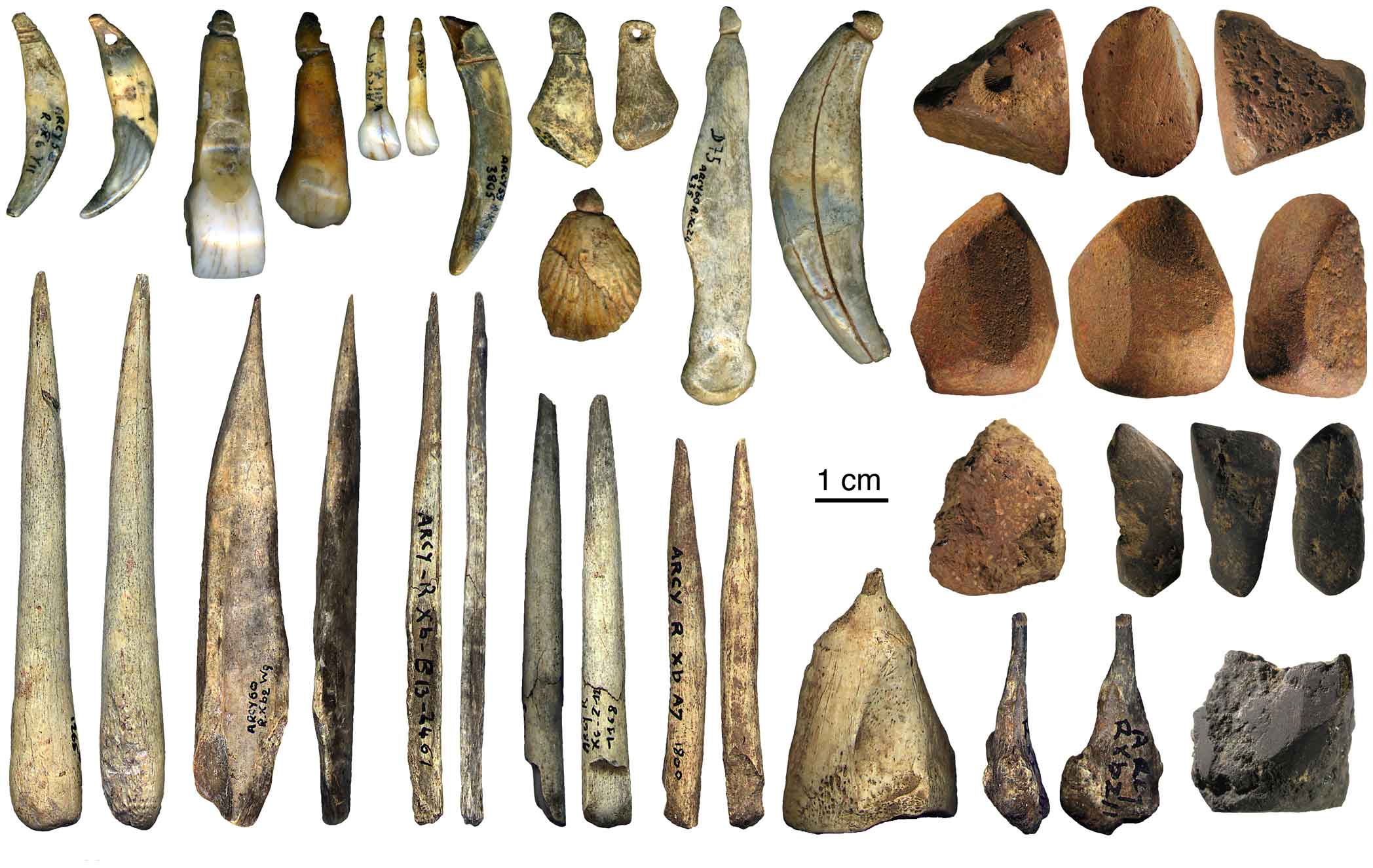
The discovery of symbolic artifacts, such as cave paintings, personal ornaments, and intricately crafted tools, points to a capacity for symbolic thought and communication among Neanderthals. These artifacts imply that Neanderthals engaged in behaviors that require the use of abstract symbols, a function typically associated with language. The ability to create and interpret symbolic representations suggests that Neanderthal communication extended beyond mere vocalizations to include a more sophisticated system of signs and symbols.
Complex Tool Use and Social Structures
Neanderthals are known for their advanced tool-making techniques and the development of complex social structures. The creation of specialized tools and the organization required for communal living indicate a level of planning and cooperation that would necessitate effective communication. The transmission of knowledge and skills within Neanderthal groups likely relied on verbal instructions and discussions, further supporting the presence of a functional communication system akin to language.
Burial Practices and Social Rituals
Archaeological evidence of Neanderthal burial practices suggests that they engaged in social rituals and perhaps held beliefs related to death and the afterlife. Such practices demonstrate a capacity for symbolic behavior and abstract thinking, which are closely linked to the use of language. The organization and execution of burial rituals would require precise communication and shared cultural norms, indicative of sophisticated social interactions facilitated by speech.
The Debate: Speech vs. Language Complexity
Defining Speech and Language
It is essential to differentiate between speech and language when discussing Neanderthal communication. Speech refers to the physical production of sounds, while language encompasses the structured system of grammar, syntax, and vocabulary used for communication. While the anatomical and genetic evidence strongly supports the capacity for speech, the extent to which Neanderthals possessed a complex language system remains a subject of scholarly debate.
Protolanguage Hypothesis
Some researchers propose that Neanderthals may have utilized a protolanguage—a more rudimentary form of communication lacking the full grammatical complexity of modern languages. Protolanguages consist of basic vocalizations and simple word structures, sufficient for conveying essential information but limited in expressive and abstract capacities. This hypothesis suggests that while Neanderthals could communicate effectively within their groups, their linguistic capabilities were not as advanced as those of Homo sapiens.
Evidence for Complex Language Systems
Contrary to the protolanguage hypothesis, other scholars argue that the cognitive and cultural evidence supports the notion of a more complex language system among Neanderthals. The sophistication of their tool-making, the creation of symbolic artifacts, and their social structures imply the use of a structured language with syntax and grammar. These functions require the ability to construct and comprehend complex sentences, suggesting that Neanderthal language may have been more developed than previously thought.
Neurological Considerations
Neurological studies of Neanderthal brain structures reveal areas analogous to those involved in language processing in modern humans. The presence of lateralization—a tendency for certain neural functions to be more dominant in one hemisphere of the brain—is one such feature that supports the possibility of language processing. This neurological specialization is closely associated with the capabilities required for the production and comprehension of language, further fueling the debate on the complexity of Neanderthal communication systems.
Comparative Analysis with Homo sapiens
Similarities and Differences in Vocal Anatomy
Comparing the vocal anatomy of Neanderthals and modern Homo sapiens reveals both similarities and differences. While the fundamental structures necessary for speech production are comparable, certain variations in the skull base and vocal tract dimensions may have resulted in differences in vocal range and sound production. These anatomical differences could have influenced the specific phonemes used in Neanderthal speech, potentially leading to variations in their language compared to that of modern humans.
Social and Cultural Interactions
The interactions between Neanderthals and early Homo sapiens provide insights into the communication dynamics between the two species. Evidence of interbreeding and cultural exchanges suggests that there was a level of social and behavioral compatibility, which may have been facilitated by verbal communication. The ability to communicate effectively would have been crucial for cooperation, sharing of knowledge, and the establishment of social bonds between the two groups.
Implications for Understanding Human Evolution
Language Development and Cognitive Evolution
The study of Neanderthal speech and language capabilities offers valuable perspectives on the evolution of human language. Understanding the communicative abilities of Neanderthals helps in tracing the origins and development of language in Homo sapiens. It suggests that the roots of complex language may extend back to common ancestors or that parallel evolutionary paths led to similar communicative traits in both species.
Cultural and Genetic Legacy
The genetic contributions of Neanderthals to modern humans continue to be a significant area of research. Traits inherited from Neanderthals, including those related to speech and language, may have influenced the linguistic abilities of contemporary populations. Additionally, the cultural legacy embodied in archaeological findings underscores the shared heritage and interconnectedness of human and Neanderthal societies.
Recap and Conclusion
The question of whether Neanderthals had speech encompasses multiple facets, including anatomical structures, genetic predispositions, auditory capabilities, and cultural behaviors. The convergence of evidence from fossil studies, genetic analyses, and archaeological discoveries strongly suggests that Neanderthals possessed the anatomical and neurological foundations necessary for speech production and perception. While the complexity and sophistication of their language remain subjects of ongoing research and debate, the available evidence points towards the likelihood that Neanderthals engaged in forms of verbal communication akin to human speech.
Neanderthals' ability to create symbolic artifacts, engage in complex tool-making, and establish social rituals further supports the existence of a functional communication system. Whether this communication constituted a fully developed language system comparable to that of modern humans or a more rudimentary protolanguage, it is clear that Neanderthals were not devoid of the communicative prowess often associated with human species. This understanding enriches our perspective on human evolution, highlighting the sophisticated cognitive and cultural complexities of our ancient relatives.
References
Last updated January 21, 2025