
Predicting Necrotizing Enterocolitis Using Real-Time HRV
Exploring the Potential of Heart Rate Variability Analytics in Neonatal Care
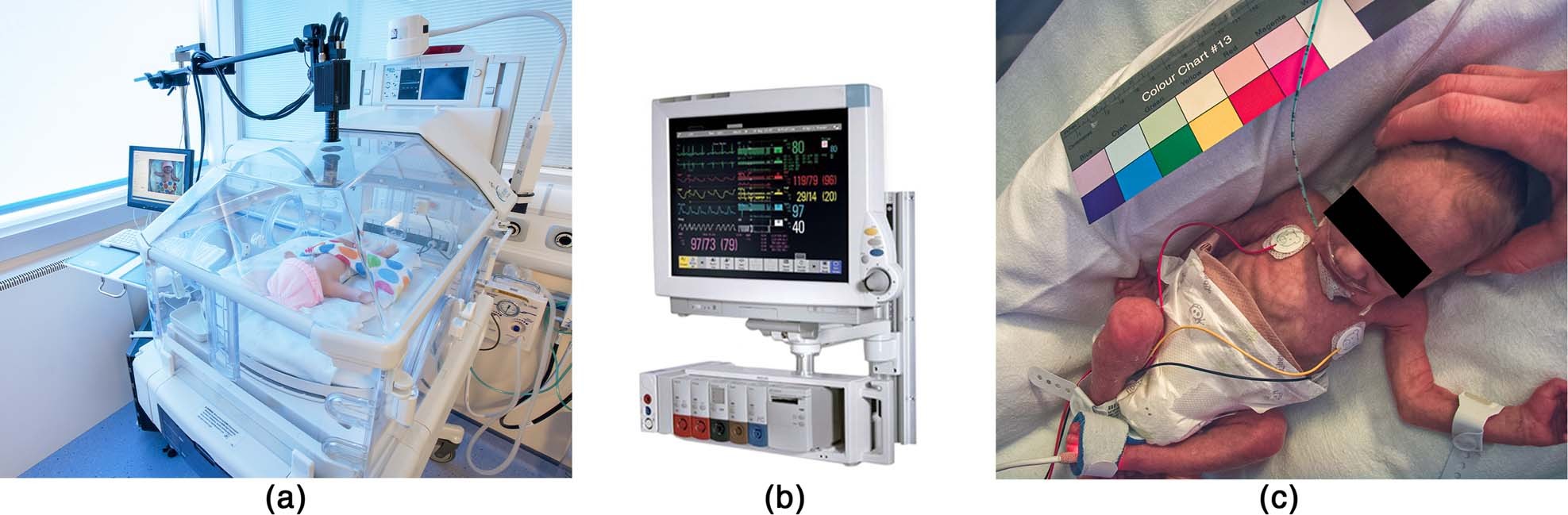
Key Highlights
- Non-Invasive Monitoring: HRV provides a real-time, non-invasive method to monitor premature infants for early signs of NEC.
- Early Biomarker Identification: Decreased high-frequency HRV is linked to reduced vagal tone, potentially signaling NEC risk before clinical symptoms appear.
- Clinical Integration and Research: Current trends show promising results while emphasizing the necessity for further research and clinical validation.
Introduction
Necrotizing enterocolitis (NEC) is a serious gastrointestinal condition predominantly affecting premature infants. The early identification of infants at risk of developing NEC can dramatically improve clinical outcomes by enabling timely interventions. One innovative approach that is gaining attention is the utilization of real-time heart rate variability (HRV) monitoring. HRV measures variations in the time intervals between consecutive heartbeats and provides insight into the autonomic nervous system functioning. Specifically, decreased high-frequency heart rate variability (HF-HRV), which is indicative of reduced vagal tone, has emerged as a potential early biomarker for NEC.
Understanding HRV and Its Relevance to NEC
What is Heart Rate Variability?
Heart rate variability (HRV) refers to the fluctuations in the time intervals between heartbeats. This variability is influenced by the interplay between the sympathetic and parasympathetic branches of the autonomic nervous system. In neonates, especially premature ones, HRV can serve as an essential measure reflecting the balance of autonomic regulation and overall health status.
HRV Metrics and Their Importance
HRV can be evaluated using various metrics that fall into three primary categories: time-domain, frequency-domain, and non-linear metrics. Among these, the high-frequency (HF) band is particularly significant because it represents vagal (parasympathetic) activity. A reduced HF-HRV has been linked to diminished vagal tone, which in turn is associated with a higher susceptibility to inflammatory responses, including those that may lead to NEC.
Mechanism Behind HRV as an Early Biomarker for NEC
The autonomic nervous system plays a critical role in maintaining homeostasis by responding to stress and inflammatory stimuli. In the context of NEC, reduced vagal tone—as indicated by a lower HF-HRV—can lead to diminished anti-inflammatory responses. Vagal activity normally helps modulate inflammation via the cholinergic anti-inflammatory pathway. When this mechanism is compromised, it may predispose the neonate to exaggerated inflammatory reactions in the gut, thereby increasing the risk of NEC.
Real-Time HRV Monitoring Techniques
Implementing HRV Monitoring in Neonatal Intensive Care Units (NICUs)
The integration of real-time HRV monitoring into NICUs offers a significant advantage in the early detection of potential NEC cases. With modern technology, continuous monitoring of HRV becomes feasible, enabling healthcare providers to observe minute-to-minute variations in an infant's autonomic function without the need for invasive procedures. This continuous assessment can alert clinicians to subtle signs of physiological distress long before overt clinical symptoms arise.
Advantages of Real-Time HRV Monitoring
Key advantages include:
- Non-invasive and continuous monitoring, reducing the stress on vulnerable neonates.
- Early detection of physiological changes, potentially leading to earlier intervention strategies.
- Enhanced ability to tailor clinical responses based on real-time data.
Technological Developments and Predictive Algorithms
Recent innovations in monitoring devices and data analytics have allowed for the development of predictive models that incorporate HRV data. Machine learning algorithms, for example, are being employed to analyze HRV patterns and predict NEC risk. Although these models are promising, they require extensive validation through clinical trials to ensure they are reliable and generalizable across different neonatal populations.
Clinical Evidence Supporting HRV as a Predictor for NEC
Key Research Findings
Multiple clinical studies have examined the predictive value of HRV in NEC. The predominant finding across these investigations is a consistent association between decreased HF-HRV and the later development of NEC. Infants who are at risk of NEC have often shown diminished HF-HRV prior to the appearance of other clinical signs. Such observations suggest that real-time HRV analysis could serve as an effective early warning signal, potentially allowing for proactive clinical management.
Summary of Notable Findings
| Aspect | Observation | Clinical Implication |
|---|---|---|
| Vagal Tone | Decrease in HF-HRV | Indicates reduced anti-inflammatory capacity |
| Autonomic Regulation | Imbalance between sympathetic and parasympathetic activity | May predispose infants to inflammatory gut responses |
| Predictive Timing | Changes in HRV precede clinical signs | Facilitates early intervention |
These findings underscore the potential utility of HRV as a predictive tool, yet they also highlight the need for standardized HRV thresholds and further investigation to fully validate this approach for clinical use.
Challenges and Limitations of HRV-based Prediction
Despite its promising aspects, using real-time HRV monitoring for predicting NEC is not without challenges. Some of the critical limitations include:
Standardization and Interpretation
One primary challenge is the lack of standardized protocols for measuring and interpreting HRV in premature infants. While decreased HF-HRV is a useful indicator, the specific thresholds for what constitutes a "significant" decrease remain under investigation. This variability can lead to challenges in reliably distinguishing between normal and pathological changes in HRV.
Integration with Other Predictive Tools
While HRV can offer valuable insights as a standalone measure, many studies suggest that its predictive accuracy may be enhanced when combined with other clinical data. Researchers are exploring composite scoring systems that integrate HRV metrics with other parameters, such as laboratory findings, radiographic imaging, and additional vital signs. This multimodal approach could lead to more robust clinical models for early NEC prediction.
Clinical Validation and Implementation
Although initial studies have demonstrated associations between HRV and NEC risk, more extensive clinical validation is necessary before HRV monitoring can become a routine aspect of neonatal care. The successful implementation of HRV monitoring depends on validating predictive models, establishing universal measurement standards, and training clinical staff to interpret HRV data effectively.
Future Directions and Potential Research Avenues
Advancing Predictive Models and Clinical Implementation
The promise of HRV monitoring in predicting NEC has spurred interest in several research areas. Future directions include:
Development of Composite Predictive Models
Research is increasingly focusing on the integration of HRV with other physiological markers to create composite predictive models. These multi-parameter models aim to improve the sensitivity and specificity of NEC prediction by combining diverse data sources such as:
- Inflammatory biomarkers
- Clinical scoring tools
- Other vital signs and imaging data
The combination of these elements can provide a more complete picture of an infant's risk profile, potentially leading to earlier and more targeted interventions.
Enhanced Technological Platforms
Emerging wearable technologies and non-invasive monitoring devices are expected to advance the capability to collect high-resolution HRV data. Improvements in sensor technology, data transmission protocols, and real-time analytics are likely to make HRV monitoring more accurate and user-friendly in the NICU environment.
Longitudinal Studies and Standardization
To ensure that HRV-based predictions are consistently reliable, robust longitudinal studies involving diverse neonatal populations are essential. Such studies will help establish standardized measurement protocols and definitive thresholds that can be universally applied in NICUs worldwide.
Interdisciplinary Collaboration for Enhanced Outcomes
Effective implementation of HRV as a predictive tool for NEC also relies on close collaboration between neonatologists, biomedical engineers, data scientists, and healthcare policymakers. Such multidisciplinary efforts are crucial for developing, validating, and deploying predictive models that can be seamlessly integrated into clinical workflows.
Comparative Analysis: HRV Versus Traditional Methods
Table: Comparative Overview of Predictive Approaches for NEC
| Method | Invasiveness | Predictive Timing | Data Integration |
|---|---|---|---|
| Real-Time HRV Monitoring | Non-invasive | Early detection before clinical onset | Can be combined with other clinical data |
| Biochemical Markers | Invasive (blood or stool samples) | Often reactive rather than predictive | Requires integration with other laboratory data |
| Imaging Studies | Non-invasive | Detects changes after clinical manifestation | Widely used but less sensitive in early stages |
This comparative analysis highlights the potential of HRV as an early, non-invasive predictor. While traditional methods offer valuable diagnostic insights, HRV monitoring uniquely provides a window into preclinical changes that may precede overt clinical deterioration.
Conclusion and Final Thoughts
The application of real-time heart rate variability (HRV) analysis in predicting necrotizing enterocolitis (NEC) represents a promising frontier in neonatal care. Through the non-invasive, continuous monitoring of the autonomic nervous system, HRV provides early insights into the physiological stress and inflammatory changes that may predispose premature infants to NEC. The consistent observation that decreased high-frequency HRV (indicative of reduced vagal tone) often precedes the clinical manifestation of NEC underlines the potential of HRV as a predictive biomarker.
While the current body of research is encouraging, several challenges remain. These include the need for standardized HRV measurement protocols, precise threshold definitions, and further validation through large-scale clinical studies. Moreover, integrating HRV data into composite models with other clinical markers may improve predictive accuracy, thereby providing a more comprehensive assessment of NEC risk. Future research should also explore advances in wearable monitoring technology and interdisciplinary collaboration to overcome current limitations and enhance clinical implementation.
In summary, real-time HRV monitoring could become a vital tool in the early detection and management of NEC, paving the way for more timely and effective interventions. As ongoing research continues to refine and validate the utility of HRV in this context, clinicians and researchers remain optimistic about its potential to improve outcomes for vulnerable neonatal populations.
References
- Heart rate variability may predict risk of disease in premature infants - PSU News
-
Heart Rate Variability and Inflammation in Neonates - NCBI PMC
- Real-Time HRV Monitoring in Neonatal Care - Frontiers in Neuroscience
- Predictive Role of HRV in NEC - PubMed
-
HRV and NEC: A New Frontier - ScienceDirect
Recommended Further Queries
Last updated February 28, 2025