
Beyond Words: How Neo-Gricean Ideas Reshaped Our Understanding of Implied Meaning
Exploring the evolution of pragmatic theory and its powerful applications in language analysis.
Key Insights
- Refinement, Not Rejection: Neo-Gricean pragmatics builds upon H.P. Grice's foundational Cooperative Principle and maxims, aiming to simplify and refine the system rather than discard it.
- Simplified Principles: Theorists like Laurence Horn and Stephen Levinson proposed models (e.g., Horn's Q/R Principles, Levinson's Q/I/M Heuristics) that condense Grice's maxims into fewer, broader principles to explain conversational implicatures.
- Wide-Ranging Applications: This framework is crucial for analyzing conversational meaning, simplifying linguistic theories (lexicon, semantics, syntax), understanding lexical phenomena, and informing fields like AI, language learning, and discourse analysis.
What is Neo-Gricean Pragmatics?
Building on Grice's Legacy
Neo-Gricean pragmatics represents a significant evolution in the study of how meaning is conveyed and understood in conversation, emerging as a development and refinement of the classical Gricean theory formulated by philosopher H.P. Grice. Grice's groundbreaking work introduced the concept of conversational implicature—the idea that speakers often mean more than they literally say—and proposed the Cooperative Principle (CP) alongside four conversational maxims (Quantity, Quality, Relation, Manner) as guides for effective communication.
Neo-Gricean approaches, primarily developed from the 1980s onwards, generally accept the fundamental Gricean premises about cooperation and rationality in conversation. However, they seek to address perceived complexities or shortcomings in the original framework, particularly the number and scope of the maxims. Instead of Grice's four maxims (potentially nine or more sub-maxims), neo-Gricean theorists aim to derive the phenomena Grice discussed from a smaller, more streamlined set of principles or heuristics.
The Cooperative Principle Revisited
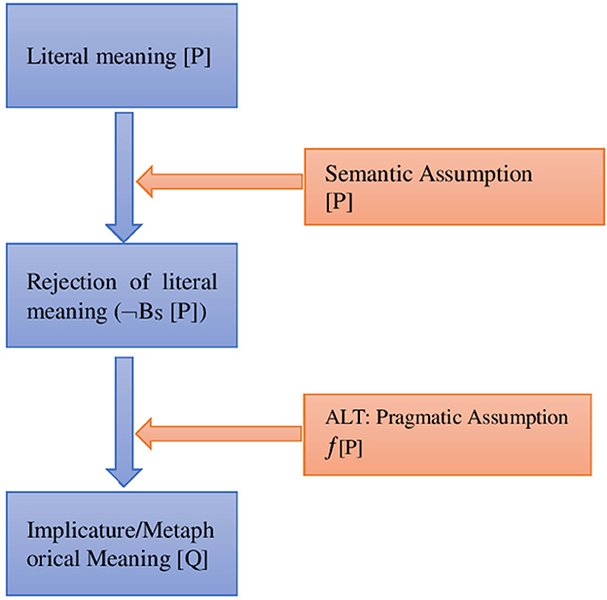
While Grice saw the maxims as specific guidelines for cooperative conversation, neo-Griceans tend to view their reduced sets of principles as more general inferential heuristics derived from rationality. The core idea remains that listeners assume speakers are being cooperative (in a broad sense) and use these principles to infer the intended, non-literal meaning (implicature) when an utterance seems, on the surface, to deviate from expectations or is less informative than it could be.
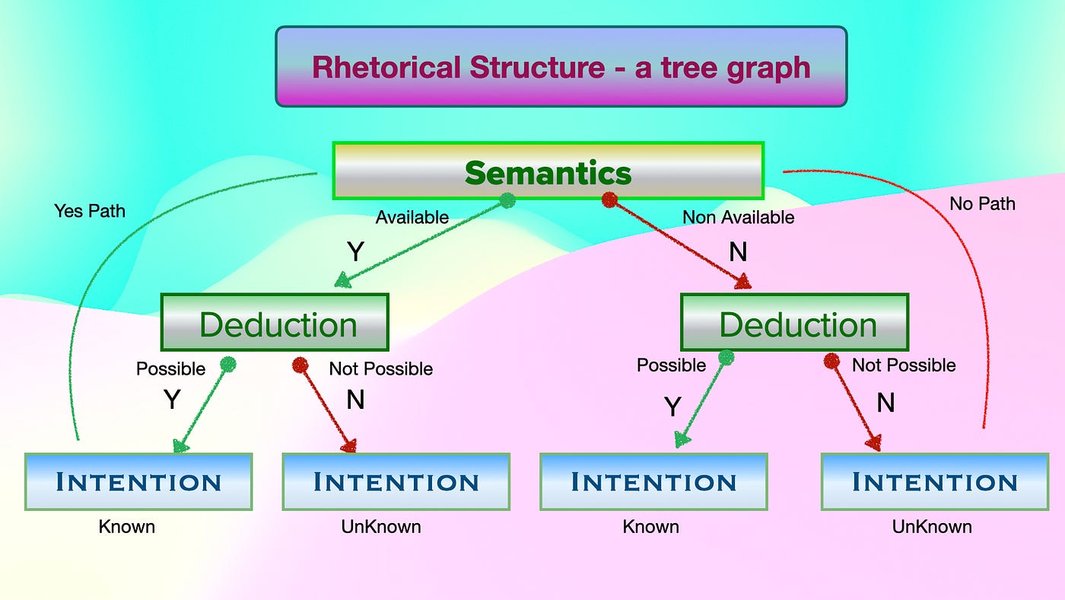
Neo-Gricean theory refines the understanding of cooperative communication principles initially proposed by Grice.
Streamlining the Maxims: Key Models
Two main figures dominate the neo-Gricean landscape:
- Laurence Horn: Proposed a bipartite model based on two competing principles derived from Grice's maxims:
- The Q-Principle (related to Quantity 1: Make your contribution as informative as is required): "Say as much as you can (relevant to R)." This often generates upper-bounding implicatures (e.g., scalar implicatures).
- The R-Principle (related to Relation, Manner, and Quantity 2: Do not make your contribution more informative than is required): "Say no more than you must (relevant to Q)." This often generates lower-bounding implicatures, enriching meaning towards stereotypical interpretations.
- Stephen Levinson: Developed a trinitarian model with three heuristics:
- The Q-Heuristic (Quantity): "What isn't said, isn't." This primarily generates scalar implicatures.
- The I-Heuristic (Informativeness): "What is expressed simply is stereotypically exemplified." This leads to enrichments and inferences to the stereotype.
- The M-Heuristic (Manner): "What's said in an abnormal way isn't normal." This suggests that marked or unusual expressions convey marked or unusual messages, contrasting with the I-Heuristic.
These models aim to provide a more parsimonious and predictive account of how generalized conversational implicatures (GCIs) – those that arise typically or by default – are generated.
Core Principles and Heuristics
Neo-Gricean pragmatics relies on a reduced set of principles that often reflect a tension between communicative clarity/informativeness and economy of effort for both speaker and hearer.
Horn's Q and R Principles
Horn's model elegantly captures the interplay between saying enough (Q) and not saying too much (R). The Q-Principle pushes for maximal information within relevance constraints, often leading to interpretations where a weaker statement implicates the negation of a stronger one (e.g., "Some students passed" Q-implicates "Not all students passed"). The R-Principle encourages economy, leading hearers to infer richer, more specific meanings from minimal expressions (e.g., "John turned the key and the engine started" R-implicates "John turned the key *and then*, *and thereby caused*, the engine to start").
Levinson's Q, I, and M Heuristics
Levinson's heuristics offer a slightly different perspective on the inferential processes:
- Q-Heuristic: Focuses on scales and alternatives. If a speaker uses a weaker term from a scale (e.g., <all, some>, <hot, warm>), the hearer infers that the speaker was not in a position to use a stronger term.
- I-Heuristic: Drives inferences towards the most typical or stereotypical interpretation unless otherwise indicated. It simplifies processing by assuming normalcy. For example, "secretary" might be interpreted as "female secretary" via the I-heuristic in certain contexts, reflecting stereotypical associations (though this is context-dependent and can be problematic).
- M-Heuristic: Operates in opposition to the I-heuristic. Using a marked, complex, or unusual form suggests the speaker intended to convey a non-stereotypical meaning. For example, saying "The singer produced a series of sounds corresponding closely to the score of 'The Star-Spangled Banner'" (a marked expression) implies something different from "The singer sang 'The Star-Spangled Banner'" (unmarked expression), perhaps that the performance was poor or unusual.
The Role of Scalar Implicature
Scalar implicature is a cornerstone phenomenon explained particularly well by neo-Gricean principles, especially Horn's Q-Principle and Levinson's Q-Heuristic. It arises when a speaker uses a term that lies on an informational scale (e.g., <all, most, many, some>, <always, often, sometimes>, <hot, warm>, <excellent, good>).
Understanding "Some" vs. "All"
The classic example is the word "some." Logically, "some" is compatible with "all" (if all students passed, it is true that some students passed). However, in conversation, saying "Some students passed the exam" typically implicates "Not all students passed the exam." The neo-Gricean explanation is that the speaker is assumed to be cooperative (following the Q-Principle/Heuristic). If the speaker knew that *all* students passed, they should have said so, as "all" is informationally stronger than "some" on the relevant scale. By choosing the weaker term "some," the speaker implies they are not in a position to assert the stronger term "all," leading to the "not all" inference.
Everyday utterances like ordering coffee often rely on implicatures derived from brevity and assumed norms (related to R/I Principles).
Applications within Pragmatics
Neo-Gricean pragmatics provides a powerful framework with broad applications across linguistics and related fields.
Refining Linguistic Theory
Simplifying the Lexicon and Semantics
A major contribution is the potential for radical simplification of other linguistic components. By explaining certain aspects of meaning through pragmatic inference, neo-Gricean theory reduces the need to posit numerous distinct senses for words (polysemy) in the lexicon or overly complex semantic representations. For example, scalar terms like "some" don't need a separate semantic entry meaning "some but not all"; the "not all" part is derived pragmatically.
Understanding the Semantics-Pragmatics Boundary
Neo-Gricean theories are central to debates about the interface between semantics (literal, encoded meaning) and pragmatics (inferred meaning). They explore phenomena suggesting "pragmatic intrusion," where pragmatic inferences seem to affect the truth-conditional content (what is said) of an utterance, challenging a strict separation between the two.
Analyzing Conversation and Discourse
Explaining Implicatures in Dialogue
The refined principles provide tools to systematically analyze how speakers imply meanings indirectly in everyday conversation, including generalized implicatures (like scalar ones) and context-dependent particularized implicatures. This helps understand phenomena like indirect speech acts, irony, and politeness strategies.
Insights for Discourse Analysis
The framework aids in analyzing real-life conversations and texts, revealing how coherence and meaning are constructed through shared assumptions and inferential heuristics beyond literal interpretation.
Developments in Lexical Pragmatics
Neo-Gricean principles are extensively applied in lexical pragmatics, the study of how word meanings are adjusted in context.
Narrowing, Cloning, and Blocking
Neo-Gricean heuristics help explain:
- Lexical Narrowing: How the meaning of a general term is restricted in context (e.g., "drink" often meaning "alcoholic drink"). This can be linked to the I/R-Principle (inference to stereotype).
- Lexical Cloning: Repetition of a word for emphasis or specific meaning modification (e.g., "Are you *awake* awake?").
- Lexical Blocking: How the existence of a specific term (often simpler or more conventional) blocks the use or interpretation of a more complex or periphrastic expression for the same meaning (often related to the M-Principle).
Asymmetry in Language
The framework helps explain asymmetries in language, such as why certain logical operators are lexicalized differently across languages or why negative terms might behave differently from positive ones, often appealing to principles of economy and informativeness.
Broader Implications
Language Learning and Teaching
Understanding neo-Gricean principles provides insights into the challenges second language learners face in acquiring pragmatic competence (understanding and using implicatures appropriately). This informs teaching methods aimed at improving communicative effectiveness.

Developing pragmatic skills, understood through frameworks like neo-Gricean theory, is crucial for effective social communication in educational settings.
Artificial Intelligence and NLP
The structured heuristics offer a theoretical basis for developing more sophisticated natural language processing (NLP) systems and conversational agents (chatbots) that can go beyond literal meaning to interpret user intentions and generate more human-like, contextually appropriate responses.
Cognitive Science and Philosophy
Neo-Gricean pragmatics contributes to understanding the cognitive processes underlying communication, intention recognition, and the balance between effort and effect in language use. It remains a key theory in the philosophy of language concerning meaning and interpretation.
Comparing Pragmatic Frameworks
Neo-Gricean theories offer distinct perspectives compared to Grice's original framework and other post-Gricean approaches like Relevance Theory. The radar chart below provides a comparative overview based on several key features. It reflects a qualitative assessment of the emphasis and strengths of each framework.
This chart illustrates how neo-Gricean models (Horn, Levinson) streamline the number of principles compared to classical Gricean theory, excel in explaining GCIs and scalar implicatures, strongly contribute to simplifying semantics, and offer robust explanations for markedness phenomena (especially Levinson). Relevance Theory, while distinct, focuses heavily on cognitive aspects and particularized inferences, using a single overarching principle.
Key Concepts Mapped
The mindmap below provides a visual overview of the core ideas within neo-Gricean pragmatics, showing its roots, key components, and areas of application.
(Quantity, Quality, Relation, Manner)"] id1d["Conversational Implicature"] id2["Core Goal"] id2a["Refine & Simplify Grice"] id2b["Reduce Number of Maxims"] id2c["Focus on General Principles/Heuristics"] id3["Key Figures & Models"] id3a["Laurence Horn"] id3a1["Bipartite Model"] id3a2["Q-Principle (Say enough)"] id3a3["R-Principle (Say no more than needed)"] id3b["Stephen Levinson"] id3b1["Trinitarian Model"] id3b2["Q-Heuristic (What isn't said, isn't)"] id3b3["I-Heuristic (Infer stereotype)"] id3b4["M-Heuristic (Infer non-stereotype from marked form)"] id4["Central Concepts"] id4a["Generalized Conversational Implicatures (GCIs)"] id4b["Scalar Implicatures
(e.g., some -> not all)"] id4c["Pragmatic Inference"] id4d["Interaction with Context"] id5["Applications"] id5a["Linguistic Theory Simplification"] id5a1["Lexicon"] id5a2["Semantics"] id5a3["Syntax"] id5a4["Semantics-Pragmatics Interface"] id5b["Lexical Pragmatics"] id5b1["Narrowing"] id5b2["Cloning"] id5b3["Blocking"] id5b4["Asymmetry"] id5c["Discourse & Conversation Analysis"] id5d["Language Learning & Teaching"] id5e["AI & Natural Language Processing (NLP)"] id5f["Cognitive Science & Philosophy"] id6["Relation to Other Theories"] id6a["Classical Gricean"] id6b["Relevance Theory"] id6c["Other Post-Gricean Approaches"]
This map highlights the interconnectedness of the foundational ideas, the specific models developed, the key phenomena explained (like scalar implicatures), and the wide-ranging impact of neo-Gricean thought within pragmatics and beyond.
Visualizing Pragmatics in Action
The following table provides concrete examples of utterances and how neo-Gricean principles can be used to explain the inferred meaning (implicature) that goes beyond the literal content.
| Utterance | Literal Meaning (Simplified) | Likely Neo-Gricean Principle(s) Involved | Inferred Meaning (Implicature) |
|---|---|---|---|
| "I ate some of the cookies." | I ate one or more cookies, possibly all. | Q-Principle / Q-Heuristic (Scale: <all, some>) | I did not eat all of the cookies. |
| A: "Did you finish the report and the presentation?" B: "I finished the report." |
I completed the report. (Says nothing explicit about the presentation). | Q-Principle / Q-Heuristic (Speaker didn't mention the presentation) | I did not finish the presentation (or am unwilling/unable to assert that I did). |
| "She gave him the key and he opened the door." | Two events occurred: she gave him the key; he opened the door. | R-Principle / I-Heuristic (Infer stereotypical sequence/causality) | She gave him the key, and *then* he opened the door *with that key*. |
| "John stopped the car." | John caused the car to cease moving. | R-Principle / I-Heuristic (Infer stereotypical action) | John stopped the car in the usual manner (e.g., using the brakes). |
| "John caused the car to stop." | John brought about the cessation of the car's movement. | M-Heuristic (Marked expression vs. "stopped the car") | John stopped the car in an unusual or indirect way (e.g., by driving into a wall, running out of gas). |
| A: "How was the meal?" B: "The soup was warm." |
The temperature of the soup was warm. | Q-Principle / Q-Heuristic (Focus on 'warm' on scale <hot, warm, cool, cold> & mentions only soup) | The soup wasn't hot, and potentially the rest of the meal wasn't noteworthy or good. |
These examples demonstrate how the concise principles proposed by neo-Griceans allow for systematic explanations of common inferences that enrich communication beyond what is explicitly encoded in the language itself.
Further Exploration: Neo-Gricean Theories Explained
For an auditory and visual explanation, the following video provides an introduction to neo-Gricean theories of conversational implicature, discussing how they build upon and modify Grice's original ideas. It can help solidify understanding of the core concepts and distinctions within this pragmatic framework.
Frequently Asked Questions
What's the main difference between Gricean and Neo-Gricean pragmatics?
The main difference lies in the number and nature of the principles used to explain conversational implicature. Grice proposed the Cooperative Principle and four maxims (Quantity, Quality, Relation, Manner) with several sub-maxims. Neo-Griceans accept the core idea of cooperation but aim to simplify the system by reducing the maxims to fewer, more general principles or heuristics (like Horn's Q/R Principles or Levinson's Q/I/M Heuristics). They focus more systematically on explaining Generalized Conversational Implicatures (GCIs) through these streamlined principles.
How does Neo-Gricean pragmatics differ from Relevance Theory?
While both are post-Gricean developments, they differ significantly. Neo-Gricean pragmatics retains multiple principles derived from Grice's maxims, focusing on the interaction between informativeness and economy. Relevance Theory (developed by Sperber and Wilson) proposes a single principle – the Principle of Relevance – driven by cognitive efficiency (balancing cognitive effort against cognitive effects). Relevance Theory emphasizes the inferential calculation of meaning in context for both explicit content (explicature) and implicit meaning (implicature), whereas neo-Gricean approaches often focus more heavily on generalized implicatures derived from specific linguistic forms and scales via their heuristics.
What is 'pragmatic intrusion'?
Pragmatic intrusion (or implicature intrusion) refers to the controversial idea that pragmatic inferences, typically thought to contribute to implicated meaning (what is meant but not said), can sometimes influence the truth-conditional content of an utterance (what is literally said). For example, the scalar implicature in "Some students passed" (implying "not all") might be argued by some theorists to intrude into the truth conditions, meaning the utterance could be considered false if, in fact, all students passed. Neo-Gricean theories, particularly Levinson's work on GCIs, are often discussed in relation to this phenomenon, as GCIs are seen as default inferences that might arise early enough in processing to affect truth-conditional interpretation, blurring the strict Gricean line between saying and implicating.
Is Neo-Gricean pragmatics still relevant today?
Yes, absolutely. Neo-Gricean pragmatics remains one of the foundational approaches in contemporary linguistic pragmatics and the philosophy of language. While it faces challenges and competes with other frameworks like Relevance Theory, its principles (especially regarding scalar implicatures, lexical pragmatics, and the drive for linguistic simplification) continue to inform research, theoretical debates, and applications in areas like computational linguistics, language acquisition, and discourse analysis. Horn's and Levinson's models are still widely cited and used as analytical tools.
Recommended Further Reading
- How do Horn's Q/R principles compare to Levinson's Q/I/M heuristics in explaining implicatures?
- Can you provide specific examples of pragmatic intrusion as discussed in Neo-Gricean theory?
- What are the practical applications of Neo-Gricean pragmatics in Natural Language Processing and AI?
- What are the main criticisms leveled against Neo-Gricean pragmatic theories?
References
 assets.cambridge.org
Last updated April 27, 2025