
Neorealism in International Relations
An In-Depth Exploration of Structural Forces Shaping Global Politics
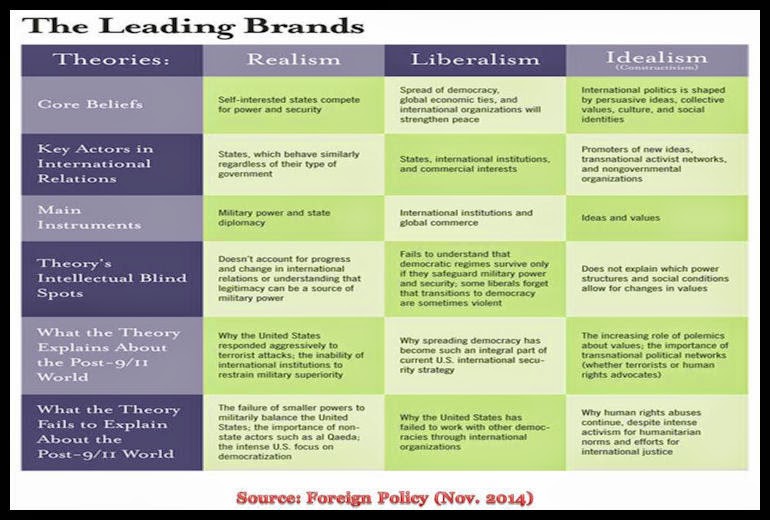
Key Highlights
- Anarchy and Structure – The foundation of neorealism is the anarchic nature of the international system, forcing states to rely on self-help.
- Distribution of Power – State behavior is primarily determined by the structure and power distribution in the global arena.
- Defensive and Offensive Variants – Neorealism branches into defensive realism, which emphasizes security maintenance, and offensive realism, which concentrates on power maximization.
Overview of Neorealism
Neorealism, also known as structural realism, represents a fundamental theoretical approach in international relations. It diverges significantly from classical realism by shifting the focus away from human nature or internal state characteristics to examining the systemic structure of the international system. The theory was primarily developed and popularized by Kenneth Waltz in his groundbreaking work, "Theory of International Politics" (1979), which redefined the way scholars and policymakers understand global politics.
Historical Context and Development
In the aftermath of World War II and throughout the Cold War, scholars sought to understand the persistent nature of conflict and competition between states. Classical realism had long emphasized the internal features of states—including human nature and leadership decisions—as key factors influencing international behavior. However, neorealism emerged as a reaction against this focus, positing instead that the anarchic structure of the international system compels states to behave in a self-interested, competitive manner regardless of internal characteristics. This systemic approach provides a more scientific framework for analyzing state interactions.
Defining Anarchy in the International System
A central pillar of neorealism is the concept of anarchy. Unlike domestic political systems, which are characterized by regulated hierarchies and centralized authority, the international system is inherently anarchic. There is no overarching authority or world government to enforce rules or mediate disputes. This absence of central authority means that each state operates in a self-help environment, seeking to ensure its own survival and security above all else.
In an anarchic system, trust between states is limited and temporary alliances are formed based on immediate security needs rather than long-term commitments to shared values. This pervasive insecurity leads to what is known as a “security dilemma,” where one state's measures to enhance its security can inadvertently threaten other states, leading all parties to engage in a continuous cycle of armament and rivalry.
The Security Dilemma Explained
The security dilemma refers to a situation in which actions taken by a state to increase its own security—such as investing in military capabilities—trigger similar responses from other states, thereby escalating tensions and making the international environment even more dangerous. In this setting, even defensive measures can be perceived as offensive threats, thereby reinforcing the competitive and often conflict-prone nature of international relations.
Key Tenets and Theoretical Foundations
Neorealism rests upon several foundational principles that illuminate the behavior of states on the global stage. These principles emphasize the structural constraints imposed by the international system and the resulting implications for state conduct.
Systemic Constraints and the Distribution of Power
At the heart of neorealism lies the assertion that the structure of the international system—especially the distribution and concentration of power among states—is the prime determinant of global politics. States are not just motivated by internal factors; rather, it is the configuration and relative capabilities of potential adversaries that shape their strategies.
Key Components
- Anarchy: The lack of a centralized global authority compels states to rely on self-help to secure their interests.
- Power Distribution: States interpret their own security largely through the lens of how power is distributed in the system, which may lead to scenarios such as bipolarity, multipolarity, or unipolarity.
- State Behavior: In this structural framework, states behave as rational actors, making calculated decisions to maximize national security and relative power.
According to neorealism, states are essentially “black boxes” whose internal politics and individual leaders matter less than the external pressures exerted by the competitive international environment. In this view, it is only the external distribution of power that matters, and each state's behavior is fully determined by its position within that broader structure.
Balancing of Power
One of the critical concepts in neorealism is the balancing of power. Given the inherent uncertainty and risks associated with an anarchic international system, states are often compelled to take measures that prevent any one state or coalition from achieving overwhelming dominance. Balancing mechanisms may include:
Internal and External Balancing
Internal balancing involves a state strengthening its military capabilities, technological advances, or economic resources to match or counter perceived external threats. External balancing refers to the formation of alliances or partnerships with other states to counterbalance rivals and share the burdens of security.
The interplay between internal and external balancing strategies highlights the dynamic and often precarious nature of international politics under neorealism. Although alliances and cooperative measures exist, they are inherently unstable due to the underlying competition and mistrust fostered by anarchy.
Variants of Neorealism
Neorealism is not a monolithic theory but rather one that encompasses varying perspectives on how states pursue security and power within an anarchic system. Two primary strands of neorealism are widely recognized:
Defensive Realism
Defensive realism is the original form of neorealism advocated by Kenneth Waltz. It posits that states are primarily interested in maintaining their security rather than maximizing power for its own sake. Under defensive realism, states aim to acquire sufficient power to ensure their survival and create stability within the international system.
Main Features of Defensive Realism
- Security Maximization Over Power Maximization: States focus on achieving a secure and stable balance rather than engaging in continuous power accumulation.
- Emphasis on Balance of Power: Defensive realism underscores the importance of maintaining equilibrium, where no single state can dominate the system.
- Cost-Benefit Calculations: States engage in cautious strategies, often carefully weighing the potential benefits of expansion against the risks of triggering counterbalancing measures by rivals.
Offensive Realism
In contrast to defensive realism is offensive realism, as articulated by scholars like John Mearsheimer. Offensive realism argues that states are inherently driven to maximize their relative power and pursue opportunities to achieve regional or global hegemony. This approach interprets state behavior as aggressively seeking power not just to secure survival but to gain strategic advantages over potential adversaries.
Characteristics of Offensive Realism
- Relative Power Maximization: Offensive realism suggests that states continually work to enhance their power relative to rivals, thereby achieving a dominant position in their region.
- Risk-Taking Behavior: This variant implies that states are willing to take significant risks in order to enlarge their sphere of influence, sometimes leading to conflict or war.
- Dynamic Expansion: The pursuit of regional hegemony and the prevention of counterbalancing alliances drive states to seek continuous expansion and assertiveness.
Comparative Analysis: Defensive vs. Offensive Neorealism
A comparison of defensive and offensive neorealism illustrates how different conceptualizations of state behavior can emerge from the same foundational premises of anarchy and power distribution. Both approaches agree that the international system is anarchic but diverge sharply in terms of strategy and objectives.
Comparison Table
| Aspect | Defensive Realism | Offensive Realism |
|---|---|---|
| Objective | Ensure survival through adequate power without provoking excessive counterbalancing. | Maximize relative power to achieve regional or even global predominance. |
| Approach to Security | Focus on maintaining a balance of power and stability. | Adopt proactive measures to seize opportunities for expansion. |
| Risk Tolerance | Generally risk-averse, favoring caution to avoid unintended escalations. | More willing to engage in risky, aggressive behaviors to achieve strategic goals. |
| Alliance Formation | Alliances are seen as temporary measures for maintaining balance. | Alliances are used strategically to weaken potential rivals and enhance power projection. |
Implications and Criticisms
Neorealism has had a profound impact on both academic debates and policy decisions over the past several decades. By emphasizing the structural constraints of the international system and the centrality of power politics, neorealism has provided a robust framework for explaining persistent conflicts and the formation of alliances. However, its assumptions and predictions have also attracted significant criticisms.
Strengths of Neorealism
One of the primary strengths of neorealism is its parsimonious approach. By reducing the complexity of international politics to a few key variables—most notably anarchy and the distribution of power—neorealism offers clear, testable hypotheses that have been widely adopted in empirical research. The theory’s focus on structural factors also explains why similar outcomes occur in different regional settings, reinforcing the argument that international relations are governed by systemic forces rather than idiosyncratic domestic factors.
The Enduring Relevance
Despite its simplicity, neorealism remains influential because it captures the fundamental dynamics of power politics seen throughout history. From the Cold War balance between the United States and the Soviet Union to contemporary multipolar tensions in regions such as East Asia and Eastern Europe, the theory’s emphasis on the anarchic structure of international politics continues to resonate with scholars and policymakers alike.
Critiques of Neorealism
Critics of neorealism contend that the theory’s heavy focus on material capabilities and systemic constraints neglects other significant factors that influence state behavior. For example, cultural, ideological, and domestic political variables are often underemphasized in neorealist analyses, leading some scholars to argue that the theory oversimplifies the complexities of international relations. Additionally, critics point out that neorealism’s generally pessimistic view of limited international cooperation does not fully account for successful multilateral institutions and norms that have emerged over time.
Furthermore, while the distinction between defensive and offensive realism offers theoretical nuance, empirical evidence sometimes blurs the lines between these variants, suggesting that state behavior might incorporate elements of both strategies depending on context and opportunity.
Practical Applications in International Policy
The theoretical underpinnings of neorealism have not only influenced academic thought but have also provided guidance for statecraft. Recognizing the constraints imposed by an anarchic global system, national leaders and strategic planners have often designed policies that emphasize self-reliance, careful balancing, and the strategic deployment of military and economic power.
Policy Implications
Policy-makers influenced by neorealism typically focus on ensuring national security through a combination of internal military strengthening and the formation of strategic alliances. In light of the security dilemma, states are cautious in their foreign policy decisions, seeking to avoid actions that might inadvertently trigger counterbalancing measures by rivals. The reliance on self-help also drives investments in technology and intelligence, which are seen as essential for maintaining a competitive edge.
Case Study: Cold War and Beyond
During the Cold War, neorealist insights played a significant role in shaping the strategies of both the United States and the Soviet Union. Each superpower focused on maintaining military parity and building alliances with smaller states to create spheres of influence. Even in the post-Cold War era, the principles of power balancing, alliance politics, and strategic deterrence continue to inform international relations policies in regions marked by rivalry and shifting power dynamics.
Integrative Analysis and Ongoing Debates
Although neorealism offers a streamlined explanation of international politics by emphasizing structure and power distribution, ongoing debates in the field continue to seek more comprehensive answers. The limitations associated with the theory's focus on systemic constraints have spurred the development of complementary perspectives that incorporate domestic, ideological, and normative factors.
Bridging the Gap Between Theory and Practice
In an era marked by rapid globalization and complex interdependence, scholars have attempted to integrate the strengths of neorealism with other approaches to create more holistic models of international relations. For instance, while acknowledging the foundational importance of anarchy, some theorists argue that domestic politics, leadership styles, and even global public opinion can significantly modulate how states interpret and respond to international pressures.
Emerging Synthesis
This emerging synthesis has led to variations such as neoclassical realism, which seeks to reconcile the systemic determinism of neorealism with the influence of internal factors. Neoclassical realism posits that while the international structure creates strong incentives for power accumulation and balancing, domestic variables—such as state leadership, interest group dynamics, and political culture—mediate how these incentives are translated into actual policy decisions.
Nonetheless, standard neorealism remains a critical theoretical framework for understanding global politics. Its emphasis on self-help, the security dilemma, and the importance of power distribution continues to provide valuable insights into the persistent and recurring patterns that characterize international relations. While some critics argue that neorealism has a determinative outlook that underestimates the scope for international cooperation, it nonetheless serves as a powerful tool for analyzing the constraints and structural forces that shape state behavior.
Conclusion and Final Thoughts
Neorealism in international relations offers a robust framework that emphasizes the primacy of the anarchic international system and the central role of power distribution in shaping state behavior. By shifting the focus from internal state characteristics to the structure of the global arena, the theory explains why, despite variations in culture, leadership, or political ideology, states continue to pursue strategies that ensure their survival and relative advantage.
The neorealist paradigm has evolved through major contributions from scholars like Kenneth Waltz and John Mearsheimer, resulting in distinct variants that highlight either defensive measures aimed at maintaining stability or more aggressive strategies for power maximization. Despite criticisms regarding its sometimes reductionist approach, neorealism remains highly influential and relevant, particularly in periods marked by uncertainty, rivalry, and strategic competition.
Ultimately, neorealism provides a lens through which the mechanics of global politics — from the formation of alliances to the escalation of the security dilemma — can be understood as manifestations of broader structural forces. It is this analytical clarity, combined with its bold predictions about the competitive nature of international systems, that cements neorealism's place as a central theory in the study of international relations.
References
- Neorealism (international relations) – Wikipedia
- Oxford Research Encyclopedia of International Studies
- Neorealism – Fiveable Library
- Neorealism in International Relations – Britannica
- Neorealism in International Relations – Yoopery
Recommended Queries for Further Insight
Last updated February 21, 2025