
Exploring the Interconnected World: Computers, Peripherals, and IoT in Networks
Understanding the Devices that Form the Fabric of Modern Connectivity
Key Insights into Networked Devices
- Networking Fundamentals: A computer network fundamentally connects devices to facilitate data exchange and resource sharing.
- Diverse Device Landscape: Modern networks encompass a wide array of devices, including traditional computers and mobile devices, as well as a growing category of peripherals and Internet of Things (IoT) devices.
- Specialized Network Hardware: Dedicated network devices like routers, switches, and access points are essential for managing traffic and enabling communication between connected devices.
In today's increasingly digital world, the ability of devices to connect and communicate forms the backbone of nearly every aspect of our lives, from personal interactions to global industries. A network is the fundamental concept that enables this connectivity, allowing a diverse collection of hardware to share information and resources. This interconnected web includes familiar devices such as computers and mobile phones, but also extends to a vast and expanding category of peripherals and the rapidly evolving landscape of Internet of Things (IoT) devices.
The Foundation: What Constitutes a Computer Network?
Defining the Core Concept of Connectivity
At its core, a computer network is a system where two or more computing devices are linked together to enable the transmission and exchange of information and resources. These devices can range from powerful servers and desktop computers to portable laptops, smartphones, and even specialized hardware designed for specific tasks. The primary purpose is to facilitate communication, allowing devices to send and receive data, share access to hardware like printers or storage, and collaborate on tasks regardless of their physical location.
The connections within a network can be physical, utilizing cables like Ethernet, or wireless, relying on technologies such as Wi-Fi and cellular networks. The choice of connection method often depends on factors like distance, bandwidth requirements, and mobility needs.
Beyond the Traditional: Peripherals in the Networked Environment
Expanding the Scope of Connected Hardware
While computers and mobile phones are often the most visible components of a network, peripheral devices play a crucial role in extending the functionality and usability of connected systems. A peripheral is essentially any auxiliary hardware device that connects to a computer or network to transfer information externally. These devices are not core components of the computer itself but are accessible to and controlled by it.
Examples of network peripherals include printers, scanners, external hard drives, and webcams. In a networked environment, these devices can be shared among multiple users, eliminating the need for each computer to have its own dedicated peripheral. This not only reduces hardware costs but also streamlines workflows and improves efficiency.
The increasing integration of network connectivity into peripherals means that many can now connect directly to a network without needing to be tethered to a single computer. Network-enabled printers, for instance, can be accessed wirelessly by any authorized device on the network.
The Rise of the Internet of Things (IoT)
Connecting Everyday Objects to the Digital Realm
The Internet of Things (IoT) represents a paradigm shift in networking, bringing connectivity to a vast array of everyday objects that were traditionally offline. IoT devices are physical objects embedded with sensors, software, and other technologies that enable them to collect and exchange data with other devices and systems over the internet. This category is incredibly diverse, encompassing everything from smart home appliances and wearable fitness trackers to industrial sensors and connected vehicles.
Unlike traditional computers or peripherals, many IoT devices are designed for specific, often narrow, functions. Their power lies in their ability to collect data from their environment, transmit it for analysis, and often receive instructions or updates. This data can be used for a multitude of purposes, such as monitoring conditions, automating tasks, providing insights into usage patterns, and enabling remote control.
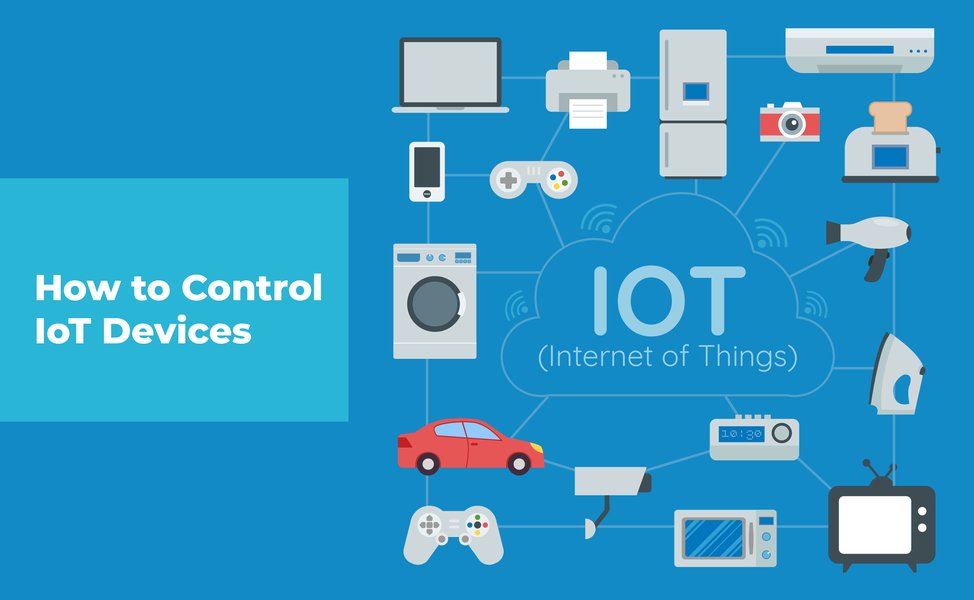
How IoT Devices Connect and are Controlled
The growth of IoT has been fueled by advancements in wireless communication technologies, miniaturization of sensors and processors, and the increasing affordability of connectivity. As more devices become connected, the potential for data collection and analysis grows exponentially, leading to innovations in various sectors.
Essential Network Hardware Enabling Connectivity
The Devices that Orchestrate Network Traffic
While computers, peripherals, and IoT devices form the endpoints of a network, dedicated network hardware is essential for managing the flow of data and enabling communication between these devices and with external networks like the internet. These devices act as the infrastructure that allows the interconnected world to function seamlessly.
Key network devices include:
Routers
Routers are devices that forward data packets between different computer networks. They act as the gateway between a local network (like your home network) and a wider network (like the internet). Routers use IP addresses to determine the best path for data to travel, ensuring that information reaches its intended destination.
Switches
Switches are fundamental components of most local area networks (LANs). They connect multiple devices within the same network segment, allowing them to communicate with each other efficiently. Unlike older hubs that broadcast data to all connected devices, switches are intelligent enough to send data only to the intended recipient, reducing unnecessary traffic.
Access Points
Wireless access points (APs) are network devices that allow wireless devices, such as laptops, smartphones, and IoT devices, to connect to a wired network. They create a wireless local area network (WLAN), essentially acting as a bridge between the wireless and wired parts of the network. Access points are crucial for providing Wi-Fi connectivity in homes, offices, and public spaces.
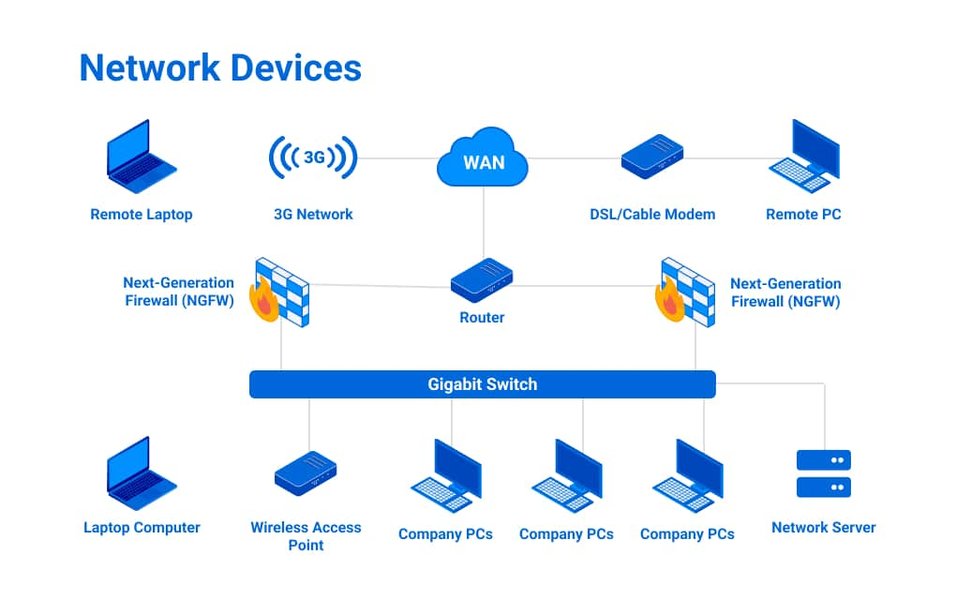
Common Network Devices
Modems
Modems are devices that convert digital signals from a computer into analog signals that can be transmitted over traditional telephone lines or cable networks, and vice versa. They are essential for connecting a local network to an Internet Service Provider (ISP).
Firewalls
Firewalls are security devices that monitor and control incoming and outgoing network traffic based on predefined security rules. They act as a barrier between a trusted internal network and untrusted external networks, protecting against unauthorized access and other security threats.
The Interplay: How Devices Connect and Communicate
Protocols and Technologies Facilitating Data Exchange
The ability of diverse devices to connect and communicate within a network relies on a set of established protocols and technologies. These protocols define the rules and formats for data exchange, ensuring that devices can understand and process the information they receive.
Common networking protocols include:
-
TCP/IP: The Transmission Control Protocol/Internet Protocol suite is the foundation of the internet and most modern networks. TCP handles the reliable delivery of data, while IP handles the addressing and routing of data packets.
-
HTTP/HTTPS: Hypertext Transfer Protocol (HTTP) and its secure version (HTTPS) are used for transmitting web pages and other content over the internet.
-
Wi-Fi: A wireless networking technology that allows devices to connect to a network using radio waves.
-
Ethernet: A standard technology for wired local area networks.
-
Bluetooth: A wireless technology used for short-range communication between devices, often found in peripherals and some IoT devices.
-
Zigbee and Z-Wave: Low-power wireless protocols commonly used in smart home IoT devices.
The selection of protocols and technologies depends on the type of network, the devices involved, and the specific application. For instance, high-bandwidth applications like video streaming require faster technologies like Wi-Fi or Ethernet, while low-power IoT sensors might utilize protocols like Zigbee to conserve energy.
The Growing Significance of IoT in Networking
The Impact of Connected Objects on Network Infrastructure
The proliferation of IoT devices is having a significant impact on network infrastructure and management. The sheer volume of data generated by these devices, often referred to as "big data," requires robust network capacity and sophisticated analytics tools to extract meaningful insights. Furthermore, the diverse nature and often limited processing power of many IoT devices present unique challenges for network security and management.
Businesses and individuals are increasingly leveraging IoT to automate processes, optimize efficiency, and gain valuable data-driven insights. Industrial IoT (IIoT), for example, is transforming manufacturing by enabling predictive maintenance, optimizing production lines, and improving supply chain management.
As the number of connected devices continues to grow, the need for scalable, secure, and intelligent network solutions becomes ever more critical. Technologies like 5G and faster Wi-Fi standards are being developed and deployed to meet the increasing demand for bandwidth and low latency required by many IoT applications.
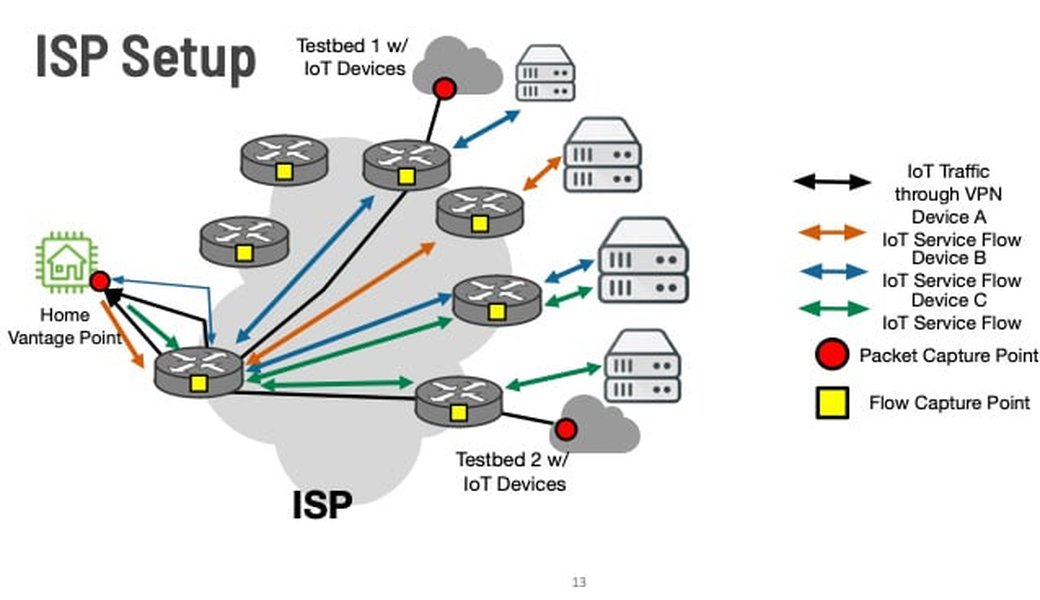
Components of an IoT Ecosystem
Comparing Networked Device Categories
Understanding the Distinctions and Overlaps
While the lines between different types of networked devices can sometimes blur, understanding their primary characteristics helps to clarify their roles within a network. The following table provides a simplified comparison of the device categories discussed:
| Device Category | Primary Function | Typical Examples | Connectivity |
|---|---|---|---|
| Computers | General-purpose computing and data processing | Desktops, Laptops, Servers | Wired (Ethernet), Wireless (Wi-Fi) |
| Mobile Phones | Mobile communication, computing, and access | Smartphones, Tablets | Wireless (Wi-Fi, Cellular) |
| Peripherals | Extend the functionality of computers or networks | Printers, Scanners, External Drives, Webcams | Wired (USB, Ethernet), Wireless (Wi-Fi, Bluetooth) |
| IoT Devices | Sensors, data collection, specific tasks, automation | Smart Thermostats, Wearables, Smart Appliances, Industrial Sensors | Wireless (Wi-Fi, Bluetooth, Zigbee, Cellular), Wired (Ethernet - less common) |
It's important to note that this is a simplified view, and some devices may fall into multiple categories or have functionalities that overlap. For example, a smartphone could be considered a computer, a mobile device, and even an IoT device if it participates in IoT ecosystems.
The Future of Networked Devices
Increasing Connectivity and Intelligence
The trend towards greater connectivity and intelligence in devices is expected to continue. We can anticipate a future where even more objects are connected to networks, generating vast amounts of data that can be leveraged for improved efficiency, personalized experiences, and new innovations. The integration of Artificial Intelligence (AI) and Machine Learning (ML) with IoT data is particularly promising, enabling devices and systems to learn, adapt, and make autonomous decisions.
The challenges associated with securing this expanding network of devices will also become increasingly important. Protecting sensitive data and ensuring the integrity of connected systems will require ongoing development of robust security protocols and practices.
An Introduction to Networking Basics for Beginners
This video provides a helpful introduction to the fundamental concepts of computer networking, laying the groundwork for understanding how various devices connect and communicate. It covers essential elements like network devices and their roles, which is directly relevant to the discussion of computers, peripherals, and IoT devices as components of a network.
Frequently Asked Questions
What is the primary function of a computer network?
The primary function of a computer network is to connect devices to enable the sharing of data and resources and to facilitate communication between them.
How do peripherals differ from core computer components?
Peripherals are auxiliary hardware devices that extend the functionality of a computer but are not essential for its core operation. Core components, like the CPU and memory, are fundamental to the computer's function.
What are some examples of IoT devices?
Examples of IoT devices include smart thermostats, wearable fitness trackers, smart appliances, security cameras, and industrial sensors.
Why is network hardware important?
Network hardware, such as routers and switches, is essential for managing network traffic, directing data flow, and enabling communication between connected devices and networks.
What are some common protocols used in computer networking?
Common protocols include TCP/IP, HTTP/HTTPS, Wi-Fi, Ethernet, and Bluetooth.
References
 aws.amazon.com
Last updated May 7, 2025