
A Decade of Transition: North Korea's Foreign Policy under Kim Jong Un (2012-2022)
Exploring the interplay of nuclear ambitions, diplomatic maneuvers, and economic challenges
Key Insights
- Nuclear and Military Consolidation: Kim Jong Un solidified North Korea’s nuclear program and heightened military capabilities to strengthen regime survival and deter external pressures.
- Diplomacy and Summit Engagements: The period saw historic summits with global powers, notably with the United States and South Korea, which offered a hiatus from decades-long hostility, albeit without sustainable breakthroughs.
- Economic and Internal Policy Challenges: Despite attempts at limited economic development, the regime's central control prevailed amid sanctions, COVID-19 impacts, and ongoing internal consolidation.
Nuclear Strategy and Military Advances
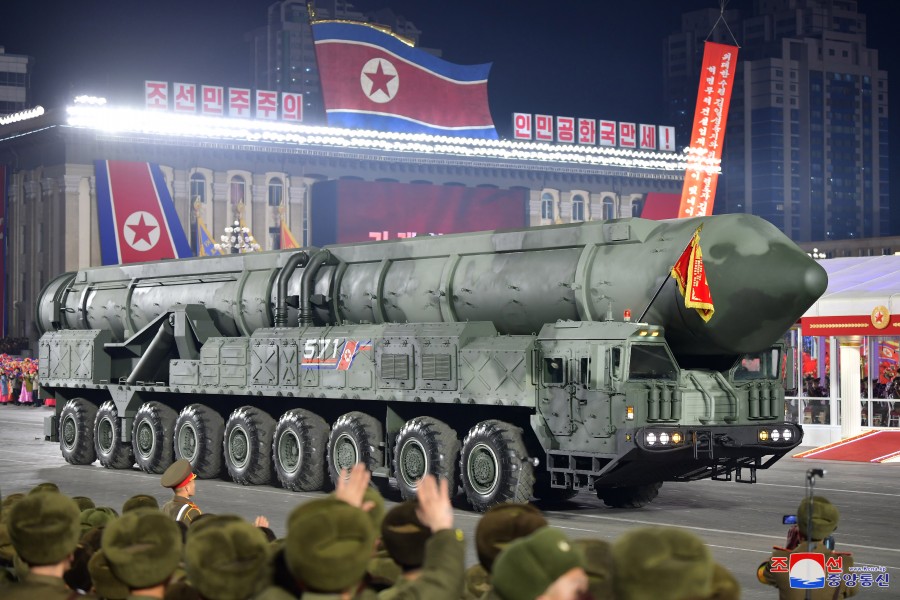
Central to Kim Jong Un’s leadership from 2012 to 2022 was the unwavering emphasis on North Korea's nuclear and military capabilities. Recognizing that nuclear weapons serve as a guarantor of national security in an increasingly hostile international environment, the regime under Kim consolidated its advancements in nuclear technology. The development of nuclear arms was not merely a demonstration of military power, but also a cornerstone of domestic legitimacy. The state's pursuit of nuclear prowess was codified into policy, notably through the adoption of new nuclear laws in September 2022, which underscored the regime’s commitment to deterrence and second-strike capability.
Nuclear Testing and Strategic Demonstrations
Throughout the decade, North Korea conducted several rounds of nuclear tests, particularly in 2013, 2016, and 2017. Each test served multiple strategic objectives. First, they were a method to signal resolve in the face of international sanctions and diplomatic isolation. Second, these tests reinforced the regime's stance that its nuclear program was indispensable, both for national security and as leverage in diplomatic negotiations. The tests symbolized a deliberate blend of aggressive military posturing with underlying efforts to secure regime stability.
Consolidation of Military Power
Alongside its nuclear trajectory, North Korea focused on reorganizing its military structure to further consolidate Kim Jong Un’s leadership. Early in his reign, the paramount goal was to diminish the potential influence of rival military factions while ensuring that the armed forces remained loyal to the central authority. By curbing independent power bases within the military, Kim Jong Un established a strict chain of command. This approach allowed him to emphasize the doctrine of “Byungjin,” which advocates for the parallel development of the military and the economy. However, despite aspirations for progress in economic reform, the strictly controlled military apparatus and nuclear agenda remained at the forefront of state policy.
Diplomatic Engagements and International Summits
A notable aspect of Kim Jong Un's tenure was the oscillation between overt military threat and diplomatic overtures. Known as a period of "summit diplomacy," the regime attempted to reframe its international posture through face-to-face engagements with powerful nations, notably the United States, South Korea, and even Russia. The summit meetings generated significant global interest and temporarily eased the narrative of endless antagonism.
Summit Diplomacy
One of the decade’s most historic moments was the series of summits between Kim Jong Un and then U.S. President Donald Trump in 2018 and 2019. These rare meetings marked the first encounter between a sitting U.S. president and a North Korean leader, capturing the world’s attention. The dialogue, centered on issues like denuclearization and peace on the Korean Peninsula, illustrated a willingness by both sides to entertain negotiations. However, despite the initial optimism, the summits ultimately failed to yield concrete disarmament measures or significantly alter the regime's nuclear agenda.
Similarly, engagements with South Korea, particularly under the leadership of President Moon Jae-in, fostered a brief period of hope for reconciliation. Inter-Korean dialogues focused on reducing military tensions and promoting economic cooperation. Yet, underlying discord and unresolved issues with long-standing allies of South Korea meant that these efforts often led to temporary alleviations rather than lasting solutions.
Backlash and Reversion to Hostility
Following the stalled progress in summit diplomacy, especially after the unsuccessful Hanoi meeting in early 2019, North Korea reverted to a more aggressive stance. This return was marked by renewed missile tests and military provocations, reinforcing North Korea's long-standing commitment to nuclear deterrence. The reemergence of hostility also indicated deep-seated concerns within the regime regarding external pressures and internal stability, leading Kim Jong Un to prioritize hardline policies once again.
Economic Developments and Internal Policy Dynamics
While the international spotlight often centers on North Korea's nuclear and military ventures, underneath this layer there is a complex narrative regarding economic policies and internal developments. Faced with the dual challenges of international sanctions and unforeseen global events such as the COVID-19 pandemic, the North Korean government had to navigate significant economic obstacles.
Interplay Between Nuclear Policy and Economic Strategy
Kim Jong Un's governance intertwined the objectives of strengthening the military with promoting a semblance of economic progress. The regime promoted the concept that nuclear capability was the backbone of economic improvement—arguing that the deterrence provided by advanced weapon systems created a more stable environment conducive to eventual economic recovery. However, international sanctions imposed in response to nuclear tests and human rights concerns drastically limited economic opportunities.
Challenges in Economic Reforms and Sanctions
North Korea’s economic challenges were multi-faceted. On one side, there were attempts to foster market-oriented sectors, such as the expansion of coal and mineral exports, along with modest advancements in the information technology domain. However, these efforts remained constrained by strict state control over the economy. The centrally planned nature of North Korea's economy was reinforced as a mechanism to enable regime stability, even as sanctions and structural inefficiencies hampered large-scale reforms.
Economic difficulties were compounded by crises such as the COVID-19 pandemic, which closed borders and disrupted trade networks. Moreover, natural disasters exacerbated the precariousness of an already brittle economic system. In response, state propaganda consistently encouraged resilience among citizens, urging them to endure economic hardship as part of a broader narrative of national survival and self-reliance.
Internal Consolidation and Regime Stability
A critical element throughout the decade was Kim Jong Un's focus on consolidating internal power. This involved strategic purges and a reorganization of the Workers' Party of Korea and security services, which were realigned to ensure unwavering loyalty to the Kim family. High-profile figures in the military and administration were either sidelined or replaced to safeguard the regime against potential dissent or rival power centers.
One striking aspect was the prominent role played by family members, particularly his sister Kim Yo-jong, whose influence in the political and diplomatic arena grew markedly. The familial consolidation not only reinforced the uniqueness of the dynastic leadership but also provided a buffer against both domestic and external challenges.
Interregional and Global Dynamics
North Korea's foreign policy under Kim Jong Un cannot be fully understood without considering its interactions with key global players. The relationship with neighboring powerhouses such as China and Russia played an essential role in shaping the regime’s strategic options.
China: Economic and Diplomatic Lifeline
China’s role as North Korea’s most significant economic partner and diplomatic ally remained central. In times of heightened tension with the United States and South Korea, China provided a degree of economic stability and acted as a mediator in multilateral discussions. Although the Chinese government often found itself at odds with North Korea’s aggressive policies, pragmatic support was maintained in view of regional security interests. This relationship, characterized by a balance of support and frustration, enabled North Korea to mitigate some of the economic impacts imposed by international sanctions.
Russia: Military and Strategic Engagement
While less economically integrated than with China, North Korea's interactions with Russia were predominantly military and strategic. The relationship with Russia was not only a counterbalance to Western pressure but also provided the regime with a technical and logistical partner in its military pursuits. Occasionally, defense and intelligence exchanges have been cited as enhancing North Korea’s strategic arsenal, particularly during times of renewed international focus on its nuclear capabilities.
Global Perception and Evolving Diplomatic Narratives
On the global landscape, the world’s view of North Korea has oscillated between that of an intransigent pariah and a potential interlocutor. The diplomatic engagements initiated by Kim Jong Un’s regime briefly shifted global discourse towards the prospect of denuclearization and peace-building on the Korean Peninsula. However, recurring violations of agreed frameworks, combined with persistent human rights abuses and nuclear tests, have invariably pushed the global community back to a stance of skepticism and caution.
Comparative Analysis: Phases of North Korea's Foreign Policy
The decade from 2012 to 2022 witnessed a dynamic evolution in the regime’s approach, marked by distinct phases that encapsulate the dual strategies of isolation and engagement. The following table provides an overview of key developments across different phases:
| Phase | Description | Key Events & Policies |
|---|---|---|
| 2012-2016 | Initial Consolidation and Military Provocations |
- Rapid consolidation of power - Military reorganization - Early missile tests and nuclear demonstrations |
| 2018-2019 | Summit Diplomacy and Engagement |
- Historic summits with the United States and South Korea - Diplomatic overtures tied to denuclearization talks - Temporary shift in international posture |
| 2020-2022 | Return to Hostility and Enhanced Nuclear Commitment |
- Renewed missile tests and military advancements - Adoption of new nuclear laws - Reaffirmation of regime priorities amidst economic challenges |
Evaluating the Complexity of Kim Jong Un’s Leadership
Kim Jong Un's tenure is best understood as a blend of strategic extremes—oscillating between the promise of diplomatic engagement and the imperative of military deterrence. The pursuit of nuclear arms and progressive military capabilities has served both as a symbol of national pride and as a practical enforcement mechanism in an international order dominated by opposing powers. His diplomatic engagements, although historic, were largely overshadowed by his firm commitment to maintaining and expanding North Korea's nuclear arsenal.
Moreover, the internal consolidation efforts, ranging from targeted purges to the promotion of key family members, ensured that Kim Jong Un maintained an unassailable grip over the state apparatus. While on the surface there were occasional signs of possible economic reforms, the prioritization of central control over liberalization remained a consistent theme. This blend of military assertiveness, tactical diplomacy, and centralized economic management has defined North Korea's external posture over a turbulent decade.
Resources and Further Information
- Historical Overview: The evolution of North Korea’s foreign policy, from aggressive nuclear tests to summit diplomacy, reflects deep-seated security concerns and the complex global environment.
- Strategic Continuity: Despite brief periods of diplomatic openness, Kim Jong Un’s commitment to nuclear advancement and regime consolidation has remained steadfast.
- Regional Implications: The relationships with China and Russia underscore the geopolitical balance that North Korea has sought to maintain amidst escalating international pressures.
References
- North Korea: Kim Jong Un’s Nuclear Decade - CFR
- Kim Jong Un Biography - Britannica
- Summit Diplomacy & Space Launches - AP News
- North Korea Data - Our World in Data
- North Korea’s Economic Challenges - The New York Times
Recommended Queries
Last updated March 12, 2025