
Enhancing Noisy Text Classification with Bayesian and Probabilistic Methods
Advanced techniques for robust and interpretable text classification in noisy environments.
Key Takeaways
- Bayesian frameworks effectively model uncertainty and handle label noise, improving classification robustness.
- Probabilistic graphical models and hierarchical structures enhance interpretability by providing clear insights into model decisions.
- Active learning combined with probabilistic methods optimizes data labeling efforts, maintaining high performance with reduced noise impact.
1. Bayesian Approaches for Noisy Text Classification
1.1 Bayesian Naive Bayes and Its Robust Variants
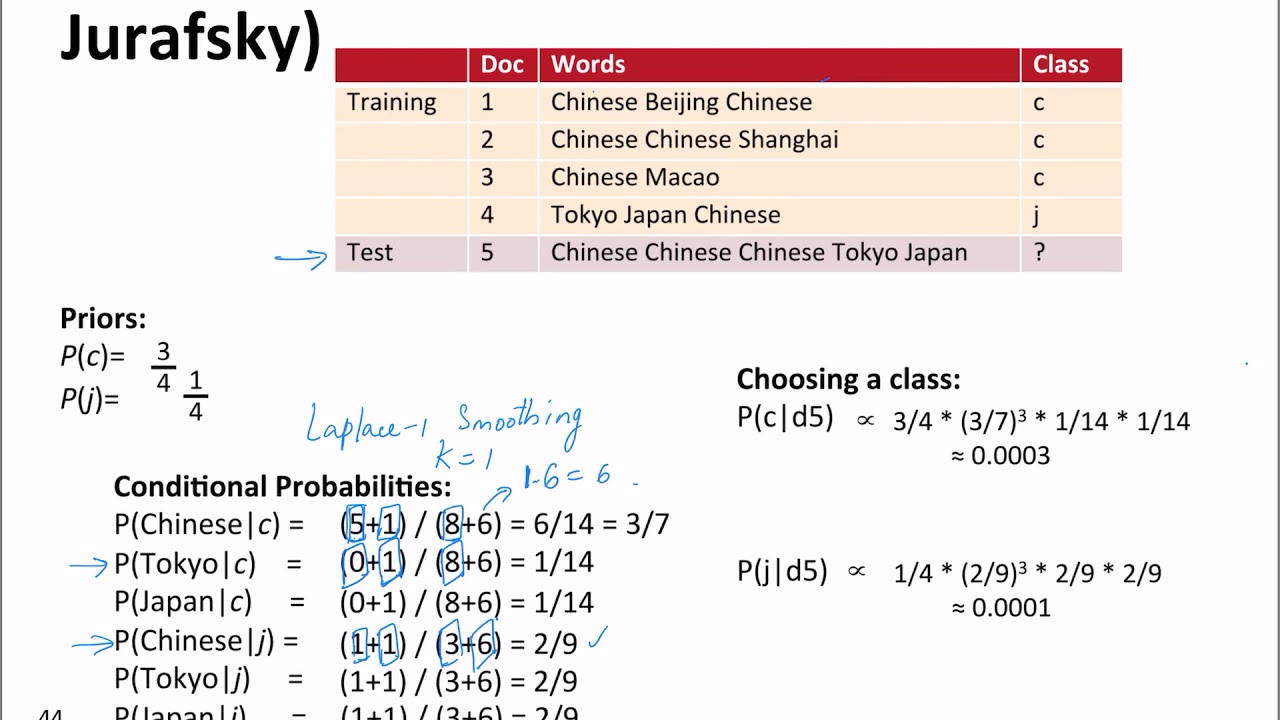
The Naive Bayes classifier is a foundational probabilistic model in text classification, renowned for its simplicity and efficiency. By assuming conditional independence among features, it effectively handles high-dimensional text data. However, real-world text often contains noise such as typos, slang, and irrelevant information, which can violate the model’s assumptions.
To address this, robust variants of Naive Bayes have been developed. These models incorporate mechanisms to weight or discount features based on their reliability, mitigating the impact of noisy tokens. For instance, Robust Naive Bayes employs outlier detection techniques on word counts, ensuring that rare or noisy words do not disproportionately influence the classification outcome.
1.2 Bayesian Neural Networks (BNNs)
Bayesian Neural Networks extend traditional neural networks by treating weights as distributions rather than fixed values. This probabilistic framework allows BNNs to quantify uncertainty in predictions, which is particularly valuable in noisy environments. High uncertainty can indicate low-quality or ambiguous data, enabling the model to handle such instances more gracefully.
Techniques like variational inference and Monte Carlo dropout are commonly used to approximate these weight distributions, making BNNs computationally feasible. By integrating BNNs into text classification pipelines, models can achieve greater robustness against label noise while providing interpretable uncertainty estimates.
1.3 Hierarchical Bayesian Models
Hierarchical Bayesian models introduce multiple layers of latent variables, allowing for a more nuanced representation of data. In the context of text classification, these models can capture word frequencies, topics, and document-level information in a structured manner. For example, a hierarchical model might use Dirichlet priors to model word distributions within topics and topics within documents.
This layered approach not only smooths over noise by leveraging shared statistical properties across different levels but also enhances interpretability. By examining the posterior distributions at each hierarchical level, stakeholders can gain insights into how specific words and topics contribute to classification decisions.
2. Probabilistic Graphical Models and Topic Modeling
2.1 Latent Dirichlet Allocation (LDA) and Supervised Extensions
Latent Dirichlet Allocation is a powerful topic modeling technique that identifies underlying topics within a corpus by modeling word distributions probabilistically. While primarily used for unsupervised learning, supervised extensions like Supervised LDA incorporate class labels into the topic generation process, directly tying topics to classification tasks.
These models offer interpretability by presenting documents as mixtures of topics, with each topic characterized by specific word distributions. This representation allows for a clear understanding of which themes are driving classification decisions, even in the presence of noisy data.
2.2 Combining Topic Models with Probabilistic Classifiers
Integrating topic models with probabilistic classifiers enhances both performance and interpretability. By first extracting meaningful topics from the text, classifiers can operate on a reduced and more semantically rich feature space. This not only mitigates the impact of noise by focusing on high-level abstractions but also provides interpretable features that align with human-understandable concepts.
Advantages of Probabilistic Graphical Models
- Captures complex word dependencies through graphical structures.
- Provides a clear probabilistic interpretation of model parameters.
- Enhances interpretability by linking topics to class labels.
Implementation Example: Supervised LDA
import gensim
from gensim import corpora
from gensim.models import LdaModel, LdaMulticore

# Sample data
documents = ["Text classification with Bayesian methods.",
             "Probabilistic models enhance interpretability.",
             "Handling noisy data in text classification."]

# Preprocessing
texts = [[word.lower() for word in document.split()] for document in documents]
dictionary = corpora.Dictionary(texts)
corpus = [dictionary.doc2bow(text) for text in texts]

# Train LDA model
lda = LdaModel(corpus=corpus, num_topics=2, id2word=dictionary, passes=15)

# Display topics
for idx, topic in lda.print_topics(-1):
    print(f"Topic: {idx} \nWords: {topic}\n")
3. Active Learning and Symbolic-Neural Models
3.1 Active Learning with Probabilistic Models
Active learning strategically selects the most informative data points for labeling, optimizing the annotation process and reducing the impact of noisy labels. When combined with probabilistic models, active learning can prioritize samples where the model is uncertain, ensuring that the most challenging or ambiguous instances receive human attention.
This synergy not only enhances classification performance by focusing on critical data but also maintains interpretability by revealing which samples influence the model’s decision boundaries. Techniques like Expectation-Maximization can be employed for parameter estimation within this framework.
3.2 Symbolic-Neural Models for Enhanced Interpretability
Symbolic-Neural Models blend the strengths of symbolic probabilistic models with neural networks, aiming to achieve both high performance and interpretability. By incorporating structured elements like constituency trees or semantic rules into neural architectures, these models can provide interpretable intermediate representations.
For example, a model might generate parse trees that explain the grammatical structure influencing the classification decision. This granular level of interpretability allows users to trace back the reasoning process, fostering trust and facilitating insights into how the model handles noisy inputs.
4. Robust Techniques: Loss Functions, Regularization, and Data Abstraction
4.1 Robust Loss Functions
Traditional loss functions like cross-entropy can be sensitive to noisy labels, leading to overfitting and degraded performance. Robust loss functions such as the Huber loss or mean absolute error (MAE) offer resilience against outliers by reducing their influence during training.
Implementing these loss functions within a Bayesian framework further enhances their effectiveness by incorporating uncertainty estimates, allowing the model to weigh down the influence of noisy samples dynamically.
4.2 Regularization Techniques
Regularization techniques play a crucial role in preventing models from overfitting to noisy data. Methods like early stopping, dropout, and L1/L2 regularization help maintain generalization by penalizing complex models that may otherwise memorize noise.
In Bayesian models, regularization is implicitly handled through prior distributions, which can enforce sparsity or smoothness in model parameters, further mitigating the impact of noise.
4.3 Data Abstraction for Noise Reduction
Data abstraction involves transforming raw data into simpler, lower-dimensional representations. Techniques such as dimensionality reduction, feature selection, or discretization can effectively reduce noise by filtering out irrelevant or redundant information.
When combined with probabilistic models, data abstraction not only simplifies the input space but also enhances robustness by focusing on the most salient features, thereby improving classification performance in noisy environments.
| Technique | Description | Benefits |
|---|---|---|
| Bayesian Neural Networks | Neural networks with weight distributions instead of fixed weights. | Quantifies uncertainty, robust to noise. |
| Hierarchical Bayesian Models | Models with multiple layers of latent variables. | Captures complex data structures, enhances interpretability. |
| Supervised LDA | Topic modeling with supervised class labels. | Links topics to classes, interpretable features. |
| Active Learning | Selects the most informative samples for labeling. | Optimizes labeling effort, reduces noise impact. |
| Robust Loss Functions | Loss functions resilient to outliers. | Prevents overfitting to noisy labels. |
5. Enhancing Interpretability
5.1 Interpretable Probabilistic Models
Models like Latent Class Allocation and Discriminative Labeled LDA are designed with interpretability in mind. They provide clear insights into how different words and topics influence classification decisions by exposing the posterior distributions and latent variables that drive predictions.
5.2 Post-Hoc Explanation Tools
After training, probabilistic models can be paired with explanation tools to further enhance interpretability. Techniques such as LIME (Local Interpretable Model-agnostic Explanations) and SHAP (SHapley Additive exPlanations) can be adapted to incorporate uncertainty estimates from Bayesian models, offering comprehensive explanations that account for predictive uncertainty.
5.3 Visualization of Uncertainty
Visual representations of uncertainty, such as confidence intervals or probability distributions over class labels, can be integrated into model outputs. These visual cues help stakeholders understand the reliability of predictions, especially in cases where the model is unsure due to noisy inputs.
Benefits of Enhanced Interpretability
- Builds trust in model predictions by providing transparent reasoning.
- Enables identification of model weaknesses and areas impacted by noise.
- Facilitates informed decision-making in critical applications like healthcare.
6. Practical Implementation Considerations
6.1 Selecting Informative Priors
In Bayesian models, the choice of prior distributions significantly influences model behavior, especially in noisy settings. Informative priors can regularize the model by encoding domain knowledge or encouraging sparsity, thereby reducing the impact of noisy features. For instance, Laplace or spike-and-slab priors can promote feature selection, effectively filtering out irrelevant or noisy variables.
6.2 Scalable Inference Techniques
Bayesian methods, particularly hierarchical models and BNNs, can be computationally intensive. To ensure scalability, approximate inference techniques such as variational inference and expectation propagation are commonly employed. These methods provide efficient approximations to the posterior distributions, enabling the application of Bayesian models to large-scale text classification tasks.
6.4 Instance-Label Pair Correction
Frameworks like Instance-Label Pair Correction (iLaCo) are designed to identify and rectify noisy label assignments in multi-label classification tasks. By using holistic selection metrics and label correlation-based filters, iLaCo effectively cleans the training data, enhancing the quality of model training and subsequent classification performance.
Implementation Tips
-
Leverage existing libraries like Pyro or Stan for Bayesian neural networks.
-
Utilize scalable inference algorithms to handle large datasets efficiently.
-
Incorporate domain expertise through informative priors to guide the learning process.
-
Regularly validate model performance on clean subsets to monitor noise handling effectiveness.
7. Example Implementation: Bayesian Neural Network for Text Classification
Below is a simplified example of implementing a Bayesian Neural Network for text classification using PyTorch and the Pyro library, which facilitates probabilistic programming. This example demonstrates how to construct a BNN, handle uncertainty, and integrate it into a text classification pipeline.
7.1 Setting Up the Environment
Ensure that you have the necessary libraries installed:
pip install torch pyro-ppl
7.2 Defining the Bayesian Neural Network
import torch
import torch.nn as nn
import torch.optim as optim
import pyro
import pyro.distributions as dist
from pyro.nn import PyroModule, PyroSample

class BayesianTextClassifier(PyroModule):
    def __init__(self, input_dim, hidden_dim, output_dim):
        super().__init__()
        self.fc1 = PyroModule[nn.Linear](input_dim, hidden_dim)
        self.fc1.weight = PyroSample(dist.Normal(0., 1.).expand([hidden_dim, input_dim]).to_event(2))
        self.fc1.bias = PyroSample(dist.Normal(0., 1.).expand([hidden_dim]).to_event(1))
        self.fc2 = PyroModule[nn.Linear](hidden_dim, output_dim)
        self.fc2.weight = PyroSample(dist.Normal(0., 1.).expand([output_dim, hidden_dim]).to_event(2))
        self.fc2.bias = PyroSample(dist.Normal(0., 1.).expand([output_dim]).to_event(1))

    def forward(self, x, y=None):
        x = torch.relu(self.fc1(x))
        logits = self.fc2(x)
        with pyro.plate("data", x.shape[0]):
            obs = pyro.sample("obs", dist.Categorical(logits=logits), obs=y)
        return logits
7.3 Training the Model
# Sample training loop using stochastic variational inference
from pyro.infer import SVI, Trace_ELBO
from pyro.optim import Adam

# Initialize model and guide
model = BayesianTextClassifier(input_dim=100, hidden_dim=50, output_dim=10)
guide = AutoDiagonalNormal(model)

# Setup optimizer and loss
optimizer = Adam({"lr": 0.01})
svi = SVI(model, guide, optimizer, loss=Trace_ELBO())

# Training data placeholders
# Assume 'train_loader' is a DataLoader providing (data, labels)
for epoch in range(100):
    epoch_loss = 0
    for batch_data, batch_labels in train_loader:
        loss = svi.step(batch_data, batch_labels)
        epoch_loss += loss
    print(f"Epoch {epoch} - Loss: {epoch_loss}")
7.4 Making Predictions with Uncertainty
# Inference
from pyro.infer import Predictive

predictive = Predictive(model, guide=guide, num_samples=100)
samples = predictive(test_data)
predictions = samples['obs'].mode(dim=0).values
uncertainties = samples['obs'].var(dim=0)
This implementation provides a Bayesian approach to text classification, allowing the model to express uncertainty in its predictions. Such uncertainty estimates are invaluable in noisy environments, where they can guide decision-making processes and improve overall system reliability.
Conclusion
Improving noisy text classification through Bayesian and probabilistic methods offers a dual advantage of enhanced robustness and interpretability. By modeling uncertainty explicitly, these approaches effectively mitigate the adverse effects of label noise, ensuring more reliable and trustworthy predictions. Techniques such as Bayesian Neural Networks, hierarchical models, and probabilistic graphical models provide powerful frameworks for handling complex, noisy data. Moreover, integrating active learning and robust loss functions further amplifies model resilience while maintaining high performance.
The emphasis on interpretability ensures that stakeholders can understand and trust the model's decisions, a critical factor in domains requiring transparency and accountability. As the field continues to evolve, the integration of advanced probabilistic methods with interpretability tools will be pivotal in advancing the capabilities of text classification systems in noisy real-world scenarios.
References
Last updated February 5, 2025