
Empowering Non-Profit Boards: A Blueprint for Continuous Self-Improvement
Unlocking enhanced governance and mission impact through structured self-assessments.
Key Insights for Board Excellence
- Strategic Purpose: Self-assessments are not just compliance checks but vital tools for fostering a culture of continuous learning, adaptation, and enhanced governance. They clarify roles, identify skill gaps, and drive alignment with the organization's mission.
- Structured Approach: An effective assessment process involves deliberate planning, confidential execution, thorough data analysis, and a commitment to actionable follow-through. This includes defining objectives, selecting appropriate tools, and ensuring robust discussion.
- Action-Oriented Outcomes: The true value of self-assessments lies in translating insights into concrete action plans. This includes implementing changes, fostering ongoing development, and embedding continuous improvement as an integral part of the board's operational DNA.
The Transformative Power of Board Self-Assessments
Non-profit board self-assessments are a fundamental mechanism for boards to systematically evaluate their performance, governance practices, and overall effectiveness. Far from being a mere formality, these assessments serve as a powerful catalyst for continuous improvement, enabling boards to identify strengths, pinpoint areas for development, and ultimately enhance their capacity to govern the organization and advance its mission. In today's dynamic non-profit landscape, marked by evolving challenges and increasing demands for accountability, regular and well-structured self-assessments ensure boards remain adaptable, proactive, and deeply aligned with their strategic objectives.
Why Self-Assessments Are Indispensable
Engaging in periodic self-assessments offers a multitude of benefits that extend beyond simple evaluation:
- Enhanced Governance and Oversight: They ensure the board is effectively fulfilling its fiduciary duties, providing strategic direction, and overseeing financial health, risk assessment, and resource allocation.
- Driving Continuous Improvement: By fostering intentional reflection, self-assessments embed a culture where the board actively seeks better ways to operate, innovate, and remain effective over time.
- Clarifying Roles and Responsibilities: The process brings clarity to individual board members' roles and collective responsibilities, aligning individual skills with the board's collective resources and the organization's mission.
- Identifying Gaps and Needs: Self-assessments help unearth issues needing clarification, identify skill gaps within the board, and determine topics for future board education and development.
- Promoting Accountability and Transparency: A transparent evaluation process builds trust with stakeholders, demonstrating the non-profit's commitment to robust governance practices.
A Step-by-Step Blueprint for Effective Self-Assessments
Conducting an effective non-profit board self-assessment requires a structured and intentional approach. The following steps integrate best practices to ensure a comprehensive and impactful process:
Phase 1: Strategic Preparation and Planning
The foundation of a successful self-assessment lies in meticulous preparation, setting clear objectives, and securing buy-in from all board members.
Defining Purpose and Scope
Before initiating the assessment, clearly communicate its purpose and scope to all board members. Emphasize that the goal is to improve board effectiveness, clarify expectations, and enhance teamwork, rather than to criticize individuals. The assessment should focus on the board's collective performance and individual members' fulfillment of their roles, not on evaluating staff or the executive director. Consider tailoring the assessment to specific needs, focusing on metrics like attendance, engagement, and decision-making quality.
Selecting Assessment Methods and Tools
Choose the most appropriate method for your board. Common approaches include:
- Board Self-Assessment Surveys: Anonymous, structured questionnaires are widely used, covering governance practices, meeting effectiveness, individual director contributions, strategic oversight, and board dynamics.
- Peer-to-Peer (P2P) Evaluations: Board members assess each other's performance, offering insights into interpersonal dynamics and collaborative effectiveness.
- Facilitated Discussions/Retreats: An internal or external facilitator guides reflective discussions, fostering honest dialogue and buy-in.
- External Consultant-Led Assessments: Hiring an unbiased expert provides objective analysis, particularly beneficial for newer or larger boards lacking internal evaluation experience.
Numerous tools are available, including those from BoardSource, McKinsey & Company, and the New Hampshire Center for Nonprofits. Ensure the chosen tool aligns with the defined purpose and objectives. Incorporate both quantitative (rating scales) and qualitative (open-ended) questions to capture nuanced feedback.
Establishing a Timeline and Committee
Form a dedicated committee (e.g., governance or nominating committee) to lead the process, design assessment tools, and schedule the assessment to avoid conflicts. Regular assessments, ideally annually or biennially, help track progress and address emerging issues promptly.
Ensuring Confidentiality and Trust
To encourage candid feedback, assure members that individual responses will be confidential and that results will be aggregated. This is crucial, especially in peer evaluations.
Phase 2: Executing the Assessment
The administration phase should be transparent and inclusive to maximize participation and accuracy.
Distributing and Administering Tools
Use digital platforms or survey tools for anonymous and easy completion. Encourage full participation by sending reminders and highlighting the importance of thoughtful responses. Involve all board members, including the chairperson and committee leads.
Phase 3: Analyzing Results and Identifying Priorities
This critical phase translates raw data into actionable insights.
Systematic Data Collection and Analysis
Once assessments are completed, aggregate and analyze the data to identify common strengths, weaknesses, divergent views, and priority areas for improvement. Look for trends, differences in perspectives, and specific performance gaps. Consider using summary reports for larger boards to maintain individual confidentiality while providing actionable insights.
Facilitating Open and Productive Discussion
Present the findings to the board in a constructive manner, focusing on opportunities for growth rather than fault. Facilitate an open forum or workshop to discuss the results, celebrating successes and acknowledging challenges. Focus on system-level improvements and building consensus on priority areas, avoiding singling out individuals.
Phase 4: Action and Continuous Improvement
The true value of self-assessments lies in their ability to drive continuous improvement through follow-up actions.
Developing a Concrete Action Plan
Based on the assessment insights, collaboratively develop a concrete action plan with specific, measurable goals, assigned responsibilities, and clear timelines. This plan may include:
- Training or orientation refreshers for members unclear about their duties.
- Adjusting board composition or recruitment efforts to enhance diversity or skills.
- Enhancing board processes like meeting management or communication.
- Increasing ongoing education and mentorship opportunities.
- Incorporating operational changes into annual strategic goals.
Monitoring Progress and Embedding Continuous Improvement
Ensure the board commits to implementing the action plan and monitors progress over time. Schedule follow-up assessments and periodic check-ins to evaluate the effectiveness of changes and continue refining board performance. Continuous improvement should be an ongoing discussion, not a one-time event. Boards can integrate insights into new board member orientation and recruitment, fostering a culture that values learning, transparency, and adaptability.
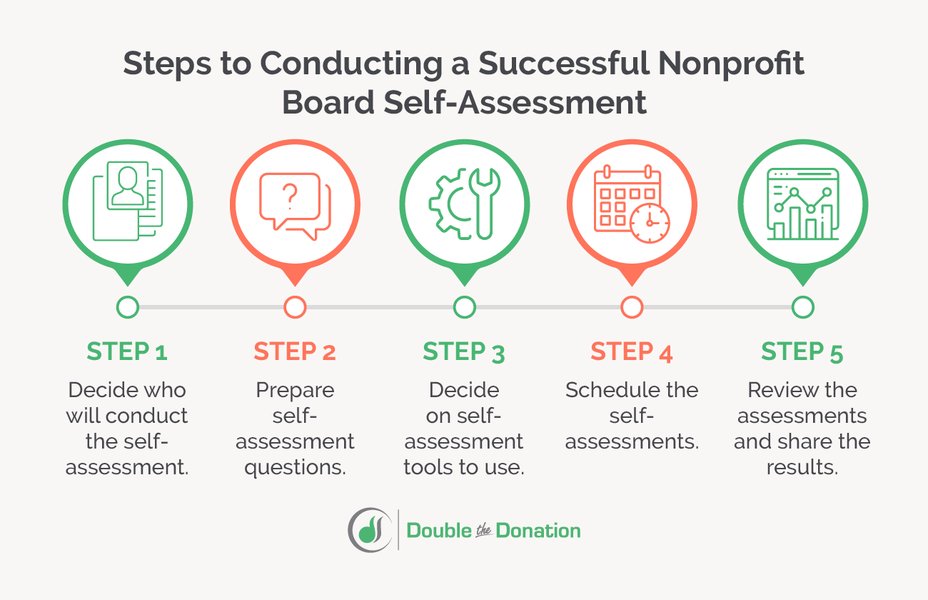
Key steps illustrating the journey of a non-profit board self-assessment.
Assessing Board Effectiveness: A Radar Chart Perspective
To further illustrate the multifaceted nature of non-profit board effectiveness, the following radar chart presents a hypothetical assessment of key performance areas. This chart provides a visual representation of how a board might perceive its strengths and areas for development across critical dimensions of governance. It underscores the importance of a holistic evaluation that goes beyond a single metric, highlighting where strategic efforts for improvement might be most impactful.
The data points in this chart are opinionated analyses, reflecting potential self-perceptions rather than hard data. They are designed to stimulate thought on areas such as strategic foresight, financial stewardship, member engagement, and communication efficacy, which are all crucial for a high-performing board.
Key Dimensions of Board Assessment
Effective board self-assessments delve into various critical aspects of board operations and governance. The following table provides a structured overview of common areas covered in assessments, highlighting their importance for continuous improvement:
| Assessment Area | Description | Importance for Continuous Improvement |
|---|---|---|
| Governance Practices | Evaluation of adherence to bylaws, policies, and ethical standards; effectiveness of committee structure and responsibilities. | Ensures compliance, clarity of roles, and foundational stability for all board activities. |
| Strategic Oversight | Assessment of the board's role in strategic planning, mission alignment, goal setting, and monitoring organizational progress. | Directly impacts the non-profit's long-term direction, adaptability, and ability to achieve its mission. |
| Fiduciary Duties & Financial Management | Review of financial literacy, oversight of budgets, audits, risk management, and resource allocation. | Critical for financial health, accountability, and safeguarding organizational assets. |
| Board Composition & Diversity | Evaluation of board size, skills, experience, demographic diversity, and effectiveness of recruitment processes. | Enhances decision-making quality, broadens perspectives, and strengthens representation of community needs. |
| Meeting Effectiveness | Assessment of meeting frequency, agenda quality, preparation, participation, decision-making processes, and follow-through. | Optimizes time, promotes productive discussions, and ensures efficient progress on key initiatives. |
| Member Engagement & Participation | Review of individual member contributions, attendance, committee involvement, and overall level of commitment. | Boosts collective energy, accountability, and leverages the full potential of each board member. |
| Executive Director/Staff Relationship | Evaluation of the board's relationship with the Executive Director, clear delineation of roles, and mutual support. | Ensures effective leadership, smooth operations, and alignment between governance and management. |
| Fundraising & External Relations | Assessment of board involvement in fundraising, donor stewardship, advocacy, and community engagement. | Crucial for resource development, public perception, and expanding the organization's reach and impact. |
| Board Culture & Communication | Review of internal communication, conflict resolution, trust, respect, and overall board dynamics. | Fosters a positive environment conducive to open dialogue, collaboration, and cohesive decision-making. |
Visualizing Board Assessment Elements
The self-assessment process encompasses a wide array of interconnected elements, all contributing to a board's overall effectiveness and its capacity for continuous improvement. This mindmap visually represents these key components, illustrating how they branch out from the core concept of board self-assessment to cover strategic, operational, and interpersonal dimensions. Understanding these connections is vital for a comprehensive and impactful evaluation that drives real change.
Cultivating a Culture of Continuous Improvement
Beyond the formal assessment process, the most effective non-profit boards embed a culture of continuous improvement into their day-to-day operations. This involves ongoing reflection, a commitment to learning, and proactive adaptation to evolving challenges. The following video offers valuable insights into strategies for energizing non-profit boards and fostering a positive board culture, which are integral to sustaining improvement efforts.
The video delves into practical strategies for improving board engagement and overall effectiveness. It emphasizes that a dynamic board culture, characterized by open communication and a shared commitment to the mission, is essential for translating assessment findings into sustained positive change. This alignment of culture and process is key to ensuring that self-assessments are not merely annual exercises, but drivers of ongoing excellence.
Strategies for energizing non-profit boards and fostering a positive board culture.
Frequently Asked Questions (FAQ)
What is the primary purpose of a non-profit board self-assessment?
How often should a non-profit board conduct self-assessments?
Who should facilitate the board self-assessment process?
What types of questions should be included in a self-assessment tool?
How can a board ensure honest feedback during the assessment?
What happens after the assessment results are collected and analyzed?
Conclusion
Non-profit board self-assessments are an indispensable tool for fostering robust governance and sustained organizational impact. By embracing a structured, transparent, and action-oriented approach, boards can effectively identify strengths, address weaknesses, and cultivate a culture of continuous improvement. This iterative process of reflection, evaluation, and targeted action not only enhances the board's strategic effectiveness and fiduciary oversight but also strengthens its collective ability to champion the non-profit's mission with greater clarity, accountability, and impact. Investing in regular, thoughtful self-assessments is an investment in the long-term success and resilience of the organization itself.
Recommended Further Reading
- Explore best practices for non-profit board governance beyond self-assessments.
- Learn more about creating effective action plans from self-assessment results.
- Discover various tools and templates to aid your board evaluation process.
- Understand how to embed continuous improvement principles throughout your non-profit organization.
Referenced Search Results
 d3dpplp9w0uy3g.cloudfront.net