
Northern Lights: Aurora Borealis Unveiled
A mesmerizing celestial ballet caused by solar wind and Earth's magnetic embrace.
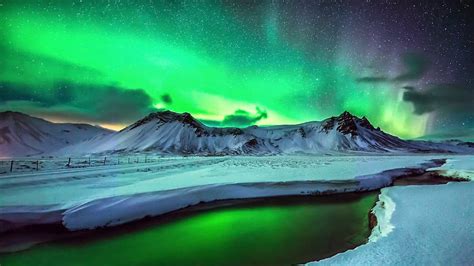
Key Takeaways
- Solar Wind Interactions: Charged solar particles interacting with Earth's magnetic field create the stunning light displays.
- Vibrant Colors: The auroras exhibit a spectrum of colors, primarily green and pink, depending on atmospheric gases.
- Optimal Visibility: Best seen in high-latitude regions during specific seasons and periods of heightened solar activity.
Introduction to the Northern Lights
The Northern Lights, scientifically known as the aurora borealis, are one of nature's most spectacular phenomena. These dazzling light displays grace the night skies of the northern hemisphere, captivating onlookers with their dynamic patterns and vibrant colors. The aurora borealis has been a source of wonder and inspiration for cultures around the world for centuries.
Formation and Scientific Process
The Role of Solar Wind and Earth's Magnetic Field
The genesis of the northern lights lies in the interaction between the Sun's solar wind and Earth's magnetic field. Solar wind consists of charged particles, mainly electrons and protons, expelled from the Sun's corona during solar events such as solar flares and coronal mass ejections. When these particles travel through space and reach Earth, they encounter the planet's magnetic field, which channels them towards the polar regions.
Interaction with the Ionosphere
As the charged particles are funneled into the Earth's ionosphere, they collide with atoms and molecules of atmospheric gases, primarily oxygen and nitrogen. These collisions transfer energy to the gas particles, exciting them to higher energy states. As the excited particles return to their stable states, they release energy in the form of light, creating the luminous displays observed as the aurora borealis.
Vibrant Colors and Patterns
Understanding the Color Spectrum
The rich palette of the northern lights is determined by the types of gases in the Earth's atmosphere and the altitude at which the collisions occur. Oxygen atoms emit green and red light, with green being the most common color seen in auroras. Red hues are produced at higher altitudes, while nitrogen molecules contribute blue and purple tones. The varying colors result from different energy transitions within the gas atoms.
Dynamic Patterns in the Sky
The aurora borealis displays an array of mesmerizing patterns, including curtains, rays, spirals, and flickers. These patterns are influenced by the Earth's magnetic field lines and the flow of charged particles. The movement and shape of the auroras are dynamic and can change rapidly, creating the illusion of dancing lights across the night sky.
Visibility and Optimal Viewing Conditions
Geographical Locations for Best Observations
The northern lights are predominantly visible in high-latitude regions near the Arctic Circle. Countries such as Norway, Sweden, Finland, Iceland, Canada, and Alaska offer some of the best vantage points for witnessing this celestial display. Within these regions, areas with minimal light pollution provide the clearest and most vivid views of the auroras.
Seasonal and Temporal Factors
The optimal period for observing the aurora borealis spans from late August to mid-April, with peak visibility occurring during the autumn and spring equinoxes. During these times, the Earth's magnetic field is more receptive to solar wind particles, enhancing auroral activity. Additionally, the long, dark nights of winter months offer extended viewing opportunities under clear skies.
Predicting Aurora Activity
Scientists utilize the Kp-index, a scale that measures geomagnetic activity, to forecast the likelihood and intensity of northern lights displays. Satellite data monitoring solar wind conditions and magnetic field fluctuations also contribute to accurate predictions. These forecasts help enthusiasts plan their aurora-viewing excursions during periods of heightened activity.
Scientific Significance and Research
Insights into Solar and Geophysical Processes
The study of the aurora borealis provides valuable information about the Sun's activity, space weather, and the Earth's magnetosphere. By analyzing auroral patterns and intensities, scientists gain a deeper understanding of solar wind dynamics, magnetic field interactions, and atmospheric chemistry. This research has broader implications for space exploration, satellite operations, and understanding climate patterns.
Technological Implications
Understanding auroral mechanisms aids in the development of technologies to protect against geomagnetic storms, which can disrupt communication systems, navigation, and power grids. Enhanced predictive models derived from auroral studies contribute to mitigating the effects of space weather on modern infrastructure.
Cultural and Historical Impact
Auroras in Mythology and Folklore
Throughout history, the northern lights have been a source of inspiration and mystery in various cultures. Indigenous peoples of the Arctic regions have their own interpretations and legends surrounding the auroras, often attributing them to spiritual beings or celestial events. These cultural narratives highlight the profound impact of natural phenomena on human imagination and storytelling.
Modern-Day Significance
Today, the aurora borealis continues to attract tourists and scientists alike. Aurora-watching has become a popular activity, contributing to local economies in regions where the lights are frequently visible. Additionally, the scientific community continues to explore the complexities of auroral physics, pushing the boundaries of our understanding of Earth's atmospheric and magnetic systems.
Conclusion
The northern lights, or aurora borealis, represent a stunning interplay between the Sun's solar wind and Earth's magnetic and atmospheric conditions. This natural light show not only fascinates observers with its vibrant colors and dynamic patterns but also serves as a crucial area of scientific research, providing insights into solar activity and geomagnetic processes. Whether viewed through the lens of science or admired for their aesthetic beauty, the aurora borealis remains a captivating testament to the wonders of our planet's interaction with the cosmos.
References
Last updated January 11, 2025