
Unveiling North Mountain: Nova Scotia's Volcanic Ridge and Natural Shield
A Deep Dive into the Geography, Geology, and Cultural Significance of North Mountain in Nova Scotia
North Mountain is a prominent geographical feature in Nova Scotia, Canada, forming a significant part of the province's distinct landscape. This narrow, southwest-northeast trending volcanic ridge stretches along the mainland portion of southwestern Nova Scotia, extending from Brier Island to Cape Split. It plays a crucial role in shaping the local climate and ecology, acting as the northern boundary of the fertile Annapolis Valley and sheltering it from the cooler climate along the Bay of Fundy.
Key Highlights of North Mountain's Significance
- Geological Formation: North Mountain is a unique volcanic ridge that traces its origins back to the Triassic period when this part of Nova Scotia was at the center of the supercontinent Pangaea. Its hard basaltic rock has resisted the erosive forces of ice sheets from past ice ages.
- Geographical Importance: This ridge forms the northern edge of the Annapolis Valley, creating a distinct physiographic region known as the Annapolis Highlands when combined with the South Mountain. It significantly influences local weather patterns and agricultural productivity.
- Recreational and Cultural Value: Beyond its geological and geographical importance, North Mountain offers various recreational opportunities, including hiking and cycling, and is home to unique natural formations like the Balancing Rock. It also contributes to the rich cultural tapestry of the region.
Locating North Mountain: A Geographical Overview
Pinpointing the Ridge in Nova Scotia
North Mountain is situated in the southwestern part of mainland Nova Scotia. Its linear expanse runs parallel to the Bay of Fundy, acting as a natural barrier between the bay and the Annapolis Valley. Specifically, it extends from Brier Island in the southwest to Cape Split in the northeast. This extensive stretch means that "North Mountain" refers to a continuous ridge rather than a single peak.
The ridge is primarily located within Annapolis County, with its highest point, Mount Rose, found north of Lawrencetown. It also extends into Victoria County in a different context, where another "North Mountain" peak exists with an elevation of 354 meters. However, the most commonly referenced "North Mountain" refers to the volcanic ridge that defines the Annapolis Valley.
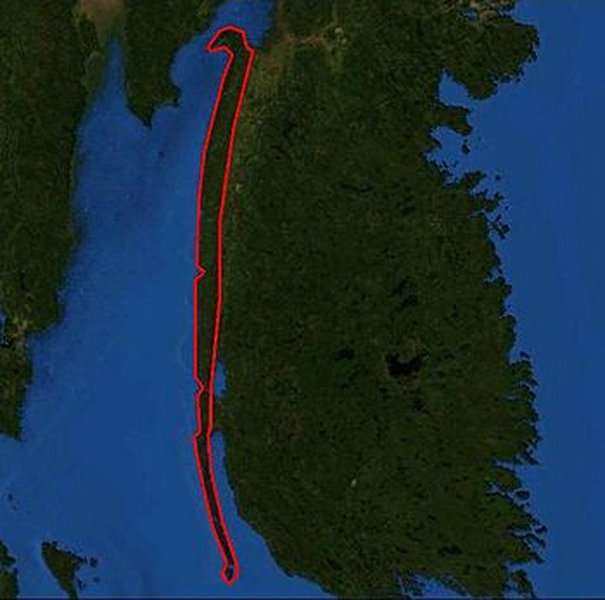 An expansive view showcasing the forested ridge of North Mountain, a defining feature of Nova Scotia's landscape.
Defining Boundaries and Key Locations
The westernmost point of North Mountain is Brier Island, an important ecological area. As the ridge progresses northeastward, it forms the distinctive coastline along the Bay of Fundy, characterized by dramatic cliffs and unique rock formations. The eastern terminus is Cape Split, a popular hiking destination known for its stunning views and tidal phenomena.
A notable geographical interruption in the ridge occurs at Digby Gut, a deep tidal channel that separates the main eastern section of North Mountain from Digby Neck. This gap is vital for maritime passage and contributes to the area's complex coastal geography.
Geological Tapestry: The Formation of North Mountain
North Mountain is not merely a topographical feature; it is a geological marvel rooted in the Triassic period. Approximately 200 million years ago, during the breakup of the supercontinent Pangaea, massive volcanic eruptions occurred, spewing forth vast quantities of basaltic lava. This lava solidified to form the hard, resistant rock that constitutes North Mountain today.
The geological data collected through mapping projects, such as those by Dan Kontak, reveal the intricate basaltic rocks of the North Mountain Formation. These basalts are known to host zeolites in various forms, including pipes, joints, veins, fractures, cavities, and within the amygdales and groundmass of the basalt itself. This geological composition provides insights into the intense volcanic activity that shaped the region.
Resilience Against Glacial Forces
The enduring presence of North Mountain is a testament to the resilience of its basaltic composition. During successive ice ages, massive ice sheets flowed over the region. While these glaciers reshaped much of Nova Scotia's landscape, the hard ridge of North Mountain basalt largely resisted their grinding force. This resistance is why it now stands as a prominent feature, forming one side of the Annapolis Valley and providing a stark contrast to the softer sedimentary rocks of the valley floor.
The presence of sediment-filled fissures near the upper surface of North Mountain further illustrates the dynamic geological history, indicating periods of fracturing and subsequent infilling of the rock strata.
Ecological and Climatic Influence
A Natural Shield for the Annapolis Valley
One of North Mountain's most significant roles is its function as a climatic shield for the Annapolis Valley. By forming the northern boundary of the valley, it protects the region from the cooler, more maritime climate influences originating from the Bay of Fundy. This sheltering effect contributes to the Annapolis Valley's reputation as a fertile agricultural region, particularly known for its apple-growing industry.
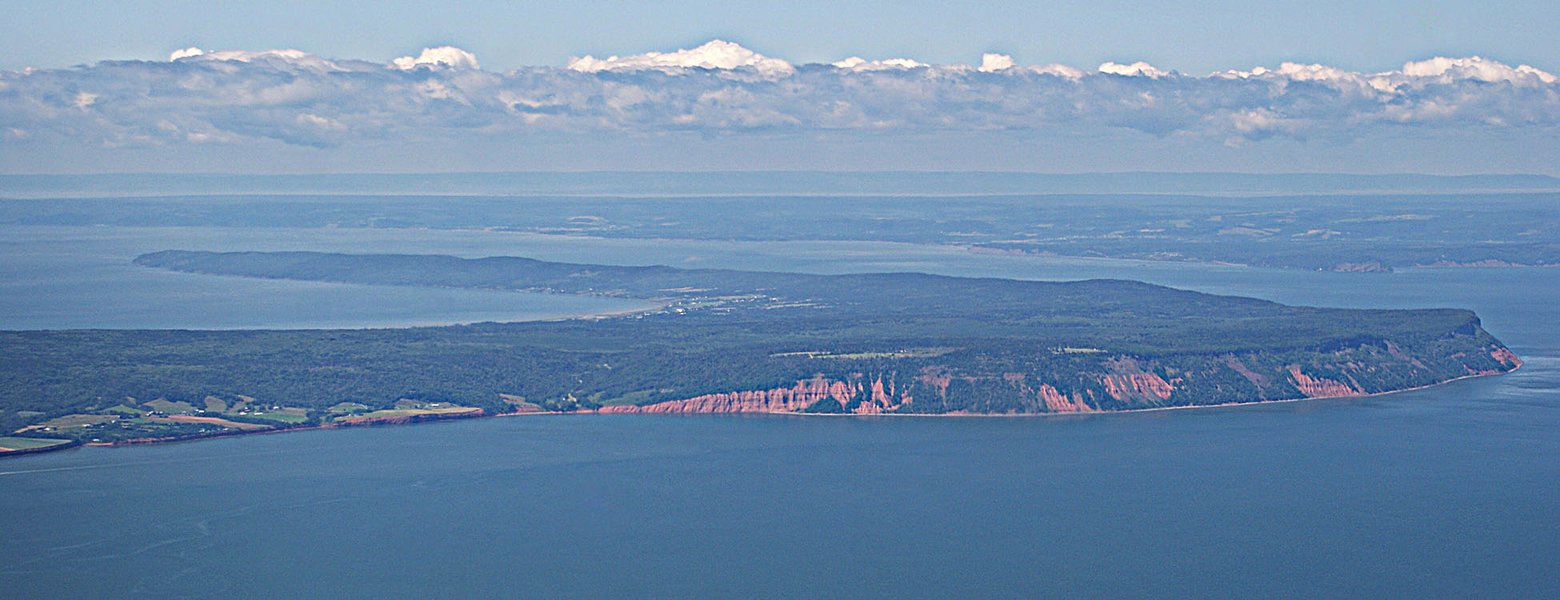
The south-facing slope of North Mountain can be quite steep, exhibiting escarpment-like features in several locations. This varied topography creates diverse microclimates and habitats, supporting a range of flora and fauna.
 The verdant slopes of North Mountain, illustrating its role in creating a sheltered environment for the Annapolis Valley.
Biodiversity and Ecodistricts
North Mountain is part of the North Mountain Ecodistrict 920, which extends from Cape Split to Brier Island. This ecodistrict encompasses a variety of ecosystems, influenced by the basaltic geology and the transition between the Bay of Fundy coast and the Annapolis Valley. The varied terrain and soil conditions support diverse wildlife and plant communities.
Recreational Activities and Notable Features
Exploring the Ridge: Hiking, Cycling, and Unique Formations
North Mountain offers numerous opportunities for outdoor enthusiasts. Hiking trails crisscross its slopes, providing access to scenic viewpoints and unique geological formations. The challenging climbs, including what is known as the "killer kilometer," attract cyclists looking for demanding routes on mainland Nova Scotia.
One of the most iconic natural landmarks associated with North Mountain is the Balancing Rock, a columnar basalt fragment near Digby. This remarkable formation stands precariously on its narrow base, defying gravity and attracting visitors from around the world. It serves as a striking example of the volcanic geology that defines the ridge.
 The famous Balancing Rock, a unique basalt column demonstrating the geological artistry of North Mountain.
Cultural and Economic Contributions
Beyond its natural allure, North Mountain also influences the local economy and culture. The sheltered Annapolis Valley, protected by the mountain, is renowned for its agricultural produce, particularly apples. Additionally, small businesses, such as North Mountain Fine Coffees, draw inspiration and their name from the region, highlighting its local significance. These businesses often emphasize traditional techniques, reflecting the heritage of the area.
Comparative Analysis of North Mountain's Characteristics
A Quantitative Perspective on its Attributes
To further understand North Mountain's significance, we can compare its characteristics with general mountain attributes. The following radar chart provides an opinionated analysis of North Mountain across several key dimensions, demonstrating its unique profile within the broader context of mountain ranges.
This radar chart visually represents how North Mountain compares to a typical major mountain range (like the Rockies) and a typical small ridge/hill. North Mountain stands out with its high geological age due to its Triassic origins and its significant climatic influence on the Annapolis Valley. While its elevation is not as high as major mountain ranges, its accessibility and recreational appeal are notable. The chart highlights its unique blend of attributes, making it a distinctive feature in Nova Scotia's geography.
The Greater Context of North American Mountains
North Mountain within Continental Geography
While North Mountain is a regional feature, it belongs to the larger Appalachian mountain system, which stretches across eastern North America. The Appalachians, about 1,500 miles in length, extend from central Alabama in the U.S. up through the New England states and into Canada, including Nova Scotia.
North America's physical geography is characterized by several prominent mountain ranges. In the west, the young mountains of the Cordilleras dominate, with the Rockies being the largest chain, stretching from British Columbia to New Mexico. In contrast, the eastern part of the continent features older, more weathered mountain ranges like the Appalachians, which include North Mountain.
This video from iKen Edu provides an excellent overview of North America's diverse physical features, including mountain ranges, helping to contextualize North Mountain within the continent's broader geographical landscape.Comparative Table of North American Mountain Ranges
To further illustrate the diverse nature of mountain ranges across North America, the following table compares key characteristics of North Mountain with other notable ranges on the continent:
| Mountain Range | Location | Primary Formation Period | Notable Characteristics | Highest Point (Approx. Elevation) |
|---|---|---|---|---|
| North Mountain (Nova Scotia) | Southwestern Nova Scotia, Canada | Triassic (Volcanic) | Narrow volcanic ridge, shelters Annapolis Valley, unique basalt formations like Balancing Rock. | 477 m (Mount Rose) |
| Appalachian Mountains | Eastern North America (Alabama to Newfoundland) | Paleozoic (Ancient Orogenic) | Old, weathered mountains, rolling hills, significant forest cover. | 2,037 m (Mount Mitchell, NC) |
| Rocky Mountains | Western North America (New Mexico to British Columbia) | Cenozoic (Young Orogenic) | Longest mountain range in North America, rugged terrain, high peaks, part of the Cordilleras. | 4,399 m (Mount Elbert, CO) |
| Sierra Nevada | California, USA | Cenozoic (Fault-block) | Granitic batholith, high peaks, known for Yosemite Valley and sequoia groves. | 4,418 m (Mount Whitney, CA) |
| Coast Ranges | Pacific Coast (California to Alaska) | Cenozoic (Fold-and-Thrust) | Coastal mountains, often foggy and rainy, home to redwood forests. | Varies significantly by region. |
This table highlights North Mountain's distinct volcanic origin in contrast to the fold-and-thrust belt formations of the larger Appalachian system and the even younger, higher peaks of the Rockies and Sierra Nevada. Its relatively modest elevation is compensated by its significant local ecological and climatic impact.
Frequently Asked Questions about North Mountain
What is the highest point of North Mountain?
The highest point on the North Mountain ridge, specifically the volcanic ridge in Annapolis County, is Mount Rose, located north of Lawrencetown. Its elevation is approximately 262 meters (860 feet). However, there is another peak also named North Mountain in Victoria County, Nova Scotia, with an elevation of 354 meters.
How was North Mountain formed?
North Mountain is a volcanic ridge that formed during the Triassic period, approximately 200 million years ago, as the supercontinent Pangaea began to break apart. Massive eruptions of basaltic lava created the hard, resistant rock that constitutes the ridge today.
What is the "Balancing Rock"?
The Balancing Rock is a unique columnar basalt fragment of North Mountain located near Digby, Nova Scotia. It is a natural wonder where a tall, slender column of rock appears to precariously balance on its narrow base, a result of erosion shaping the basaltic rock.
Does North Mountain protect the Annapolis Valley?
Yes, North Mountain acts as a natural barrier that protects the Annapolis Valley from the cooler, harsher climate influences of the Bay of Fundy. This sheltering effect contributes to the valley's favorable agricultural conditions, especially for fruit growing.
Can you hike or cycle on North Mountain?
Yes, North Mountain offers various opportunities for hiking and cycling. There are numerous trails and roads, some of which are quite challenging, providing scenic views and a good workout for outdoor enthusiasts. It is known for having some of the tallest paved road climbs on mainland Nova Scotia.
Conclusion
North Mountain is far more than just a geographical location; it is a fundamental element of Nova Scotia's landscape, history, and ecology. Its volcanic origins from the Triassic period have sculpted a resilient ridge that not only defines the stunning coastline along the Bay of Fundy but also acts as a vital climatic shield for the verdant Annapolis Valley. From its unique basaltic formations like the Balancing Rock to its role in fostering local agriculture and offering recreational pursuits, North Mountain embodies a rich interplay of geological grandeur and natural utility. Its presence is integral to the identity and charm of southwestern Nova Scotia, making it a compelling destination for both scientific study and leisurely exploration.
Recommended Further Exploration
- Explore the ancient geological history and formation of the Appalachian Mountains.
- Investigate how the unique climate of the Annapolis Valley supports its agricultural success.
- Discover other prominent volcanic features and their impact on Nova Scotia's landscape.
- Find out about the best hiking trails and natural wonders across Nova Scotia.
References
Last updated May 21, 2025