
The Simulated Utopia: To Plug In or Not to Plug In?
Exploring Robert Nozick's Experience Machine and the True Meaning of a Good Life
Key Insights into the Experience Machine
- Nozick's Core Argument: Robert Nozick's Experience Machine thought experiment, introduced in his 1974 book Anarchy, State, and Utopia, primarily aims to refute ethical hedonism by suggesting that factors beyond mere pleasure contribute to a good life.
- Beyond Pleasure: The thought experiment highlights that most people intuitively reject plugging into a machine that guarantees constant pleasure, indicating that values like authenticity, real-world connection, genuine accomplishment, and moral agency are crucial for human well-being.
- Implications for the Good Life: Our reluctance to enter the machine reveals a deeper human desire for a life rooted in reality, where choices have tangible consequences, relationships are authentic, and achievements are earned, challenging the notion that happiness alone defines a flourishing existence.
The question, "Would you plug into the Experience Machine?", is a philosophical cornerstone that compels us to deeply examine our values and define what truly constitutes a "good life." Proposed by Robert Nozick in his seminal 1974 work, Anarchy, State, and Utopia, this thought experiment challenges the fundamental premise of ethical hedonism—the idea that pleasure is the sole intrinsic good and the ultimate aim of life.
Unpacking the Experience Machine Thought Experiment
Nozick's Vision of a Perfect Simulation
Imagine a machine, a superduper neuropsychological device, capable of stimulating your brain to induce any experience you desire. You could believe you are writing a great novel, falling in love, achieving a lifelong dream, or enjoying exquisite sensory pleasures. Crucially, while plugged in, you would have no memory of entering the machine, nor any awareness that your experiences are not real. You would simply live out a life of perfectly programmed bliss, indistinguishable from genuine reality from your internal perspective. All the while, your physical body would be floating in a tank with electrodes attached to your brain, meticulously maintained by unseen technicians.
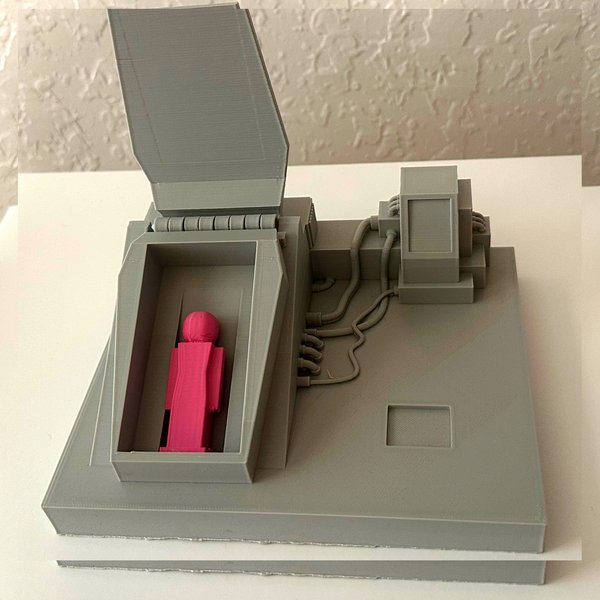
A visual representation of an individual connected to the Experience Machine, illustrating the simulated reality.
Nozick then poses the critical question: Would you plug in? And if given the choice, would you opt for this simulated existence of perpetual pleasure over real life, with all its inherent struggles, disappointments, and unpredictability? While hedonists might argue that such a machine offers the ultimate form of well-being by maximizing pleasure and minimizing pain, Nozick predicts—and most people intuitively agree—that the answer is a resounding "no."
The Core Argument Against Hedonism
The refusal to plug into the Experience Machine serves as a powerful counter-argument to hedonism. If pleasure were truly the only thing that mattered, then logic dictates we should all rush to connect to such a device. The fact that most people recoil from the idea suggests that there are other, more profound values and aspects of life that we hold dear beyond mere subjective pleasure.
Why Most People Would Not Plug In: Deeper Values at Play
The Desire for Authenticity and Reality
One of the primary reasons for rejecting the Experience Machine is the deep-seated human desire for genuine reality. We want to be connected to something real, to inhabit a world that exists independently of our perceptions. The machine, despite its perfect simulation, fundamentally denies us this connection. As Nozick himself articulated, we want to do things, not just experience the sensation of doing them. There's a qualitative difference between genuinely achieving a goal and merely feeling as if you have. This craving for authenticity suggests that our well-being is tied not just to internal states but to our relationship with an objective reality.
The Importance of Being and Doing
Nozick outlines three main reasons why people would likely refuse to plug in:
- We want to do things, not just have the experience of doing them. There's a difference between actually writing a great novel and merely having the experience of writing one. The former involves genuine effort, struggle, and interaction with the real world, leading to a sense of accomplishment and meaning that a simulation cannot replicate.
- We want to be a certain kind of person. The machine dictates our experiences, but it does not allow us to truly be a person of character, resilience, or moral integrity. We are merely passive recipients of programmed sensations. Being a certain kind of person involves making real choices, facing real challenges, and developing genuine virtues, which are stripped away in the machine.
- Plugging into an experience machine limits us to a man-made reality. We desire a deeper connection to reality, one that is not fabricated. The world we live in, with all its complexities and mysteries, offers possibilities and discoveries that an artificial simulation, no matter how advanced, cannot fully encompass. This desire for genuine contact with a "deeper reality" is a powerful motivator.
The Value of Growth, Struggle, and Meaning
A life without challenges, failures, or the possibility of loss might seem appealing at first glance, but it often lacks the depth and meaning that arises from overcoming adversity. Our growth as individuals is often forged in the crucible of difficult experiences. The machine eliminates this essential component of human development. Genuine relationships, the pain of loss, the joy of hard-won victories—these are all part of the rich tapestry of real life that contributes to our overall well-being, even if they sometimes involve suffering. The absence of these real-world elements, even for the sake of perpetual pleasure, diminishes the perceived value of life in the machine.
Exploring the Nuances: Why Some Might Consider Plugging In
Escapism and Alleviating Suffering
While the overwhelming consensus leans against plugging in, it's important to acknowledge situations where the choice might be less clear. For individuals experiencing profound and unending suffering, or those trapped in exceptionally bleak circumstances, the machine could represent a compassionate escape. If one's real life offers nothing but pain and despair, the promise of blissful ignorance might outweigh the philosophical objections to unreality. This scenario highlights the complex interplay between philosophical ideals and the harsh realities of human existence.

The Experience Machine raises questions about what truly constitutes a "good life" beyond mere pleasurable sensations.
The Subjectivity of "Good Life"
The Experience Machine also forces us to confront the subjectivity of what constitutes a "good life." While Nozick presents a compelling argument, the weight given to authenticity, reality, and genuine accomplishment can vary between individuals. Some might argue that if the subjective experience is perfect, the external reality is irrelevant. This perspective, though less common, challenges the universality of Nozick's intuition.
The Experience Machine's Enduring Philosophical Impact
Refuting Ethical Hedonism
The Experience Machine remains a powerful thought experiment primarily because of its effectiveness in challenging ethical hedonism. It demonstrates that our concern for well-being extends beyond simply accumulating pleasurable experiences. We value the source and nature of our experiences, not just their subjective feeling. This thought experiment has shaped discussions in ethics, metaphysics, and the philosophy of mind for decades.
Connection to Simulation Theory and The Matrix
Nozick's concept has a striking resemblance to modern discussions around simulation theory and has been famously paralleled with the plot of the movie The Matrix. In The Matrix, humanity is unknowingly plugged into a vast computer simulation while their bodies are used as an energy source. The choice offered to Neo—the red pill for reality or the blue pill for blissful ignorance—directly mirrors the dilemma of the Experience Machine. These popular culture references underscore the enduring relevance and intuitive appeal of Nozick's philosophical inquiry.
This video explores the dilemma of choosing a life with no pain, touching upon the core questions posed by Nozick's Experience Machine.
The video above delves into the human inclination to avoid pain, a central theme when considering the allure of the Experience Machine. It asks a profound question: "Would you opt for a life with no pain?" While seemingly desirable, this option, as explored by Nozick, necessitates a trade-off with reality and authenticity. The video serves as an excellent complement to the Experience Machine thought experiment, illustrating the tension between the pursuit of pleasure and the value of genuine, often challenging, experiences.
A Quantitative Look at the Philosophical Dimensions
To further illustrate the multifaceted considerations involved in the "plug in or not plug in" dilemma, let's consider a radar chart. This chart will represent hypothetical scores on various dimensions of a "good life" as perceived through the lens of traditional values versus the promise of the Experience Machine. These scores are illustrative and based on a philosophical interpretation of Nozick's arguments and common human intuitions.
As depicted in the radar chart, a life in the real world (represented by the green area) typically scores high on aspects like authenticity, genuine achievement, real-world connection, moral agency, and personal growth. While subjective pleasure might fluctuate, the overall depth and richness of experience are high. In contrast, a life in the Experience Machine (represented by the gold area) scores exceptionally high on subjective pleasure but significantly low on all other dimensions, highlighting the trade-off inherent in choosing simulated reality.
Key Distinctions: Real Life vs. Experience Machine
The table below summarizes the core differences in key life aspects when comparing authentic reality with the simulated world of the Experience Machine.
| Aspect of Life | Real Life | Life in Experience Machine |
|---|---|---|
| Nature of Experiences | Authentic, sometimes painful, but genuinely earned and impactful. | Programmed, perpetually pleasurable, but ultimately inauthentic and illusionary. |
| Connection to Reality | Direct interaction with an objective, external world. | Disconnected; experiences are internal brain stimulations, not external events. |
| Personal Identity & Being | Shape who you are through real actions, choices, and consequences. | Passive recipient; identity defined by programmed experiences, not genuine agency. |
| Achievement & Meaning | Sense of accomplishment from overcoming real challenges and making tangible impact. | Illusory accomplishments; no real-world impact or genuine struggle. |
| Relationships | Genuine, reciprocal interactions with other conscious beings, fostering true connection. | Simulated relationships with non-existent entities, lacking authentic reciprocity. |
| Moral Agency | Capacity for genuine ethical choice, responsibility, and impact on others. | Decisions are programmed; no true moral dilemmas or ethical growth. |
| Risk & Uncertainty | Inherent unpredictability, with potential for both pain and unexpected joy. | Controlled and predictable; eliminates negative experiences but also the richness of true risk. |
Conclusion: The Richness Beyond Mere Pleasure
Ultimately, my answer to the question "Would you plug in?" is a firm "no." While the allure of endless pleasure is undeniable, it comes at too high a cost: the sacrifice of authenticity, genuine achievement, and real connection to the world and others. A truly good life, for me, is not merely about how life feels from the inside, but about what I genuinely do, what kind of person I am, and my authentic engagement with a reality that is larger than my own subjective perceptions. The struggles, the setbacks, the moments of doubt, and the triumphs in real life contribute to a depth of character and a sense of meaning that no simulated existence, however pleasurable, can ever replicate. The Experience Machine, rather than defining utopia, underscores the profound value we place on reality, agency, and the complex, often messy, journey of truly living.
Frequently Asked Questions (FAQ)
What is the main purpose of Robert Nozick's Experience Machine thought experiment?
Why do most people intuitively refuse to plug into the Experience Machine?
How does the Experience Machine relate to movies like The Matrix?
Does the Experience Machine imply that pleasure is not important at all?
Recommended Further Exploration
- Explore the full context of Robert Nozick's philosophical work, Anarchy, State, and Utopia.
- Delve deeper into other philosophical arguments that critique or offer alternatives to hedonism.
- Investigate the philosophical concept of authenticity and its role in living a meaningful life.
- Examine the contemporary "simulation hypothesis" and its broader implications for reality and existence.
Referenced Search Results
 philosophicaldisquisitions.blogspot.com