
Ntorya Gas Field Development in Tanzania
A comprehensive exploration of the project's scale, strategy, and future prospects
Key Takeaways
- Large-Scale Opportunity: The Ntorya gas field is one of Tanzania's largest onshore gas projects with significant gas reserves, paving the way for increased domestic energy production and economic growth.
- Strategic Development: With a 25-year development license and an integrated infrastructure plan, including pipelines and processing facilities, the field is designed to rapidly boost production and support regional energy security.
- Robust Partnerships: The collaboration between industry players and government agencies not only ensures efficient project implementation but also helps build local capacity and long-term sustainability.
Overview and Significance
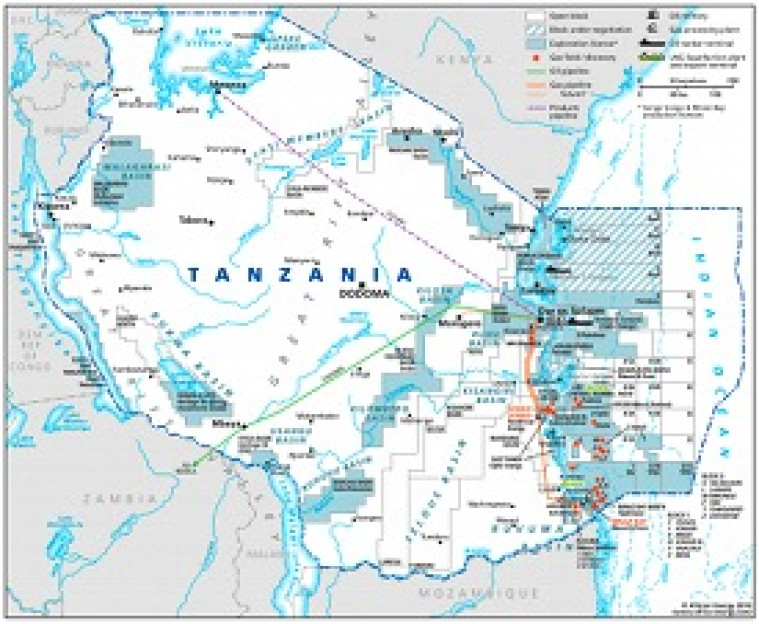
The Ntorya gas field represents a transformative asset in Tanzania’s burgeoning natural gas sector. Located in the Ruvuma Basin of Tanzania, this onshore field has emerged as a critical project designed to harness substantial natural gas resources. With the granting of a 25-year development license, the project has been set up to meet the growing energy demand, provide economic benefits, and contribute to regional energy security.
The gas field’s notable status as one of Tanzania’s largest onshore discoveries is underlined by its considerable gas reserves. Classified among “World Class Giants” – a designation for fields with gas reserves exceeding three trillion cubic feet – the Ntorya gas field boasts an impressive unaudited contingent resource estimate measured in the trillions of cubic feet. This reinforces its potential to significantly influence Tanzania’s gas supply market and energy pricing.
Project Background and Licensing
Development License and Policy Framework
The project's legal and regulatory foundations were laid with the issuance of a 25-year development license, which provides the framework for all subsequent development activities. This long-term license is crucial for fostering investor confidence and ensuring that the project remains viable for decades. It also underscores the commitment of government entities to support the country's energy transition and alleviate energy poverty.
In a strategic move, the project license was awarded to a consortium led by local and international energy companies, including the Tanzanian state-controlled Tanzania Petroleum Development Corporation and ARA Petroleum Tanzania Limited. The license is designed not only to open up a lucrative field but also to integrate capacity building initiatives for local energy personnel. This element of local capacity development is critical for ensuring that the project benefits extend well into economic and social development.
Partnerships and Stakeholder Collaboration
A core strength of the Ntorya project lies in its collaborative framework. Key stakeholders, both domestic and international, have come together to realize the project’s full potential. The operational responsibilities are jointly managed by experienced operators who bring technical expertise and innovative solutions to gas field development.
Moreover, partnerships have been established to facilitate the technical training and development of local workforce capabilities, ensuring that the benefits of the project extend beyond immediate gas production. This strategic approach enhances job creation, skills development, and economic diversification within the region.
Gas Reserves and Resource Potential
Exploration and Resource Evaluation
Extensive geological work and advanced seismic data interpretation have been performed over a large area in the Ntorya and adjoining blocks, yielding early indications of extensive gas potential. Initially discovered in 2012, the gas field has since been re-evaluated with modern techniques—chiefly 3D seismic surveys—leading to more robust estimates of gas reserves.
The field is noted for its proven gas reserves which are estimated in the vicinity of 1.8 trillion cubic feet, with additional potential identified in the wider region. The evaluation process, which included geological, geophysical, and geochemical studies, highlighted the vast potential contained within the area. In addition, contingent resource estimates suggest that the gas initially in place might extend well beyond the proven reserves, with potential figures indicative of a “World Class Giant” on a global scale.
Resource Metrics and Economic Implications
The immense gas volumes not only promise to transform Tanzania's energy landscape but also present substantial economic opportunities. With a mean unrisked potential estimated at several trillion cubic feet and risked assessments indicating massive reserves, the project is seen as having significant upside potential. This has attracted both local and foreign investments, with projected rapid production ramp-up ensuring substantial returns for the stakeholders involved.
Development Strategy and Timeline
Production Phases and Timeline
The Ntorya gas field development is structured in distinct phases. The initial phase focuses on converting existing wells into producing wells, with the NT2 well poised to begin production by mid-2025. This first phase targets a daily production range of 40-60 million standard cubic feet, setting a foundational base for scaling up operations.
Subsequent phases involve drilling additional wells (such as NT1 and CH1) and implementing infrastructure expansions that will increase the production rate to approximately 140 million standard cubic feet per day in the coming years. The phased approach is designed to ensure that production not only begins promptly but is capable of scaling responsively to market demands.
Infrastructure Developments and Investments
Central to the project's execution is a comprehensive infrastructure development plan. A critical component of this plan is the construction of a 35-kilometer pipeline that will connect the Ntorya field to the state-operated Madimba gas processing plant. This pipeline is pivotal in ensuring efficient transportation of gas from the field to processing facilities where it can be treated and integrated into the domestic energy grid.
In parallel with pipeline construction, upstream processing facilities are being planned and developed to capture and process gas at the wellheads. These facilities are designed to optimize production efficiency, reduce operational costs, and minimize environmental impacts. With a projected development cost around $140 million, the investment underscores the scale of the project and the high confidence in its economic viability.
Development Phases Table: Key Milestones
| Phase | Key Activities | Timeline | Budget Estimate |
|---|---|---|---|
| Phase 1 |
|
Up to mid-2025 | $40 million |
| Phase 2 |
|
2025-2027 | $60 million |
| Phase 3 |
|
2027 onward | $40 million |
Operational and Technical Aspects
Field Development Techniques
From an operational standpoint, the project leverages state-of-the-art field development techniques aimed at maximizing output while ensuring safety standards and environmental compliance. The initial strategy involves utilizing proven methods in well reconditioning, drilling, and installing process facilities that are designed to minimize downtime and accelerate production start-up.
Advanced seismic surveys and data analysis have played a critical role in mapping the field’s subsurface structures. Such precision data enables operators to optimize drilling locations and boost the efficiency of resource extraction. In this respect, the comprehensive use of 3D seismic interpretation has not only confirmed existing reserves but also hinted at larger potential areas for future exploration.
Technological Innovations and Safety Measures
Safety and technological innovation go hand in hand in the Ntorya project. By integrating advanced drilling technologies, real-time monitoring systems, and automated process controls, the project aims to reduce operational hazards and ensure a consistent production flow.
Alongside these operational advantages, these innovations also reduce the cost of development. The technology-driven approach minimizes risk and optimizes resource extraction, thereby lowering overall development costs per unit of gas produced.
Environmental and Social Impact Considerations
An important pillar of the project is the focus on environmental sustainability and social responsibility. Efforts have been implemented to minimize the ecological footprint of the field’s development. These include stringent environmental assessments, adherence to best practices in land reclamation, and measures to mitigate potential adverse impacts on local communities.
Social engagement initiatives are an integral part of the development strategy. Local communities benefit from job creation, skills training, and broader economic opportunities. Technical training programs have been established to build local expertise, ensuring that the operational benefits are shared across the region.
Economic and Strategic Implications
Boosting Tanzania’s Energy Security
The Ntorya gas field is poised to be a linchpin in Tanzania’s overall energy strategy. As domestic gas demand increases, the field’s production is expected to play a key role in stabilizing energy supply and reducing reliance on imported fuels. The rapid commissioning of production facilities and infrastructure at Ntorya contributes to a firmer footing in the nation’s broader goal of energy self-sufficiency.
Additionally, reliable gas supplies help underpin related industries, from power generation to fertilizer production, thus fostering broader economic resilience. The strategic emphasis on onshore gas projects like Ntorya is viewed as a cost-effective alternative to offshore developments, thereby providing a competitive advantage in terms of investment and operational turnaround times.
Economic Growth and Regional Development
The development of the Ntorya gas field is expected to be a catalyst for economic growth in Tanzania. With significant investments in infrastructure and human capital development, the project is projected to generate numerous direct and indirect job opportunities. Furthermore, increased gas production will bolster government revenues through taxes and royalties, providing additional resources for public investments.
The long-term nature of the project, with its production timeline extending into the mid-21st century, assures a sustained boost to the domestic energy market. This long-term operational window positions Tanzania as a regional hub for natural gas, potentially attracting further investments into the country’s upstream and downstream sectors.
Future Prospects and Expansion Potential
Exploration Beyond the Initial Development
While the initial phase of the Ntorya gas field development is focused on unlocking known reserves and rapid production scaling, the project has significant untapped potential for further exploration. Operators have already acquired extensive 3D seismic data covering a vast area beyond the core development blocks. This data has revealed additional prospects that, if successfully appraised, could see the gas reserves multiply substantially.
Future exploration efforts will include drilling appraisal wells in adjacent blocks to assess their gas potential. Within the framework of the 25-year license, the project consortium is mandated to undertake additional geological and geophysical studies. These efforts are expected to unlock larger gas volumes and further cement Tanzania’s position in the global energy market.
Long-Term Production Outlook
The long-term outlook for the Ntorya gas field is highly optimistic. With production slated to eventually achieve outputs of 140 million standard cubic feet per day and an anticipated field life stretching several decades, the project is set to provide a stable source of energy that will underpin Tanzania’s industrial and domestic energy needs.
The integration of more advanced extraction technologies and continuous appraisal efforts will enable operators to optimize recovery rates. In a broader perspective, the sustained production track will help mitigate the impact of global energy price fluctuations and ensure a steady income stream for both government and investors.
Challenges and Risk Mitigation
Operational Challenges
While the Ntorya gas field development promises significant rewards, it also involves managing a range of operational challenges. The scale of the project demands coordinated efforts across multiple disciplines—from drilling and infrastructure development to environmental compliance and technical training. Each of these components must be managed effectively to prevent cost overruns and scheduling delays.
The challenges also extend to logistical issues such as land acquisition, pipeline routing, and the integration of new technologies. The comprehensive planning process integrated into the project’s strategy has been designed to identify potential bottlenecks early on, thereby enabling proactive interventions and risk management strategies.
Risk Mitigation Strategies
Risk mitigation is central to the enterprise’s strategy. From the outset, rigorous feasibility studies and robust financial planning have been employed to safeguard investments. Detailed environmental and social impact assessments ensure that the project adheres to regulatory standards and minimizes adverse effects on the community.
Technological innovations also play a significant role in mitigating operational risks. Automated control systems, real-time data analytics, and remote monitoring capabilities help to maintain safety and efficiency throughout the production lifecycle. These measures provide the necessary contingency planning to address unforeseen challenges while keeping the project on track.
Conclusion and Final Thoughts
The Ntorya gas field development is a landmark project in Tanzania’s energy sector, characterized by its vast gas reserves, strategic partnerships, and comprehensive development plans. With a clear 25-year license framework, the project not only aims to meet domestic energy demands but also positions Tanzania as a regional hub in the natural gas market. The phased production approach, significant infrastructure investments such as the 35-km pipeline, and the integration of advanced technological systems provide the necessary foundation for a reliable and scalable energy source.
In addition to its economic and energy security benefits, the project is also socially responsible, contributing directly to local skills development and community engagement. The key challenges have been foreseen, and robust risk mitigation strategies have been implemented to ensure smooth operations. As additional exploration work continues in the adjacent blocks, the already impressive resource base of the Ntorya gas field could be amplified further, unlocking even more potential over the coming decades.
Overall, the Ntorya gas field development offers a compelling example of how modern energy projects can drive economic growth while balancing technological advancements, social responsibilities, and environmental conservation. The project’s long-term outlook, combined with its immediate benefits, makes it a central piece in the puzzle of Tanzania’s sustainable energy future.
References
- ARA Petroleum Ntorya Gas Field Development - Energy News Africa
-
Development Licence for Ntorya Gas Field - ARA Petroleum Tanzania
- Development Licence Analysis - Tanzania Petroleum
- Ntorya Conventional Gas Field Profile - Offshore Technology
- Tanzania’s Largest Onshore Gas Discovery - World Oil
More
Last updated February 18, 2025