
Unlocking Nucor's Approach: Navigating Electrical Safety Scenarios in Steel Manufacturing
A deep dive into the specific electrical hazards Nucor addresses and the robust safety protocols ensuring worker protection.
Highlights: Key Insights into Nucor's Electrical Safety
- Culture of Empowerment: Safety is deeply ingrained in Nucor's operations, empowering every team member to prioritize and act on safety concerns, especially complex electrical hazards.
- Engineered Solutions Beyond Standards: Nucor implements advanced, engineered safety systems, like trapped key interlocks, when standard procedures like Lockout/Tagout (LOTO) require enhancement for specific high-risk tasks.
- Comprehensive Training & Qualification: Rigorous training programs cover hazard recognition, LOTO, PPE usage, and specific electrical task qualifications, ensuring personnel are prepared to work safely.
The Electrified Heart of Steelmaking: Understanding Nucor's Environment
Why Electrical Safety is Paramount
Nucor Corporation, a leader in North American steel production, operates complex industrial facilities where electricity is fundamental. From powering massive Electric Arc Furnaces (EAFs) and rolling mills to running intricate control systems and heavy machinery, electrical energy is ubiquitous. However, this reliance brings inherent risks. Electrical hazards, including shock, arc flash, and unexpected equipment energization, pose significant dangers in the demanding environment of a steel mill. Recognizing this, Nucor places an uncompromising emphasis on electrical safety, integrating it into the core of its operational philosophy and culture.
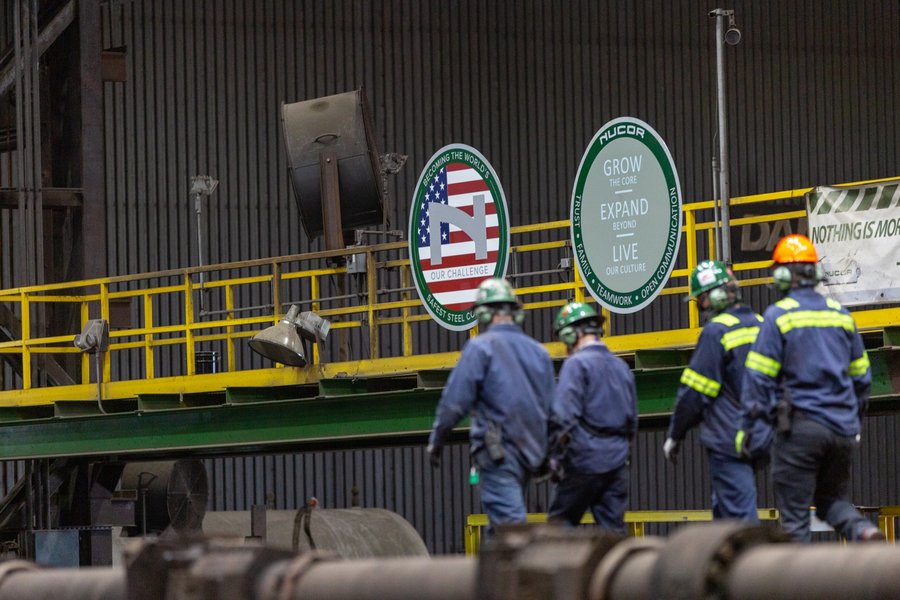
Nucor emphasizes safety as a foundational element across its operations.
A Proactive Safety Culture
Safety isn't just a policy at Nucor; it's described as being "in their DNA." This culture empowers every teammate to identify potential hazards and stop work if necessary, fostering a collective responsibility for safety. Nucor actively partners with organizations like the Occupational Safety and Health Administration (OSHA), often participating in programs such as the Voluntary Protection Program (VPP), which signifies commitment to safety standards exceeding basic requirements. This proactive stance is crucial in managing the electrical risks inherent in steel manufacturing.
Common Electrical Hazard Scenarios and Nucor's Responses
Working in a steel mill presents unique electrical safety challenges. Nucor addresses these through a combination of engineering controls, administrative procedures, and personal protective equipment, tailored to specific scenarios.
Scenario 1: Working Near Energized Equipment
The Risks of Proximity
Tasks often require personnel to work near potentially energized components, such as control panels, motors, EAFs, or overhead lines. Accidental contact, tool slippage, or conductive materials (like perspiration lowering skin resistance) can lead to severe shock or electrocution. Arc flash, an explosive release of energy caused by an electrical fault, is another significant hazard when working near live parts, capable of causing severe burns and other injuries.
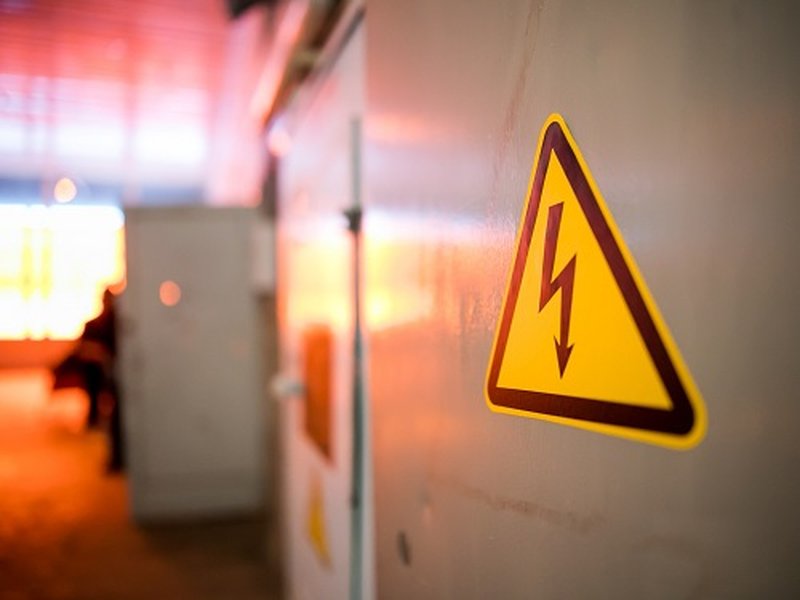
Clear warnings and defined boundaries are crucial near live electrical equipment.
Nucor's Mitigation Strategies
Nucor employs multiple strategies to manage proximity risks:
- Approach Boundaries: Establishing and respecting safe approach boundaries (concepts aligned with standards like NFPA 70E) for qualified and unqualified personnel around live equipment.
- Barriers and Signage: Using physical barriers, guards, and clear warning signs to restrict access to hazardous areas.
- Personal Protective Equipment (PPE): Mandating appropriate voltage-rated gloves, insulated tools, face shields, and flame-resistant (FR) clothing when work near energized parts is unavoidable and justified.
- De-energization Preference: Prioritizing de-energizing circuits before work commences whenever feasible, using LOTO procedures.
Scenario 2: Equipment Maintenance and Unexpected Startup
The Danger of Uncontrolled Energy
Maintenance, repair, or cleaning tasks on machinery like roll mills inherently involve risks of the equipment unexpectedly starting up or releasing stored electrical energy. Standard procedure dictates isolating energy sources using Lockout/Tagout (LOTO). However, some complex tasks might present challenges to traditional LOTO application.
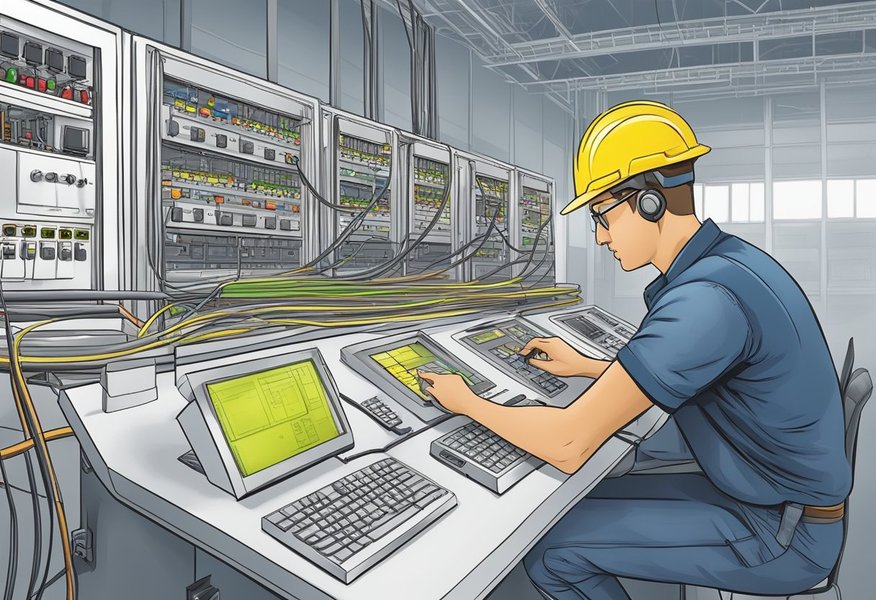
Lockout/Tagout (LOTO) is a critical procedure for isolating energy sources during maintenance.
Nucor's Advanced Solution: The Trapped Key System Case
A specific documented instance at Nucor Steel Connecticut Incorporated (NSCI) illustrates Nucor's approach to complex energy control. The task involved grinding roll mill passes, which presented hazards related to unexpected movement or energization. Standard LOTO application was deemed complex for this specific, frequent task.
NSCI sought and received a permanent variance from OSHA, allowing the use of an engineered alternative safety system. This system included:
- Modifications to Electrical Controls: Changes at the main control pulpit.
- Trapped Key Control System: A specialized system using unique keys interlocked with access points and energy isolation devices. A key required to access the hazardous area can only be removed once the energy source is isolated. This key is then used to unlock the access point. The key remains "trapped" in the access lock while the door is open, preventing re-energization until the worker is clear and the access point is secured again.
- Safety-Rated Components: Use of components like Allen Bradley GuardMaster safety-rated relays.
This alternative system underwent rigorous evaluation, including job hazard analysis, electrical isolation analysis, functional safety reviews, and control reliability analysis by qualified experts. It was also certified by an independent third party (TUV Rheinland) to ensure it provided a level of safety at least equivalent to standard LOTO, preventing unexpected startup even under fault conditions.
Scenario 3: Damaged or Compromised Electrical Systems
Risks from Wear, Environment, and Installation Faults
Electrical systems in heavy industrial environments are subject to wear and tear, potential damage, and environmental factors like moisture or heat. Damaged insulation, frayed wires, loose connections, or improperly grounded equipment can create pathways for dangerous electrical currents, leading to shocks, fires, or equipment malfunction.
High-energy environments like EAF operations require robust and well-maintained electrical systems.
Nucor's Preventive Measures
- Regular Inspections: Conducting routine checks of electrical equipment, wiring, and grounding systems to detect and repair damage proactively.
- Proper Grounding: Ensuring all electrical equipment is correctly grounded and bonded according to standards, providing a safe path for fault currents.
- Use of Appropriate Materials: Employing durable, properly rated electrical components suited for the industrial environment. Nucor Tubular Products produces Electrunite® Color Electrical Metallic Tubing (EMT), which aids in quickly identifying different wiring systems, enhancing safety.
- Environmental Controls: Taking precautions in wet or damp conditions, ensuring equipment is appropriately rated (e.g., NEMA enclosures), and emphasizing the importance of dry PPE.
- Qualified Personnel: Ensuring that installation, maintenance, and repairs are performed only by trained and qualified electricians who understand the specific requirements and hazards.
Visualizing Nucor's Multi-Layered Electrical Safety Approach
Nucor's electrical safety strategy is not based on a single action but rather a comprehensive, interconnected system. This mindmap illustrates the key components contributing to a safer electrical environment within Nucor facilities.
(HazCom, LOTO, Electrical Theory)"] id2b2["Safe Work Procedures"] id2b3["Regular Inspections"] id2b4["Job Hazard Analysis (JHA)"] id2b5["Contractor Safety Protocols"] id2b6["Emergency Response Plans"] id2c["Personal Protective Equipment (PPE)"] id2c1["Voltage-Rated Gloves"] id2c2["FR Clothing"] id2c3["Face Shields / Safety Glasses"] id2c4["Insulated Tools"] id3["Key Focus Areas"] id3a["Electric Arc Furnaces (EAFs)"] id3b["Rolling Mills"] id3c["Control Systems & Panels"] id3d["Maintenance Operations"] id3e["General Facility Electrics"]
This framework highlights how Nucor integrates its core safety values with specific control measures—spanning engineering solutions, administrative procedures, and personal protection—to manage electrical risks across its diverse operational areas.
Key Safety Protocols and Practices
Beyond addressing specific scenarios, Nucor implements fundamental safety protocols across its operations.
Training and Qualification
Building Competence
Nucor requires continuous safety and health training covering essential topics like Lockout Tagout (LOTO), Hazard Communication, Machine Guarding, and emergency procedures. For roles like Maintenance Electricians, formal electrical theory education or training, alongside demonstrable electrical safety knowledge and experience, are prerequisites. This ensures that personnel working on or near electrical systems possess the necessary competence to perform tasks safely.
Lockout/Tagout (LOTO) and Energy Control
Isolating Power Sources
LOTO is a cornerstone of electrical safety during maintenance and servicing. Nucor mandates strict adherence to LOTO procedures to ensure equipment is properly de-energized and cannot be accidentally restarted. As seen in the NSCI variance case, Nucor also invests in analyzing and implementing alternative, equally protective measures when standard LOTO faces practical challenges for specific, recurring tasks, always prioritizing worker safety through rigorous validation.
Personal Protective Equipment (PPE)
The Last Line of Defense
When hazards cannot be fully eliminated through engineering or administrative controls, appropriate PPE is essential. Nucor requires the use of voltage-rated gloves, insulated tools, safety glasses/face shields, and flame-resistant (FR) clothing when performing tasks with potential exposure to electrical hazards, based on thorough risk assessments.
Engineered Controls and Innovation
Designing Safety In
Nucor utilizes engineered solutions to mitigate electrical risks. Examples include the aforementioned trapped key interlock systems, safety-rated relays, proper equipment guarding, and the use of products like color-coded EMT to simplify circuit identification and reduce errors.
Inspections and Maintenance
Proactive Hazard Detection
Routine inspections and preventive maintenance of electrical installations and equipment are critical. Identifying wear, damage, loose connections, or improper grounding early allows for corrective actions before a failure or incident occurs.
Contractor Safety
Ensuring Universal Standards
Nucor extends its safety expectations to third-party contractors working on its sites. Contractors must comply with Nucor's strict safety protocols, including LOTO procedures, PPE requirements, and specific site rules, ensuring a consistent level of safety for everyone.
Emphasis on Electrical Safety Pillars at Nucor
This chart provides an opinionated perspective on the relative emphasis Nucor places on various pillars of its electrical safety program, based on the information gathered. A higher score suggests a stronger focus or more advanced implementation in that area. Note that all areas are considered important for a robust safety program.
The chart suggests a strong emphasis across all areas, particularly highlighting the foundational safety culture, robust LOTO practices, investment in engineered solutions where needed, and comprehensive training programs, reflecting the synthesized information from the provided sources.
Summary Table: Hazards and Mitigation
This table summarizes common electrical hazard scenarios relevant to Nucor's environment and the corresponding mitigation strategies employed.
| Hazard Scenario | Primary Risks | Nucor's Mitigation Approach |
|---|---|---|
| Working Near Energized Parts | Shock, Arc Flash | Approach Boundaries, Barriers, PPE, De-energization Preference, Training |
| Equipment Maintenance (e.g., Roll Mills) | Unexpected Energization/Startup, Stored Energy Release | Strict LOTO Procedures, Engineered Alternatives (Trapped Key Systems where applicable), Job Hazard Analysis, Qualified Personnel |
| Damaged Wiring/Equipment | Short Circuits, Shock, Fire, Arc Flash | Regular Inspections, Preventive Maintenance, Use of Durable/Rated Components, Prompt Repair, Grounding Verification |
| Improper Grounding | Shock Hazard (especially during faults), Equipment Damage | Systematic Grounding and Bonding Checks, Use of GFCIs where appropriate, Training on Grounding Principles |
| Wet/Conductive Environments | Increased Shock Risk (Lowered Resistance) | Use of Appropriately Rated Equipment (Enclosures), Maintaining Dry Conditions where possible, Insulated Tools, Appropriate PPE (Rubber Gloves), Awareness Training |
| Operating Switches/Breakers | Arc Flash/Blast upon failure | Proper Operating Procedures (e.g., stand aside), Use of PPE, Regular Maintenance of Switchgear, Arc Flash Hazard Analysis |
Teamwork and Safety: A Message from Nucor
Collaboration and a shared commitment to safety are vital. This video, featuring ISN and Nucor, underscores the importance of teamwork in maintaining a safe working environment, a principle that extends strongly to managing electrical hazards.
The video emphasizes how communication, mutual support, and adherence to safety protocols by every team member contribute significantly to preventing incidents, including those related to electrical work.
Frequently Asked Questions (FAQ)
What is Lockout/Tagout (LOTO)?
Lockout/Tagout (LOTO) is a safety procedure used to ensure that dangerous machines are properly shut off and not able to be started up again prior to the completion of maintenance or repair work. It requires hazardous energy sources (electrical, mechanical, hydraulic, pneumatic, etc.) to be "isolated and rendered inoperative" before work starts. A lock (lockout) or tag (tagout) is affixed to the energy isolating device to indicate that the equipment should not be operated until the device is removed by the authorized individual.
What is a Trapped Key Interlock System?
A Trapped Key Interlock system is an engineered safety method used to control access to hazardous areas or machinery. It uses a sequence of locks and keys to ensure processes are followed in a safe order. For example, a key needed to open an access gate to a dangerous machine can only be removed from a control panel after the machine's power has been isolated. This key is then used to unlock the gate. While the gate is open, the key remains trapped in the gate lock, preventing it from being used to re-energize the machine until the gate is closed and locked again. Nucor utilized such a system as an alternative control method in a specific OSHA-approved variance case.
What kind of PPE is typically required for electrical work at Nucor?
The specific Personal Protective Equipment (PPE) required depends on the task and the associated electrical hazards identified through a risk assessment. Common PPE includes: voltage-rated rubber insulating gloves with leather protectors, flame-resistant (FR) clothing (shirts, pants, coveralls), arc-rated face shields or hoods, safety glasses, and sometimes insulated tools. The level of protection (e.g., arc rating of clothing, voltage class of gloves) is determined by the potential energy exposure.
How does Nucor train its employees on electrical safety?
Nucor provides ongoing safety and health training covering core topics like Lockout/Tagout (LOTO), Hazard Communication, Machine Guarding, and emergency response. Employees working directly with electrical systems, like electricians, require formal electrical theory training and demonstrated knowledge of electrical safety practices. Training includes hazard recognition, safe work procedures, proper use of PPE, understanding approach boundaries, and specific equipment safety protocols relevant to their roles.
References
- Nucor Steel Connecticut Incorporated; Grant of a Permanent Variance | Occupational Safety and Health Administration - OSHA
- Safety at Nucor Overview PDF - Nucor
- Safety - Nucor Tubular Products
- Don't get zapped - six electrical safety scenarios - ISHN.com
- Contractor Safety at Nucor PDF - Nucor
- Safety - Nucor
Recommended Reading
 assets.ctfassets.net
Last updated April 19, 2025