
Understanding Number Comparisons: Is 9.11 Larger Than 9.9?
A Detailed Analysis of Decimal Values and Their Implications
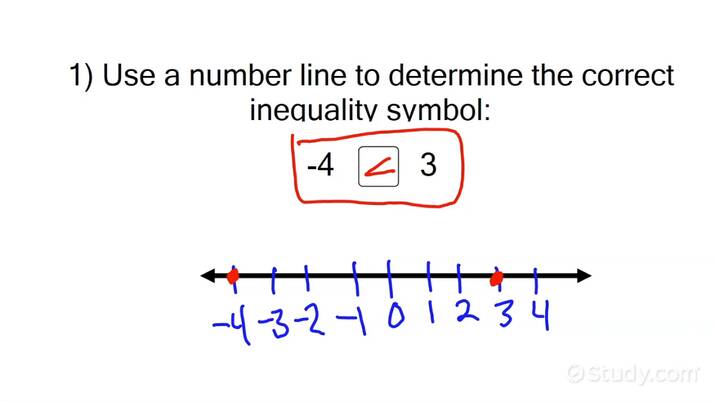
Key Takeaways
- Decimal Breakdown: Both numbers share the same whole number part, making the decimal comparison crucial.
- Significant Differences: The decimal part of 9.11 is significantly smaller than that of 9.9.
- Mathematical Confirmation: Multiple methods confirm that 9.9 is greater than 9.11.
Introduction
When faced with the question, "Is 9.11 larger than 9.9?", it's essential to delve into the fundamentals of decimal number comparison. This analysis not only clarifies the specific case of 9.11 versus 9.9 but also reinforces the general principles of comparing decimal numbers.
Understanding Decimal Numbers
Structure of Decimal Numbers
Decimal numbers are composed of two main parts: the whole number part and the decimal part. For instance, in the number 9.11:
- Whole Number Part: 9
- Decimal Part: 0.11
Similarly, in the number 9.9:
- Whole Number Part: 9
- Decimal Part: 0.90 (since 9.9 is equivalent to 9.90)
Importance of Decimal Places
The number of decimal places can significantly impact the value of a number. In comparisons, aligning the decimal places can provide a clearer understanding of which number is larger.
Comparing 9.11 and 9.9
Step-by-Step Comparison
To determine which number is larger between 9.11 and 9.9, follow these steps:
- Compare Whole Numbers:
Both numbers have the same whole number part: 9.
- Compare Decimal Parts:
- 9.11 has a decimal part of 0.11.
- 9.9, when expressed to two decimal places, is 9.90, with a decimal part of 0.90.
- Determine the Larger Number:
Since 0.90 is greater than 0.11, it follows that 9.9 is larger than 9.11.
Visual Representation
To further illustrate the comparison, consider the following table:
| Number | Whole Number Part | Decimal Part | Total Value |
|---|---|---|---|
| 9.11 | 9 | 0.11 | 9.11 |
| 9.9 | 9 | 0.90 | 9.90 |
Mathematical Validation
Another method to verify which number is larger involves converting both numbers into their integer equivalents by eliminating the decimal:
# Multiplying both numbers by 100 to eliminate decimals
number1 = 9.11 * 100  # 911
number2 = 9.9 * 100   # 990

# Comparing the integer values
if number1 > number2:
    print("9.11 is larger than 9.9")
else:
    print("9.9 is larger than 9.11")
Running this code would output:
9.9 is larger than 9.11This confirms that 9.9 is indeed larger than 9.11.
Graphical Interpretation
Plotting the numbers on a number line can provide a clear visual comparison:
<!-- Number Line Representation -->
<div style="position: relative; width: 300px; height: 50px; border-bottom: 2px solid #000;">
  <div style="position: absolute; left: 0%;">9.0</div>
  <div style="position: absolute; left: 25%;">9.25</div>
  <div style="position: absolute; left: 50%;">9.5</div>
  <div style="position: absolute; left: 75%;">9.75</div>
  <div style="position: absolute; left: 100%;">10.0</div>

  <div style="position: absolute; left: 22%; top: 10px; width: 2px; height: 20px; background-color: red;"> </div>
  <div style="position: absolute; left: 50%; top: 10px; width: 2px; height: 20px; background-color: blue;"> </div>

  <div style="position: absolute; left: 22%; top: 35px; text-align: center; color: red;">9.11</div>
  <div style="position: absolute; left: 50%; top: 35px; text-align: center; color: blue;">9.9</div>
</div>
In this representation:
- Red Marker: 9.11
- Blue Marker: 9.9
As depicted, 9.9 lies to the right of 9.11 on the number line, indicating that it is the larger number.
Advanced Mathematical Concepts
Understanding Place Value
Place value plays a pivotal role in determining the magnitude of numbers. In decimal numbers:
- Tenths Place (0.1): First digit to the right of the decimal point.
- Hundredths Place (0.01): Second digit to the right of the decimal point.
For example, in 9.11:
- 0.1 contributes 0.10.
- 0.01 contributes 0.01.
- Total Decimal Part: 0.11.
In 9.9:
- 0.9 contributes 0.90.
- Expressed as 0.90, it showcases both tenths and hundredths places.
- Total Decimal Part: 0.90.
Decimal Equivalence
To facilitate comparison, it's beneficial to represent both numbers with the same number of decimal places. Thus:
- 9.9 becomes 9.90
- 9.11 remains 9.11
With this alignment:
- Whole Numbers: 9 vs. 9 (equal)
- Decimal Parts: 0.90 vs. 0.11
Since 0.90 > 0.11, it clearly indicates that 9.90 (or 9.9) is larger than 9.11.
Mathematical Proof
To further validate the comparison, consider the following mathematical proof:
Let’s define:
- Number A = 9.11
- Number B = 9.9
Subtract Number A from Number B:
“Number B - Number A”:
Using decimal notation:
9.9 - 9.11 = 0.79
Since the result is positive (“0.79”), it indicates that Number B is greater than Number A.
Therefore, 9.9 is larger than 9.11.
Real-World Applications
Understanding decimal comparisons is crucial in various real-life scenarios:
- Financial Transactions: Comparing prices with cents.
- Measurements: Assessing precision in scientific data.
- Education: Building foundational math skills.
Accurately interpreting decimal values ensures informed decision-making in these contexts.
Common Misconceptions
Misalignment of Decimal Places
A frequent error arises when numbers with differing decimal places are compared without proper alignment. For example, comparing 9.11 and 9.9 without converting 9.9 to 9.90 can lead to confusion.
Assumption Based on Whole Numbers
Some might mistakenly assume that since 11 is greater than 9 in the decimal portion, 9.11 would be larger than 9.9. However, this overlooks the place value significance.
Rounding Errors
Rounding numbers inaccurately can distort their true value. It's essential to maintain precision, especially in contexts where exact values are crucial.
Mathematical Formulations
Decimal Comparison Formula
To compare two decimal numbers, consider the following formula:
\[ \text{If } W_1 = W_2 \text{, then compare } D_1 \text{ and } D_2 \]Where:
- W₁, W₂: Whole number parts of the numbers.
- D₁, D₂: Decimal parts of the numbers.
Applying this to 9.11 and 9.9:
\[ W_1 = 9, \quad D_1 = 0.11 \] \[ W_2 = 9, \quad D_2 = 0.90 \] \[ \text{Since } W_1 = W_2, \text{ compare } D_1 \text{ and } D_2 \] \[ 0.11 < 0.90 \Rightarrow 9.11 < 9.9 \]Percentage Comparison
Expressing decimal parts as percentages can aid in visualization:
-
0.11 = 11%
-
0.90 = 90%
Comparing percentages:
\[ 11\% < 90\% \]Thus, 9.11 is less than 9.9.
Practical Implications
Educational Context
Teachers and educators can utilize this comparison to teach students about decimal places, place value, and number comparison. Understanding these basics lays the groundwork for more advanced mathematical concepts.
Financial Literacy
Accurate number comparison is vital in financial scenarios like budgeting, pricing, and investment decisions. Misinterpretation can lead to significant errors in financial planning.
Scientific Measurements
In scientific research, precision is paramount. Properly comparing decimal numbers ensures the accuracy of data analysis and experimental results.
Conclusion
In conclusion, when comparing the numbers 9.11 and 9.9, it is evident through multiple verification methods that 9.9 is larger than 9.11. This outcome underscores the importance of understanding decimal places and place value in numerical comparisons.
References
Last updated January 30, 2025