
Nuremberg in a Day: Unveiling Centuries of History and Charm
Maximizing Your 24-Hour Adventure in Bavaria's Historic Gem
Welcome to Nuremberg! With just one day to explore this captivating Bavarian city during your Viking river cruise stop, you'll be amazed by how much history, culture, and charm you can experience. Nuremberg, despite heavy damage during World War II, has painstakingly restored its medieval heart, offering visitors a fascinating journey through time. From imperial grandeur to solemn historical reflections and vibrant market squares, this itinerary is designed to help you make the most of your concentrated visit.
Highlights of Your Nuremberg Day Trip
- Imperial Castle (Kaiserburg): Begin your day at Nuremberg's iconic Imperial Castle, offering panoramic views and a deep dive into the city's medieval past as a significant center of the Holy Roman Empire.
- Historic Old Town (Altstadt): Wander through the beautifully restored Altstadt, a pedestrian-friendly maze of cobblestone streets, half-timbered houses, and historic churches, encapsulating Nuremberg's traditional charm.
- Historical Reflection: Dedicate time to the significant World War II sites, such as the Documentation Centre Nazi Party Rally Grounds and the Memorium Nuremberg Trials, offering profound insights into a pivotal period of modern history.
Morning: Medieval Grandeur and Old Town Charm
Your day in Nuremberg should ideally begin by immersing yourself in its medieval heritage, primarily centered around the majestic Imperial Castle and the enchanting Old Town. Most of Nuremberg's top attractions are conveniently located within its historic city walls, making it exceptionally walkable.
The Imperial Castle (Kaiserburg) - A Royal Beginning
Perched atop a sandstone ridge, the Imperial Castle (Kaiserburg) is Nuremberg's most prominent landmark and a must-see. Dating back to the 11th century, this fortified complex served as a crucial imperial residence during the Holy Roman Empire. A visit here offers not only stunning architecture but also breathtaking views of the city. Consider taking a guided tour of the renovated residential areas and the fascinating Deep Well, which plummets 50 meters into the rock.
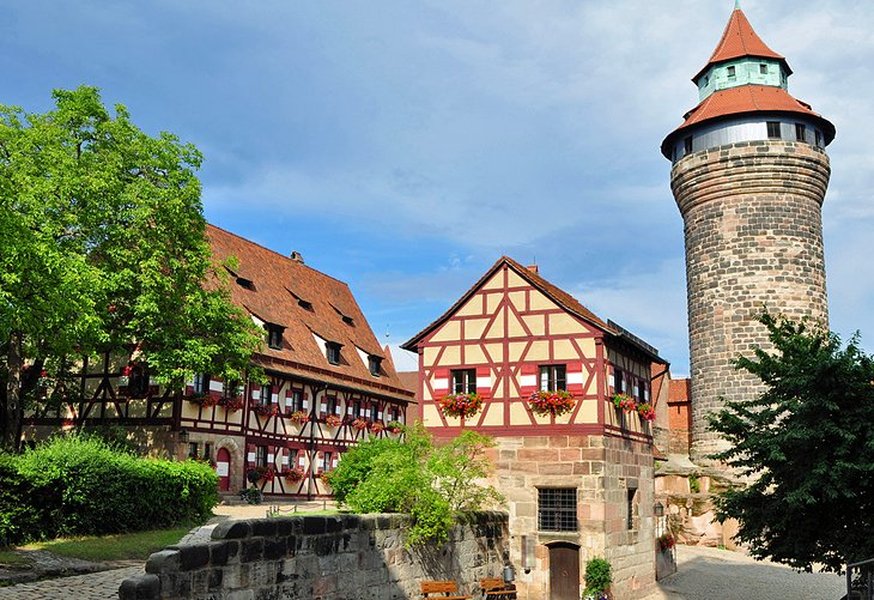
The historic Imperial Castle of Nuremberg, a testament to the city's imperial past.
Exploring the Castle Grounds and Beyond
After exploring the castle, take a leisurely stroll through the Castle Gardens. From the terraces of Michelsberg Abbey (now Kloster Michelsberg), you can get excellent panoramic views over the entire city. This area offers a perfect vantage point to appreciate Nuremberg's unique blend of medieval and restored architecture.
Wandering Through the Altstadt (Old Town)
Descend from the castle into the heart of the Altstadt (Old Town). This charming, walkable neighborhood is a delightful labyrinth of narrow cobblestone streets, picturesque bridges, and historic landmarks. Despite widespread destruction during WWII, the city's dedication to restoration has preserved its quaint atmosphere and traditional character.

The picturesque Weißgerbergasse with its traditional half-timbered houses.
Key Sights in the Old Town
- Hauptmarkt (Main Market Square): This central square is the vibrant pulse of the Old Town. Home to the beautiful Frauenkirche (Church of Our Lady) and the iconic Schöner Brunnen (Beautiful Fountain). If visiting in December, this is the site of the world-famous Christkindlesmarkt (Christmas Market).
- Schöner Brunnen (Beautiful Fountain): A stunning 14th-century Gothic fountain, intricately decorated with 40 figures. Don't miss the brass ring on its fence – legend says spinning it three times brings good luck!
- Frauenkirche (Church of Our Lady): A beautiful 14th-century Gothic church known for its "Männleinlaufen" mechanical clock, which performs a show at midday.
- St. Sebaldus Church: Nuremberg's oldest church, dating back to the 13th century, housing the tomb of St. Sebald, one of Nuremberg's patron saints. Its Gothic façade is truly impressive.
- Weißgerbergasse (Tanners' Lane): One of the best-preserved and most picturesque streets in Nuremberg, featuring colorful half-timbered houses. It's a fantastic spot for photos and offers a glimpse into medieval life.
- Pegnitz River and Bridges: Walk along the Pegnitz River, which flows through the Old Town, and admire the charming historic bridges like the Kettensteg (Chain Bridge) and the Museum Bridge.
Albrecht Dürer's House
A short walk from the castle, you'll find Albrecht Dürer's House, the former home and studio of Germany's most famous Renaissance artist. This beautifully restored 16th-century house offers insights into Dürer's life and work, with guided tours often led by a costumed guide portraying Dürer's wife, Agnes.
Afternoon: Reflection and Cultural Immersion
The afternoon can be dedicated to exploring Nuremberg's more somber yet incredibly important historical sites, particularly those related to the Nazi era and World War II, or delving into its rich museum scene.
Nuremberg's WWII and Nazi History
Nuremberg played a significant, and dark, role in 20th-century history, serving as the site of the massive Nazi Party rallies and later the momentous Nuremberg Trials. Understanding this period is crucial for a complete picture of the city.
Documentation Centre Nazi Party Rally Grounds
Located slightly outside the immediate Old Town, the Documentation Centre Nazi Party Rally Grounds is a powerful and essential visit. Housed within the unfinished Congress Hall, this museum offers deep insights into the causes, context, and consequences of the Nazi Party rallies and the regime's propaganda. The sheer scale of the grounds, even in their ruined state, is striking. Allow a significant amount of time here, as the exhibits are extensive and thought-provoking.
Memorium Nuremberg Trials (Courtroom 600)
The Memorium Nuremberg Trials, situated in Courtroom 600 of the Palace of Justice, is where the major war criminals of the Nazi regime were tried. This museum provides detailed information about the trials, their significance, and the development of international law. It's a solemn but incredibly important historical site. Check opening hours, as the courtroom may be in use for active trials.
A comprehensive travel guide to Nuremberg, touching upon its historical sights, food, and Nazi past.
This video provides an excellent overview of what to expect in Nuremberg, including its historical sites and cultural aspects, making it a valuable resource for first-time visitors.
Museums for Every Interest
If you prefer a less somber afternoon or have extra time, Nuremberg boasts a variety of world-class museums:
- Germanisches Nationalmuseum (Germanic National Museum): The largest museum of cultural history in Germany, offering vast collections ranging from prehistory to the present, including art, crafts, and historical artifacts.
- Toy Museum (Spielzeugmuseum): Nuremberg has a long history of toy manufacturing. This museum showcases toys from antiquity to the present day, with vintage dolls, model trains, and interactive exhibits, making it a fun visit for all ages.
- Deutsche Bahn Museum (Railway Museum): Germany's first railway museum, celebrating the country's rich railway history, a nod to the fact that Germany's first passenger trains ran between Nuremberg and Fürth.
Evening: Culinary Delights and Local Atmosphere
As your day in Nuremberg draws to a close, indulge in the city's culinary traditions and soak in its evening ambiance.
Savoring Franconian Cuisine
Nuremberg is famous for its local specialties. You absolutely must try:
- Nuremberger Rostbratwurst: Small, finger-sized sausages, traditionally grilled over an open fire and served in groups of 6, 8, 10, or 12. Enjoy them with sauerkraut, potato salad, or horseradish, or simply "Drei im Weckla" (three in a bun with mustard) from a street stall.
- Elisenlebkuchen: A traditional gingerbread, especially popular during Christmas but available year-round in specialty shops.
Many traditional German restaurants in the Old Town offer these delights, providing a cozy atmosphere for your evening meal.
Optimizing Your One-Day Visit: A Radar Chart Analysis
To help you prioritize and understand the balance of a one-day trip to Nuremberg, here's a radar chart illustrating the emphasis on different aspects of the city based on a typical compacted itinerary. This chart provides an opinionated perspective on how much attention you can realistically give to each category during a short visit, assuming a focus on efficiency and covering key highlights.
As the radar chart illustrates, a one-day visit heavily emphasizes the medieval history, particularly the Imperial Castle, and a thorough exploration of the Old Town. Significant time is also allocated to World War II historical sites due to their profound importance in Nuremberg. Museums and cultural sites are generally touched upon but may require choosing one or two highlights due to time constraints. Local cuisine is easily integrated into meals, while extensive shopping and leisure activities are often minimized in a packed one-day itinerary. This distribution helps visitors manage expectations and focus on the most impactful experiences within their limited time.
Practical Tips for Your Day in Nuremberg
To maximize your time and enhance your experience, consider these practical tips:
| Aspect | Recommendation for a One-Day Visit |
|---|---|
| Getting Around | Nuremberg's Old Town is highly walkable. Most key attractions are within easy walking distance of each other. Public transportation (subway, tram) is efficient for reaching sites further out, such as the Nazi Party Rally Grounds. The Nuremberg Hauptbahnhof (main train station) is centrally located. |
| Nuremberg Card | If you plan to visit multiple paid attractions (e.g., Imperial Castle, Documentation Centre, Toy Museum), the Nuremberg Card might be worthwhile. It offers free admission to over 40 museums and attractions and unlimited public transport for 48 hours. Assess if you'll visit enough paid sites to make it cost-effective for a single day. |
| Opening Hours | Museums are often closed on Mondays, except during peak tourist season (July-September) and the Christmas Market period. Always check specific opening hours before your visit. |
| Best Time to Visit | Spring, summer, and early autumn offer pleasant weather for walking and outdoor attractions. December is magical for the Christmas Market, but be prepared for crowds. |
| Footwear | Wear comfortable walking shoes, as you'll be covering a lot of ground on cobblestone streets. |
| Food and Drink | Look for red-and-white stalls in the Old Town for quick and authentic "Drei im Weckla" (three sausages in a bun). Many cafes and restaurants offer traditional Franconian fare. |
This table summarizes key considerations for a smooth and enjoyable one-day visit to Nuremberg, highlighting practical aspects that can significantly impact your experience.
Frequently Asked Questions
What are the absolute must-see sights in Nuremberg for a one-day trip?
Can I realistically visit both the Old Town and the Nazi historical sites in one day?
Is Nuremberg walkable, or do I need public transportation?
What traditional food should I try in Nuremberg?
Is Nuremberg enjoyable outside of the Christmas Market season?
Conclusion
Nuremberg offers a profound journey through German history, from its medieval imperial splendor to its pivotal role in the 20th century. While a single day might feel short, following this itinerary will ensure you capture the essence of this remarkable city. You’ll leave with vivid memories of its majestic castle, picturesque Old Town, and the solemn reflections prompted by its more recent past. Enjoy your captivating stop in Nuremberg!
Recommended Further Exploration
- How to best explore Nuremberg's Old Town on a self-guided walking tour?
- What is the full historical significance of the Nuremberg Trials?
- Where can I find the most authentic Franconian cuisine in Nuremberg?
- What makes the Nuremberg Christmas Market a world-renowned event?