
Discovering the Multidimensional Meaning of OB-malli
Unveiling design heritage and theoretical insights in diverse fields
Key Highlights
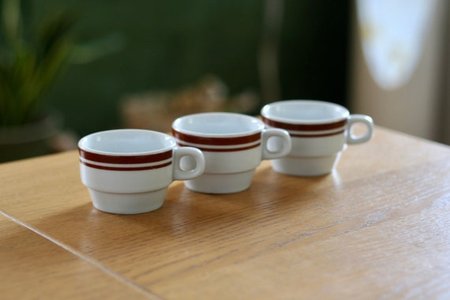
- OB-malli in Finnish Ceramics: A classic model of coffee cups by Arabia known for its elegant design and notable variations.
- Design Nuances and Collectibility: Features such as the "sininen ruusu" design, golden or silver rims, and associations with designers like Greta-Liisa Jäderholm-Snellman.
- Economic and Market Applications: Also recognized as a theoretical model in market research and economics, focusing on opportunity assessment and strategic resource allocation.
Comprehensive Analysis of OB-malli
Understanding OB-malli in the Context of Finnish Ceramics
OB-malli is a term that is frequently encountered in the world of Finnish ceramics, particularly in reference to a specific model of coffee cups produced by the renowned company Arabia. The OB-malli design is steeped in tradition and recognized by collectors worldwide for its distinctive features.
Design Origins and Influential Figures
The OB-malli design is often attributed to the work of notable Finnish designer Greta-Liisa Jäderholm-Snellman. Under her creative guidance, Arabia produced coffee cups that have left an indelible mark on the ceramic art scene. The design embodies a blend of functionality and aesthetic allure, making these items desirable both as everyday tableware and as collectible vintage pieces.
Signature Features and Variations
Several distinctive elements are characteristic of OB-malli coffee cups:
- Design Patterns: One of the most noted designs is the "sininen ruusu" (blue rose), which is often highlighted by decorative floral motifs and is paired with contrasting rim colors.
- Rim Colors: The rims can vary, including golden, platinum/silver, or other color variations, enhancing the cup’s visual appeal.
- Production Analysis: Certain cups marked with stamps like "Pikkukruunu" indicate production periods dating back to the 1950s, emphasizing their vintage and collectible nature.
- Collectibility: These coffee cups are frequently sought after by collectors and can be found in antique stores, specialty shops, and online marketplaces.
The OB-malli series has a rich history within Finnish ceramic craftsmanship. Its elegant styling and design intricacies capture the essence of mid-20th century Scandinavian design, making each piece not only a functional object for serving coffee but also a rich piece of design history.
Economic and Market Research Perspective on OB-malli
In addition to its prominent place in ceramics, the term "OB-malli" also surfaces in discussions related to economics and market research. Here, OB-malli serves as an abbreviation for an "Opportunity-Based Model," which provides a theoretical framework for evaluating market opportunities and resource allocation.
Core Principles of the Opportunity-Based Model
The Opportunity-Based Model (OB-malli) is designed to analyze and understand the dynamics of markets and the potential opportunities within them. It lays the groundwork for assessing how firms and individuals can identify and exploit opportunities created by market conditions. Key aspects include:
- Market Analysis: It assists researchers and decision-makers in identifying and evaluating market opportunities, including potential threats, shifts, and competitive dynamics.
- Strategic Planning: OB-malli is instrumental in devising strategies that align company resources with available market opportunities. Organizations can leverage this model to optimize their operations and achieve competitive advantages.
- Resource Allocation: By analyzing the state of the market and available resources, OB-malli provides insights on the best ways to allocate assets to maximize production, profitability, and market presence.
Applications in Business and Market Research
The Opportunity-Based Model holds significant relevance in the field of economics. It is particularly useful for:
- Developing and refining business models by aligning them with evolving market conditions.
- Facilitating strategic investment decisions and improving market positioning through targeted resource deployment.
- Understanding and predicting market trends, which can be instrumental in competitive analysis and risk management.
Reconciling the Dual Meanings
It is important to note that the term "OB-malli" is context-dependent. On one hand, it refers to a celebrated range of Finnish ceramics, particularly coffee cups by Arabia that feature elegant design motifs and collectibility. On the other hand, OB-malli is used in the context of economic models to describe an approach focused on recognizing and seizing market opportunities. These two definitions coexist, reflecting the versatility of the terminology across different domains.
Comparative Table: OB-malli in Ceramics vs. Economics
| Aspect | Finnish Ceramics (Arabia OB-malli) | Economic Opportunity-Based Model (OB-malli) |
|---|---|---|
| Definition | A model of coffee cups notable for its design, production during the mid-20th century, and collectibility. | A theoretical framework for analyzing market opportunities and resource allocation strategies. |
| Key Features |
|
|
| Main Applications |
|
|
| Historical Context | Originated in the mid-20th century Finland, part of Arabia's renowned design portfolio. | Developed as a theoretical model to address market dynamics and opportunities in economics. |
Diving Deeper into OB-malli: Detailed Insights
OB-malli in Finnish Ceramics: A Detailed Look
The OB-malli design in ceramics represents an emblematic piece of Scandinavian design heritage. Its allure lies not only in its visual appeal but also in the historical significance carried by each piece. For collectors and design enthusiasts, every detail—from the choice of glaze to the precise curvature of the cup—is a testament to a time when functional art took center stage in everyday life.
The design often emphasizes balance between simplicity and decoration. For instance, the "sininen ruusu" design is a fine example of bringing floral elements into a minimalistic form to create a visually arresting piece. The integration of contrasting rim colors, such as gold and silver, adds a layer of sophistication and enhances its desirability in current markets.
Collectors often note that items bearing the OB-malli designation are more than mere utensils; they are cultural artifacts that encapsulate the evolution of design in Finnish industrial production. As a result, when evaluating such items, experts typically consider not only the aesthetic condition but also provenance, production stamps, and historical context.
Design Impact on Collectibility
The OB-malli design has, over the decades, acquired a status that transcends everyday functionality. Vintage OB-malli pieces are typically appraised based on:
- Era of Production: Many OB-malli artifacts date back to the 1950s, which enhances their value and relevance as collectibles.
- Design Consistency: The recurring motifs and color schemes allow collectors to easily identify and authenticate genuine pieces.
- Artistic Influence: The association with designers, notably Greta-Liisa Jäderholm-Snellman, underpins the pieces with additional historical and artistic importance.
These factors combined create a strong market demand for OB-malli ceramics, ensuring that they remain subjects of interest in auctions, specialized antique shops, and online marketplaces such as Tori.fi and Wanhat Kupit.
Theoretical Perspectives: OB-malli in Economics
Turning to the economic perspective, the Opportunity-Based Model (OB-malli) serves as an analytical tool designed to navigate the complexities of modern market environments. In this framework, the central notion is that the market continually presents opportunities that can be leveraged by savvy businesses and economic agents.
Analysts using an OB-malli framework are particularly interested in initial market conditions, the adaptability of stakeholders, and the dynamic flow of resources. This model becomes instrumental in:
- Predicting competitive moves within rapidly changing markets.
- Deciphering which market segments are ripe for innovation.
- Providing a structured approach to evaluating risks associated with emerging opportunities.
Strategic planning informed by the OB-malli enhances decision-making by quantifying potential returns on investment and mapping out future market scenarios. The principles of resource allocation embedded in this model have been adopted in various sectors, from finance to technology, underscoring its broad applicability.
Moreover, the OB-malli model has been integrated into academic discourse as a method to illustrate how emerging opportunities shape competitive landscapes. Scholars have used this theoretical model to design case studies, develop practical guidelines for businesses, and even influence policy preparations aimed at fostering resilient economic ecosystems.
Additional Perspectives and Contextual Links
Related Insights on OB-malli
While the OB-malli is predominantly recognized for its association with Finnish ceramics as well as its application in economic theory, one should also be aware that terminological overlaps sometimes lead to confusion in categorizing its usage. However, whether viewed as a cultural icon or a methodological tool, OB-malli embodies a rich tapestry of tradition and innovation.
Collectors interested in physical items often consult antique marketplaces and specialized portals where detailed descriptions, dimensions, and production history are provided. On the other hand, researchers in economic fields lean on scholarly articles and market analysis reports that elaborate on the theoretical framework of the Opportunity-Based Model.
Practical Resources for Further Exploration
For those keen to delve deeper into the legacy of OB-malli coffee cups, several websites offer comprehensive details and listings for sale or auction. Similarly, academic and business resources provide valuable insights into the application of the OB-malli for market analysis.
| Resource Area | Primary Focus | Example Websites/Platforms |
|---|---|---|
| Finnish Ceramics | Detailed product descriptions, historical context, and market listings for OB-malli coffee cups. |
|
| Economic Model Research | Theoretical frameworks, market analysis, and strategic planning based on the Opportunity-Based Model. |
|
References
- Arabia Sally Kahvikuppi - EkoAarrekauppa
- Sally Kahvikuppi - WanhatKupit
- China Kahvikuppi OB-malli - WanhatKupit
- Sininen Ruusu OB-malli - WanhatKupit
-
Arabia OB-malli - Tori.fi
Recommended Queries
 tilastoapu.wordpress.com
Last updated March 28, 2025