
Evaluating Obregón's Success in Overcoming Challenges
A detailed analysis of the achievements and shortcomings during Obregón's presidency
Key Highlights
- Political Stabilization: Successfully restored order after revolutionary turmoil through pragmatic alliances.
- Economic and Infrastructure Recovery: Encouraged foreign investment, domestic enterprise, and initiated crucial infrastructure projects.
- Social and Cultural Transformation: Implemented educational reforms and supported cultural initiatives such as Mexican muralism.
An In-Depth Analysis of Obregón's Presidency
Restoration of Political Stability and Consolidation of Power
After a decade marked by the violence and upheaval of the Mexican Revolution, Obregón’s tenure as president from 1920 to 1924 was critically oriented towards restoring political stability. He managed to secure a fragile peace through a series of strategic decisions. One of his major achievements was consolidating his regime by forming alliances with organized labor and revolutionary factions. This consolidation helped mitigate the entrenched divisions that had resulted from the revolution and minimized the risk of renewed civil conflict.
Moreover, Obregón’s ability to depoliticize and reorganize the military by reducing the influence of regional warlords further contributed to a more centralized and stable state apparatus. In spite of facing military rebellions in 1922 and 1923, his careful negotiations and the eventual peaceful transition of power to his successor, Plutarco Elías Calles, demonstrated his political sagacity. His approach to political reconciliation allowed for a controlled transformation of Mexican governance, laying a foundation for further modernization efforts.
Mechanisms for Political Stabilization
Obregón employed several mechanisms by which he achieved political stabilization:
- Forging alliances with powerful labor organizations and revolutionary groups.
- Implementing moderate reforms that eased social tensions without triggering radical opposition.
- Navigating internal dissent through continuous dialogue with various political stakeholders.
Economic Policies and Infrastructure Development
On the economic front, Obregón’s presidency was marked by pragmatic policies amid attempts to reintegrate Mexico into the global economic system. He pushed for a mixed economic approach, favoring both foreign investment and domestic private enterprise. This balanced method was instrumental in reviving the national economy after years of disruption. His focus on infrastructure led to tangible improvements such as the extension of railway lines and the development of irrigation systems. Such improvements, though modest, laid the groundwork for increased agricultural productivity and market access.
His administration’s economic programs were designed to ensure a gradual recovery from the devastation wrought by the revolution, setting the stage for further modernization. However, there existed a delicate balance between preserving economic stability and enacting transformative policies. Obregón’s cautious approach in land reform, for example, was influenced by his concerns that radical redistribution could destabilize the economy. While he distributed over 921,627 hectares of land in accordance with constitutional mandates, his measured stance did not fully accommodate the revolutionary envisioning of widespread radical change.
Infrastructure and Economic Initiatives
| Sector | Initiatives | Impact |
|---|---|---|
| Transportation | Expansion of railway lines | Improved regional connectivity and trade |
| Agriculture | Irrigation projects and moderate land reform | Enhanced agricultural productivity |
| Foreign Investment | Encouragement of international capital | Revitalization of the economy |
| Economic Policy | Balanced support for labor and enterprise | Gradual economic recovery and stability |
Social, Cultural, and Educational Advances
Obregón’s presidency was also instrumental in promoting social and cultural rejuvenation. The era witnessed significant educational reforms, largely thanks to the appointment of José Vasconcelos as Secretary of Public Education. Under his guidance, the government initiated the construction of numerous rural schools and vast public libraries, thereby expanding access to education across diverse regions of Mexico. This expansion played an essential role in unifying the post-revolutionary society and fostering a new generation of informed citizens.
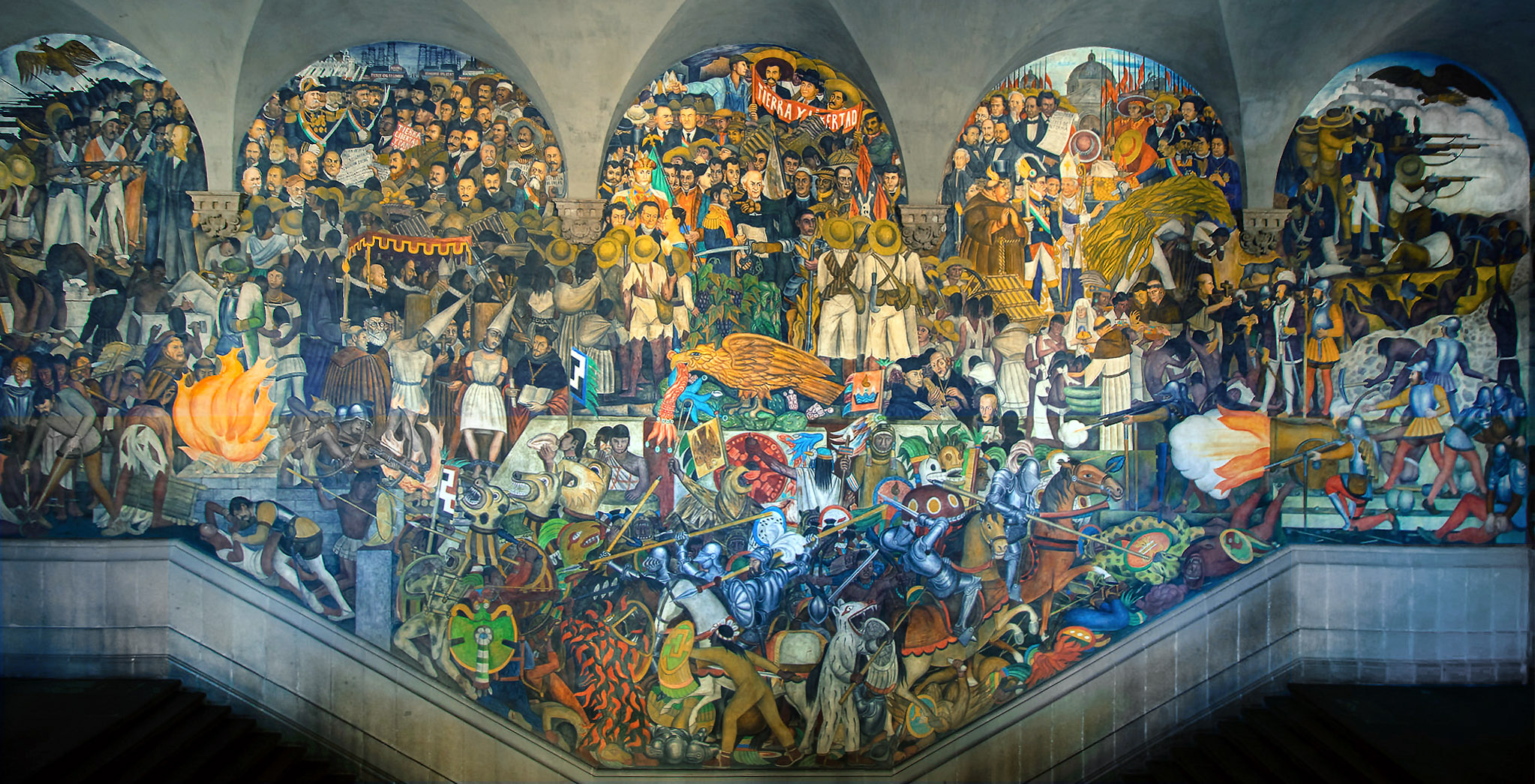
In parallel, Obregón’s support for cultural endeavors contributed to a blossoming of national art and identity. The promotion of Mexican muralism, spearheaded by acclaimed artists like Diego Rivera and José Clemente Orozco, encapsulated the spirit of the revolution and celebrated the country’s heritage. These artistic projects did more than beautify public spaces; they became potent symbols of social change and national rebirth.
Education and Cultural Transformation
The educational and cultural policies during Obregón’s administration can be summarized as follows:
- Expansion of rural education through the establishment of schools and libraries.
- Promotion of national identity through state-supported artistic movements.
- Fostering a literate and culturally engaged populace, which was integral to the rebuilding process after the Revolution.
Labor Reforms and Social Welfare
Addressing the rights and welfare of workers was another significant aspect of Obregón’s governance. His administration was notable for the introduction of new labor laws which aimed to balance the power dynamics between workers and employers. Closely allied with the labor movement, Obregón provided institutional support to labor organizations such as the Regional Confederation of Mexican Workers (CROM), which played a major role in shaping the country’s labor landscape.
While these labor reforms were successful in elevating the status of workers and ensuring better wages and working conditions, they also demonstrated the limits of his moderate policies. Non-CROM labor movements sometimes faced suppression, reflecting the underlying tensions between worker rights and the pragmatic need for economic stability. Nonetheless, his efforts in instituting labor-friendly policies contributed to the broader goal of social welfare.
Challenges in Labor and Social Equity
Despite laying the groundwork for improved labor relations, Obregón's reforms were not all-encompassing. His approach was marked by:
- Establishing formal labor laws that primarily benefited workers aligned with major unions.
- Implementing social programs that targeted the needs of the workforce while balancing industrial growth.
- Striving to ease social inequalities amid a still-fragmented post-revolutionary society.
Handling of Constitutional and Religious Issues
As part of his broader reform agenda, Obregón was tasked with the challenging responsibility of implementing constitutional provisions while managing the contentious issue of church-state relations. In the realm of constitutional governance, his selective approach allowed for the enforcement of significant reforms—most notably, land reform. The allocation of large tracts of land, though conservative in nature, underscored his commitment to adhering to constitutional mandates while maintaining economic stability.
Regarding religious relations, Obregón adopted a more moderate stance compared to his successors. Although he was inherently wary of the Catholic Church’s influence, his measured approach towards religious policies helped avert the severe conflicts that later erupted during the Cristero War. By maintaining diplomatic courtesies with the Church, such as sending congratulatory messages to the Pope, Obregón managed to navigate the delicate balance between revolutionary anticlerical sentiments and the traditional values held by a significant segment of the Mexican populace.
Balanced Constitutional Implementation
The key features of Obregón's constitutional and religious policies include:
- Enforcement of significant portions of the 1917 Constitution, particularly land reform and labor laws.
- A measured approach toward radical reforms, ensuring that economic stability was not compromised.
- Moderation in religious affairs, avoiding the pitfalls of extreme anticlericalism while still advancing revolutionary ideas.
Obstacles, Criticisms, and Legacy
While Obregón’s record reflects many successes, it is essential to recognize the limitations and criticisms that accompanied his presidency. His moderate reforms, though effective in bringing stability, often fell short of the radical changes anticipated by more fervent revolutionary factions. Critics argued that his approach to land reform, while constitutional, was too cautious to bring about profound economic and social transformation. Similarly, although his labor laws significantly benefited many workers, they did not fully accommodate the demands of all sectors of the working class.
Additionally, certain unresolved issues—such as the full implementation of constitutional provisions related to petroleum and the clergy—left lingering debates about his legacy. The challenges he faced, including sporadic military uprisings and internal dissent, underscored the ongoing tension between the revolutionary ideals and the pragmatic necessities of governing a fragmented society.
Nevertheless, modern historical assessments generally credit Obregón with having played a central role in stabilizing Mexico during one of its most tumultuous periods. His accomplishments in transforming a revolutionary conflict into a structured governmental system have left an indelible mark on Mexican history. His legacy is emblematic of a leader who balanced reform with pragmatism, ensuring that the country could move forward while still honoring key revolutionary principles.
Conclusion
In summary, Álvaro Obregón was largely successful in addressing the myriad challenges that confronted him during his presidency. His restoration of political stability, adept management of economic recovery, and substantial investment in social and cultural development transformed a nation recovering from devastating conflict. By deftly balancing between radical revolutionary demands and a pragmatic approach to governance, Obregón managed to foster a period of reconstruction and renewal in Mexico.
His political acumen was demonstrated in his capacity to forge alliances, reduce military factionalism, and ensure a peaceful transition of power. Economically, his backing of foreign investment and domestic enterprise helped reinvigorate a once-disrupted economy, further bolstered by key infrastructural improvements. Socially and culturally, the expansion of education and the support for artistic movements played critical roles in revitalizing national identity and unity.
Despite facing criticism for his moderate reforms—particularly regarding land redistribution and labor policies—Obregón's efforts provided a stabilizing influence that proved indispensable for post-revolutionary Mexico. His measured enforcement of constitutional mandates and his balanced handling of church-state relations allowed him to mitigate potential conflicts while still adhering, at least in part, to the revolutionary spirit.
Overall, while not every revolutionary aspiration was fully realized, Obregón's tenure as president constituted a decisive step towards establishing enduring governmental structures and social reforms. This multifaceted success arguably set the stage for future leaders, embedding a legacy of pragmatism and reform that continues to influence the historical narrative of modern Mexico.
References
- Álvaro Obregón - Britannica
- Álvaro Obregón - Emerson Kent
-
Obregón's Vision for Mexico - Library of Congress
- Alone at the Top - Mexconnect
- Álvaro Obregón - Wikipedia
- Obregón Accomplishments - Study.com
Recommended Further Inquiries
Last updated February 25, 2025