
Unveiling the Hidden Traces of Conditioning: A Comprehensive Analysis
Explore the intricate world of observable conditioning indicators across linguistic, behavioral, and physiological domains, and discover how advanced algorithms unlock deeper insights.
Key Insights into Conditioning Indicators
- Conditioning manifests across multiple observable dimensions: From the words we choose to the speed of our reactions and even subtle physiological shifts, conditioning leaves measurable imprints.
- Algorithmic analysis is revolutionizing understanding: Machine learning, anomaly detection, and predictive modeling are powerful tools for identifying, tracking, and forecasting conditioned responses.
- Interdisciplinary approaches offer profound insights: Combining linguistic, behavioral, and physiological data provides a holistic view of how conditioning shapes individuals and groups.
Conditioning, a fundamental aspect of learning, profoundly shapes our responses to the world around us. These influences are not merely abstract concepts; they manifest as observable indicators that can be systematically identified and analyzed. This comprehensive exploration delves into the various facets of observable conditioning, spanning linguistic, behavioral, and physiological markers, and highlights the pivotal role of algorithmic development in deciphering these complex patterns.
Dissecting Observable Conditioning Indicators
Observable conditioning indicators are quantifiable cues that reveal the presence and nature of learned associations and their impact on an individual's or group's responses. These indicators provide a window into the underlying processes of how behaviors are acquired, maintained, and modified through reinforcement, punishment, and repeated exposure to specific stimuli. By categorizing these indicators, we can gain a more structured understanding of conditioning's pervasive effects.
Linguistic Footprints: How Language Reveals Conditioning
Linguistic markers are observable patterns in communication that offer insights into conditioned cognitive and behavioral states. The way individuals and groups use language can unconsciously reflect deeply ingrained beliefs, biases, and responses shaped by past experiences.
Frequency of Civilizational/Historical References
The consistent use of historical events, cultural narratives, or civilizational analogies in communication can indicate conditioning based on shared cultural or historical frameworks. For instance, if an individual or group frequently frames current events through the lens of a particular historical conflict or societal norm, it might suggest a conditioned adherence to specific interpretations of history, influencing their present perspectives and actions. This high frequency can denote a strong psychological bond to these narratives, often used to justify or explain current stances.
Rhetorical Pattern Consistency Across Contexts
Consistency in rhetorical patterns refers to the repeated application of specific persuasive language, logical fallacies, or emotional appeals, irrespective of the situation. When individuals or groups consistently employ the same communication style across diverse topics, it can point to a deeply ingrained, almost automatic, way of communicating. This consistent use of rhetoric, whether appeals to authority or emotionally charged language, can be a strong sign of conditioned communication strategies, often adopted due to past reinforcement in similar discourse environments.
Speed of Response Formulation
The rapidity with which an individual or group formulates responses to stimuli or questions can serve as a key indicator of conditioning. A very quick, almost reflexive answer, particularly to complex or sensitive topics, might suggest a pre-programmed or conditioned response rather than a result of deliberate thought. This swiftness often indicates an automatized cognitive process, reflecting well-established neural pathways forged through conditioning. In contrast, slower, more considered responses often suggest critical thinking and less strong conditioning in that specific area.
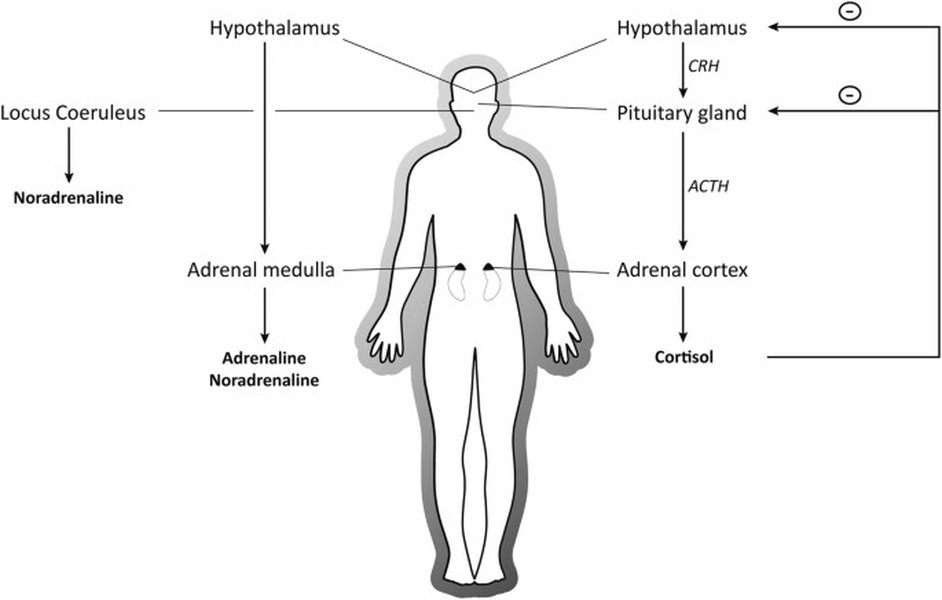
An illustration of the interplay between stress, learning, and memory, relevant to conditioned responses.
Behavioral Signatures: Actions That Speak Volumes
Behavioral markers are observable actions and decision-making patterns that directly reflect the influence of conditioning. These indicators are often used in contexts like employee performance assessment, but their principles extend to understanding broader human behavior.
Resource Allocation Patterns Independent of Cost-Benefit Analysis
This marker examines how resources (time, money, effort) are distributed, especially when these allocations appear to defy rational cost-benefit calculations. If resources are consistently directed towards activities or outcomes that don't offer clear, immediate, or logical returns, it could suggest a conditioned adherence to certain practices, beliefs, or priorities. For example, persistent investment in a failing strategy despite clear financial losses might indicate deeply conditioned loyalty or a fear of change, driven by past reinforcement or avoidance of negative consequences.
Decision-Making Timeline Compression Under Trigger Conditions
This refers to an accelerated decision-making process that occurs when specific "trigger" conditions are met. Instead of a standard evaluation period, decisions are made much more quickly, almost impulsively, under these particular circumstances. This compression suggests a conditioned response where the trigger bypasses normal deliberation, leading to rapid, pre-determined actions. This aligns with anticipatory behavior, where a predictable event elicits changes preceding it, indicating a pre-programmed rapid response.
Resistance to Modification Despite Negative Outcomes
This indicator focuses on the persistence of certain behaviors or strategies even when they consistently lead to undesirable or negative results. If an individual or group continues with a particular course of action, ignoring or rationalizing adverse consequences, it suggests a strong underlying conditioning that makes deviation difficult. This can be linked to operant conditioning, where behaviors followed by desirable outcomes are more likely to be repeated, and resistance to modification implies a strong, potentially irrational, reinforcement history. This highlights the robustness of ingrained habits or learned biases.
Physiological Footprints: The Body's Conditioned Responses
Physiological markers provide objective, often involuntary, data on conditioning. These indicators reveal how our bodies respond to stimuli based on learned associations, offering direct insights into emotional and cognitive states influenced by conditioning.
Stress Response Patterns to Different Trigger Types
This involves observing physiological manifestations of stress, such as heart rate variability, skin conductance, or facial micro-expressions, in response to various stimuli or situations. Different trigger types might elicit distinct or unusually heightened stress responses, indicating a conditioned emotional or physiological reaction to those specific triggers. For instance, an exaggerated stress response to a particular symbol or phrase could signify a conditioned fear or aversion. These responses are often beyond conscious control, making them powerful indicators of underlying conditioning.
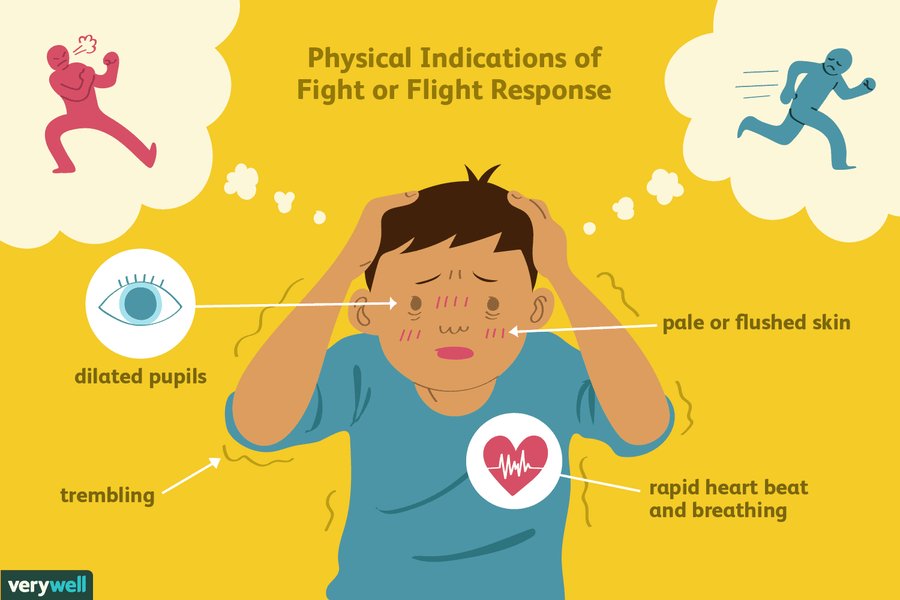
An illustration of the fight-or-flight response, a physiological stress reaction that can be conditioned.
Cognitive Load Indicators During Conditioning-Compatible vs. Challenging Decisions
This marker assesses the mental effort required during decision-making processes. Cognitive load indicators, such as pupil dilation, eye movement patterns, or response latency, might show lower cognitive load when making decisions that align with conditioned patterns, suggesting an automatic process. Conversely, higher cognitive load could indicate a struggle when faced with decisions that challenge established conditioning, requiring more deliberate and effortful processing. This differentiation reveals how deeply ingrained conditioned responses can streamline cognitive processing.
Group Dynamics Patterns in Conditioning-Activated Discussions
This involves observing how group interactions change when discussions touch upon topics or are initiated by cues that are likely to activate conditioned responses. Patterns like increased conformity, decreased critical evaluation, rapid consensus formation, or heightened emotional displays within the group could signal the influence of shared conditioning. This relates to how a group's collective behavior can be shaped by shared learning experiences or ingrained norms, sometimes leading to phenomena like groupthink or enhanced social cohesion.
To further illustrate the multifaceted nature of observable conditioning indicators, consider the following table summarizing their characteristics and implications:
| Category | Indicator | Observable Manifestation | Implication of Conditioning |
|---|---|---|---|
| Linguistic | Frequency of Civilizational/Historical References | Repeated use of specific historical analogies or cultural narratives. | Deeply ingrained cultural or societal frameworks influencing thought. |
| Linguistic | Rhetorical Pattern Consistency Across Contexts | Consistent use of particular persuasive language or argument structures. | Automatic, habitual communication styles from past reinforcement. |
| Linguistic | Speed of Response Formulation | Rapid, almost reflexive answers to complex or sensitive questions. | Automatized cognitive processing, pre-programmed responses. |
| Behavioral | Resource Allocation Independent of Cost-Benefit Analysis | Investment of time/effort/money in activities defying rational returns. | Ingrained habits, learned biases, or irrational adherence to practices. |
| Behavioral | Decision-Making Timeline Compression Under Trigger Conditions | Accelerated, impulsive decisions when specific triggers are present. | Pre-programmed responses bypassing normal deliberation. |
| Behavioral | Resistance to Modification Despite Negative Outcomes | Persistence of behaviors even when consistently leading to adverse results. | Robustness of conditioning patterns, difficulty in deviation. |
| Physiological | Stress Response Patterns to Different Trigger Types | Distinct or heightened heart rate, skin conductance, micro-expressions. | Conditioned emotional or physiological reactions to specific stimuli. |
| Physiological | Cognitive Load Indicators During Conditioning-Compatible vs. Challenging Decisions | Lower cognitive effort for conditioned tasks, higher for challenging ones. | Efficiency of ingrained patterns vs. effort for novel/conflicting tasks. |
| Physiological | Group Dynamics Patterns in Conditioning-Activated Discussions | Increased conformity, rapid consensus, heightened emotional displays. | Influence of shared learning experiences and ingrained group norms. |
An engaging overview of behavioral psychology and conditioning, providing foundational knowledge for understanding observable indicators.
This video provides an accessible explanation of behavioral conditioning, a core concept for understanding how the observable indicators discussed here are formed. It highlights the basic principles of how associations and consequences shape behaviors, which is crucial for interpreting the various linguistic, behavioral, and physiological markers we observe.
Algorithmic Development: Unlocking Deeper Insights
The data collected from these observable indicators can be fed into advanced algorithms for analysis, significantly enhancing the understanding and prediction of conditioned responses. Machine learning (ML) systems are particularly adept at processing vast datasets, identifying subtle patterns, and predicting potential outcomes, revolutionizing the field of condition monitoring.
Pattern Recognition: Training on Historical Responses
Developing and training machine learning models using datasets of past linguistic, behavioral, and physiological indicators linked to known conditioning events or outcomes is central to pattern recognition. The goal is for algorithms to identify recurring patterns, correlations, and causal relationships within these datasets. For example, an algorithm might learn to recognize specific linguistic cues that consistently precede certain collective actions, or behavioral sequences indicative of a particular type of social conditioning. This allows for the automated detection of similar patterns in new data, signaling the presence or activation of conditioning. Both supervised learning (with labeled data) and unsupervised learning (for discovering novel patterns) are employed in this domain.
Anomaly Detection: Identifying Deviations
Anomaly detection algorithms are designed to flag data points or sequences that significantly deviate from established normal or conditioned patterns. By training these algorithms on identified conditioning patterns, any deviation – whether in language, behavior, or physiological response – can be identified as an anomaly. This is crucial for detecting situations where conditioning might be breaking down, individuals are resisting conditioned responses, or new, unconditioned behaviors are emerging. Machine learning algorithms are particularly adept at picking up on subtle signs that human observers might miss, leading to early detection of shifts or resistance.
Predictive Modeling: Assessing Activation Probabilities
Predictive models utilize learned patterns and identified anomalies to assess the likelihood of conditioning activation under different hypothetical or real-time scenarios. These models can forecast the probability of certain linguistic or behavioral responses given specific inputs, triggers, or environmental conditions. This allows for proactive strategies, whether to reinforce desired conditioning or to mitigate the impact of undesirable conditioned responses. For instance, a model could predict the probability of a group adopting a certain stance based on the rhetoric used and the historical context provided, or the likelihood of a specific behavioral response given a set of external stimuli. Reinforcement learning and Bayesian frameworks are often leveraged for these assessments.
The radar chart above visualizes the estimated current state and future potential of algorithmic development in analyzing observable conditioning indicators. It assesses capabilities across key metrics like Pattern Recognition Efficacy, Anomaly Detection Accuracy, Predictive Modeling Reliability, Cross-Domain Integration, Real-time Processing Capability, and Ethical AI Implementation. The 'Current Algorithmic State' dataset reflects the sophisticated but still evolving nature of these systems, while the 'Future Algorithmic Potential' dataset highlights the anticipated advancements and increased robustness as research and technology progress. This chart underscores the significant impact that AI and machine learning are having on our ability to understand and manage conditioned behaviors.
Mindmap of Conditioning Indicators and Algorithmic Integration
This mindmap visually organizes the intricate relationships between observable conditioning indicators—linguistic, behavioral, and physiological—and their integration into algorithmic development. It highlights how each category of markers contributes to the capabilities of pattern recognition, anomaly detection, and predictive modeling, creating a holistic system for understanding conditioning.
This mindmap serves as a visual guide to the comprehensive framework for understanding observable conditioning indicators. It demonstrates how various markers—from the words we use to our physical reactions—are interconnected and how they feed into sophisticated algorithmic processes. This visual representation emphasizes the systematic approach required to fully leverage these indicators for analytical purposes, from recognizing established patterns to predicting future behaviors and identifying deviations.
Practical Considerations and Interdisciplinary Synergy
Leveraging observable conditioning indicators effectively requires careful attention to practical considerations and a synergistic approach across different domains. The integration of various data sources and analytical methods is key to developing robust and insightful systems.
Data Collection Methodologies
To capture comprehensive conditioning indicators at scale, it is essential to incorporate a variety of data collection methods. This includes utilizing real-time sensors, monitoring digital interactions (e.g., communication platforms, online behavior), and analyzing vast linguistic corpora. The aim is to create rich, multimodal datasets that provide a holistic view of an individual's or group's conditioned responses.
Ethical Considerations and Privacy
When dealing with sensitive physiological and behavioral data, ethical considerations and privacy protections are paramount. Data must be collected with informed consent, and robust privacy safeguards must be implemented to protect individuals' information. Additionally, mitigating algorithmic bias is crucial to ensure that models do not perpetuate or amplify existing societal biases, especially when making predictions or assessments related to human behavior.
Cross-Validation and Expert Feedback
To refine predictive accuracy and ensure the validity of algorithmic insights, cross-validation with human expert annotations is indispensable. Human experts can provide crucial feedback and validation, helping to fine-tune algorithms and interpret complex patterns that automated systems might misinterpret. This human-in-the-loop approach enhances the reliability and trustworthiness of the overall analysis.
Informing Intervention Design
The insights gained from analyzing observable conditioning indicators can directly inform the design of targeted behavioral interventions, re-conditioning strategies, and organizational training programs. By understanding the specific triggers, reinforcement schedules, and manifestations of conditioned responses, more effective and personalized interventions can be developed to achieve desired behavioral outcomes, whether for individual improvement or group performance enhancement.
Frequently Asked Questions (FAQ)
What is "observable conditioning"?
How can linguistic patterns indicate conditioning?
Are physiological markers truly "observable"?
What is the role of anomaly detection in conditioning analysis?
Can algorithms predict future conditioned behaviors?
Conclusion: The Path Forward in Understanding Conditioning
The analysis of observable conditioning indicators across linguistic, behavioral, and physiological domains, augmented by sophisticated algorithmic development, represents a powerful frontier in understanding human and group dynamics. By systematically identifying patterns in how we speak, act, and react, and by leveraging the capabilities of machine learning for pattern recognition, anomaly detection, and predictive modeling, we gain unprecedented insights into the subtle yet profound influence of conditioning. This interdisciplinary approach not only deepens our scientific comprehension of learning but also offers practical avenues for targeted interventions, adaptive strategies, and enhanced performance management in various contexts, from individual development to organizational effectiveness. As AI continues to evolve, our ability to decipher and leverage these conditioning indicators will undoubtedly lead to more nuanced and effective approaches to shaping behavior and fostering positive change.
Recommended Further Exploration
- How to apply reinforcement learning for behavioral modification?
- What are the ethical implications of using AI for behavioral analysis?
- Exploring the neurobiological basis of conditioned responses
- Advanced techniques for multimodal data fusion in behavioral science