
Unmasking the Mystery: Why Did Podcast Downloads Skyrocket from Unexpected Places?
An in-depth look at a baffling case of anomalous download spikes linked to Google News, impacting podcasters' stats and costs.
Key Insights into the Download Anomaly
- Massive, Unexplained Spike: Podcast downloads surged dramatically (e.g., from 2,500 to nearly 49,000 per episode), primarily originating from Malaysia and Indonesia.
- Automated Source Identified: The downloads were traced to a specific, private RSS feed supplied to Google News audio services, requested predominantly by Android devices using a generic "Dalvik" user agent.
- Significant Consequences: This automated traffic inflated download metrics, distorted analytics, and led to unexpected increases in podcast hosting costs for affected creators.
Decoding the "Odd Podcast Downloads" Phenomenon
A peculiar and concerning issue surfaced for podcast creators, notably documented by James Cridland for his "Podnews Daily" podcast. Publishers observed a sudden, massive inflation in their download numbers, presenting characteristics starkly different from typical listener behavior. This analysis delves into the specifics of the issue, its underlying cause, and the steps taken towards a resolution, based on the investigation detailed in the blog post published March 3, 2025, and updated May 3, 2025.
The Anatomy of the Problem: What Happened?
The core problem was an abrupt and colossal surge in podcast downloads that lacked any correlation with genuine audience growth or engagement.
Unprecedented Scale and Geography
Podcasts that usually garnered modest download numbers (around 2,500 per episode for Podnews Daily) saw specific episodes explode to nearly 49,000 downloads. This wasn't a gradual increase but a sudden jump. Crucially, this traffic was geographically concentrated: on specific days, over 90% of these downloads originated from just two countries – Malaysia (often over 50%) and Indonesia (around 38%). This highly localized spike was anomalous for a global podcast.
Technical Fingerprints: Devices and User Agents
Log analysis revealed distinctive technical characteristics:
- Device Dominance: The overwhelming majority (around 97-98%) of these downloads were attributed to Android devices.
- The "Dalvik" User Agent: Almost all requests used the generic "Dalvik" user agent. Dalvik was the process virtual machine (VM) in Google's Android operating system before being replaced by ART. Its appearance as a user agent typically indicates a request coming from an Android app that hasn't specified a more detailed identifier, often associated with background processes or older/simpler apps. Requests came from various Android versions (13, 14, 15).
- File Format: The specific files downloaded were AAC audio files, not the MP3 versions offered on the public feed.
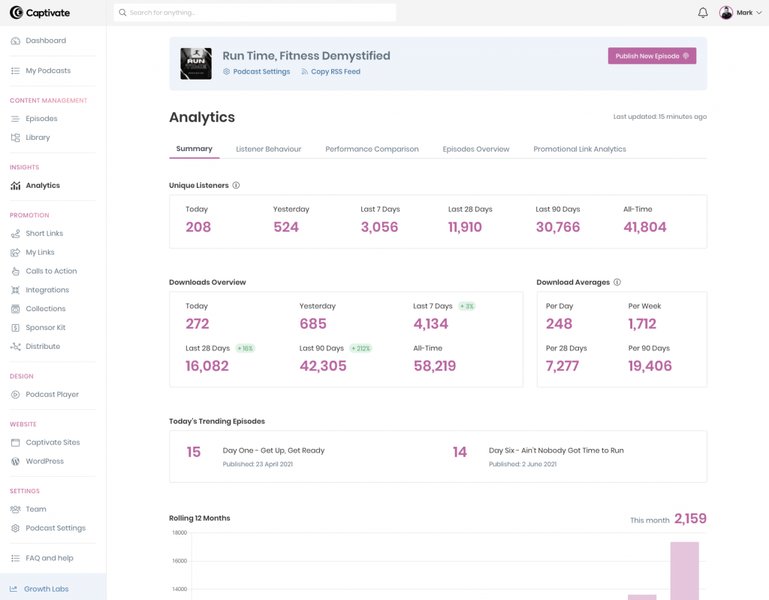
Podcast analytics dashboards track downloads, but anomalies like these require deeper log analysis.
Behavioral Patterns: Automation Suspected
The download patterns strongly suggested non-human activity:
- Temporal Consistency: Downloads occurred at a relatively constant rate throughout the day, with a slight dip during late-night hours corresponding to Malaysian/Indonesian local time. This differs significantly from typical human listening patterns, which usually peak during commutes or specific times of day.
- Latest Episode Focus: The automated downloads primarily targeted the newest episodes, fetching them shortly after release.
- Lack of Engagement: This massive download spike wasn't accompanied by any corresponding increase in listener feedback, social media interaction, newsletter subscriptions, or other engagement metrics.
The Fallout: Costs and Analytics Integrity
This flood of automated downloads had tangible negative consequences:
- Increased Hosting Costs: The sheer volume of data transferred led to significantly higher bandwidth usage and, consequently, increased hosting bills (the author reported an extra ~$200 in one month).
- Distorted Analytics: The inflated numbers severely skewed download statistics, making it difficult to gauge the true audience size, growth, and geographic distribution. This undermines the value of analytics for content strategy, monetization, and reporting to advertisers.
Pinpointing the Source: The Google News Connection
The investigation meticulously traced the source of these anomalous downloads back to a specific integration with Google services.
The "Secret" RSS Feed
The key discovery was that all the problematic downloads were accessing audio files tagged with a unique URL parameter: ?from=googleaudionews (or a variant like ?_from=googleaudionews1 created for testing). This parameter was appended exclusively to audio file URLs within a special, private RSS feed provided solely to Google for its News audio briefing service. This service allows users to listen to news summaries via Google Assistant ("Hey Google, listen to the news") or the Google News app.
Server logs confirmed that requests for the *feed itself* often came from known Googlebot IP addresses. However, the *audio file downloads* traced back to the parameter originated from a vast number of residential IP addresses in Malaysia and Indonesia, all using the "Dalvik" user agent.
Automated Fetching by Android Devices
The evidence points towards an automated process running on Android devices in these specific regions, triggered via the Google News integration. While Google Assistant's news briefing feature *is* known to pre-fetch content, the sheer scale, the generic user agent, and the geographic concentration suggest something beyond normal user-initiated requests. Possible explanations include:
- Over-aggressive caching or pre-fetching by a specific version of a Google app or Android system component prevalent in those regions.
- A potential misconfiguration or bug in how the Google News service interacts with partner feeds in Malaysia and Indonesia. Notably, Google News audio briefings are officially supported in Indonesia but not listed for Malaysia, adding another layer of complexity.
- Background processes on Android devices automatically polling the feed, possibly linked to pre-installed apps or system updates.
The "Dalvik" user agent, while generic, strongly implies the involvement of Android applications executing these requests automatically, without necessarily reflecting an active user listening session.
Comparing Anomalous vs. Genuine Downloads
This radar chart visually contrasts the characteristics of the anomalous downloads observed in this case against typical, genuine podcast listener downloads. The anomalous traffic shows high geographic concentration, low user agent diversity, high temporal consistency (indicating automation), low correlation with engagement, and a high relative cost impact due to sheer volume.
Summary Table: Anomalous vs. Typical Downloads
The following table summarizes the key differences observed:
| Characteristic | Anomalous Downloads (Podnews Case) | Typical Genuine Downloads |
|---|---|---|
| Volume | Extremely high, sudden spike (e.g., ~2.5k to ~49k) | Gradual changes, reflects audience size |
| Geography | Highly concentrated (Malaysia & Indonesia >90%) | More diverse distribution reflecting listener base |
| User Agent | Predominantly generic "Dalvik" (Android) | Diverse mix (AppleCoreMedia, specific apps, browsers, etc.) |
| Device | Almost exclusively Android phones | Mix of iOS, Android, Desktop, Smart Speakers |
| Download Pattern | Consistent hourly rate, automated pattern | Variable, peaks during specific times (commutes, evenings) |
| Source Feed | Private Google News RSS feed | Public RSS feed, various podcast apps |
| Listener Engagement | No corresponding increase | Correlates with downloads (feedback, shares, etc.) |
| Cost Impact | Significant increase due to high volume | Proportional to genuine audience size |
Navigating Towards a Solution
Addressing this issue involved investigation, mitigation, and attempts at platform communication. While a complete resolution remained elusive, several actions were taken.
Investigation and Verification
The podcaster undertook methodical steps to understand the traffic:
- Log Analysis: Detailed examination of server logs to identify IPs, user agents, requested files, and timestamps.
- Feed Tagging: Modifying the unique parameter in the Google News feed URL (e.g., changing
?from=googleaudionewsto?from=googleaudionews1) confirmed this feed was the exclusive source of the spike. - Ruling out Alternatives: The analysis helped exclude other causes like scrapers or sudden organic popularity in those regions.
Mitigation Strategies
To manage the immediate impact, especially the financial cost:
- Reducing Audio File Size: The author switched the audio format provided *specifically to the Google News feed* from a higher quality 128kbps stereo file to a much smaller 32kbps HE-AAC v2 mono file. This significantly reduced bandwidth consumption (from ~6.8MB to ~1.9MB per download) and thus hosting costs, without drastically impacting listenability for news briefings.
- Raising Awareness: Publishing the findings publicly served to inform other podcasters who might be experiencing similar issues and put pressure on the involved platforms.
Challenges and Ongoing Concerns
Finding a definitive solution proved difficult:
- Platform Communication: Attempts to engage Google for clarification and resolution yielded minimal response or slow progress, highlighting challenges creators face when dealing with large platform Cogs.
- Generic User Agent: The "Dalvik" user agent makes it hard to precisely identify the specific app or process responsible without cooperation from Google or more granular data.
- Lack of Control: Podcasters have limited direct control over how third-party platforms like Google News cache, fetch, or distribute their content via specialized integrations.
Mindmap Summary: Understanding the Download Anomaly
This mindmap provides a visual overview of the key aspects of the odd podcast download issue, from identification to mitigation efforts.
(James Cridland Case Study)"] id1["The Problem"] id1a["Massive Download Spike
(2.5k -> 49k)"] id1b["Geographic Concentration
(Malaysia & Indonesia)"] id1c["Technical Details
(Android, 'Dalvik' UA, AAC)"] id1d["Automated Pattern
(Consistent Hourly Rate)"] id1e["Negative Impact
(Costs, Skewed Analytics)"] id2["The Cause"] id2a["Source Identified
(Private Google News RSS Feed)"] id2b["URL Parameter
('?from=googleaudionews')"] id2c["Link to Google Services
(News Briefings, Assistant)"] id2d["Automated Fetching
(Android Devices)"] id2e["Ambiguity
(Specific Trigger Unknown)"] id3["Investigation Steps"] id3a["Server Log Analysis
(IPs, UAs, Timestamps)"] id3b["Feed Parameter Tagging
(Verification)"] id3c["Excluding Other Causes"] id4["Mitigation & Solutions"] id4a["Cost Reduction
(Lower Bitrate Audio File)"] id4b["Raising Awareness
(Public Blog Post)"] id4c["Platform Communication
(Contacting Google)"] id4d["Challenges
(Generic UA, Platform Response)"] id4e["Potential Future Steps
(Filtering, Analytics Adjustment)"]
Broader Recommendations
While this specific case highlights a Google News integration issue, it underscores broader points for podcasters:
- Monitor Analytics Deeply: Look beyond headline download numbers. Analyze geographic data, user agents, and download patterns for anomalies.
- Understand Feed Integrations: Be aware of how third-party platforms use private or specialized feeds and the potential impact on stats.
- Focus on Engagement: Prioritize metrics that reflect genuine listener interaction (e.g., listener retention, comments, community engagement) over potentially inflated raw downloads.
- Advocate for Transparency: Encourage platforms to provide clearer data and explanations for traffic originating from their systems.
Frequently Asked Questions
+ Were these actual people listening to the podcast?
+ What does the "Dalvik" user agent mean?
+ Why Malaysia and Indonesia specifically?
+ How does this affect podcast analytics and rankings?
+ Why is this issue difficult to solve completely?
Recommended Further Exploration
- How can podcasters identify and filter bot traffic from their analytics?
- What are the best practices for interpreting podcast download statistics?
- How does Google News audio briefing integration work for podcasters?
- Strategies for reducing podcast hosting costs due to high bandwidth usage.
References
 uk.amazonforum.com
Last updated May 5, 2025