
Unlocking Knowledge: How OER and Librarians are Revolutionizing Education
Discover the world of Open Educational Resources and the essential support university librarians offer to faculty for their successful adoption.
Key Insights at a Glance
- OER Defined: Open Educational Resources are teaching, learning, and research materials that are freely accessible and openly licensed, permitting no-cost use, adaptation, and redistribution.
- The Power of the "5 Rs": OER empowers users to Retain (make, own, and control copies), Reuse (use content in various ways), Revise (adapt, modify, or alter content), Remix (combine original or revised content with other material), and Redistribute (share copies with others), fostering educational innovation.
- Librarian's Crucial Role: University librarians are key enablers in the OER movement, providing comprehensive support from discovery and licensing guidance to advocacy, technical assistance, and integration support for faculty.
Demystifying Open Educational Resources (OER)
The globally recognized symbol for Open Educational Resources.
Open Educational Resources (OER) represent a transformative approach to educational materials. They are fundamentally about broadening access to knowledge and fostering a more equitable and collaborative learning environment. The core principle is simple yet profound: educational content should be freely available for everyone to use, adapt, and share.
What Exactly Are OER?
OER are defined as teaching, learning, and research materials in any medium – digital or otherwise – that reside in the public domain or have been released under an open license. This open license, often a Creative Commons license, grants explicit permission for no-cost access, use, adaptation, and redistribution by others with no or limited restrictions. This distinguishes OER from simply "free" resources, as OER inherently carry permissions for modification and sharing, which is crucial for educational customization and innovation.
The concept of OER is rooted in the belief that education is a public good and that access to high-quality educational materials should not be hindered by cost or restrictive copyright. By removing these barriers, OER initiatives aim to democratize education, making learning more accessible to a wider range of students globally.
The Power of the "5 Rs" in OER
The utility and flexibility of OER are often summarized by the "5 Rs" framework, which outlines the permissions typically granted by open licenses:
- Retain: The right to make, own, and control copies of the content (e.g., download, duplicate, store, and manage).
- Reuse: The right to use the content in a wide range of ways (e.g., in a class, in a study group, on a website, in a video).
- Revise: The right to adapt, adjust, modify, or alter the content itself (e.g., translate the content into another language, or adapt it to a specific cultural context).
- Remix: The right to combine the original or revised content with other open content to create something new (e.g., incorporate the content into a mashup, or create a new textbook from several OER).
- Redistribute: The right to share copies of the original content, your revisions, or your remixes with others (e.g., give a copy of the content to a friend, or share it online).
These permissions collectively empower educators to tailor learning materials precisely to their students' needs and their specific teaching contexts, fostering a more dynamic and responsive educational experience.
A Spectrum of Resources: Types of OER
OER encompasses a vast array of materials, demonstrating its versatility. These resources can include, but are not limited to:
- Full Courses: Complete course packages, including syllabi, lecture notes, assignments, and assessments.
- Course Materials: Individual components such as modules, lecture notes, and reading lists.
- Textbooks: Openly licensed textbooks that serve as alternatives to expensive commercial options.
- Streaming Videos: Educational videos, lectures, and documentaries.
- Tests and Assessments: Quizzes, exams, and question banks that can be adapted.
- Software and Simulations: Interactive tools and applications that enhance learning.
- Lesson Plans and Syllabi: Detailed outlines and guides for instruction.
- Learning Objects: Small, reusable units of educational content, such as images, animations, or interactive exercises.
This wide range allows educators to select, combine, and adapt resources to create rich and engaging learning environments tailored to their specific pedagogical goals and student needs.
University Librarians: Champions of OER Adoption
University librarians are increasingly playing a pivotal and multifaceted role in fostering the adoption and successful integration of Open Educational Resources within their institutions. Their expertise in information management, copyright, resource discovery, and scholarly communication uniquely positions them as key partners for faculty seeking to explore and implement OER.
Illuminating the Path: Awareness and Education Initiatives
A primary function of librarians is to raise awareness and educate faculty about OER. Many instructors may not be fully aware of what OER entails, its benefits, or how it differs from other digital resources. Librarians address this by:
- Organizing workshops, webinars, and training sessions covering OER fundamentals, the "5 Rs," finding and evaluating resources, and understanding open licenses.
- Disseminating information through library guides, newsletters, faculty meetings, and one-on-one consultations.
- Clarifying common misconceptions, distinguishing OER with its open licensing and permissions from materials that are merely free to access but not to modify or share.
- Highlighting successful OER adoption case studies within their institution or in similar academic contexts.
Navigating the OER Landscape: Discovery and Curation Services
Finding high-quality, relevant OER can be a daunting task for busy faculty members. Librarians leverage their information retrieval skills to assist in this process by:
- Guiding faculty to reputable OER repositories and search platforms like OER Commons, OpenStax, Open Textbook Library, and MERLOT.
- Creating and maintaining subject-specific OER guides that curate recommended resources tailored to different academic disciplines.
- Assisting faculty in evaluating OER for quality, accuracy, currency, accessibility, and alignment with course learning outcomes, often introducing evaluation rubrics and frameworks.
- Integrating OER discovery into existing library search systems and catalogs, making them more easily discoverable alongside traditional resources.
The mindmap below outlines the key areas where university librarians provide support to faculty for OER adoption, illustrating the comprehensive nature of their involvement.
This mindmap illustrates the multifaceted support structure librarians provide to faculty, facilitating the effective adoption and use of Open Educational Resources.
Clarifying Permissions: Expertise in Copyright and Open Licensing
Understanding the nuances of copyright and open licenses is crucial for legally and ethically using, adapting, and sharing OER. Librarians provide invaluable expertise in this area by:
- Educating faculty on different types of Creative Commons licenses and their implications for use (e.g., requirements for attribution, non-commercial use, or sharing adaptations under the same license).
- Advising on how to properly attribute OER content and comply with the terms of its license.
- Helping faculty navigate the legalities of revising or remixing OER, especially when combining materials with different licenses.
- Explaining the concept of public domain and how it applies to educational materials.
Empowering Innovation: Support for OER Adaptation, Creation, and Integration
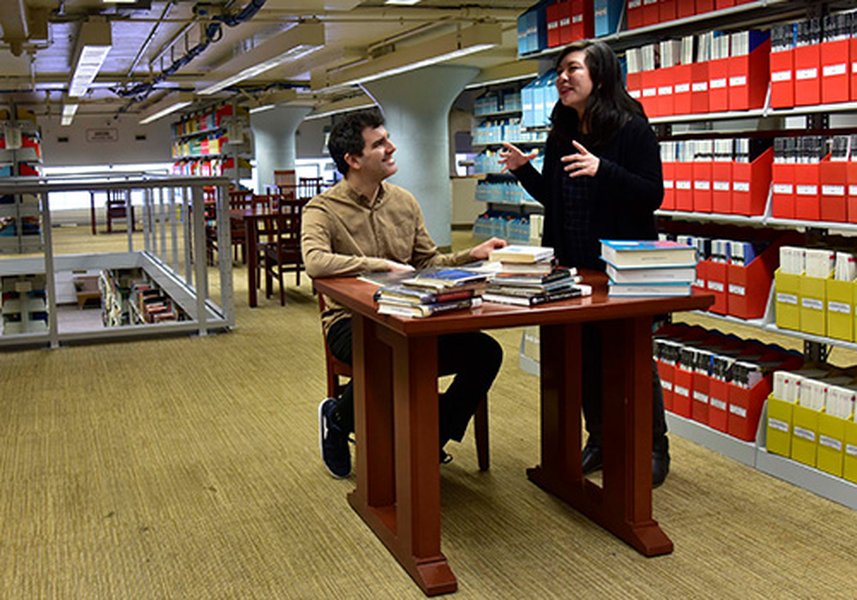
Librarians often collaborate closely with faculty and instructional designers to integrate, adapt, or even create new Open Educational Resources.
Beyond finding existing OER, many faculty members wish to adapt resources to better fit their courses or even create new OER. Librarians can support these endeavors by:
- Providing technical assistance or connecting faculty with support for using OER authoring tools and platforms.
- Offering guidance on accessibility standards to ensure OER materials are usable by all students, including those with disabilities.
- Assisting with the integration of OER into Learning Management Systems (LMS) like Canvas, Moodle, or Blackboard.
- Collaborating with instructional designers and other campus support units to provide comprehensive pedagogical and technical assistance for OER development and course redesign.
- Supporting "open pedagogy" initiatives, where students are involved in creating or adapting OER as part of their learning experience.
Driving Change: Institutional Advocacy and Strategic Collaboration
Librarians often act as advocates for OER at an institutional level, working to create a supportive environment for open educational practices. This includes:
- Collaborating with university administration to develop and implement institutional OER policies and strategic plans.
- Advocating for and helping to manage OER grant programs or other incentives to encourage faculty adoption and creation.
- Building partnerships with academic departments, faculty senates, student government associations, and campus bookstores to promote OER.
- Tracking OER adoption and calculating student cost savings to demonstrate the impact and value of OER initiatives.
- Participating in regional or national OER consortia and networks to share best practices, resources, and advocate for broader OER support.
Visualizing Librarian Impact on OER Adoption
The following chart illustrates how different levels of librarian engagement can impact various facets of OER adoption by faculty. More comprehensive and proactive librarian support generally leads to stronger outcomes across all areas, facilitating smoother transitions to open educational practices and ultimately enhancing the learning experience for students. The facets measured range from initial awareness to complex institutional integration and pedagogical innovation.
As depicted, comprehensive librarian support significantly enhances faculty engagement with OER, leading to more widespread and effective use of open materials, ultimately benefiting students through increased access and affordability.
A Closer Look: Key Librarian Support Functions for OER
University librarians offer a diverse range of services to assist faculty in adopting and effectively utilizing Open Educational Resources. Their involvement is crucial for overcoming common barriers and maximizing the benefits of OER. The table below summarizes these key support functions, provides examples of librarian activities, and highlights the impact on faculty engagement with OER.
| Support Area | Description of Librarian Role | Examples of Librarian Activities | Impact on Faculty OER Adoption |
|---|---|---|---|
| Awareness & Education | Raising faculty understanding of OER principles, benefits, and available resources. | Conducting workshops, creating informational guides, one-on-one consultations, promoting OER through campus channels. | Increases faculty interest and willingness to explore OER; clarifies misconceptions. |
| Discovery & Curation | Assisting faculty in finding relevant, high-quality OER suitable for their courses. | Developing subject-specific OER LibGuides, demonstrating OER repository searches (e.g., OER Commons, Open Textbook Library), helping evaluate OER quality and alignment. | Saves faculty time; improves the quality and relevance of adopted OER. |
| Copyright & Licensing Guidance | Providing expertise on open licenses (e.g., Creative Commons), copyright compliance, and proper attribution. | Explaining license terms, advising on legal use and adaptation of OER, ensuring faculty understand permissions. | Builds faculty confidence in using and modifying OER legally; prevents copyright infringement. |
| Adaptation, Creation & Technical Support | Supporting faculty in modifying existing OER or developing new open materials, and integrating them into teaching platforms. | Connecting faculty with authoring tools, instructional designers, and IT support; assisting with LMS integration; advising on accessibility standards. | Empowers faculty to customize OER for specific needs; facilitates seamless OER delivery to students. |
| Institutional Advocacy & Policy Development | Championing OER at an institutional level to foster a supportive environment. | Collaborating on OER policies, advocating for OER grants and incentives, tracking OER adoption and impact, partnering with campus stakeholders. | Creates systemic support for OER; encourages broader institutional commitment and sustainability. |
| Community Building & Collaboration | Fostering a community of practice around OER among faculty and across institutions. | Facilitating OER showcases, connecting OER adopters, participating in OER consortia and networks. | Encourages peer-to-peer learning and support; spreads best practices in OER implementation. |
Insights from the Field: The Library's Role in the Open Education Movement
The following video provides a concise overview of how libraries are integral to the broader Open Education movement, highlighting various support mechanisms and the importance of librarian involvement in promoting OER. Understanding this broader context can help appreciate the depth of support librarians offer.
This video, "Libraries & the Open Education Movement," underscores the active and evolving role academic libraries and librarians play in fostering OER adoption. It touches upon how libraries champion open access, provide discovery tools for open resources, and support faculty in integrating OER into their teaching methodologies. Ultimately, such initiatives are crucial for building a sustainable open education ecosystem within universities, enhancing access to education and reducing costs for students. Librarians act as catalysts in this movement, leveraging their expertise to navigate the complexities of OER and make them accessible and practical for the academic community.
Frequently Asked Questions (FAQ)
What are the main benefits of OER for students and faculty?
How do Creative Commons licenses relate to OER?
Is the quality of OER comparable to traditional textbooks?
What is the first step a faculty member should take if interested in OER?
Can librarians help with adapting or creating new OER?
Conclusion
Open Educational Resources (OER) represent a significant shift towards more accessible, affordable, and adaptable education. By providing freely available and openly licensed materials, OER empowers both educators and learners, fostering innovation and equity in academic settings. The "5 Rs" framework—Retain, Reuse, Revise, Remix, and Redistribute—defines the core freedoms that make OER a powerful tool for transforming teaching and learning.
University librarians are indispensable partners in the journey of OER adoption. Their expertise in information discovery, copyright, instructional support, and institutional advocacy positions them as central figures in helping faculty navigate the OER landscape. From raising awareness and curating resources to providing guidance on licensing and supporting the creation of new materials, librarians offer comprehensive assistance that is vital for the successful integration of OER into university curricula. By championing OER, librarians not only help reduce student costs but also contribute to a richer, more dynamic, and inclusive educational environment.
Recommended Further Exploration
- What are the best repositories for finding peer-reviewed Open Educational Resources by subject?
- How can faculty evaluate the quality and accessibility of Open Educational Resources?
- What are some successful case studies of institutional OER adoption and their impact on student success?
- What are the different types of Creative Commons licenses and how do they apply to creating or using OER?