
Navigating the Release Landscape: Why Official Processes Reign Supreme for Project Deliverables
Unpacking "IC-002 v1.0" and the Indispensable Role of Structured Workflows in Technical Project Management.
Key Insights into Release Management
- Mandatory Processes: For a project manager to request the release of any technical deliverable, including "IC-002 v1.0," adherence to official, structured processes is unequivocally necessary. This ensures accountability, quality, and compliance.
- Contextual Nuances of "IC-002 v1.0": While "IC-002 v1.0" can refer to diverse technical artifacts—from Microsoft Cloud for Sustainability training modules to firmware versions or industrial craft components—its specific meaning is dictated by the organizational or industry context. Regardless of its exact nature, its release necessitates formal procedures.
- Strategic Role of Project Managers: Technical project managers bridge the gap between business needs and technical execution. Their requests for releases must be formalized within established workflows to facilitate collaboration, risk mitigation, and successful deployment, preventing potential security vulnerabilities or non-compliance issues.
Translating Your Query
The sentence you provided, "是否需要遵循官方流程让项目经理要求技术团队发布IC-002 v1.0?" translates to English as:
"Is it necessary to follow the official process for the project manager to request the technical team to release IC-002 v1.0?"
This translation captures the essence of your query, focusing on the need for formal procedures in technical project management and software release cycles.
Deciphering "IC-002 v1.0": A Contextual Exploration
The identifier "IC-002 v1.0" is a technical versioning tag that can signify different things depending on the specific domain or organization. Its interpretation is crucial for understanding the implications of its release.
Diverse Meanings Across Industries
Based on various technical contexts, "IC-002 v1.0" could potentially refer to:
- **Microsoft Cloud for Sustainability Courseware:** It often designates a specific training module, such as "IC-002T00: Microsoft Cloud for Sustainability." This involves authorized content, student and instructor handbooks, PowerPoints, and lab files typically managed on GitHub. Releasing updates or new versions in this context would follow Microsoft's internal content management and distribution protocols.
- **Industrial Craft (IC) World Conversion Utilities:** In gaming or simulation environments, "IC-002 v1.0" might relate to a specific version of a mod or a conversion tool, like "IndustrialUpgrade v1.0" for converting game worlds.
- **Integrated Collaboration Object Model (ICOM):** It could represent a version within a formal standard or document, such as "Integrated Collaboration Object Model (ICOM) for Interoperable ... v1.0," which outlines procedures for technical committees.
- **SAP Intercompany Reconciliation (ICR) Process:** In enterprise resource planning (ERP) systems, "ICR process 002" refers to a standard procedure for financial reconciliation, where "v1.0" might denote an initial or specific iteration of this process.
- **Firmware or Software Updates:** "IC" commonly serves as a prefix for product identifiers in various hardware, such as Icom radios, where "v1.0" or similar refers to firmware versions that require specific update processes. It could also refer to a specific integrated circuit (IC) or a tool like "iC Bypass Tool v1.3" with versioning.
- **Technical Specifications and Security Policies:** Examples include GlobalPlatform specifications (e.g., "APDU Transport over SPI / I2C v1.0"), cybersecurity test documents (e.g., "STIX/TAXII 2.0 Interoperability Test Document: Part 2 Version 1.0"), or military policies (e.g., "ECSM 002 Protected Distribution System V1.0"). In these cases, "v1.0" indicates the initial release of a formal technical document or policy.
Given these varied interpretations, the precise definition of "IC-002 v1.0" is entirely dependent on the specific organizational or industry context where it is used. Nevertheless, the necessity of an official release process remains constant across all these domains.
The Indispensable Role of Official Processes in Technical Releases
Regardless of what "IC-002 v1.0" represents, adhering to an "official process" for its release is not merely a recommendation but a fundamental requirement in professional technical environments. This practice ensures order, quality, security, and compliance.
Why Processes Matter
Official processes are the backbone of successful technical project management. They provide a structured framework that:
- **Ensures Accountability:** Clear steps and documentation define roles and responsibilities, making it evident who is responsible for each phase of the release.
- **Promotes Communication and Collaboration:** Formal processes necessitate specific communication channels and touchpoints, fostering effective teamwork between project managers, technical teams, and other stakeholders.
- **Maintains Quality and Consistency:** Defined workflows, especially for "v1.0" releases, ensure that all deliverables meet established quality standards, undergo necessary testing, and align with organizational guidelines.
- **Mitigates Risks:** By incorporating steps like security assessments, compliance checks, and approval gates, official processes help identify and address potential issues before a release impacts production environments or users.
- **Enhances Productivity:** While seemingly bureaucratic, well-defined processes streamline operations, reduce rework, and improve overall efficiency, ultimately leading to better project outcomes.
The Project Manager's Mandate
A technical project manager acts as a crucial liaison, bridging the technical team's capabilities with business objectives. Their request for a release, especially for a foundational "v1.0," must be integrated into a formal workflow. This involves:
- **Formal Request Submission:** Initiating the release process through a documented request, often via an online work request system or a project management tool.
- **Scope and Objective Definition:** Collaborating with the technical team to clearly outline the scope, objectives, and deliverables of "IC-002 v1.0."
- **Planning and Scheduling:** Working with the team to develop a detailed release plan, including timelines, resource allocation, and task assignments.
- **Compliance and Review:** Ensuring that all necessary checks—technical, security, legal, and regulatory—are completed and approved before the release. This is particularly vital in environments like the Department of Defense (DoD) or large enterprises, where compliance with standards like DevSecOps is mandatory.
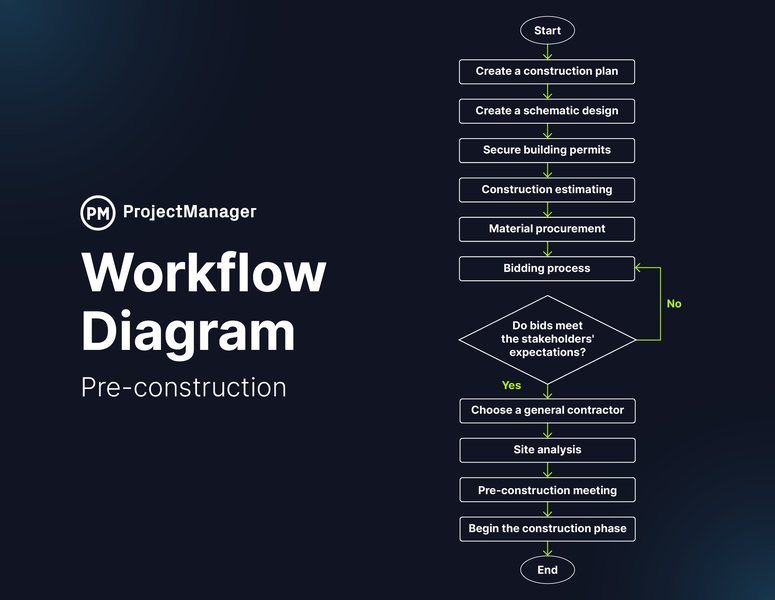
An example of a structured workflow diagram illustrating phases and decision points in a project.
The Release Management Lifecycle: A Structured Approach
Software and technical artifact releases typically follow a well-defined lifecycle. For "IC-002 v1.0," this would involve several critical stages:
Development and Versioning
Initially, the technical team develops "IC-002." The "v1.0" designation indicates its first official release, setting a baseline for future iterations. This often involves using version control systems like Git and potentially semantic versioning to manage changes effectively.
Build and Testing
Once development is complete, the artifact undergoes rigorous building and testing. This includes:
- **Unit Testing:** Verifying individual components.
- **Integration Testing:** Ensuring different components work together seamlessly.
- **System Testing:** Validating the complete system against requirements.
- **Security Testing:** Identifying vulnerabilities, especially critical for internal components or customer-facing solutions.
Deployment and Delivery
After successful testing and approvals, "IC-002 v1.0" is prepared for deployment. This phase might involve:
- **Release Branching:** Creating stable branches for the release to isolate it from ongoing development.
- **Deployment Automation:** Using tools and scripts for efficient and error-free deployment to target environments (e.g., production servers, distribution platforms, or internal systems like GitHub repositories for course materials).
- **Documentation:** Updating all relevant documentation, including technical specifications, user guides, and release notes, to reflect the "v1.0" release.
Post-Release Monitoring and Feedback
Following the release, monitoring is essential to ensure stability and performance. Feedback loops are established to collect user input, report bugs, and inform future updates.
A Comprehensive View of Project Management and Release Factors
To further illustrate the multifaceted nature of technical releases and the importance of official processes, consider the various factors influencing a project manager's decision-making and the technical team's execution.
This radar chart visualizes key factors influencing the successful release of a technical deliverable like "IC-002 v1.0." It highlights the relative importance and performance across different dimensions from a project manager's perspective. For instance, "Process Adherence" and "Technical Readiness" are often foundational for a stable release.
Understanding the Interplay of Project Management and Technical Release
The successful release of "IC-002 v1.0" is a collaborative effort, orchestrated by the project manager and executed by the technical team. This mindmap illustrates the essential elements and their connections.
This mindmap illustrates the interconnected components involved in the release of "IC-002 v1.0," emphasizing the central role of official processes, the responsibilities of the project manager and technical team, and the benefits and risks associated with adherence or non-adherence to these processes.
Navigating the Technical Project Manager's Role in Release Management
For any technical project, particularly one involving software or system releases, the project manager serves a pivotal function in ensuring that the release process is followed diligently. A technical project manager possesses a unique blend of management skills and technical expertise, enabling them to effectively communicate with both stakeholders and the technical team.
A key aspect of this role is managing releases through structured workflows. The following video from GitLab discusses using GitLab as a project management tool, which can include managing technical releases like "IC-002 v1.0." It highlights how such platforms facilitate collaboration, version control, and workflow adherence, all crucial for a successful release.
This video demonstrates how GitLab can be leveraged as a project management tool, particularly relevant for tracking and managing technical releases. It underscores the importance of integrated platforms in enforcing official processes and ensuring transparency throughout the release cycle.
Detailed Considerations for "IC-002 v1.0" Release
The necessity of following official processes is reinforced by various examples and best practices in the industry.
The DoD DevSecOps Reference Design
For instance, the DoD Enterprise DevSecOps Reference Design v1.0 provides a comprehensive framework for software development and delivery, including rigorous workflows for building, testing, securing, and releasing applications. If "IC-002 v1.0" were a component within such a system, bypassing these steps could lead to significant security vulnerabilities or non-compliance with critical standards.
Version Control and Release Cadence
In most software development lifecycles, a "v1.0" release implies a baseline version that will likely be followed by subsequent patch releases or minor/major updates. Organizations often have a defined release cadence, ensuring that critical bug fixes or new features are integrated and delivered systematically. This structured approach, typically involving release branches and semantic versioning, is essential for maintaining product stability and clarity.
Collaboration and Documentation
Effective project management hinges on seamless collaboration. Tools that facilitate shared documentation, task tracking, and communication are vital. Official processes ensure that all stakeholders have access to necessary information and can contribute to the release's success. This also includes maintaining detailed technical specifications and construction management documents for accountability and future reference.
Comparative Analysis of Release Process Elements
The table below summarizes key aspects of ideal and typical release processes, highlighting why adhering to official procedures for "IC-002 v1.0" is paramount.
| Aspect of Release Process | Ideal Process (Official Adherence) | Typical Project Scenario (Potential Shortcuts) |
|---|---|---|
| Initiation & Request | Formal work request submitted, approved by relevant stakeholders. Clear scope and objectives defined. | Informal request via chat or email, scope may be ambiguous or change frequently. |
| Planning & Design | Detailed planning with documented technical specifications, architecture diagrams, and test plans. | Minimal documentation, reliance on tacit knowledge within the team. |
| Development & Coding | Adherence to coding standards, regular code reviews, version control best practices. | Inconsistent coding standards, limited code reviews, less rigorous version control. |
| Testing & Quality Assurance | Comprehensive testing cycles (unit, integration, system, security, UAT), automated test suites. | Limited manual testing, potential for overlooked bugs, insufficient security checks. |
| Security & Compliance | Mandatory security assessments, vulnerability scans, adherence to industry/regulatory compliance. | Security as an afterthought, potential for unaddressed vulnerabilities. |
| Deployment & Release | Automated deployment pipelines, staged rollouts, rollback plans, documented release notes. | Manual deployment, direct-to-production pushes, limited rollback capability. |
| Post-Release Monitoring | Proactive monitoring, incident management, performance tracking, feedback loops. | Reactive issue resolution, minimal performance monitoring. |
| Documentation & Archiving | All artifacts, decisions, and processes thoroughly documented and archived. | Incomplete documentation, knowledge silos within the team. |
This comparison underscores that while shortcuts might seem to accelerate delivery, they often introduce significant risks, ultimately impacting quality, security, and project success.
Frequently Asked Questions (FAQ)
What does "IC-002 v1.0" specifically refer to?
Why is it important for project managers to follow official processes for releases?
What are the typical stages of an official release process for a technical deliverable?
What are the risks of not following an official release process?
Conclusion
In conclusion, the question of whether a project manager needs to follow an official process to request the technical team to release "IC-002 v1.0" is met with a resounding "yes." This necessity transcends the specific interpretation of "IC-002 v1.0," be it a software version, a training module, or a technical specification. Official processes are the bedrock of effective project management, ensuring that technical deliverables are developed, tested, and deployed with precision, security, and adherence to established standards. They foster accountability, streamline communication, and ultimately lead to higher-quality outcomes while mitigating risks. For any technical release, a structured, documented approach is not merely a bureaucratic hurdle but an indispensable pathway to success.
Recommended Further Reading
- How do technical project managers ensure compliance in software releases?
- What are the best practices for DevSecOps implementation in enterprise environments?
- Understanding semantic versioning and its impact on software release management.
- The role of GitHub in managing technical training courseware releases.
Referenced Search Results
 assets2.euchner.de