
Unlocking Okra's Adhesion Wonders
Exploring how okra innovates by binding and repelling on a molecular scale
Highlights
- Dual Functionalities: Okra exhibits both adhesive and antiadhesive properties for varied applications.
- Biomedical and Industrial Uses: Its unique mucilage can serve as a hemostatic agent, tablet binder, and eco-friendly adhesive.
- Mechanisms at Play: Inhibits bacterial adhesion through non-specific charge interactions while promoting adhesion via platelet activation and mucilaginous binding.
Introduction to Okra Adhesion Properties
Okra (Abelmoschus esculentus) is recognized not only as a nutritious vegetable but also as a source of highly versatile natural compounds. In recent studies, okra has gained attention for its ability to both promote adhesion and inhibit the adhesion of foreign substances. These dual behaviors are attributed to the mucilage, a polysaccharide-rich substance, found in okra’s fruits.
The adhesive properties of okra make it an ideal candidate for use in pharmaceutical applications, such as tablet binders and hemostatic agents, while its antiadhesive qualities have been harnessed to prevent the colonization of harmful bacteria like Helicobacter pylori in the stomach. This dual functionality is being explored in various fields ranging from wound healing and drug delivery to eco-friendly industrial adhesives.
Detailed Properties and Mechanisms
Okra as an Adhesive Agent
The adhesive power of okra is primarily linked to its mucilage—a sticky, viscous polysaccharide constituted of monosaccharides such as D-galactose, L-rhamnose, and galacturonic acid. These molecules provide a high viscosity and shear-thinning behavior, which can be manipulated through temperature and concentration to serve various binding applications.
Tablet Binder and Wound-Healing Applications
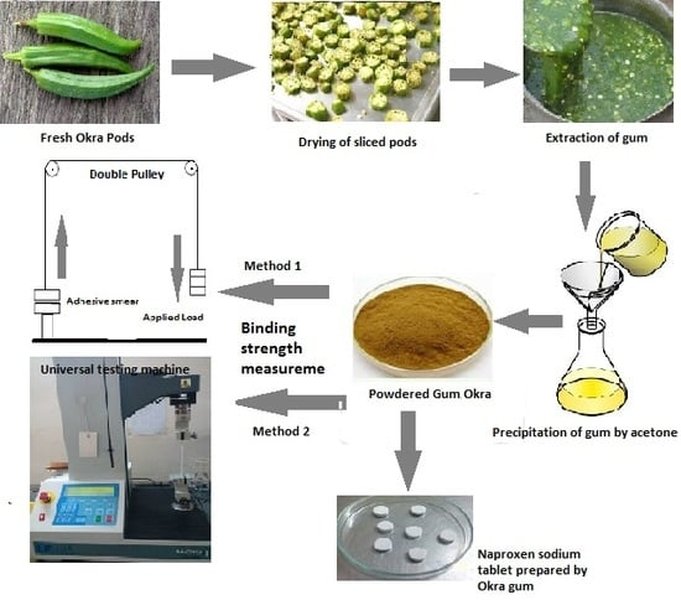
In the pharmaceutical industry, okra mucilage has been developed as a robust tablet binder that often exceeds the performance of traditional alternatives like pre-gelatinized starch. Its bioadhesive properties enhance drug retention times at the administration site, improving the overall efficacy of therapeutic formulations.
Additionally, okra gel is effective as a hemostatic bioadhesive. By activating platelets and inducing the release of coagulation factors XI and XII, okra gel creates a rapid and effective seal against bleeding, even under high pressure or subaquatic conditions.
Sustainable and Natural Glue Alternative
Beyond its pharmaceutical uses, okra mucilage is being explored as a natural and sustainable alternative to synthetic glues. Its adhesive nature makes it a promising candidate for light-duty bonding applications in paper, fabric, and even certain wood products. Some innovative ventures have demonstrated successful extractions of okra mucilage through boiling processes, ensuring a safe and eco-friendly adhesive formulation.
Okra's Antiadhesive Capabilities
In contrast to its binding properties, certain extracts of okra have shown significant antiadhesive attributes, particularly against bacterial pathogens. A focal point in this research has been the inhibition of Helicobacter pylori adherence to gastric mucosa.
Mechanism Against Bacterial Adhesion
The antiadhesive effects primarily stem from the polysaccharide content in okra. When applied, these compounds interfere with the binding of bacterial adhesins such as BabA, SabA, and HpA to their corresponding receptors on the human gastric cells. Studies have demonstrated that okra fresh extract (Okra FE) dose-dependently prevents H. pylori from anchoring onto AGS cells, thereby offering a protective barrier against infection.
Moreover, the non-specific binding of these high molecular weight compounds to the bacterial cell surface disrupts the electrostatic interactions essential for bacterial adhesion without triggering compensatory virulence factor expression.
Extended Applications in Antimicrobial Strategies
In addition to combating H. pylori, okra extracts have also shown promise in reducing the adhesion of Campylobacter jejuni to colonic tissues. Although the inhibitory effect is more pronounced in in vitro studies, this opens up potential applications in preventing certain gastrointestinal infections and maintaining digestive health.
Visualizing the Impact of Okra's Adhesion Properties
Performance Radar Chart
The following radar chart illustrates a comparative analysis of okra's dual functionalities across several performance metrics. The chart provides an opinionated assessment based on current research trends—the adhesion efficiency in tablet binding, hemostatic performance, bacterial antiadhesion, and environmental sustainability.
Mindmap of Key Concepts in Okra Adhesion
The following mindmap offers a visual overview of the key concepts surrounding okra's adhesion mechanisms. Central to this is the dynamic interplay between its adhesive and antiadhesive functionalities, which lends okra its unique versatility.
Okra in Action: Video Resource
For a practical demonstration of how okra can be transformed into a natural adhesive, view the video below. This resource delves into the process of making glue from okra, demonstrating its potential applications and eco-friendly advantages.
Comparative Overview Table
The table below summarizes the various aspects of okra's adhesion properties, contrasting its adhesive and antiadhesive functionalities, application areas, and underlying mechanisms.
| Aspect | Adhesive Properties | Antiadhesive Properties |
|---|---|---|
| Primary Component | Mucilage (polysaccharides, proteins, minerals) | Polysaccharides inhibiting bacterial adhesion |
| Applications | Tablet binding, hemostatic bioadhesives, eco-friendly glues, wound healing | Prevention of Helicobacter pylori and Campylobacter jejuni adhesion to tissue |
| Mechanisms | Activation of platelets, enhanced physical binding, stable viscosity | Interference with adhesin-ligand interactions, non-specific charge interactions |
| Industrial Impact | Sustainable alternative to synthetic adhesives | Support in preventing gastrointestinal infections |
Frequently Asked Questions
What are the key adhesive components in okra?
How does okra inhibit bacterial adhesion?
In what industries can okra-based adhesives be applied?
What extraction methods enhance okra’s adhesive properties?
References
|
Recommended for Further Exploration
Last updated March 31, 2025