
Exploring the Use of Old Grammars in Linguistic Analysis
Understanding historical grammar to unlock language evolution and cultural heritage
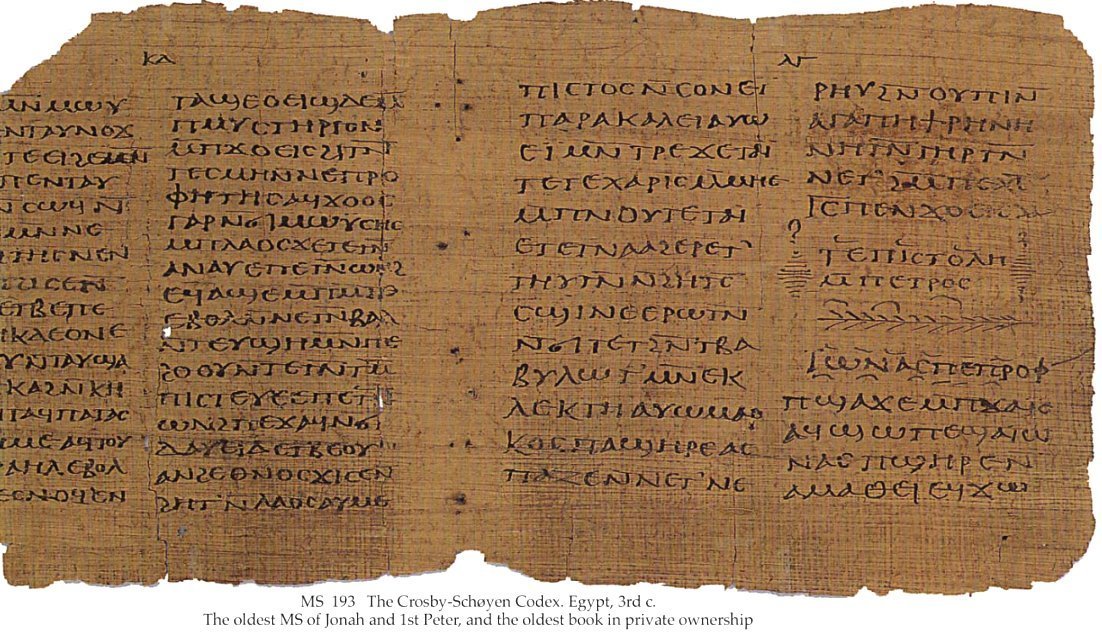
Essential Insights
- Tracing Language Evolution: Old grammars allow linguists to understand the transformation of language structures through time.
- Comparative Linguistics: Studying historical grammar is key to reconstructing language families and proto-languages by identifying shared linguistic features.
- Cultural and Cognitive Insights: Historical grammatical forms reveal cultural contexts and provide a window into the cognitive processes underlying language development.
Introduction
Linguists devote significant attention to the study of old grammar—grammatical systems of historical or extinct language forms—because they offer a rich repository of information about how languages have evolved over time. By analyzing the structure, syntax, and morphological elements of historical texts and inscriptions, researchers are able to trace the evolution of linguistic forms, reconstruct lost languages, and understand the interplay between language and culture. The study of old grammar is a multidisciplinary venture, touching on historical linguistics, comparative mythology, cognitive science, and even cultural anthropology.
In this article, we examine the various reasons why linguists use old grammar of certain languages. These include:
- Understanding the mechanisms of language change and evolution
- Establishing connections through comparative studies to reconstruct proto-languages
- Investigating universal grammatical principles and cognitive linguistics theories
- Analyzing cultural histories and social transformations reflected in language
- Utilizing historical contexts for language pedagogy and revitalization
Historical Analysis and Language Evolution
Uncovering the Past Through Grammar
Old grammars provide a historical record that captures how language was used at specific points in time. By examining texts written in languages like Old English, Latin, Ancient Greek, or Sanskrit, linguists are able to:
- Trace the evolution of language structures from complex inflectional forms to more analytic constructions.
- Examine historical shifts in word order, syntax, and morphological inflections that reveal language change processes.
- Establish timelines for when specific linguistic features emerged or disappeared, providing context for broader historical events influencing language development.
The evolution of language is not a linear process. Historical events, cultural contacts, migrations, and conquests often leave their mark on language. For instance, the transition from Old English to Modern English demonstrates significant alterations in grammar due to influences from Norse invasions and Norman Conquest. The changes in verb conjugations, noun declensions, and syntactic patterns over centuries illustrate the dynamic nature of language evolution.
Reconstructing Linguistic History
One of the primary objectives of studying old grammar is the reconstruction of proto-languages. Through the method of comparative linguistics, researchers compare grammatical features across related languages to identify common ancestors. This allows scholars to infer features of extinct languages which have left no written records. The reconstruction process includes:
- Comparing phonological, morphological, and syntactical patterns across related languages.
- Identifying systematic changes and shared innovations that can be traced back to a proto-language.
- Using historical evidence from inscriptions, manuscripts, and other ancient sources to support linguistic reconstruction.
An interesting aspect of this reconstruction is the way grammatical features—such as case markings in nouns or conjugation patterns in verbs—transmit cultural and social conventions, offering insights into the life and organization of past societies.
Comparative Linguistics
Establishing Relationships Among Languages
Comparative linguistics is a field that extensively benefits from the study of old grammar. It involves a systematic comparison of the grammatical systems of different languages to identify similarities and differences, which often reveal shared roots and mutual influences. The analysis of old grammatical structures plays a crucial role in:
- Identifying shared syntactic structures or morphological elements among languages within the same family.
- Determining how languages diverge over time from a common ancestor, leading to distinct linguistic identities.
- Developing theories about language universals and how specific regional innovations have arisen.
Table: Comparative Linguistic Features
| Feature | Old Grammar Characteristics | Modern Grammar Characteristics |
|---|---|---|
| Syntactic Structure | More flexible word order, rich inflections | More fixed word order, less morphological complexity |
| Morphological Inflections | Extensive case endings for nouns and adjectives | Reduced cases and reliance on word order for meaning |
| Verb Conjugations | Complex systems with multiple moods and tenses | Simplified system with fewer conjugations |
| Pronoun Variations | Diverse forms reflecting case, number, and gender | Streamlined pronoun systems with less case marking |
This table encapsulates some of the principal differences that linguists analyze when comparing old and modern grammatical systems, illustrating how languages simplify, regularize, or innovate over time.
Reconstructing Language Families
The meticulous study of old grammar not only informs us about individual languages but also allows for a comprehensive understanding of entire language families. By mapping similarities and differences across languages, linguists can:
- Establish connections between contemporary languages and their historical counterparts.
- Create models of language development that can explain divergence and convergence in grammatical structures.
- Illuminate the pathways through which languages have influenced one another due to migration, trade, or cultural exchange.
These comparative approaches aid in the development of language trees that visually represent relationships and trace the evolution of linguistic traits across regions and eras. Such trees serve as invaluable tools for both linguistic research and the broader understanding of human history.
Universal Grammar and Cognitive Linguistics
Testing Linguistic Universals
A significant aspect of linguistic theory is the concept of universal grammar—the idea that certain structural principles underlie all human languages. Old grammars provide a fertile testing ground for these hypotheses by:
- Revealing patterns and structures that persist in multiple languages across various time periods.
- Distinguishing universal features from those that are language-specific or historically contingent.
- Allowing linguists to test assertions about innate cognitive capabilities related to language acquisition and processing.
For example, despite the dramatic evolution of many languages, some grammatical features, such as subject-verb agreement or the existence of verb tenses, may be traced back to ancient linguistic forms. These consistencies suggest that there are underlying cognitive mechanisms influencing how languages are structured, regardless of external historical influences.
Cognitive Development Through Historical Lenses
Examining old grammar provides insight into the mental processes involved in language use and evolution. The ways in which historical societies formulated and organized their grammatical systems can inform modern theories of cognition by:
- Demonstrating how language complexity aligns with cognitive capacities over time.
- Highlighting the interplay between memory, cognitive processing, and linguistic structure.
- Providing empirical evidence for theories of how health of cognitive systems impacts linguistic changes over generations.
In this context, linguistic analysis extends beyond language structure to offer a window into the evolution of human thought and cultural adaptation. The comparative study of grammar across ages reveals patterns that speak to how cognitive abilities have evolved in concert with language changes.
Cultural and Historical Context
Illuminating the Social Fabric of the Past
Language is intricately bound with the culture, traditions, and social practices of the society using it. The grammars of historical languages are repositories of cultural information. They not only dictate how ideas are expressed but also encode:
- Social hierarchies and relationships through honorifics and forms of address.
- Ritualistic and ceremonial language usage that reflects religious and cultural practices.
- Norms and values of society, from literary conventions to legal formulations.
For instance, the grammar of Old English texts such as epic poems or legal documents offers insights into the societal order, gender roles, and even the worldview of Anglo-Saxon communities. These texts become cultural artifacts, providing contemporary researchers with critical perspectives on how ancient societies perceived and structured their world.
Preservation and Revitalization of Endangered Languages
In addition to historical analysis, old grammar is vital in efforts aimed at preserving and revitalizing endangered languages. Linguistic communities and scholars often collaborate to:
- Reconstruct lost or archaic grammatical forms to refresh language instruction and cultural identity.
- Develop pedagogical materials that draw upon historical forms to reintroduce richness and authenticity in the revitalization process.
- Enhance public awareness about linguistic diversity and heritage, ensuring that even as languages evolve, their roots remain documented and appreciated.
This work is crucial in preventing the irreversible loss of linguistic diversity, especially in communities where traditional languages are fading amidst dominant modern languages. By delving into historical grammars, scholars preserve not only linguistic data but also the cultural narratives embedded within a language.
Pedagogical Applications and Analysis of Ancient Texts
Enhancing Language Education
Knowledge of old grammars plays a significant role in educational settings. Whether teaching ancient literature, classics, or even modern languages with deep historical roots, understanding the grammatical structure of older language forms aids in:
- Providing students with a context for understanding how modern linguistic structures developed.
- Offering insights into linguistics and language evolution that enrich classical studies and humanities curricula.
- Enabling accurate translations and interpretations of ancient texts, thereby opening up cultural and historical windows into the societies from which they originated.
Teaching old grammar also serves as a method to explore linguistic diversity. Educators use these historical insights to demonstrate that language is not static but rather a living, evolving entity. This perspective not only deepens students' understanding of language mechanics but also instills a sense of cultural appreciation and historical context.
Textual Analysis and Interpretation
Accurate interpretation of historical documents and literary texts is contingent on a sound understanding of the grammatical conventions of the period. Many ancient texts rely on grammatical constructs and vocabulary that no longer exist in their modern counterparts, making it essential for linguists and historians to:
- Develop comprehensive grammatical frameworks that allow for faithful translations of ancient materials.
- Identify shifts in meaning that arise due to linguistic evolution over time.
- Illuminate subtle nuances in texts that reveal deeper cultural or rhetorical intents.
For example, translating medieval manuscripts requires an in-depth knowledge of how tense, mood, and syntactic structures functioned historically. Such studies not only aid in literary and historical research but also contribute to more accurate historical narratives.
Scientific Analysis and Theoretical Linguistics
Structured Approaches to Language Change
The scientific study of language relies on rigorous methodologies to parse the evolution and structure of grammar. By employing comparative methods and statistical models, linguists use old grammatical data to:
- Analyze patterns of language change in a systematic way.
- Model the effects of sociopolitical and cultural influences on grammatical structures.
- Develop comprehensive theories that account for both synchronic and diachronic linguistic phenomena.
These approaches often involve the integration of linguistic typology, cognitive science, and even computational methods. The objective is to formulate robust models that capture the dynamic nature of language evolution while also explaining observed phenomena in modern languages.
Universal Principles in Grammar
Research into old grammar has yielded important insights into the possibility of universal grammatical principles. Despite the apparent diversity of languages, certain structural patterns have been identified that likely stem from universal cognitive constraints or shared aspects of human communication. This includes:
- Common syntactic patterns that facilitate communication and comprehension.
- Recurrence of specific morphological phenomena, such as case systems or gender distinctions, even in distantly related languages.
- Existence of deep-seated cognitive templates that influence how linguistic structures are formed and processed.
By comparing the intricate details of old grammars with modern ones, scholars can better articulate what aspects of language are invariant and what parts are subject to change—thereby refining the theories of universal grammar.
Integrating Historical, Cultural, and Linguistic Perspectives
Methodological Integration
The multifaceted reasoning behind the study of old grammar underlines its importance across diverse fields. Linguists are not solely interested in language as a system of rules—they also explore it as a living, evolving instrument that mirrors human history, culture, and cognition. Some of the key reasons motivating the use of historical grammar include:
- Historical Analysis: By drawing on a wide array of textual sources—from inscriptions to manuscripts—linguists can chronicle the evolution of language, providing detailed accounts of how grammatical systems have transformed over the centuries.
- Cultural Contextualization: The grammatical structures of ancient languages reflect the societal norms and cultural values of the eras they represent. This offers powerful insights into historical communities, their rituals, and communication practices.
- Cognitive Insights: Investigating old grammar helps in understanding the cognitive underpinnings of language. The recurring patterns observed in grammatical shifts highlight the deep interconnections between human thought processes and the linguistic structures that shape them.
Through integrating these perspectives, linguists and scholars can construct a holistic view of language evolution. Such synthesis not only enriches academic discourse but also provides practical applications in education, cultural preservation, and even artificial intelligence, where historical linguistics informs the design of natural language processing systems.
Conclusion and Final Thoughts
The use of old grammar in linguistic research is a multifaceted endeavor that illuminates much more than the evolution of language structures; it opens a gateway into the history, culture, and cognitive processes of human societies. By exploring old grammars, linguists establish vital links between past and present, reconstruct ancient language families, and propose theories regarding universal grammar that inform our understanding of human cognition.
The rigorous analysis of historical grammar not only contributes to our appreciation of how languages have changed over time but also enhances our ability to interpret ancient texts, preserve endangered languages, and appreciate the intricate tapestry of cultural heritage embedded within linguistic forms. This holistic approach underscores why old grammar remains an indispensable tool in the field of linguistics—providing clarity, continuity, and a bridge between the ancient and modern worlds.
Ultimately, the continued study of old grammar confirms that language is not a static repository of words and rules but a dynamic, evolving entity that reflects the changing nature of societies, ideas, and cognition. Linguists armed with the tools of historical analysis and comparative linguistics are therefore able to offer insights that enrich our understanding of both language and the human experience.
References
- what-is-historical-grammar.html - Study.com
- Historical Linguistics - Wikipedia
- Language History and Foreign Languages - VerbalPlanet
- Mental Grammar - Pressbooks: Essentials of Linguistics
- A Language Out of Nothing - Harvard Magazine
- Old English Grammar - Wikipedia
- Old English - Ancient Language Institute
- What is Grammar (for a Linguist)? - Snap Language
- Grammar - Linguistic Society of America
- What Grammars Are and Aren't - Essentials of Linguistics
- English Historical Grammar - The Atlantic
- History and Grammar - University of Zurich Geo
Recommended Related Queries
Last updated February 22, 2025