
Understanding Power Outages in Olympia: A Deep Dive into Causes and Community Impact
Unraveling the Mysteries Behind Local Power Disruptions and How to Stay Informed
Key Insights into Olympia's Power Outages
- Diverse Causes: Power outages in Olympia, including those affecting areas like 3826 Sapp Rd SW, are frequently attributed to environmental factors such as windstorms, heavy rain, and tree interference, as well as equipment failures and even animal-related incidents.
- Impact on Community: These outages often lead to significant disruptions, including delayed school start times, temporary closures of community facilities, and traffic signal malfunctions, highlighting their broad community impact.
- Staying Informed: Utilities like Puget Sound Energy (PSE) provide interactive outage maps and notification services, enabling residents to track current outages, report new ones, and receive updates on restoration efforts.
While the exact cause of the power outage specifically at 3826 Sapp Rd SW, Olympia, WA last night is not definitively stated in the provided information, we can infer potential causes based on common occurrences in the Olympia area and general power outage triggers. Power disruptions in Western Washington, particularly in regions like Olympia and Thurston County, are frequently linked to a variety of factors, ranging from severe weather events to equipment malfunctions and even wildlife interference.
Common Culprits Behind Power Disruptions in Olympia
Olympia, located at the southern tip of Puget Sound, experiences power outages for several reasons, often related to its geographical location and climate. The Pacific Northwest is particularly susceptible to certain types of weather phenomena that can significantly impact the power grid.
Environmental Factors: The Dominant Force
A significant number of power outages in Western Washington, including Olympia, are attributed to environmental conditions. These can be particularly impactful due to the region's climate and lush vegetation.
Windstorms and Heavy Rain
Strong winds and heavy rain are frequently cited as primary causes of widespread power outages. Storm systems, sometimes described as "bomb cyclones," bring high winds that can knock down trees and power lines, leading to extensive damage and prolonged outages. For instance, reports indicate that powerful windstorms have left thousands without power in Thurston County and across western Washington, with many outages directly caused by fallen trees and vegetation. A particularly strong wind gust of 47 mph was recorded at Olympia Regional Airport just before midnight during one such storm, with another gust reaching 52 mph, indicating the severity of these events.
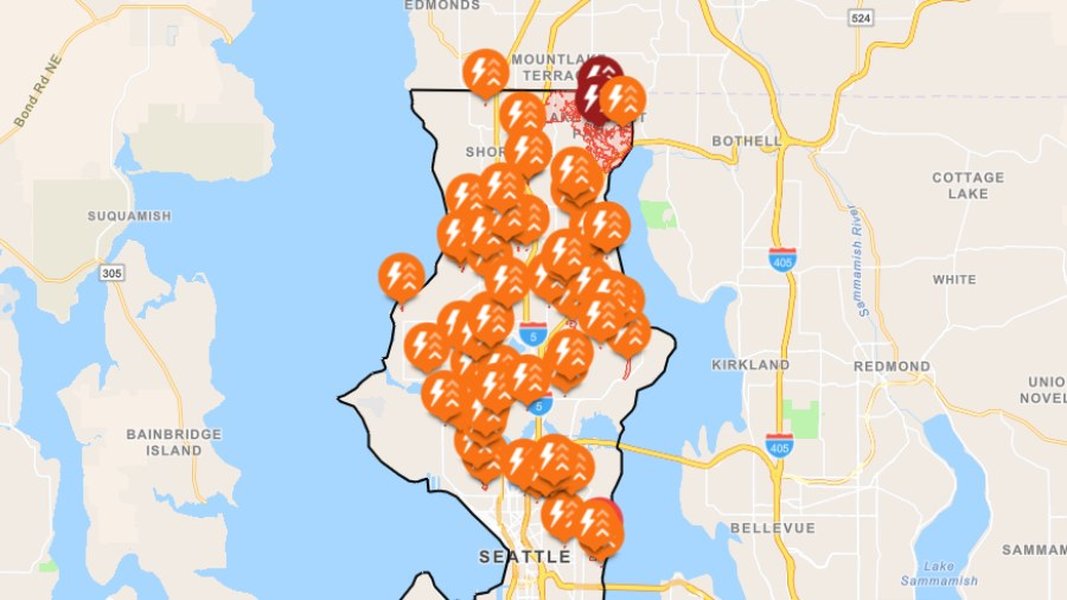
An example of a power outage map highlighting affected areas.
Tree and Vegetation Interference
Beyond the direct impact of wind, trees and vegetation are a constant threat to power lines. Even without severe storms, branches can fall onto lines due to saturation from rain or simply due to age and weakness, causing disruptions. Many outages in Western Washington are directly caused by "trees, vegetation and storm-related" factors, emphasizing the ongoing challenge of managing foliage near power infrastructure.
Infrastructure and Equipment Issues
While environmental factors are prominent, issues with the power infrastructure itself also contribute to outages.
Equipment Failure
Power outages can also result from "equipment failure" within the utility's system. This can range from issues with feeder lines to problems at substations, which are critical components of the power distribution network. Such failures can affect large numbers of customers, as seen in incidents that delayed school start times in Tumwater and Olympia due to outages impacting thousands of customers.
Overload and Public Damage
Although less frequently mentioned for Olympia specifically in the provided context, general causes of power outages include system overload, where the demand for electricity exceeds the supply capacity, and public damage, which can arise from unsafe digging practices, accidental damage to lines, vandalism, or theft. These factors contribute to interruptions in the energy chain.
Animal Interference
Surprisingly, even small animals can cause significant power disruptions. A Reddit discussion about a short power outage in Olympia mentioned that a bird or animal was reported as the cause for an outage affecting over a thousand customers, highlighting that wildlife can occasionally be responsible for localized power cuts.
Community Impact of Power Outages
Power outages in Olympia have tangible effects on daily life, impacting schools, traffic, and general community operations.
Disruptions to Education and Daily Life
When power outages occur, especially during school hours, they can lead to delayed start times or even school closures. Several instances in Tumwater and Olympia saw schools like Pioneer Elementary, Washington Middle School, and Olympia High School, and even the Briggs Community YMCA, affected by power loss, demonstrating the immediate impact on students and families.
Traffic and Safety Concerns
Power outages can cause traffic signals to stop working, leading to unexpected dark intersections and potential safety hazards. The City of Olympia has issued advisories regarding dark traffic signals during power outages, underscoring the importance of caution for drivers and pedestrians alike. Moreover, downed power lines pose significant dangers, with authorities advising the public to stay at least 30 feet away and assume they are live and dangerous.
Visualizing Outage Causes: A Comparative Analysis
To better understand the typical landscape of power outage causes in regions like Olympia, a radar chart can illustrate the relative prominence of different factors. This chart represents an informed opinion based on the common reports and typical challenges faced by utility companies in the Pacific Northwest.
This radar chart visually represents the perceived impact and frequency of various causes of power outages in Western Washington, including Olympia. As depicted, environmental factors such as windstorms, heavy rain, and especially tree interference are often the most significant contributors. Equipment failure is also a substantial factor, while animal interference, public damage, and overload tend to be less frequent, though still impactful, causes.
Reporting and Tracking Outages: Your Role in Restoration
Utility companies like Puget Sound Energy (PSE) are crucial in managing and restoring power during outages. They provide various tools and services to keep customers informed.
Utilizing Outage Maps and Reporting Systems
Power outage maps are interactive online tools that allow customers to check the status of outages in their area. PSE's outage map, for instance, shows current outages, their cause (if determined), and estimated restoration times. Customers can also report outages online or via dedicated phone lines. The ability to report outages through a mobile app or website helps utilities dispatch crews more efficiently. While some outages, especially short ones, may not immediately appear on the map, reporting them helps the utility gain a complete picture of the affected areas.
Understanding Restoration Efforts
When an outage occurs, utilities follow a systematic approach to restoration. This often involves assessing the damage, identifying the cause, dispatching crews, and then prioritizing repairs based on factors like public safety and the number of affected customers. During major storms, providing updated information on power restoration can take 24 hours or longer due to the scale of damage and hazardous conditions.
Staying Prepared for Future Outages
Given the commonality of power outages in the region, being prepared is essential for residents.
Emergency Preparedness Kit
It is advised to have an emergency kit ready, which should include essentials such as flashlights, extra batteries, non-perishable food, water, and a first-aid kit. These supplies can significantly ease the impact of a prolonged outage.
Safety Guidelines
During an outage, it's critical to prioritize safety. This includes staying away from downed power lines, avoiding the use of natural gas ranges or charcoal indoors for heating or cooking due to carbon monoxide risks, and using flashlights instead of candles to prevent fires. For those with generators, proper and safe usage is paramount, ensuring they are never plugged directly into a wall outlet.
Video Insight: Understanding Bomb Cyclones and Power Outages
The video titled "#BREAKING: Deadly bomb cyclone slams Northwest, knocks..." provides a vivid portrayal of the severe weather events that frequently cause widespread power outages in the Pacific Northwest. This footage underscores the destructive power of windstorms and heavy rain, illustrating how such phenomena can lead to downed trees and power lines, consequently impacting hundreds of thousands of residents. The "bomb cyclone" mentioned is a specific type of rapidly intensifying storm that can bring exceptionally strong winds, directly correlating with the significant power outages observed in the region, including Thurston County and Olympia. Watching this video helps in visualizing the forces at play that disrupt power services, making the abstract concept of "environmental factors" more concrete and understandable for residents in affected areas.
Summary of Outage Information Providers
Various utilities and platforms offer resources for monitoring power outages. Here's a table summarizing key providers and their services:
| Provider/Platform | Service Area (Examples) | Key Features |
|---|---|---|
| Puget Sound Energy (PSE) | Western Washington, including Olympia, Thurston County | Interactive Outage Map, Report Outage Online, Restoration Times, Mobile App Notifications |
| Southern California Edison (SCE) | Fontana, Southern California | Outage Map, Outage-Specific Customer Service, Check Outage Status by Number |
| PowerOutage.us | State-level aggregates (e.g., Washington) | Overview of outages across states, Customers Tracked/Out counts, Last Updated Timestamps |
| Tacoma Public Utilities | Tacoma and surrounding areas | Online Outage Map & Portal, Report and Track Outages, Safety Tips, Account Management |
| Florida Public Service Commission (PSC) | Florida | Incident Command Activation plans during hurricanes, Public Service announcements |
| PPL Electric Utilities | Specific regions served by PPL | Outage Map, Repair Status Updates, Estimated Repair Times |
| Arizona Public Service (APS) | Arizona | Outage Map, Outage Center, Report Outage |
| Appalachian Power (AEP) | Specific regions served by AEP | Outage Map, Information on Outages |
| Avista | Specific regions served by Avista | Outage Map |
This table provides a snapshot of various utilities and platforms that offer power outage information, highlighting the diverse ways consumers can stay informed during power disruptions.
Frequently Asked Questions (FAQ)
What is the most common cause of power outages in Olympia?
How can I check if there's a power outage at my address in Olympia?
What should I do immediately when a power outage occurs?
Why do schools delay start times during power outages?
How long does it typically take for power to be restored after an outage?
Conclusion
While the specific cause of the power outage at 3826 Sapp Rd SW, Olympia, WA, last night was not explicitly detailed, the context of recent events and general trends in Western Washington suggests it was highly likely due to environmental factors such as wind, rain, and tree interference, or potentially equipment failure. Olympia and the broader Thurston County area frequently experience disruptions stemming from these common culprits. Utility providers like Puget Sound Energy are equipped with sophisticated outage maps and notification systems to help residents stay informed and report issues. Understanding these common causes and knowing how to access real-time information empowers residents to better prepare for, and respond to, future power outages, ensuring safety and minimizing disruption to daily life.
Recommended Further Exploration
- What are essential safety tips for homeowners during a power outage?
- How do utility companies prioritize and restore power after major storm events?
- What is the long-term impact of climate change on power grid resilience in the Pacific Northwest?
- How are smart grid technologies helping to prevent and manage power outages?
References
 d1io3yog0oux5.cloudfront.net
Last updated May 21, 2025