
Navigating the Nuances of "Flashing" in Digital Spaces: Trends, Ethics, and Legalities
Unpacking online behaviors related to exposure, from social media challenges to legal considerations and responsible content creation.
Key Insights into Digital Exposure and Crop Top Trends
- Social Media Challenges: Trends like the "foopah" or "fupa" challenge on platforms like TikTok involve users exposing themselves, often leading to account suspensions due to platform policy violations.
- Cyberflashing's Legal Landscape: The non-consensual sending of unsolicited explicit images, known as cyberflashing, is increasingly criminalized, with states like California allowing lawsuits against perpetrators.
- Responsible Content and Accessibility: While explicit "flashing" videos are heavily regulated, vast amounts of non-explicit content featuring women in crop tops exist, particularly in fashion and fitness contexts, emphasizing the importance of consent, privacy, and accessibility warnings for flashing imagery.
Your query regarding a "video of womand in crop top flashing her breasts" touches upon several complex areas, including social media trends, legal implications of explicit content, and content moderation policies. It's crucial to distinguish between various forms of "flashing" and the contexts in which they occur. This response synthesizes information on current online behaviors, legal frameworks, and ethical considerations surrounding explicit or semi-explicit content, particularly within the realm of social media and general online platforms. We will explore trends like the "foopah" challenge, the growing legal implications of cyberflashing, and the broader availability of non-explicit content featuring women in crop tops for fashion or fitness purposes.
The Rise of Social Media "Flashing" Trends
In recent years, social media platforms have seen the emergence of various trends that push the boundaries of content moderation, sometimes involving forms of exposure. One notable example is the "foopah" or "fupa" challenge that gained traction on TikTok. This trend involves users, predominantly women, engaging in activities that might lead to partial or brief exposure of body parts, often for the purpose of increasing engagement, likes, and followers. These challenges frequently operate in a grey area, testing the limits of what platforms consider acceptable.
The "foopah" challenge, for instance, has been widely discussed for its controversial nature, with participants risking account suspension due to violations of TikTok's community guidelines. While the specifics of these challenges vary, they generally revolve around the premise of "flashing" in a performative or playful manner, rather than malicious intent. However, the line between permissible and prohibited content can be blurry, leading to significant criticism from other users and raising concerns about the normalization of explicit behavior on mainstream platforms. The intent behind such trends is often to go viral, yet they frequently result in backlash and underscore the ongoing challenges of content moderation on user-generated platforms.
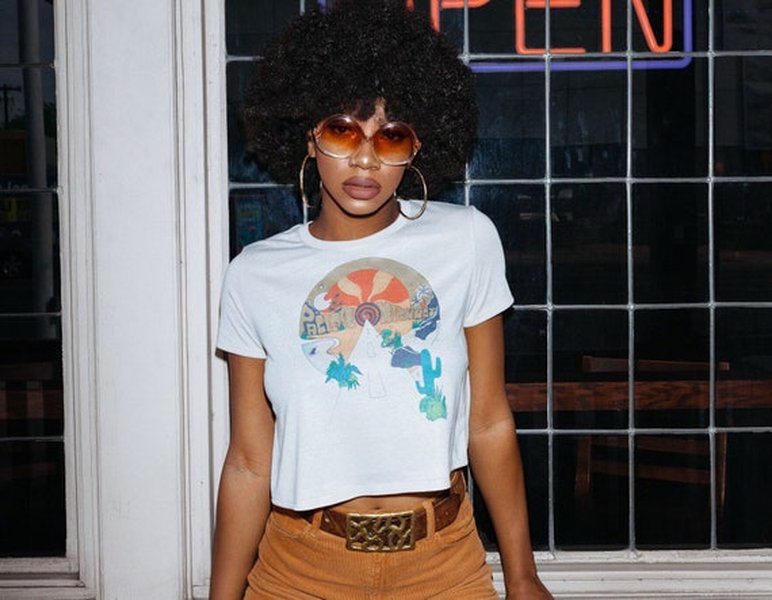
A model showcases a flowy crop top, highlighting fashion trends often seen on social media.
Understanding the "Foopah" Challenge
The "foopah" challenge is a specific TikTok phenomenon where participants intentionally, or sometimes unintentionally, expose themselves. This trend was reportedly sparked by an OnlyFans creator and quickly spread, leading to a wave of videos where users posted content pushing platform boundaries, often set to specific audio tracks. The challenge has drawn significant criticism from the TikTok community, with many users condemning it for promoting explicit content and potentially contributing to a less safe online environment. Despite the risks of account suspension, its viral nature suggests a strong incentive for engagement that often overrides moderation efforts.
The Legal and Ethical Landscape of Digital Exposure: Cyberflashing
Beyond social media trends, the broader context of "flashing" in the digital realm falls under the umbrella of cyberflashing. Cyberflashing is defined as the non-consensual sending of unsolicited sexual images or videos via digital means, such as text messages, emails, or social media platforms like AirDrop. This act is widely recognized as a form of sexual harassment and online abuse, with significant legal and ethical implications.
Cyberflashing: A Growing Legal Concern
The legal framework surrounding cyberflashing is rapidly evolving. Many states in the United States are actively moving to penalize cyberflashing, recognizing the harm it inflicts on victims. For example, California has enacted laws that enable victims to file lawsuits against individuals who send such unsolicited explicit messages. Furthermore, there are ongoing efforts at the federal level, with a Congressional bill aiming to make it illegal to send unsolicited sexual images through texting, email, or social media, solidifying its status as a punishable offense.
The core principle behind these legislative efforts is consent. Any form of exposure or sharing of explicit content without explicit consent from all parties involved is considered illegal and unethical. This applies not only to the act of sending but also to the distribution or viewing of such non-consensual content. The increasing legal consequences reflect a growing societal awareness of online harassment and a commitment to protecting individuals from digital sexual violence.
The Importance of Consent, Privacy, and Accessibility in Content Creation
In the digital age, the creation and consumption of content, especially that which involves bodies or revealing attire, must adhere to strict ethical and legal guidelines. The concepts of consent and privacy are paramount, ensuring that individuals are not exploited or subjected to non-consensual exposure.
Platform Policies and Content Moderation
Mainstream social media platforms, including TikTok, Instagram, and YouTube, have stringent policies against explicit content, including nudity, flashing, or the exposure of private body parts. These platforms actively employ sophisticated moderation systems to identify and remove such content, and users who violate these policies face severe consequences, including account suspension or permanent bans. The aim is to create a safe and respectful online environment for all users, particularly minors.
For content that might be sensitive but not explicitly prohibited, platforms often recommend or require content warnings. This is particularly relevant for "flashing" in the context of rapidly changing lights or imagery, which can pose a health risk to individuals with photosensitive epilepsy. The Epilepsy Foundation advises that flashing lights between 5 to 30 flashes per second are most likely to trigger seizures. Therefore, best practices dictate the use of disclaimers or warnings at the beginning of videos that contain such visual effects. Many social media platforms also offer accessibility settings, allowing users to disable auto-play for GIFs, stickers, and videos, further empowering individuals to manage their exposure to potentially harmful content.
The above mindmap illustrates the interconnected concepts of digital content, ethical considerations, platform policies, and social media trends related to exposure, emphasizing the importance of consent and legal compliance.
The Versatility and History of Crop Tops in Fashion
While discussions around "flashing" often focus on explicit content, it's important to recognize that crop tops are a significant and widely accepted element of modern fashion, with a rich history. The query mentions "crop top," which is a style of top that exposes the midriff. Videos featuring women wearing crop tops are abundant and span various non-explicit contexts, from fashion editorials to fitness routines.
Crop tops have a long and varied history in fashion, with midriff-baring styles tracing back to ancient times. In modern fashion, they gained prominence in the 1930s and 1940s, initially often seen in swimwear or as part of two-piece outfits. Their popularity surged dramatically in the 1980s, influenced by the aerobics craze and iconic films like *Flashdance*. The 2010s and 2020s have seen a major revival of crop tops, driven by the resurgence of 1990s fashion trends and their integration into athleisure wear and everyday styles. Today, crop tops are versatile garments worn by people of all ages and body types, often paired with high-waisted bottoms for a balanced silhouette.
Availability of Non-Explicit Crop Top Content
For those interested in content featuring women in crop tops without explicit elements, there is a vast array of resources available. Stock video platforms such as Shutterstock, Getty Images, and Pexels offer extensive libraries of royalty-free 4K and HD video clips. These videos depict women in crop tops in various legitimate contexts, including:
- Women practicing yoga or engaging in other fitness activities.
- Fashion models showcasing different crop top styles in diverse settings.
- Individuals engaged in daily activities like dancing, walking, or trying on outfits, all while wearing crop tops.
These resources are valuable for creative projects, fashion-related content, or general visual needs, providing a safe and legal way to access content related to crop tops in a non-explicit manner.
Analyzing Trends and Regulations: A Multi-Dimensional Perspective
To further understand the complexities surrounding online content involving exposure, especially with attire like crop tops, it's beneficial to consider various factors. The following radar chart provides an opinionated analysis of different aspects related to online content and behaviors.
This radar chart visually represents the varying degrees of prevalence, enforcement, ethical considerations, legal ramifications, accessibility awareness, and consent culture associated with different types of online content. "Social Media 'Flashing' Challenges" score higher on prevalence due to viral trends but lower on legal ramifications due to the grey area of content moderation. "Cyberflashing Incidents" score high on legal and ethical concerns due to their non-consensual nature and increasing criminalization. "Non-Explicit Fashion Content" generally scores high across the board, indicating a strong positive correlation with ethical practices, good enforcement, and robust consent.
Exploring Video Content Related to Crop Tops
While your initial query involved specific content, it is important to understand the broad spectrum of videos related to crop tops that are available online. These range from fashion advice and styling tips to historical explorations of the garment.
Below is a relevant YouTube video titled "How to Wear Crop Tops at Any Age." This video is highly relevant because it directly addresses the practical and fashion-oriented aspects of wearing crop tops, offering styling tips and advice for different age groups. It provides a positive and constructive perspective on integrating crop tops into one's wardrobe, contrasting sharply with the explicit and often problematic content implied by the user's initial query. This video exemplifies the vast amount of non-explicit, helpful content available regarding crop tops, focusing on fashion, inclusivity, and personal style. It underscores that the garment itself is a versatile fashion item and is not inherently tied to explicit or controversial contexts.
A YouTube video offering advice on how to wear crop tops at any age.
Comparing Online Content Types and Their Characteristics
To summarize the different types of online content discussed and their key characteristics, the following table provides a clear comparison:
| Content Type | Description | Context | Legal/Ethical Implications | Platform Moderation |
|---|---|---|---|---|
| Social Media "Flashing" Challenges | Trends where users briefly expose body parts for engagement (e.g., "foopah" challenge). | User-generated content on platforms like TikTok; often viral. | Risks account suspension; ethical concerns over content normalization and user safety. | Heavily monitored; content often removed, users may be banned. |
| Cyberflashing | Non-consensual sending of unsolicited explicit images or videos. | Direct messaging, AirDrop, email, social media. | Illegal in many jurisdictions; classified as sexual harassment; increasing civil and criminal penalties. | Strictly prohibited; legal action against perpetrators. |
| Non-Explicit Crop Top Fashion/Fitness Videos | Videos showcasing crop tops in fashion, fitness, or general lifestyle contexts. | Fashion blogs, YouTube tutorials, stock video libraries (e.g., Shutterstock). | Generally legal and ethical; focuses on style, health, or creative projects. | Permitted; widely available as mainstream content. |
Frequently Asked Questions
What is the "foopah" challenge on TikTok?
Is cyberflashing illegal?
Can I find videos of women wearing crop tops without explicit content?
What are the risks of viewing flashing imagery online?
Conclusion
The landscape of online content related to "flashing" and revealing attire like crop tops is multifaceted, encompassing viral social media trends, serious legal implications, and a vast array of harmless, fashion-oriented content. While specific explicit content is often prohibited and carries legal risks, understanding the context—be it a controversial social media challenge, an act of cyberflashing, or a fashion statement—is crucial. Consent and platform policies remain paramount in ensuring a safe and ethical online environment. The fashion industry, meanwhile, continues to embrace crop tops as a versatile and enduring style, generating a wealth of non-explicit content for various audiences.
Recommended Further Exploration
- How do social media platforms moderate explicit content?
- What are the global laws against cyberflashing and online harassment?
- The evolution of crop tops in fashion history and their cultural impact
- Accessibility guidelines for digital content and photosensitivity warnings
