
Revolutionizing Drug Screening with Organ-on-a-Chip Systems
Explore the transformative impact of microfluidic-based devices on drug discovery
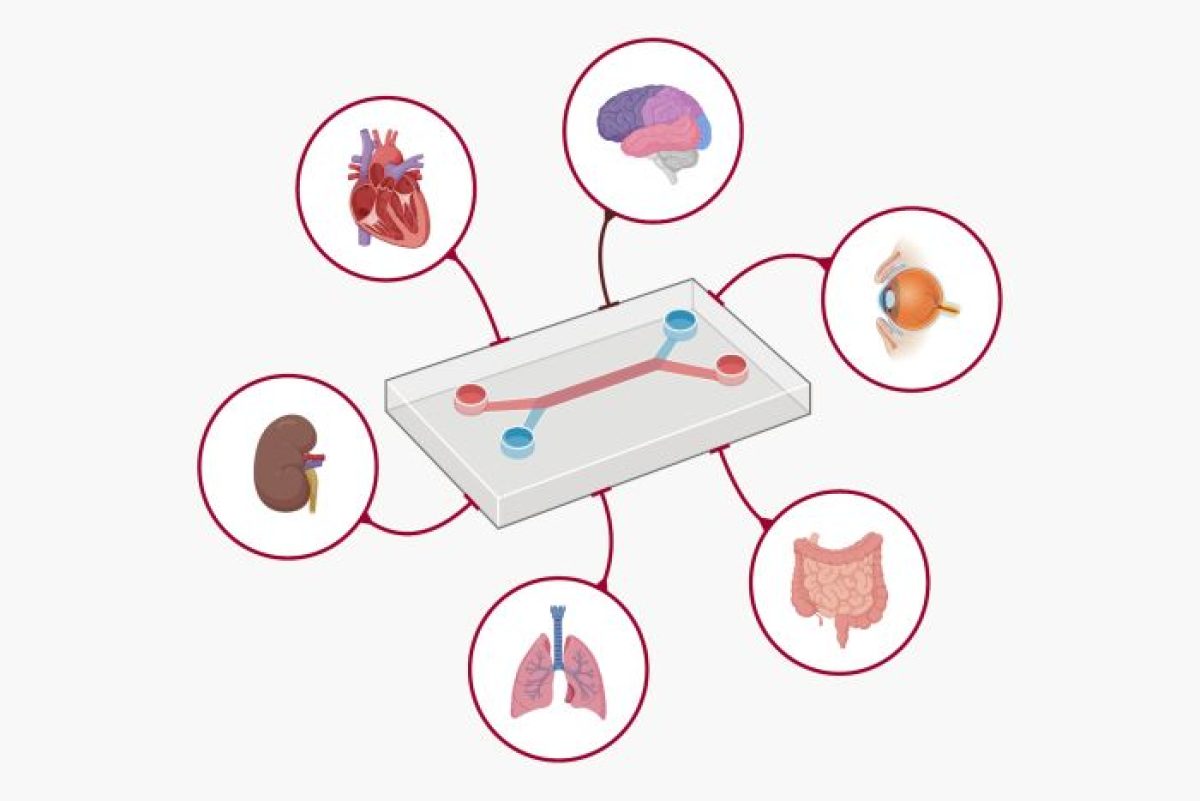
Highlights
- Human-Relevant Physiology: Mimics organ function and complex interactions for more accurate testing.
- Efficient and Ethical Screening: Offers high-throughput, reduced animal testing, and cost-efficient drug development.
- Customization and Integration: Enables multi-organ models, real-time monitoring, and personalized medicine strategies.
Understanding Organ-on-a-Chip Systems
Fundamentals
Organ-on-a-chip (OOAC) devices are advanced microfluidic systems that recreate the structural, functional, and biochemical features of human organs on a miniature scale. They are designed using a blend of tissue engineering, microfabrication, and cell biology to provide a controlled environment that accurately mimics the human body’s physiological conditions.
Design and Construction
At their core, OOAC devices consist of microfluidic channels and chambers that house human-derived cells arranged in 3D configurations. The chips are engineered to recreate the microenvironment — including cell-to-cell interactions and extracellular matrices — of vital organs such as the liver, lung, kidney, and brain. A continuous flow of nutrient-rich media simulates blood circulation, while integrated sensors provide real-time monitoring of cellular activity, enabling dynamic profiling of tissue responses to drugs.
Key Features
Microfluidic Architecture: The channels and chambers within OOAC devices allow precise control over fluid dynamics and environmental conditions.
Cellular Integration: Utilizing human cells, including epithelial, endothelial, and even neural cell types, the systems closely replicate organ-specific functions and interactions.
Real-Time Monitoring: Integrated sensor technology helps monitor physiological parameters and tissue responses, ensuring that data collected is both timely and accurate.
Organ-on-a-Chip in Drug Screening
A Paradigm Shift in Drug Development
Traditional drug screening methods rely heavily on two-dimensional cell cultures or animal models. Both have significant shortcomings, such as poor mimicry of the human physiology or ethical concerns. Organ-on-a-chip technology mitigates these issues by providing a human-relevant platform for assessing drug efficacy, toxicity, and pharmacokinetics.
Enhanced Accuracy and Predictability
One of the primary advantages of OOAC systems is their ability to replicate the complex interplay of cellular interactions found in human tissues. By using live human cells arranged in a three-dimensional structure, these devices offer a much more accurate prediction of how drugs will behave in the human body. This includes complex dynamics like drug metabolism, transportation, and clearance which are often inadequately modeled by traditional in vitro assays or animal tests.
Efficiency and High-Throughput Screening
Organ-on-a-chip devices are inherently designed for high-throughput applications. They permit simultaneous testing of multiple drug candidates under various conditions. This capability accelerates the drug discovery process by rapidly identifying potential candidates for further development and clinical trials, thereby reducing time-to-market and associated costs.
Reduction in Animal Testing
A significant benefit of OOAC systems is their ability to reduce the reliance on animal models. With more ethical and accurate human-relevant testing methods, researchers can mitigate the issues arising from interspecies differences that often lead to misleading results in animal testing. This not only addresses ethical concerns but also improves the translational success of preclinical studies into human clinical trials.
Support for Personalized Medicine
As the field of personalized medicine evolves, organ-on-a-chip systems offer solutions for testing how individual patient cells respond to specific drug regimens. This customization potential makes it possible to devise more precise and effective treatment strategies, particularly for patients with rare diseases or those who do not respond to standard treatments.
Integration with Drug Development Pipeline
Within the drug development pipeline, organ-on-a-chip devices have multifaceted roles:
Early Drug Discovery and Preclinical Testing
At the early stages of drug discovery, OOAC systems are employed to screen for potential candidates by evaluating their efficacy and relative toxicity. This preclinical evaluation is crucial, as it identifies promising compounds and filters out those with undesirable effects or toxicity profiles.
Evaluating Pharmacokinetics and Pharmacodynamics
OOAC devices are instrumental in evaluating the absorption, distribution, metabolism, and excretion (ADME) properties of drugs. These devices are capable of replicating the complex interactions between different organ systems, thereby providing a more reliable prediction of how a drug will perform in the human body.
Multi-Organ Systems
Advanced OoC systems now integrate multiple organ models on a single chip. This integration—often referred to as a "body-on-a-chip"—is essential for understanding systemic effects and inter-organ communication. For example, a multi-organ chip might simulate the interaction between the liver’s metabolic processes and the heart’s response to a drug, providing a dynamic assessment of potential adverse effects.
Challenges and Future Directions
Current Challenges
As revolutionary as organ-on-a-chip technology is, there are still challenges to address:
Scalability
Scaling these systems for widespread use, especially in high-throughput screening, remains a challenge. The transition from laboratory-scale prototypes to fully automated, large-scale systems is a key hurdle.
Standardization
To ensure reproducibility and comparability of results across different laboratories and platforms, the standardization of organ-on-a-chip systems is critical. There is an ongoing need for consensus on fabrication techniques, cell sourcing, and operational protocols.
Validation and Integration
Validating these systems against clinical data is essential for establishing their predictive accuracy. Furthermore, integration of additional technologies such as genomics, proteomics, and advanced imaging techniques will enhance the functionality and reliability of OoC systems.
Future Directions
The future of organ-on-a-chip systems is promising, with ongoing advancements aimed at addressing current limitations:
Innovative Fabrication Techniques
Advances in bioprinting and microfabrication are expected to yield increasingly intricate chip designs. These improvements will enhance the physiological relevance of the models and facilitate the creation of even more complex multi-organ chips.
Incorporation of Advanced Sensors
Future systems will likely integrate a broader range of sensors and real-time monitoring technologies. This will enable a more comprehensive analysis of cellular responses and improve the predictive accuracy regarding drug-induced toxicity and therapeutic efficacy.
Expanding Applications
Beyond drug screening, organ-on-a-chip platforms are poised to be used in environmental toxicology, disease modeling, and the study of personalized medicine. As these systems continue to evolve, they will extend their application into various biomedical and research fields.
Comparative Overview
| Feature | Description | Advantages |
|---|---|---|
| Human-Physiology | Mimics human organ functions and cellular interactions | Improved drug screening accuracy; better prediction of toxicity and efficacy |
| Microfluidic Design | Utilizes channels, chambers, and continuous flow systems | Precise control of the organ microenvironment; enhanced cell viability |
| High-Throughput Capability | Allows simultaneous testing of multiple drug candidates | Accelerates drug development; cost reduction |
| Multi-Organ Integration | Connects different organ models on a single chip | Evaluates systemic interactions; supports personalized medicine strategies |
| Real-Time Monitoring | Integrates sensors for dynamic assessment of cell behavior | Provides immediate feedback; aids in detailed pharmacokinetic studies |
References
- Unlocking the Potential of Organ-on-a-Chip Technology - Health Holland
- Microfluidics in High-Throughput Drug Screening - MDPI
- Revolutionizing Drug Screening with OOAC - Nature
- Roadmap for Standardisation of Organ-Chip Technology - Joint Research Centre
- Organ-on-a-Chip Market Report - Grand View Research
Recommended Related Queries
Last updated March 23, 2025