
Unlock AI Power Locally: Discover 2025's Elite Open-Source LLMs for Your Machine!
Your comprehensive guide to the newest, smartest, and top-performing open-source Large Language Models you can run privately, as of May 12, 2025.
The evolving landscape of open-source Large Language Models in 2025.
Key Insights: The Local LLM Revolution
- Privacy and Control are Paramount: Running LLMs locally grants unparalleled data privacy, offline access, and full control over your AI tools, free from third-party dependencies.
- Performance Rivals Proprietary Models: The latest open-source LLMs demonstrate capabilities in reasoning, coding, and multilingual tasks that increasingly match or even exceed some commercial offerings.
- A Rich Ecosystem of Tools: A growing suite of software like Ollama, LM Studio, and
llama.cppsimplifies the download, management, and execution of these powerful models on personal hardware.
The Rise of Local AI: Why Open-Source LLMs?
As of May 12, 2025, the domain of open-source Large Language Models (LLMs) that can be run locally on your own hardware is experiencing explosive growth. This trend empowers users with enhanced privacy, as data processing occurs entirely on their device, eliminating concerns about data breaches or misuse by third-party providers. Furthermore, local LLMs offer offline accessibility, cost-effectiveness by avoiding API fees, and the flexibility for deep customization and fine-tuning to specific needs. The performance of these models has matured significantly, with many now rivaling proprietary counterparts in intelligence and capability.

Key benefits include privacy, customization, offline access, and cost savings.
Leading Open-Source Local LLMs in May 2025
The landscape is dynamic, but several models consistently stand out for their innovation, intelligence, and performance. Here are some of the top contenders:
DeepSeek R1 Series
Developed by DeepSeek AI, DeepSeek R1 is frequently cited as a leading open-source LLM, particularly for its exceptional reasoning capabilities. Some variants boast an impressive parameter count (e.g., 671B mentioned in some reports) and often feature a Mixture of Experts (MoE) architecture for efficient processing.
Key Features:
- Advanced Reasoning: Excels in logical inference, mathematical problem-solving, and complex query understanding. Some versions provide step-by-step reasoning.
- Large Context Window: Capable of handling very long documents, with context windows up to 128K tokens mentioned for certain models in the series.
- Multilingual Prowess: Strong support for multiple languages, sometimes exceeding 20.
- Performance: Often outperforms proprietary models in benchmarks like Chatbot Arena, especially in STEM and real-time decision-making tasks.
Llama 3 Series (from Meta)
Meta's Llama series, particularly Llama 3.1, Llama 3.3, and specialized versions like Llama-3.1-70B-Instruct, continues to be a dominant force. These models are highly regarded for their balance of performance, versatility, and strong community support.
Key Features:
- High Performance: Excellent in general language understanding, reasoning, coding, and creative writing tasks.
- Optimized for Local Use: Versions like the Llama 3 7.3B parameter model are specifically noted for being powerful yet runnable on home PCs.
- Strong Instruction Following: Instruct-tuned models are adept at following complex user prompts.
- Active Community: Benefits from a large developer community, facilitating fine-tuning and diverse applications.
Mistral AI Models
Mistral AI has released a family of highly efficient and performant open-source models, including Mistral Small 3, Mistral-Large-Instruct-2407, and variants like Mistral-8x22B or the earlier Mistral 7B. They are praised for striking an excellent balance between performance and computational resource requirements.
Key Features:
- Efficiency: Known for achieving strong performance without demanding excessive hardware resources, making them suitable for broader local deployment.
- Coding and Reasoning: Competitive accuracy on coding tasks and logical reasoning.
- Sliding Window Attention: Some models utilize mechanisms like sliding window attention to manage long contexts effectively.
Qwen Series (from Alibaba Cloud)
Alibaba Cloud's Qwen models, such as Qwen 2.5 Coder, Qwen2.5-72B-Instruct, and QwQ-32B, are compelling options, especially for tasks requiring strong multilingual capabilities and instruction-following.
Key Features:
- Multilingual Support: Excellent performance across numerous languages in tasks like translation, exams, and math.
- Instruction Following: Highly capable of understanding and executing nuanced instructions.
- Developer Focused: Models like Qwen 2.5 Coder are specifically tailored for code generation and developer assistance.
Gemma 2 (from Google)
Google's Gemma 2 series, including models like Gemma-2-9b-it, offers state-of-the-art performance in a more compact and accessible open-source package. They are designed for a balance of capability and efficiency.
Key Features:
- Resource-Efficient: Optimized for deployment on resource-constrained devices without sacrificing significant performance.
- Natural Language Understanding: Strong in tasks like content moderation, educational tools, and natural, human-like response generation.
- Multimodal Potential: Part of a new wave of models with growing multi-modal capabilities.
Other Notable Mentions
- Falcon Series (e.g., Falcon 2, Falcon 3): Recognized for excellent reasoning and code generation capabilities, offering a good balance between speed and accuracy for local setups.
- Command R+ (from Cohere): Emphasizes retrieval-augmented generation (RAG) for knowledge-intensive tasks and performs well in enterprise-level document processing.
- Velvet-14B: Highlighted for its multilingual capabilities.
- Codestral 25.01: A developer-focused model noted for its coding assistance.
Visualizing the Local LLM Landscape
To better understand the relationships between these models and the tools used to run them, the following mindmap provides a conceptual overview of the open-source local LLM ecosystem as of May 2025.
This mindmap illustrates the interconnectedness of leading models and the software that makes them accessible for local use, highlighting the core benefits driving this trend.
Comparative Strengths of Top Local LLMs
Choosing the right LLM depends on your specific needs. The radar chart below offers a visual comparison of some leading models based on generalized attributes like reasoning, coding ability, multilingual support, resource efficiency for local deployment, and typical context length handling. Note that these are qualitative assessments for illustrative purposes.
This chart helps visualize how different models might excel in various areas. For instance, DeepSeek R1 variants often lead in reasoning and context length, while Llama 3 models show strong all-around performance, especially in coding. Mistral models are notable for their efficiency, and Qwen for multilingual tasks. Gemma 2 shines in resource-constrained environments.
Tools for Running LLMs Locally
The accessibility of these powerful models is greatly enhanced by a variety of tools designed to simplify their download, setup, and management on personal computers. These tools cater to different user needs, from ease of use to raw performance optimization.
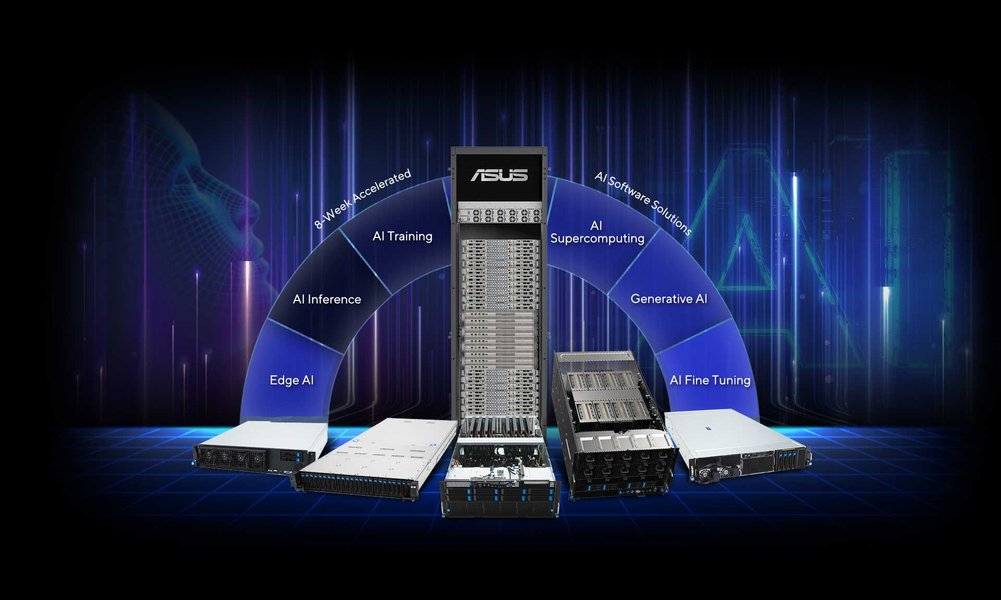
Running LLMs locally can leverage powerful consumer hardware or dedicated AI servers.
Popular Local LLM Management Tools:
- Ollama: Simplifies downloading, managing, and running LLMs. It creates an isolated environment with necessary components, popular for its ease of use.
- LM Studio: A desktop platform for downloading and running popular models like Llama 3, Gemma, and Mistral locally. It offers significant customization options and can connect to cloud services if needed.
llama.cpp: A C/C++ framework optimized for raw performance when running models locally. It's favored by users seeking maximum efficiency and supports a wide range of models.- AnythingLLM: An open-source desktop application focusing on document handling and team features for local LLM use. It processes data locally by default, enhancing privacy.
- Jan AI: Emphasizes privacy for running local models, providing a secure environment.
text-generation-webui: A popular web interface for running various LLMs, offering extensive features and model compatibility.- GPT4All: Aims for broad hardware support, making local LLMs accessible on a wider range of devices.
- Llamafile: A tool designed to solve distribution challenges, packaging models into single executable files.
This video, "Run LLMs Locally: 3 Best Tools You Need in 2025!", provides an overview of popular tools like Ollama and LM Studio for setting up local LLMs.
These tools are instrumental in democratizing access to advanced AI, allowing individuals and businesses to leverage LLMs without relying on cloud infrastructure, thereby maintaining data sovereignty and potentially reducing operational costs.
Quick Comparison of Top Local LLMs
The following table summarizes key aspects of the leading open-source local LLMs discussed, offering a quick reference for comparison. "Resource Profile" indicates typical hardware demands for reasonable performance.
| Model Series | Developer | Key Strengths | Typical Use Cases | Resource Profile (Local) |
|---|---|---|---|---|
| DeepSeek R1 | DeepSeek AI | Superior reasoning, large context window (up to 128K), multilingual, MoE architecture | Research, complex problem-solving, scientific/technical analysis, long document processing | Moderate to High |
| Llama 3 | Meta | High NLP performance, coding, strong community, customization, good instruction following | General purpose AI, coding assistance, creative writing, chatbots, research | Moderate to High (varies by model size) |
| Mistral Models | Mistral AI | Excellent balance of performance and resource efficiency, strong coding, good reasoning | Developer tools, applications requiring efficiency, general NLP tasks | Low to Moderate |
| Qwen Series | Alibaba Cloud | Strong multilingual capabilities, advanced reasoning, excellent instruction following | Multilingual applications, chatbots, document classification, developer tools (Coder versions) | Moderate to High |
| Gemma 2 | Accessible, natural language understanding, resource-efficient, good for constrained devices | Educational tools, content moderation, chatbots on less powerful hardware | Low to Moderate | |
| Falcon Series | Technology Innovation Institute (TII) / Community Efforts | Good reasoning, code generation, balance of speed and accuracy | Research, code generation, general purpose NLP | Moderate |
| Command R+ | Cohere | Retrieval-Augmented Generation (RAG), enterprise-level tasks, document processing | Knowledge-intensive applications, enterprise search, document analysis | Moderate to High |
When selecting a model, consider your specific tasks, available hardware (especially VRAM if using GPUs), and the level of technical expertise required for setup and fine-tuning. Experimentation with different models and tools is often the best way to find the optimal fit.
Frequently Asked Questions (FAQ)
What are the main benefits of running LLMs locally?
Running LLMs locally offers several key advantages:
- Privacy and Security: Your data stays on your device, significantly reducing risks associated with third-party data handling.
- Offline Accessibility: Models can be used without an internet connection once downloaded.
- Cost-Effectiveness: Avoids ongoing API subscription fees, potentially saving significant costs for heavy users.
- Control and Customization: Users have full control over the model, allowing for fine-tuning, modification, and integration into custom workflows.
- Reduced Latency: Local processing can lead to faster response times compared to relying on remote servers, especially with optimized setups.
What kind of hardware do I need to run these LLMs locally?
Hardware requirements vary significantly based on the model's size (number of parameters) and the desired performance. Generally:
- CPU: A modern multi-core CPU is essential.
- RAM: Sufficient system RAM is crucial; many models require 16GB at a minimum, with 32GB or more recommended for larger models or smoother operation.
- GPU: While some smaller models can run on CPU alone, a dedicated GPU (typically NVIDIA or AMD) with ample VRAM (Video RAM) is highly recommended for most performant LLMs. For example, 7B parameter models might run reasonably on GPUs with 8-12GB VRAM, while 70B+ models often need 24GB VRAM or more for good speed. Tools like `llama.cpp` offer optimizations that can make larger models more accessible on consumer hardware.
- Storage: Fast SSD storage is beneficial for loading models and data quickly. Model files themselves can be quite large (several GBs to tens of GBs).
Always check the specific requirements for the model and tool you intend to use.
How do I choose the best local LLM for my specific needs?
Consider the following factors:
- Primary Task: Are you focused on coding, creative writing, data analysis, reasoning, or multilingual tasks? Some models excel in specific areas.
- Performance vs. Resources: Evaluate your available hardware. Larger models are generally more capable but require more powerful hardware. Smaller, efficient models like some Mistral or Gemma variants might be better for limited resources.
- Benchmark Performance: Look at benchmarks (e.g., on Hugging Face Open LLM Leaderboard, Chatbot Arena) for tasks relevant to you, but also consider real-world user experiences.
- Ease of Use and Setup: Some models and tools (like Ollama) are easier to get started with than others.
- Community Support and Documentation: Active communities and good documentation can be very helpful for troubleshooting and customization.
- Licensing: Ensure the model's open-source license aligns with your intended use (commercial or non-commercial).
Experimentation is key. Try out a few different models using tools like LM Studio or Ollama to see which performs best for your unique use case.
Are open-source local LLMs as intelligent or capable as proprietary models like GPT-4 or Claude?
The gap is closing rapidly. As of May 2025, top-tier open-source LLMs (like some Llama 3 variants or DeepSeek R1) are demonstrating performance that rivals, and in some specific benchmarks or tasks, even surpasses leading proprietary models.
However, proprietary models often benefit from vast training datasets, extensive engineering resources, and continuous updates that can give them an edge in overall polish, breadth of knowledge, or handling of highly nuanced queries. Open-source models offer transparency, customizability, and local control, which are significant advantages. The "best" choice depends on the specific application, budget, privacy requirements, and desired level of control.
Recommended Further Exploration
- What are the VRAM requirements for running Llama 3 70B locally?
- How to fine-tune an open-source LLM on a custom dataset using local hardware?
- Compare Ollama vs LM Studio for ease of use and model management.
- What are the best local LLMs for creative writing and storytelling?
References
Last updated May 12, 2025