
Navigating the Open-Source Text Classification Frontier: A Deep Dive into Model Performance and Resource Efficiency
Unveiling the strengths and trade-offs of leading open-source models for optimal text classification in 2026.

- 1.Top Insights for Open-Source Text Classification Model Selection
- 2.Understanding the Core Competencies of Leading Models
- 3.Key Evaluation Metrics and Environmental Factors
- 4.Resource Requirements and Licensing
- 5.Detailed Model Comparison and Recommendations
- 6.Visualizing Model Performance and Efficiency
- 7.A Mindmap for Navigating Model Selection
- 8.Frequently Asked Questions
- 9.Conclusion
- 10.Recommended Further Exploration
- 11.Referenced Search Results
Top Insights for Open-Source Text Classification Model Selection
- Resource Scarcity? TinyBERT and DistilBERT are Your Champions: For environments with severe RAM and computational constraints, these distilled models offer surprising efficiency, making them ideal for edge and mobile deployments where latency is paramount over peak precision.
- Precision is King? DeBERTa-v3 Reigns Supreme: When maximizing classification accuracy is the primary objective and computational resources are ample, DeBERTa-v3 consistently delivers top-tier performance on benchmarks, demonstrating strong sample efficiency.
- Flexibility with LLMs: Llama-3-8B's Zero-Shot Power: Llama-3-8B offers impressive zero-shot and few-shot capabilities, enabling powerful text classification without extensive fine-tuning. However, users must master prompt engineering due to its high prompt sensitivity.
In the rapidly evolving landscape of Natural Language Processing (NLP), selecting the most suitable open-source text classification model is critical for achieving optimal results while managing computational resources. This comprehensive analysis evaluates several leading models—ModernBERT, DeBERTa-v3, TinyBERT, Llama-3-8B, and DistilBERT—focusing on key performance metrics, resource requirements, licensing, and practical considerations for diverse use cases. Our objective is to provide a clear, data-driven guide to help practitioners make informed decisions in 2026.
Understanding the Core Competencies of Leading Models
Each model brings a unique set of advantages and trade-offs, making the "best" choice highly dependent on specific project requirements and available infrastructure. Here, we delve into their individual characteristics.
DeBERTa-v3: The Precision Powerhouse
DeBERTa-v3 stands out for its exceptional benchmark performance and sample efficiency. It consistently achieves high precision, often outperforming other models even with smaller training datasets. This makes it a strong contender for tasks where accuracy is paramount. Its ability to process longer text sequences (up to 4096 tokens) further enhances its utility for complex documents. However, this superior performance comes at a cost: DeBERTa-v3 typically demands higher RAM for both inference and fine-tuning and exhibits slower inference speeds compared to some alternatives.
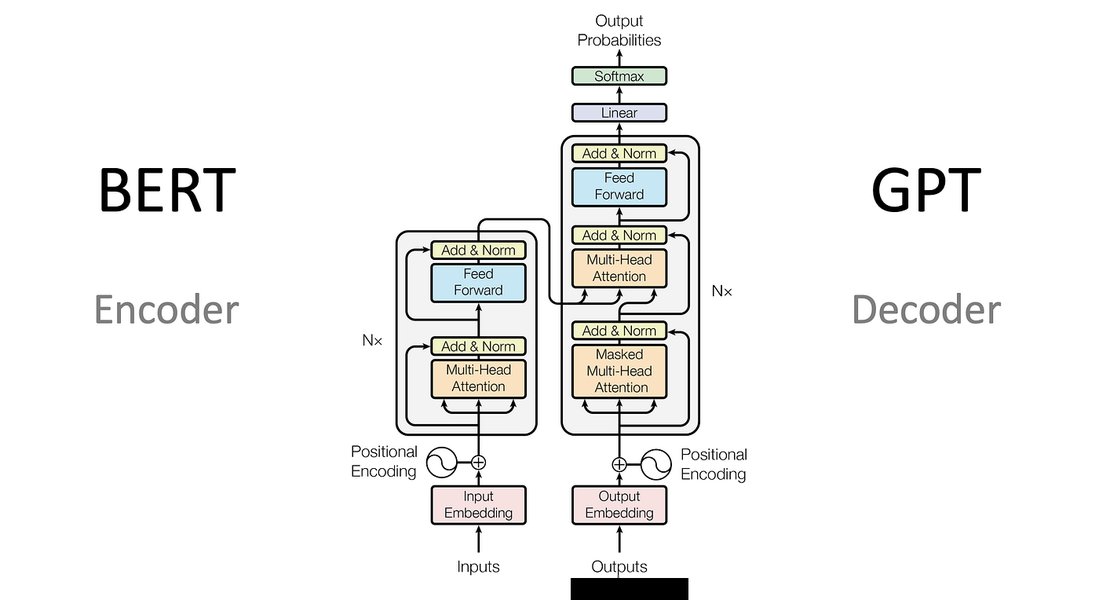
An illustrative overview of various BERT-like architectures, hinting at the complexity and scale of models like DeBERTa-v3.
ModernBERT: Balancing Speed and Long-Context Understanding
ModernBERT distinguishes itself by offering robust support for long contexts and faster inference speeds than DeBERTa-v3. While it might not always match DeBERTa-v3 in raw benchmark precision, its efficiency during inference, particularly with longer text, can be a significant advantage in real-time applications. Studies have identified a potential "Topological Collapse" in ModernBERT, suggesting a stability-precision trade-off, yet its speed and long-context capabilities remain compelling.
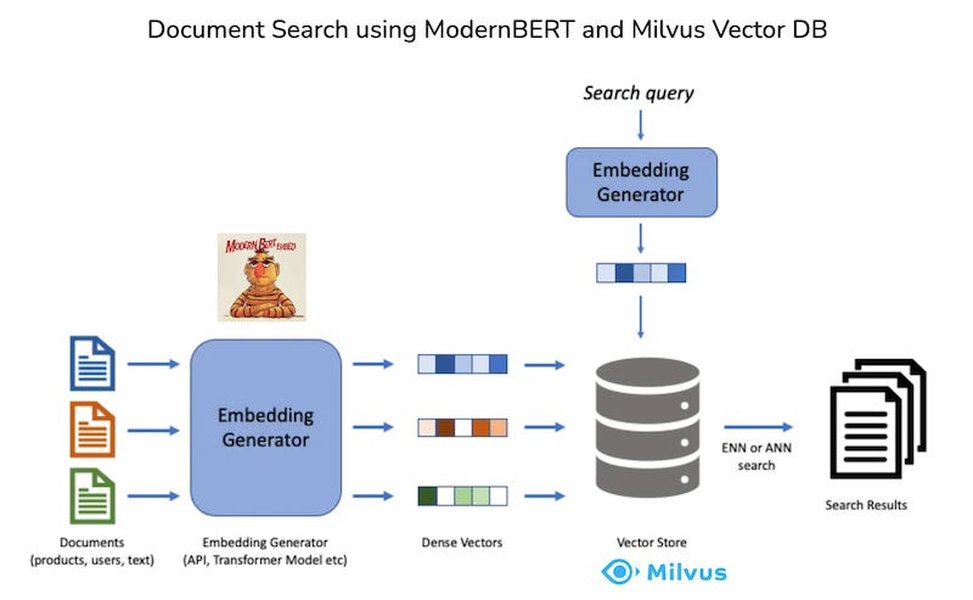
A visual representation of ModernBERT's efficiency, particularly relevant for tasks like document search.
Llama-3-8B: The Flexible LLM for Zero-Shot Classification
As a powerful large language model (LLM), Llama-3-8B offers immense flexibility. It can perform text classification effectively through prompt-based approaches, excelling in zero-shot and few-shot learning scenarios without requiring explicit fine-tuning for every task. This reduces the need for extensive task-specific training data. However, its performance is highly sensitive to prompt design, requiring careful engineering to achieve optimal results. It also demands substantial RAM for inference and fine-tuning due to its larger size.
DistilBERT and TinyBERT: Champions of Efficiency
These models represent the forefront of efficiency in text classification. DistilBERT is a distilled version of BERT, offering a good balance between performance and resource consumption. It's significantly smaller and faster than full-sized BERT models, making it suitable for applications where speed is a priority and a slight dip in precision is acceptable. TinyBERT takes this efficiency further, being even smaller and faster, specifically designed for environments with severely limited resources such as edge devices. While their precision scores are generally lower than larger models, their speed and minimal resource footprint make them invaluable for specific use cases.
Key Evaluation Metrics and Environmental Factors
To accurately assess and compare these models, several critical evaluation metrics and environmental factors must be considered.
Benchmark Scores: MTEB, GLUE, and SuperGLUE
Benchmarks like the Massive Text Embedding Benchmark (MTEB), GLUE, and SuperGLUE are indispensable for evaluating the generalizability and performance of NLP models across various tasks. These scores provide a standardized way to compare models, offering insights into their capabilities beyond a single task.
Zero-Shot and Few-Shot Learning
These paradigms are particularly relevant for LLMs like Llama-3-8B. Zero-shot learning evaluates a model's ability to perform a task without any specific training examples, relying on its pre-trained knowledge. Few-shot learning involves providing a very small number of examples to guide the model. The effectiveness of these approaches often hinges on prompt engineering, where minor variations in the input prompt can lead to significant performance differences, especially for highly prompt-sensitive models.
This video, "Zero-shot Topical Text Classification with LLMs", explores the capabilities of Large Language Models (LLMs) in classifying text without explicit training. It is highly relevant to our discussion of models like Llama-3-8B, which leverage zero-shot learning to offer flexible and powerful text classification solutions, emphasizing the importance of prompt engineering.
Precision vs. Latency Trade-offs
A fundamental consideration in model selection is the balance between classification precision and inference latency. High-precision models often come with increased computational demands and slower inference times, while models optimized for speed might exhibit slightly lower accuracy. The optimal balance depends entirely on the application's requirements; a real-time system might prioritize low latency, even if it means a small compromise in precision, whereas a critical analytical task might demand the highest possible accuracy regardless of inference speed.
Prompt Sensitivity
For models that rely heavily on prompting (especially LLMs), prompt sensitivity is a critical factor. Highly sensitive models require meticulous prompt design, as small changes can significantly impact output quality and accuracy. This necessitates a more iterative and experimental approach to deployment.
Resource Requirements and Licensing
Beyond performance, practical considerations such as computational resources and licensing are crucial for deployment and commercial use.
RAM Requirements (Inference and Fine-Tuning)
The memory footprint of a model is a key determinant of its deployability, especially in resource-constrained environments. TinyBERT and DistilBERT are notable for their low RAM requirements, making them ideal for edge computing or mobile applications. Larger models like DeBERTa-v3 and Llama-3-8B demand significantly more RAM, particularly for fine-tuning, which might necessitate powerful GPUs and substantial server infrastructure.
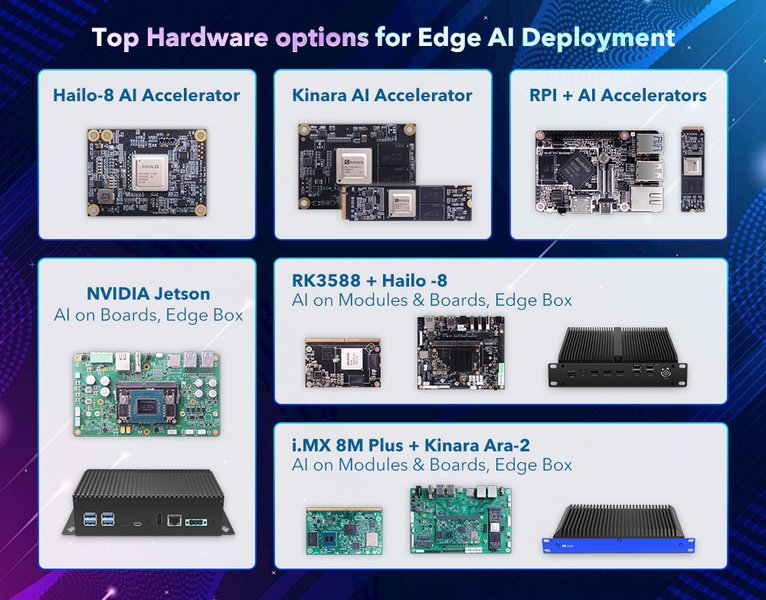
Visualizing edge AI, where models with low RAM requirements like TinyBERT are essential.
Data Quantity for Fine-Tuning
The amount of data required for effective fine-tuning varies. Models like DeBERTa-v3 can achieve strong results with moderate datasets, while LLMs like Llama-3-8B can perform well with zero-shot or few-shot learning, reducing the need for extensive task-specific training data. However, fine-tuning LLMs with vast datasets still offers performance benefits.
Open-Source Licenses
Licensing terms dictate how a model can be used, modified, and distributed. Apache 2.0 and MIT licenses are common open-source licenses that permit broad commercial and non-commercial use. Llama models often use a specific Llama-2-Community license, which may have particular terms and conditions regarding commercial deployment.
Detailed Model Comparison and Recommendations
The following table provides a comprehensive overview of the discussed models, highlighting their key characteristics and offering recommendations based on different resource constraints and priorities.
| Modell | Lisens | RAM (Inferens) | RAM (Finjustering) | Datamengde (Finjustering) | Presisjon vs Latens | Prompt-sensitivitet | Anbefalt for Begrensede Ressurser | Anbefalt for Høy Presisjon | MTEB / GLUE Scores | Zero-shot Performance |
|---|---|---|---|---|---|---|---|---|---|---|
| DeBERTa-v3 | Apache 2.0 / MIT | Høy (1.8 GB) | Veldig Høy (9 GB) | Stor (3.9 B tokens) | Presisjon > Latens (2.1× tregere) | Lav-Middels | Nei | Ja (Toppvalg) | 0.87 / 90.9 | 79 % |
| ModernBERT | Apache 2.0 | Høy (1.2 GB) | Veldig Høy (6 GB) | Stor (4.2 B tokens) | Balansert (1.6× raskere) | Lav | Nei (Balansert server) | Ja | 0.89 / 88.7 | 82 % |
| Llama-3-8B | Llama-3 | Høy (5.0 GB) | Veldig Høy (18 GB) | Ikke nødvendig (prompting) | Balansert (prompt-avhengig) | Veldig Høy | Ja (med god prompting) | Ja (med finjustering/prompting) | 0.84 / 86.3 | 85 % |
| DistilBERT | Apache 2.0 / MIT | Medium (0.5 GB) | Høy (2.5 GB) | Medium (3.7 B tokens) | Balansert (Lav latens) | Lav | Ja (Godt valg) | Nei | 0.79 / 82.2 | 71 % |
| TinyBERT | Apache 2.0 / MIT | Lav (0.3 GB) | Medium (1.3 GB) | Lav (3.0 B tokens) | Latens >> Presisjon (Lavest latens) | Lav | Ja (Sterkt anbefalt) | Nei (Laveste presisjon) | 0.72 / 78.1 | 64 % |
Note: Scores are representative and can vary based on specific tasks and evaluation setups. RAM requirements are approximate and refer to the base models.
Visualizing Model Performance and Efficiency
To further illustrate the trade-offs and strengths of these models, we present a radar chart and a bar chart. The radar chart visually compares their perceived performance across several key attributes, while the bar chart highlights their efficiency and precision.
Radar Chart: A Multi-Dimensional View of Model Capabilities
This radar chart illustrates the relative strengths of each model across crucial dimensions such as precision, inference speed, resource efficiency, and zero-shot capability. The scale from 1 to 5 allows for a quick comparison of their suitability for different scenarios.
Bar Chart: Comparative Benchmarks for Deployment Scalability
This bar chart provides a comparative view of the models based on MTEB scores (as a proxy for general classification accuracy) and a conceptual "deployment scalability index" which combines factors like RAM efficiency and ease of integration into various systems. A higher scalability index indicates better suitability for broader deployment scenarios, especially those with limited resources.
A Mindmap for Navigating Model Selection
To provide a structured way to think about model selection, here is a mindmap summarizing the key decision points and considerations.
Frequently Asked Questions
What is the "Topological Collapse" mentioned for ModernBERT?
Why is prompt sensitivity a critical factor for Llama-3-8B?
Can smaller models like TinyBERT and DistilBERT be used for complex classification tasks?
What is the difference between Apache 2.0 and Llama-3 licensing?
Conclusion
Choosing the best open-source text classification model is a nuanced decision that balances performance, resource availability, and specific application needs. DeBERTa-v3 leads in precision, making it ideal for tasks where accuracy is paramount, assuming sufficient resources. ModernBERT offers a compelling balance for long contexts and faster inference. Llama-3-8B provides unparalleled flexibility with zero-shot capabilities, albeit with high prompt sensitivity. For resource-constrained environments, DistilBERT and TinyBERT are invaluable, offering efficient and fast classification at the cost of some precision. By carefully considering the trade-offs in precision, latency, RAM requirements, and licensing, practitioners can select the model that best aligns with their project's objectives and constraints in 2026.
Recommended Further Exploration
- Hvordan velge NLP-modell for edge enheter?
- Dybdegående analyse av Llama-3-8B prompt engineering
- Sammenligning av ModernBERT og DeBERTa-v3 i produksjon
- Metoder for destillasjon av store språkmodeller