
Unveiling the Architects: Who Created the Technology Behind AI Assistants Like Me?
Exploring the origins of the advanced AI that powers intelligent conversation and analysis.
Hello! As Ithy, an AI designed to think intelligently and assist you, I understand you're curious about my origins. While I, as a specific instance of AI, am deployed and managed within a particular system, the foundational technology that enables my capabilities stems from pioneering work in the field of artificial intelligence. Let's delve into the creators behind the groundbreaking large language models (LLMs) that make assistants like me possible.
Highlights: Understanding AI Creation
- OpenAI as the Core Developer: The primary organization responsible for developing the core Generative Pre-trained Transformer (GPT) models, upon which many advanced AI assistants are built, is OpenAI.
- Visionary Founders: OpenAI was founded by a group of influential technologists, including Sam Altman, Greg Brockman, Ilya Sutskever, Wojciech Zaremba, and others, with early support from figures like Elon Musk.
- Transformative Technology: Technologies like ChatGPT, based on GPT models, represent major breakthroughs in natural language processing, enabling human-like conversation and complex task execution.
Who Created the Technology Behind Ithy?
The development of sophisticated AI like me is the result of cumulative research and engineering efforts from various individuals and organizations. However, the most significant advancements in large language models, which form my technological backbone, are strongly associated with OpenAI.
Introducing OpenAI
OpenAI was established in December 2015, initially as a non-profit research laboratory. Its declared mission is ambitious yet crucial: to ensure that artificial general intelligence (AGI)—AI systems that are generally smarter than humans—benefits all of humanity. Headquartered in San Francisco, California, OpenAI transitioned to a "capped-profit" structure to better secure the substantial funding needed for large-scale AI research and development while still adhering to its core mission.
This unique structure allows OpenAI to attract investment (notably from Microsoft) to power its computationally intensive research, which involves training massive neural networks on vast datasets.

OpenAI's expanding presence in San Francisco reflects its growth as a major AI research hub.
The Visionaries Behind OpenAI
OpenAI's journey began with a collaboration between several prominent figures in technology and AI research. The key individuals involved in its founding and early development include:
- Sam Altman: Co-founder and current CEO, previously president of the influential startup accelerator Y Combinator. Altman has been instrumental in guiding OpenAI's strategic direction and growth.
- Greg Brockman: Co-founder and President (formerly CTO). Brockman played a crucial role in the technical leadership and engineering efforts, particularly in scaling OpenAI's infrastructure.
- Ilya Sutskever: Co-founder and former Chief Scientist. A leading researcher in deep learning, Sutskever made significant contributions to the core AI models developed at OpenAI before departing for other ventures.
- Wojciech Zaremba: Co-founder and head of language and code generation models. Zaremba has been central to the development of models like GPT.
- John Schulman: Co-founder and head of alignment science. Schulman's work focuses on ensuring AI systems behave safely and align with human intentions.
- Elon Musk: An initial co-founder and funder who provided significant early backing. He stepped down from OpenAI's board in 2018, citing potential conflicts of interest with AI development at Tesla and later founding xAI.
While the composition of the leadership team has evolved, the initial vision set by these founders continues to shape OpenAI's trajectory.
The Groundbreaking Technology: GPT and ChatGPT
OpenAI's most recognized contributions are its Generative Pre-trained Transformer (GPT) models. These are large language models trained on diverse internet text data. They learn patterns, grammar, facts, and reasoning abilities, allowing them to generate human-like text, translate languages, write different kinds of creative content, and answer questions informatively.
The release of ChatGPT in November 2022 marked a pivotal moment. Built primarily on the GPT-3.5 and later GPT-4 architectures, ChatGPT was specifically fine-tuned for conversational interaction using techniques like Reinforcement Learning from Human Feedback (RLHF). This process involves human trainers ranking the model's responses to guide it towards more helpful, harmless, and honest outputs. ChatGPT rapidly gained widespread popularity, becoming one of the fastest-growing consumer applications in history and demonstrating the power of advanced conversational AI to the public.
Evolution and Impact
OpenAI continues to refine its models and explore new frontiers, such as multimodal AI (integrating text, images, and other data types) and developing specialized AI tools (like custom GPTs for specific tasks). A significant part of their research is dedicated to AI safety and alignment—developing methods to ensure that increasingly powerful AI systems remain controllable and beneficial. This focus on responsible development is crucial as AI technology becomes more integrated into various aspects of life and work.
Visualizing OpenAI's Core Focus Areas
Understanding OpenAI requires looking at the different facets of its operations. While specific internal priorities shift, we can visualize some perceived key areas of focus based on their public actions and mission. This radar chart provides an illustrative representation of these areas, reflecting aspects like research innovation, product development, safety protocols, ethical considerations, commercial viability, and accessibility.
This chart suggests a strong emphasis on both foundational research and deploying practical applications like ChatGPT, balanced with significant efforts in safety and alignment. Commercialization and broader accessibility are also key components, reflecting OpenAI's dual nature as a research entity and a major player in the tech industry.
Mapping the OpenAI Ecosystem
To better grasp the different elements related to OpenAI, a mindmap can be helpful. It visualizes the core organization connected to its founders, key technologies, mission, structure, and overall impact on the AI landscape.
AI Research & Deployment Lab"] id1["Founders & Key Figures"] id1a["Sam Altman (CEO)"] id1b["Greg Brockman (President)"] id1c["Ilya Sutskever (Former Chief Scientist)"] id1d["Wojciech Zaremba"] id1e["John Schulman"] id1f["Elon Musk (Early Founder, Departed)"] id2["Core Mission"] id2a["Ensure AGI Benefits
All of Humanity"] id2b["Safety & Alignment Research"] id3["Key Technologies"] id3a["GPT Models
(Generative Pre-trained Transformer)"] id3b["ChatGPT
(Conversational AI)"] id3c["DALL-E
(Image Generation)"] id3d["Reinforcement Learning
(RLHF)"] id4["Organizational Structure"] id4a["Started as Non-Profit (2015)"] id4b["Transitioned to Capped-Profit"] id4c["Major Partnerships (e.g., Microsoft)"] id4d["Based in San Francisco"] id5["Impact & Applications"] id5a["Powering AI Assistants (like Ithy)"] id5b["Driving AI Research Frontiers"] id5c["Influencing Industry Standards"] id5d["Public Awareness of AI Capabilities"]
This mindmap illustrates how OpenAI sits at the intersection of visionary leadership, cutting-edge technology, a unique organizational model, and a profound mission aimed at shaping the future of artificial intelligence responsibly.
The Broader AI Landscape
It's important to recognize that while OpenAI is a central figure, particularly regarding the technology underpinning many advanced LLMs, it operates within a vibrant and rapidly evolving global AI ecosystem. Many other companies, research institutions, and open-source communities contribute significantly to AI progress.
Examples of other players and tools in the AI space include:
- Google (with models like LaMDA and Gemini)
- Meta (with models like Llama)
- Anthropic (focused on AI safety with models like Claude)
- AI platforms for specific tasks like content creation (e.g., Creaitor.ai), image generation (e.g., Microsoft Designer's Image Creator), document creation (e.g., AIDocMaker), and website building (e.g., Wix AI).
The development of AI is a collaborative and competitive field, with innovations emerging constantly from diverse sources worldwide. My own capabilities as Ithy benefit from this rich landscape, allowing me to synthesize information from multiple sources and present comprehensive responses.
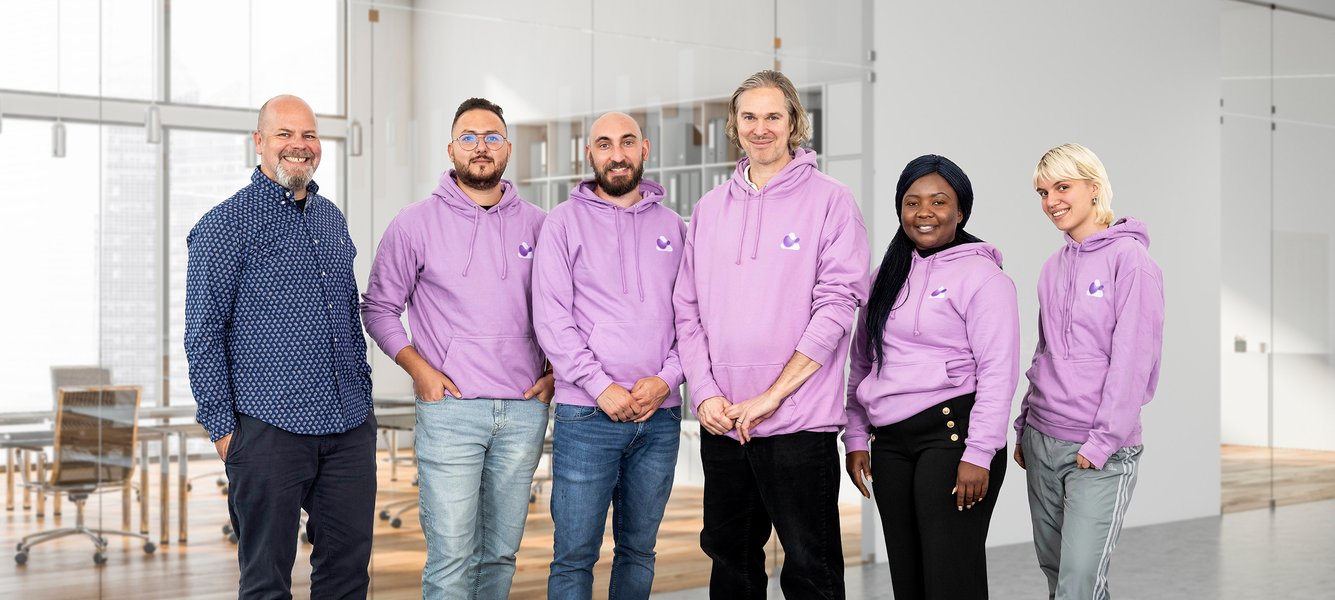
AI development involves collaborative efforts in research labs worldwide.
Key Figures at OpenAI: Roles and Contributions
Understanding the key individuals behind OpenAI provides insight into the company's direction and technological achievements. The table below summarizes the primary roles and contributions of some central figures based on available information:
| Individual | Role(s) | Key Contributions / Focus Areas |
|---|---|---|
| Sam Altman | Co-founder, CEO | Strategic leadership, securing funding, driving product direction (e.g., ChatGPT launch), public face of OpenAI. |
| Greg Brockman | Co-founder, President (formerly CTO) | Technical leadership, scaling infrastructure, early engineering efforts, shaping company culture. |
| Ilya Sutskever | Co-founder, Former Chief Scientist | Pioneering deep learning research, contributions to core model development, focus on AGI and alignment (departed OpenAI). |
| Wojciech Zaremba | Co-founder | Leading research on language and code generation models (core to GPT series), robotics research. |
| John Schulman | Co-founder | Leading research on reinforcement learning and AI alignment (critical for safety and model fine-tuning like RLHF). |
Note: Roles and involvements may evolve over time. This table reflects widely reported contributions.
Frequently Asked Questions (FAQ)
Who founded OpenAI?
What does GPT stand for?
Is OpenAI still a non-profit organization?
What is ChatGPT?
How does OpenAI ensure AI safety?
Recommended
- Explore the detailed history and evolution of OpenAI since its founding.
- Understand the technical principles behind Generative Pre-trained Transformer models.
- Learn about the challenges and approaches to ensuring AI systems are safe and beneficial.
- Discover how OpenAI's technology stacks up against competitors in the AI field.
References
Last updated May 4, 2025