
Mastering the Court: Optimal Tactics for Dominating Pickleball Doubles
Unlocking Success Through Synergy, Positioning, and Strategic Shot Selection
Key Highlights for Doubles Victory
- Communication is paramount: Successful doubles teams constantly communicate, both verbally and through non-verbal cues, to ensure seamless coordination and minimize errors.
- Strategic court positioning: Getting to the non-volley line (kitchen) promptly after the return of serve is a foundational strategy, maximizing court coverage and offensive opportunities.
- Placement over power: While power has its place, consistent shot placement, especially targeting opponents' weaknesses or the middle of the court, is often more effective than brute force.
Playing doubles in pickleball transcends individual skill; it transforms into a dynamic chess match where partners must synergize, anticipate, and outmaneuver opponents. The optimal tactics involve a blend of foundational principles and advanced maneuvers, all built upon the bedrock of effective teamwork. This guide will delve into these strategies, offering comprehensive insights for players at every level seeking to elevate their doubles game.
The Foundation of Teamwork: Communication and Movement
Seamless Integration for Superior Play
At the heart of successful pickleball doubles lies impeccable communication and synchronized movement. Without these, even the most individually skilled players will struggle to convert opportunities into points.
The Power of Clear Communication
Communication can truly make or break your doubles game. It prevents collisions, clarifies who is taking which shot, and helps strategize mid-rally. Simple, decisive verbal cues like "yours," "mine," or "bounce it" are crucial for avoiding confusion and winning points, especially on out-balls. Beyond verbal cues, developing hand signals or simple code words before a match can further enhance communication, particularly in noisy environments or when anticipating more advanced plays like poaching. Regularly discussing strategy with your partner, both before and during the game, helps identify strengths and weaknesses and ensures a unified game plan.
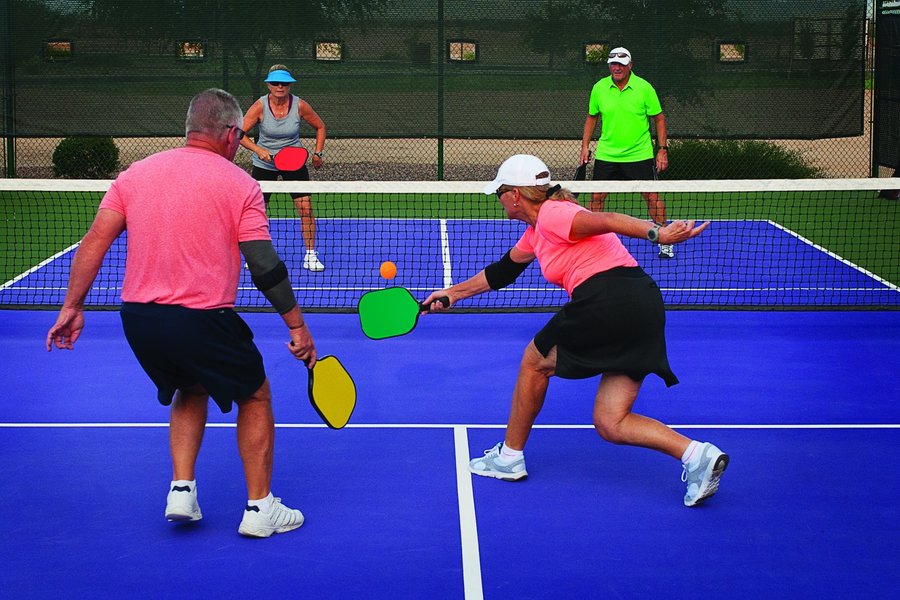
Active engagement and movement are critical in doubles pickleball.
Moving in Unison: The Tethered Approach
Imagine you and your partner are connected by an invisible 8-10 foot rope. This "tethered" approach emphasizes moving together as a unit—up and back, side to side. Failing to move in concert creates large angles and open spaces that opponents can easily exploit. Proper player positioning maximizes court control and coordination, allowing you to cover more ground, exploit opponent weaknesses, and seamlessly transition between offense and defense. Anticipating your partner's moves and understanding their likely shots helps in maintaining this synchronized movement.
Dominating the Court: Positioning and Shot Selection
Strategic Play for Consistent Wins
Beyond basic teamwork, specific positioning strategies and intelligent shot selection are vital for consistently winning doubles matches.
The Non-Volley Zone (NVZ) Advantage
Arguably the most essential doubles strategy is to get to the non-volley line (also known as the "kitchen line") immediately after the return-of-serve. Approximately 90% of professional pickleball players are adept at reaching the net, highlighting its importance. The NVZ is a critical area where many points are won and lost as teams battle for offensive advantage. Getting to the kitchen allows for effective dinks, volleys, and aggressive net play.
To effectively reach the kitchen, focus on your returns and drop shots. A high, deep return of serve can buy precious time to advance. When considering a third shot, whether a drive or a drop, assess your strengths and your opponents' positions. A well-executed third shot drop is considered the "holy grail" of pickleball strategy, forcing opponents to hit up and allowing you to move forward.
Targeted Shot Placement
Pickleball is more about placement than raw power. Consistent, strategic shot placement is key to forcing opponents into errors. Instead of always aiming for a powerful winner, focus on keeping the ball in play and waiting for your opponents to make a mistake. Approximately 75% of rallies are won or lost due to errors, not earned points.
- Aim for the middle: Hitting deep down the middle of the court is often the safest shot, minimizing wide errors and potentially causing confusion between opponents over who should take the ball.
- Target the backhand: Most players have a weaker backhand, making it an ideal target, especially on the serve, to elicit weaker returns and gain an advantage.
- Keep shots low: Consistently keeping the ball low, aiming at opponents' feet, is a fundamental strategy that makes it difficult for them to generate offensive power.
- Utilize angles: While straight lines give straight lines, angles create angles. Use diagonal shots to open up the court, especially against teams with strong dinkers, by hitting towards their inside foot.
Advanced Tactics and Adaptability
Elevating Your Game with Strategic Nuances
As you progress, incorporating advanced tactics and developing the ability to adapt will further enhance your doubles performance.
The Art of Stacking and Poaching
Stacking is a strategy where teammates play on the side of the court that maximizes their individual strengths, regardless of who served or received. While rules dictate serving and receiving positions, players can move freely after the serve. Stacking allows a right-handed and left-handed player to always have their forehand on middle shots, for instance. Poaching, a more advanced strategy, involves one partner aggressively moving into the other's territory to intercept a ball they anticipate their partner might struggle with or to surprise opponents. Good doubles teams often develop a natural sense of when their partner is likely to poach.
Patience and Reset Shots
Patience is one of the most challenging, yet rewarding, doubles strategies to master. It involves being selective with shot choices, focusing on control and consistency rather than trying to end every point with a smash. Waiting for opponents to make a mistake often leads to more wins. Reset shots are also a crucial tool, allowing you to neutralize an aggressive play from opponents and return the rally to a more controlled dinking exchange.
Adapting to Opponents and Situations
Pickleball is as much a mental game as it is physical. Successful teams are prepared to adapt their strategy based on opponents' reactions and the flow of the game. If a particular strategy isn't working, be ready to adjust. For example, if opponents are dominating the net, consider using more lobs or deeper shots to push them back. Flexibility and quick thinking are invaluable for overcoming challenging opponents.
This radar chart illustrates the perceived importance of various pickleball doubles strategies, from fundamental to advanced. Higher scores indicate greater emphasis on that particular strategy for overall success.
Key Strategic Components in Doubles Pickleball
A Consolidated View of Winning Elements
To summarize the optimal tactics, the following table outlines crucial strategic components, their descriptions, and why they are vital for success in doubles pickleball.
| Strategic Component | Description | Why it's Crucial |
|---|---|---|
| Communication | Verbal cues (e.g., "yours," "mine"), hand signals, and pre-game strategy discussions. | Prevents errors, ensures court coverage, and fosters team cohesion. |
| Court Positioning | Moving in unison with your partner, getting to the Non-Volley Zone (kitchen) quickly. | Maximizes court coverage, creates offensive opportunities, and minimizes open court space. |
| Third Shot Drop/Drive | Strategically choosing between a soft drop shot or an aggressive drive after the return of serve. | Crucial for neutralizing opponents' advantage and allowing your team to advance to the kitchen. |
| Shot Placement | Aiming for opponents' weaknesses (backhand), the middle of the court, or low at their feet. | Forces errors, prevents strong returns, and dictates the rally's pace. |
| Patience & Consistency | Focusing on keeping the ball in play and waiting for unforced errors from opponents rather than hitting risky winners. | Reduces unforced errors and increases the likelihood of winning points through opponent mistakes. |
| Adaptability | Adjusting game plan based on opponents' reactions and the flow of the game. | Allows for mid-game adjustments to counter effective opponent strategies and exploit their weaknesses. |
| Stacking & Poaching | Advanced positioning to maximize forehands/strengths (stacking); intercepting shots in partner's area (poaching). | Optimizes player strengths and adds an element of surprise, creating offensive pressure. |
Understanding these elements and actively incorporating them into your game will significantly improve your doubles performance. The synergy between partners, rooted in shared strategy and fluid execution, is what truly distinguishes winning teams.
Video Insight: Mastering Doubles Strategy
Visualizing Winning Tactics on the Court
To further illustrate the dynamics of effective pickleball doubles strategy, here's a valuable video that breaks down key elements for players at various levels. This "Doubles Strategy Masterclass" offers practical tips and visual demonstrations, helping you understand how these tactics translate from theory to real-time play.
This video provides a comprehensive look into doubles strategy, offering actionable tips to enhance your game.
The video emphasizes how communication and court positioning, particularly getting to the non-volley line, are fundamental for any doubles team. It also delves into shot selection, highlighting the importance of the third shot drop and strategic dinking. Watching professional players demonstrate these techniques can provide invaluable insights into their application during a match. The visual aspect reinforces the concepts of moving as a unit and making smart decisions under pressure, which are central to optimal doubles play.
Frequently Asked Questions (FAQ)
What is the most important initial strategy in doubles pickleball?
How does communication impact doubles play?
Should I focus on power or placement in doubles pickleball?
What is a "third shot drop" and why is it important?
What does "stacking" mean in pickleball doubles?
Conclusion
Optimizing your pickleball doubles game involves a multifaceted approach that prioritizes teamwork, strategic court positioning, and intelligent shot selection. The foundation rests on clear communication and synchronized movement, enabling partners to function as a cohesive unit. Advancing to the non-volley zone quickly after the return of serve and executing effective third shot drops are paramount for gaining an offensive advantage. Furthermore, a focus on precise shot placement—targeting weaknesses or the middle of the court—often yields more consistent wins than relying solely on power. As players progress, incorporating advanced tactics like stacking and poaching, coupled with the critical ability to adapt to varying game situations, will further elevate their performance. Ultimately, success in pickleball doubles is about patient, consistent play and a well-coordinated partnership that can anticipate and respond to every challenge on the court.
Recommended Further Exploration
- Explore advanced pickleball doubles drills for better teamwork and coordination.
- Learn techniques to master the elusive third shot drop and gain an edge.
- Discover effective strategies for playing pickleball doubles with a weaker partner.
- Understand the critical role of the mental game in winning pickleball matches.
References
Last updated May 22, 2025