
Unlocking Peak Performance: How to Supercharge Your AI Agent's Decision-Making
A comprehensive guide to refining AI agent choices through data, algorithms, feedback, and ethical frameworks for optimal outcomes.
Optimizing the decision-making capabilities of your AI agents is a multifaceted endeavor, crucial for enhancing their autonomy, efficiency, and reliability. It involves a systematic approach that integrates clear objectives, high-quality data, sophisticated algorithms, continuous learning mechanisms, and robust ethical considerations. By focusing on these core areas, you can transform your AI agents into more rational, adaptive, and effective autonomous systems capable of tackling complex tasks and achieving desired goals with greater precision.
Essential Insights for Optimized AI Decisions
- Clarity is Key: Defining precise objectives, success metrics, and operational contexts forms the bedrock of intelligent AI decision-making.
- Data-Driven Intelligence: The quality, relevance, and timeliness of data fed to AI agents directly correlate with their ability to make sound judgments and predictions.
- Iterative Refinement: Continuous monitoring, feedback loops, and self-correction mechanisms enable AI agents to learn from experience and progressively improve their decision-making prowess.
Laying the Groundwork: Foundational Strategies
Before diving into complex algorithms, establishing a solid foundation is critical for any AI agent's decision-making optimization.
Defining Clear Objectives and Success Metrics
The journey to optimized AI decision-making begins with unambiguous goals. You must clearly articulate what your AI agent is intended to achieve. This involves defining specific, measurable, achievable, relevant, and time-bound (SMART) objectives. Alongside these objectives, establish key performance indicators (KPIs) and success metrics, such as accuracy rates, response times, resource utilization, or task completion rates. These metrics will serve as benchmarks to evaluate and refine the agent's performance.
Understanding Context and Constraints
An AI agent does not operate in a vacuum. It's vital to specify the environment in which it functions, including the nature of available data, operational constraints (e.g., computational resources, time limits), and any stakeholder preferences or regulatory requirements (e.g., privacy, compliance). A deep understanding of this context allows for the tailoring of the agent's decision-making processes to real-world conditions, ensuring its choices are not only intelligent but also practical and permissible.
Data: The Lifeblood of AI Decisions
The adage "garbage in, garbage out" is particularly pertinent to AI. The quality of an agent's decisions is inextricably linked to the data it consumes.
Ensuring Data Quality and Relevance
Gather relevant, high-quality, and clean data from diverse and reliable sources. This involves rigorous data collection and preprocessing steps to handle missing values, remove duplicates, correct inaccuracies, and format data consistently for model consumption. Employ ETL (Extract, Transform, Load) processes to aggregate structured data effectively. The better the data, the more informed and optimized the agent's decisions will be.
Incorporating Real-Time Data Streams
For AI agents operating in dynamic environments, access to real-time data is crucial. This enables them to perceive and respond accurately to changing situations, making decisions that are current and contextually appropriate. Stale data can lead to suboptimal or even erroneous actions.
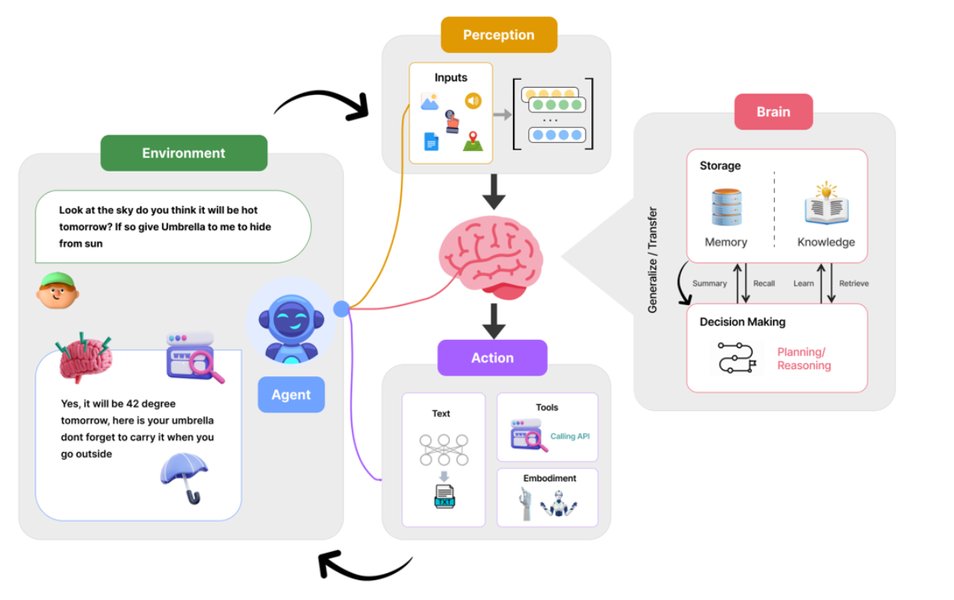
An AI agent perceives its environment, processes information, and takes action based on its decision-making logic.
Architectural and Algorithmic Enhancements
The internal design of an AI agent and the algorithms it employs are pivotal in shaping its decision-making capabilities.
Choosing the Right Agent Architecture
Different tasks call for different agent architectures. Simple reflex agents react to current percepts, but for optimized decision-making, more sophisticated architectures are preferred:
- Model-Based Reflex Agents: These agents maintain an internal state or model of how the world works. This allows them to track unobserved aspects of the environment and make decisions based on both current percepts and their internal model.
- Goal-Based Agents: These agents select actions that will help them achieve explicit goals. Decision-making involves considering the future and how current actions might lead to desired outcomes.
- Utility-Based Agents: When multiple actions can achieve a goal, utility-based agents choose the action that maximizes "utility" or expected happiness/satisfaction. This is crucial when there are conflicting goals or when the desirability of outcomes varies.
Many advanced AI agents incorporate a "reasoning engine" that can perform multi-step prompting and iteratively self-correct, allowing for more nuanced and adaptive decision-making.
Employing Sophisticated AI Techniques
The choice of AI algorithms significantly impacts decision quality. Key techniques include:
- Reinforcement Learning (RL): RL enables agents to learn optimal decision-making policies by interacting with their environment and receiving feedback in the form of rewards or punishments. This is particularly powerful for tasks requiring adaptation and long-term planning. Policy gradient methods are a subset of RL that directly optimize the action-selection policy.
- Deep Learning (DL): Various deep learning architectures can be employed based on data type:
- Convolutional Neural Networks (CNNs): Ideal for processing image and spatial data.
- Recurrent Neural Networks (RNNs) & LSTMs: Suited for sequential data like time series or text.
- Transformer Models (e.g., BERT, GPT): Highly effective for natural language understanding and generation tasks.
- Advanced Analysis Techniques: Machine learning algorithms like Support Vector Machines (SVM) and various pattern recognition techniques can help agents analyze data, identify patterns, extract insights, and make predictions, thereby supporting data-driven decisions.
Refining Processes and Ensuring Reliability
Optimizing decision-making is an ongoing process that requires structured approaches to task management, learning, and ensuring the agent operates reliably and ethically.
Strategic Task Management
Breaking Down Complex Tasks
Complex decision-making processes can often be overwhelming for an AI agent if approached monolithically. Decomposing large, intricate tasks into smaller, more manageable sub-tasks allows the agent to focus its decision-making capabilities more effectively on each component. This strategy often involves multi-step prompting or creating chains of specialized prompts, leading to more accurate and adaptable behavior.
Managing Tool Complexity
Modern AI agents often leverage external tools and APIs to enhance their capabilities. While tools can be powerful, an excessive number or poorly integrated tools can degrade selection accuracy and lead to inefficiencies or errors. It's crucial to curate the available tools carefully and design robust mechanisms for the agent to select the most appropriate tool for a given sub-task at the right time.
Continuous Learning and Improvement
Implementing Feedback Mechanisms
A cornerstone of optimized decision-making is the ability to learn and adapt. Implement robust feedback loops that allow the agent to:
- Self-Correct: Design the agent to reassess its plan of action at various stages and make corrections based on new information or intermediate outcomes.
- Review Performance: Integrate mechanisms for the agent to compare its actual performance against expected standards or predefined success metrics.
- Learn from Outcomes: Enable the agent to use the results of its past actions (both successes and failures) to refine its internal models and decision-making policies for future tasks.
Continuous Monitoring and Iterative Refinement
Optimization is not a one-time setup. Implement continuous performance monitoring against benchmarks and established KPIs. This ongoing evaluation provides insights for systematically refining models, adjusting decision policies, and adapting to new data or changing environmental conditions. Regular retraining with fresh data and feedback is essential.
Comparative radar chart illustrating the impact of various optimization facets on AI agent decision-making maturity.
The radar chart above visualizes different dimensions critical to AI agent decision-making. A "Baseline Agent" might show lower scores across these facets, indicating room for improvement. An "Optimized Agent" demonstrates higher capabilities due to targeted enhancements. The "Ideal Target State" represents a highly mature agent with robust decision-making. Optimizing an agent involves moving its performance profile from the baseline towards this ideal state across all relevant dimensions, such as ensuring high data quality, employing sophisticated algorithms, maintaining strong feedback loops, and ensuring deep contextual understanding.
Ensuring Trust, Transparency, and Ethical Conduct
For AI agents to be truly effective and accepted, especially in critical applications, their decision-making processes must be transparent, trustworthy, and aligned with ethical principles. Human oversight plays a vital role in this context.
Enhancing Transparency and Explainability
Understanding *why* an AI agent made a particular decision is crucial for building trust, debugging errors, and ensuring accountability. Consider integrating eXplainable AI (XAI) techniques that can provide insights into the agent’s decision rationale. Maintaining detailed logs of agent actions, including data inputs, intermediate reasoning steps, and any external tools or other agents utilized, also contributes to transparency. This is especially important in regulated industries.
Incorporating Human Oversight and Ethical Guardrails
Autonomous decision-making must be balanced with appropriate human control, particularly for high-impact actions or in situations with high uncertainty.
- Human Approval for Critical Actions: It is a best practice to require human approval before an AI agent takes actions with significant consequences (e.g., large financial transactions, critical safety operations).
- Fail-Safe Mechanisms: Implement fallback options, such as redirecting decisions to human supervisors if the agent encounters a novel situation it's not equipped to handle, or if its confidence in a decision falls below a certain threshold.
- Ethical Guidelines: Embed ethical considerations and guardrails directly into the agent's design and operational protocols. This includes clearly identifying the agent as an AI when it interacts with users and ensuring its objectives align with human values.

Human-centered AI emphasizes collaboration and oversight, ensuring AI decisions align with human values and objectives.
Advanced Frameworks and Considerations
Decision Intelligence Frameworks
Leverage decision intelligence frameworks that combine data analytics, AI, and behavioral science to improve and automate decision-making. Frameworks like the OODA loop (Observe, Orient, Decide, Act) can help structure an agent's decision-making process, particularly in dynamic and competitive environments, enabling it to react and adapt more effectively.
Multi-Agent Systems Optimization
If your AI agent operates within a multi-agent system (MAS), optimization extends to coordinating actions and decisions among multiple autonomous agents. This involves designing communication protocols, conflict resolution strategies, and collaborative problem-solving mechanisms to achieve common or individual goals efficiently.
Visualizing the Optimization Landscape: A Mindmap
To effectively optimize an AI agent's decision-making, it's helpful to visualize the interconnected components and strategies involved. The mindmap below outlines the key areas of focus, from foundational principles to advanced techniques and governance.
Decision-Making"] id1["Foundational Principles"] id1a["Clear Objectives & Metrics"] id1b["Contextual Understanding"] id1c["Constraint Definition"] id2["Data Strategies"] id2a["High-Quality Data Acquisition"] id2b["Data Preprocessing & Cleaning"] id2c["Real-time Data Integration"] id2d["ETL Processes"] id3["Algorithmic Approaches"] id3a["Reinforcement Learning (RL)"] id3b["Deep Learning (CNN, RNN, Transformers)"] id3c["Machine Learning (SVM, Pattern Recognition)"] id3d["Policy Gradient Methods"] id4["Architectural Design"] id4a["Model-Based Agents"] id4b["Goal-Based Agents"] id4c["Utility-Based Agents"] id4d["Reasoning Engines"] id5["Process & Refinement"] id5a["Task Decomposition"] id5b["Multi-Step Prompting"] id5c["Feedback Loops & Self-Correction"] id5d["Continuous Monitoring & Evaluation"] id5e["Iterative Improvement"] id6["Governance & Trust"] id6a["Transparency & Explainability (XAI)"] id6b["Human Oversight & Approval"] id6c["Ethical Guardrails & Safety"] id6d["Fail-Safe Mechanisms"] id6e["Logging & Auditing"] id7["Tool & Environment Management"] id7a["Effective Tool Selection"] id7b["Managing Tool Complexity"] id7c["Adapting to Diverse Decision Processes"] id8["Advanced Considerations"] id8a["Decision Intelligence Frameworks (e.g., OODA)"] id8b["Multi-Agent System Coordination"]
This mindmap illustrates that optimizing AI agent decisions is not a single action but a holistic process. It starts with clear goals (Foundational Principles), fueled by robust Data Strategies. The core intelligence comes from Algorithmic Approaches and smart Architectural Design. This intelligence is continuously sharpened through Process & Refinement techniques like feedback loops. Crucially, all of this must be enveloped in strong Governance & Trust mechanisms, including human oversight and ethical considerations. Finally, managing the agent's Tools & Environment and considering Advanced Considerations like decision intelligence frameworks can further enhance performance.
Key Strategies Summarized
The following table consolidates the essential steps and considerations for optimizing your AI agent's decision-making processes, providing a quick reference to guide your efforts.
| Strategy Area | Key Actions and Considerations | Impact on Decision Optimization |
|---|---|---|
| Goal Definition | Clearly articulate objectives; define specific, measurable success criteria (e.g., accuracy, speed). | Provides clear direction and benchmarks for agent performance. |
| Contextual Understanding | Specify operational environment, data availability, constraints (time, resources), and stakeholder preferences (privacy, compliance). | Ensures decisions are relevant and practical in real-world scenarios. |
| Data Management | Collect high-quality, relevant, and diverse data; preprocess for consistency and accuracy; integrate real-time streams. | Forms the basis for informed, data-driven decisions; reduces bias. |
| Algorithm & Model Selection | Employ appropriate AI techniques (e.g., Reinforcement Learning, Deep Learning, SVMs); choose suitable agent architectures (model-based, utility-based). | Enhances learning capabilities, pattern recognition, and predictive accuracy. |
| Task Decomposition | Break down complex decision-making processes into smaller, manageable sub-tasks; utilize multi-step prompting. | Improves focus, allows for specialized handling, and increases overall accuracy. |
| Feedback & Iteration | Implement continuous monitoring, performance reviews, and self-correction mechanisms; use feedback to refine models and policies. | Enables adaptive learning, error correction, and sustained performance improvement over time. |
| Transparency & Explainability | Integrate XAI techniques; maintain logs of actions and reasoning. | Builds trust, facilitates debugging, and supports compliance requirements. |
| Human Oversight & Ethics | Establish fail-safes, require human approval for critical actions, embed ethical guidelines. | Ensures safety, accountability, and alignment with human values. |
| Tool Management | Carefully select and integrate external tools and APIs; manage complexity to avoid performance degradation. | Enhances capabilities while maintaining efficiency and accuracy. |
Deep Dive: Evaluating AI Agent Performance
Evaluating the decision-making capabilities of AI agents is crucial for their optimization. This video from Arize AI provides insights into how to systematically evaluate agent workflows, debug performance issues, and ultimately enhance their decision-making processes. Understanding these evaluation techniques can significantly contribute to building more effective and reliable AI agents.
The video emphasizes that as AI agents take on more complex tasks, the need for robust evaluation frameworks becomes paramount. It covers methodologies to assess whether an agent is choosing the right tools, following optimal paths, and achieving desired outcomes. By applying structured evaluation, developers can identify bottlenecks, areas of underperformance, and opportunities for refinement, leading to more optimized and trustworthy AI agents.
Frequently Asked Questions (FAQ)
What is the most crucial first step in optimizing an AI agent's decision-making?
The most crucial first step is to define clear, measurable objectives and success metrics for your AI agent. Without a precise understanding of what the agent is supposed to achieve and how success will be measured, it's impossible to effectively guide or evaluate its decision-making process. This provides the foundational direction for all subsequent optimization efforts.
How significant is data quality for an AI agent's decisions?
Data quality is extremely significant. AI agents rely heavily on the data they are trained on and interact with to make informed decisions. High-quality, relevant, comprehensive, and unbiased data leads to more accurate and reliable decisions. Conversely, poor data (incomplete, inaccurate, biased) will inevitably lead to suboptimal or flawed decision-making.
What role does Reinforcement Learning (RL) play in optimizing decisions?
Reinforcement Learning (RL) plays a vital role by enabling an AI agent to learn optimal strategies through trial and error. The agent interacts with its environment, takes actions, and receives feedback (rewards or penalties). Over time, it learns a policy that maximizes cumulative rewards, effectively optimizing its decision-making process to achieve specific goals, especially in complex and dynamic environments.
Why is human oversight important for AI agents?
Human oversight is important to ensure safety, accountability, and ethical alignment. AI agents, despite advancements, can make mistakes, encounter novel situations, or face ethically ambiguous scenarios. Human intervention can prevent costly errors, provide guidance in complex cases, override poor decisions, and ensure the agent's actions remain aligned with human values and organizational policies, especially for high-impact decisions.
How can I make my AI agent's decision-making process more transparent?
You can enhance transparency by implementing eXplainable AI (XAI) techniques that provide insights into why a decision was made. Additionally, maintaining detailed logs of the agent’s actions, the data it used, and its reasoning steps can help users and developers understand its behavior. Clearly communicating the agent's capabilities and limitations also contributes to transparency.
Recommended Further Exploration
- What are the best reinforcement learning algorithms for complex decision-making in AI agents?
- How can eXplainable AI (XAI) techniques be practically implemented to increase trust in AI agent decisions?
- What are the key challenges and solutions for managing data quality in real-time AI agent systems?
- How do ethical considerations and bias mitigation strategies impact the optimization of AI agent performance?
References
 aws.amazon.com
Last updated May 13, 2025