
Mastering Hybrid Cloud Observability for Optimal Performance
Gaining Deep Insights Across Distributed Environments
Hybrid cloud environments, which combine on-premises infrastructure with public and private cloud services, are increasingly prevalent in modern IT strategies. This architecture offers significant benefits in terms of flexibility, scalability, and cost optimization. However, managing and ensuring the optimal performance, health, and security of these complex, distributed systems presents unique challenges. Traditional monitoring approaches, often designed for more static, monolithic environments, fall short in providing the comprehensive visibility needed for hybrid clouds. This is where hybrid cloud observability becomes crucial. It's the practice of gathering, integrating, and analyzing data from all components of your hybrid infrastructure to gain deep insights and proactively address issues.
Key Insights into Hybrid Cloud Observability Optimization
- Unified Visibility is Paramount: Effective hybrid cloud observability requires a single pane of glass that consolidates metrics, logs, traces, and other telemetry data from both on-premises and diverse cloud environments. This eliminates tool sprawl and provides a cohesive understanding of system health.
- Proactive Problem Resolution is Accelerated: By leveraging observability tools and practices, organizations can move beyond reactive troubleshooting. The ability to analyze correlated data and identify anomalous behavior allows IT teams to anticipate and resolve issues before they impact users or critical business operations.
- Performance and Cost Optimization Go Hand-in-Hand: Comprehensive observability provides the data needed to make informed decisions about resource allocation, identify inefficiencies, and optimize performance across the hybrid landscape. This directly contributes to cost savings and improved operational efficiency.
Understanding Hybrid Cloud Observability
Bridging the Gap Between Monitoring and Deep Insights
Hybrid cloud observability builds upon the principles of traditional monitoring but expands the scope to encompass a wider range of telemetry data and advanced analysis techniques. While monitoring typically focuses on tracking known metrics and triggering alerts when predefined thresholds are breached, observability aims to provide deep insights into the internal state of a system based on external outputs. This is particularly important in dynamic and complex hybrid environments where the interactions between components are intricate and constantly changing.
In a hybrid cloud, you're dealing with a mix of legacy systems, virtual machines, containers, microservices, and various cloud services from different providers. Each of these components generates its own set of data, including:
- Metrics: Numerical data representing system performance over time (e.g., CPU utilization, memory usage, network latency).
- Logs: Timestamped records of events occurring within applications and infrastructure (e.g., error messages, transaction details).
- Traces: Representations of the journey of a request through a distributed system, showing the sequence of operations and their duration.
Effective hybrid cloud observability involves collecting, correlating, and analyzing these diverse data types to understand the overall health, performance, and behavior of your entire IT landscape.
Challenges in Hybrid Cloud Observability
Navigating Complexity and Silos
Implementing effective observability in a hybrid cloud environment is not without its challenges. The inherent complexity of integrating disparate systems and tools can create visibility gaps and hinder efficient problem resolution. Some of the primary challenges include:
- Tool Sprawl: Different on-premises and cloud environments often come with their own monitoring tools, leading to a fragmented view of the infrastructure and requiring IT teams to switch between multiple platforms.
- Data Silos: Telemetry data is often siloed within individual environments or tools, making it difficult to correlate events and trace the root cause of issues that span across the hybrid landscape.
- Lack of Unified Context: Without a unified view and contextual understanding of dependencies between components, it's challenging to assess the impact of an issue in one part of the system on others.
- Dynamic Environments: The elastic nature of cloud resources and the adoption of microservices and containerization can lead to constantly changing environments, making it difficult to maintain consistent visibility.
- Security and Compliance: Ensuring consistent security policies and maintaining compliance across diverse environments adds another layer of complexity to hybrid cloud management and observability.
Strategies for Optimizing Hybrid Cloud Observability
Building a Comprehensive Approach
To effectively manage and optimize your hybrid cloud, a strategic approach to observability is essential. This involves implementing best practices and leveraging appropriate tools to gain unified visibility and actionable insights. Key strategies include:
Adopting a Unified Observability Platform
Instead of relying on disparate tools for each environment, invest in a unified observability platform that can collect, integrate, and analyze data from your entire hybrid infrastructure. These platforms provide a single pane of glass for monitoring metrics, logs, and traces, enabling a holistic view of system health and performance.
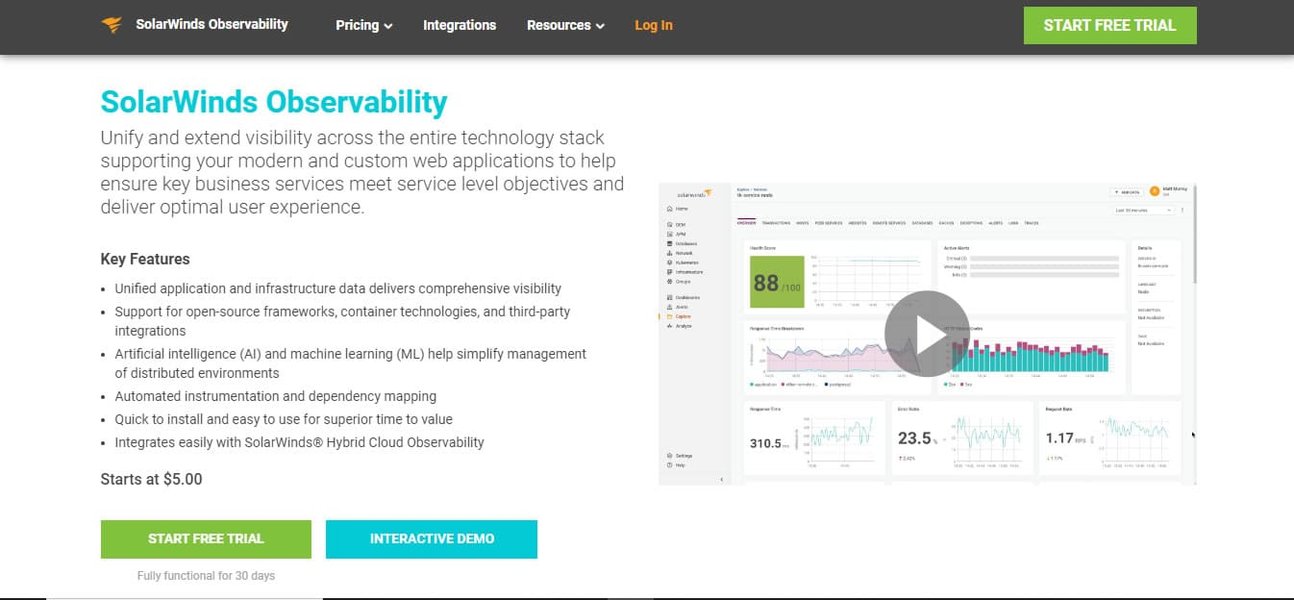
Unified dashboards from tools like SolarWinds provide a consolidated view of hybrid environments.
Defining Key Metrics and KPIs
Clearly define the key performance indicators (KPIs) and metrics that are critical for your business applications and infrastructure. Monitoring these crucial indicators allows you to quickly identify performance degradation and potential issues.
Implementing Automated Tracing and Application Performance Monitoring (APM)
Automated tracing helps visualize the flow of requests through your distributed applications, making it easier to identify bottlenecks and performance issues. APM tools provide detailed insights into application behavior and performance.
Centralizing Log Management and Analysis
Collecting and centralizing log data from all components of your hybrid environment is crucial for troubleshooting and root cause analysis. Leveraging log analysis tools with search and filtering capabilities can significantly accelerate the identification of issues.
Establishing Proactive Alerting and Notification Systems
Configure intelligent alerting systems that notify you of anomalous behavior or performance degradation before they impact users. Utilize machine learning-based alerting to reduce alert fatigue and focus on actionable insights.
Leveraging AI-Driven Performance Optimization
AI and machine learning can be used to analyze vast amounts of observability data, identify patterns, predict potential issues, and even suggest optimization strategies. This moves you towards a more proactive and intelligent approach to hybrid cloud management.
Implementing Workload Automation
Automating the deployment, scaling, and migration of workloads across your hybrid environment ensures consistency and reduces the risk of manual errors that can lead to performance issues.
Continuously Optimizing Your Strategy
Hybrid cloud environments are dynamic. Regularly review and optimize your observability strategy to ensure it aligns with your evolving infrastructure and business needs. This includes evaluating new tools and techniques and refining your monitoring approach.
Key Capabilities of Hybrid Cloud Observability Tools
Essential Features for Comprehensive Visibility
Effective hybrid cloud observability tools offer a range of capabilities designed to provide comprehensive visibility and facilitate efficient management. When evaluating potential solutions, consider the following key features:
| Capability | Description | Benefits |
|---|---|---|
| Unified Data Collection | Aggregates metrics, logs, and traces from diverse on-premises and cloud sources. | Eliminates data silos, provides a single source of truth. |
| Real-time Monitoring | Provides up-to-the-minute insights into system performance and health. | Enables rapid detection of issues. |
| Distributed Tracing | Visualizes the path of requests across different services and environments. | Facilitates root cause analysis in complex microservices architectures. |
| Log Management and Analysis | Centralizes and enables efficient searching and analysis of log data. | Accelerates troubleshooting and identifies patterns. |
| Automated Discovery and Mapping | Automatically identifies and maps dependencies between infrastructure components and applications. | Provides contextual understanding of the hybrid environment. |
| AI-Powered Analytics and Anomaly Detection | Uses machine learning to identify unusual patterns and predict potential issues. | Enables proactive problem resolution and reduces alert fatigue. |
| Customizable Dashboards and Reporting | Allows users to create tailored views of key metrics and generate reports for different stakeholders. | Provides relevant insights for different teams and decision-makers. |
| Alerting and Notifications | Configurable alerts based on predefined thresholds or anomalous behavior with various notification channels. | Ensures timely awareness of critical issues. |
| Scalability | Ability to handle the growing volume and variety of data from expanding hybrid environments. | Ensures the solution remains effective as your infrastructure scales. |
| Security and Compliance Features | Tools to help monitor security events and ensure adherence to compliance regulations across the hybrid cloud. | Maintains a strong security posture and meets regulatory requirements. |
Visualizing Hybrid Cloud Observability Capabilities
A Radar Chart Comparison
To illustrate the breadth of capabilities offered by comprehensive hybrid cloud observability solutions, consider the following radar chart. This chart provides a comparative view of key feature areas, highlighting the importance of a well-rounded toolset for effective hybrid cloud management.
As the chart illustrates, a comprehensive observability solution excels in areas like unified data collection, distributed tracing, and AI-powered analytics, which are crucial for understanding the complexities of a hybrid environment. Basic monitoring tools, while useful, often lack the depth and integration needed for effective hybrid cloud management.
Observability vs. Monitoring in the Hybrid Cloud Context
A Crucial Distinction
It's important to differentiate between monitoring and observability, especially in the context of hybrid clouds. While often used interchangeably, they represent distinct approaches to understanding system health.
- Monitoring: Focuses on collecting predefined metrics and logs to track the health of known components. It tells you if something is wrong based on expected behavior. Think of it like checking the vital signs of a patient (heart rate, blood pressure) against a set of normal values.
- Observability: Provides the ability to ask arbitrary questions about your system's behavior and understand its internal state from external data. It allows you to explore the "why" behind an issue, even for unforeseen problems. This is akin to a doctor analyzing a wide range of data (blood work, scans, patient history) to diagnose a complex illness.
In a hybrid cloud with its dynamic nature and complex interdependencies, relying solely on traditional monitoring can leave you with blind spots. Observability provides the necessary depth and context to navigate this complexity and quickly diagnose issues.
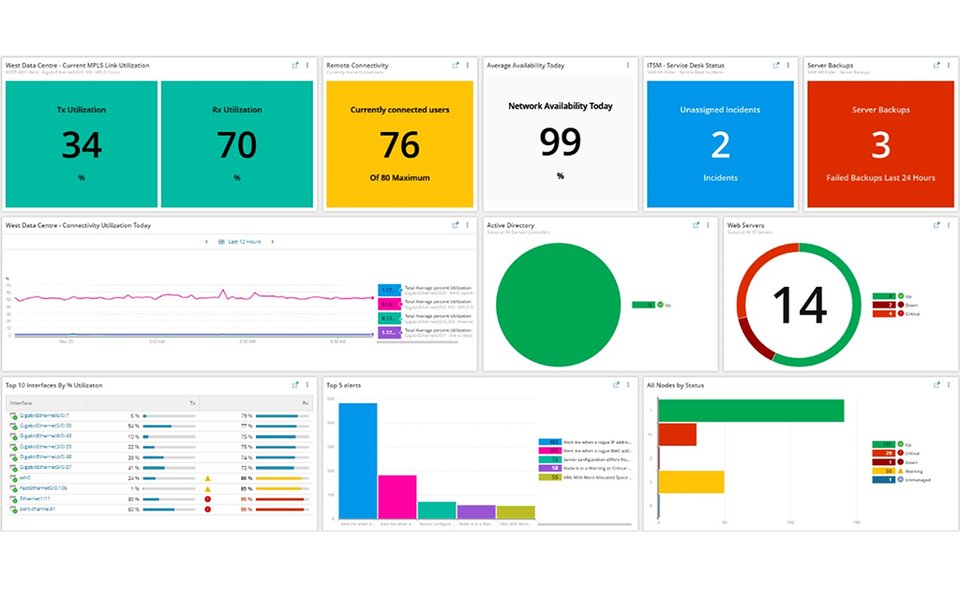
Hybrid cloud observability aims to provide a unified view across diverse environments.
Benefits of Optimized Hybrid Cloud Observability
Realizing the Value of Deep Insights
Investing in and optimizing your hybrid cloud observability strategy yields significant benefits for your organization:
- Faster Mean Time to Repair (MTTR): By quickly identifying the root cause of issues through correlated data and detailed traces, IT teams can resolve problems much faster, minimizing downtime and its impact on the business.
- Improved Application Performance: Observability provides the insights needed to identify performance bottlenecks, optimize resource allocation, and ensure applications are running efficiently across the hybrid environment.
- Enhanced Security Posture: Centralized logging and security event monitoring help detect and respond to security threats more effectively across the entire hybrid infrastructure.
- Optimized Cloud Costs: By gaining visibility into resource utilization and performance, organizations can make data-driven decisions to optimize cloud spending and avoid unnecessary costs.
- Increased Agility and Innovation: With a clear understanding of system behavior, IT teams can confidently deploy new applications and services, knowing they can effectively monitor and manage them in the hybrid environment.
- Reduced Alert Fatigue: Intelligent alerting and anomaly detection help filter out noise and focus on the most critical issues, improving the productivity of IT operations teams.
Integrating Observability into Your Hybrid Cloud Strategy
A Holistic Approach
Implementing effective hybrid cloud observability is not just about deploying tools; it's about integrating observability principles into your overall IT strategy and culture. Consider these steps:
- Foster Collaboration: Encourage collaboration between development (DevOps), operations (ITOps), and security teams to share insights and collectively address issues.
- Instrument Your Applications: Ensure your applications are designed with observability in mind, incorporating logging, tracing, and metrics collection from the outset.
- Automate Where Possible: Automate the collection and analysis of telemetry data to reduce manual effort and improve efficiency.
- Regularly Review and Refine: Continuously evaluate the effectiveness of your observability strategy and make adjustments as your hybrid environment evolves.
Here's a relevant video that discusses optimizing cloud workload experience, which ties into the broader theme of hybrid cloud observability:
This video explores optimizing cloud workload experience, a key outcome of effective hybrid cloud observability.
Frequently Asked Questions about Hybrid Cloud Observability Optimization
Addressing Common Queries
Recommended Searches for Deeper Insights
Explore Related Topics
- What are the leading tools for hybrid cloud observability?
- How can I implement full-stack observability across my hybrid IT?
- How is AIOps transforming hybrid cloud monitoring?
- What strategies can reduce mean time to repair in a hybrid cloud?
References
Sources for Further Reading
Last updated May 20, 2025