
The Forging of an Emblem: How the Hammer and Sickle Became Communism's Enduring Symbol
From the crucible of the Russian Revolution to a globally recognized icon, discover the story behind the hammer and sickle.
Key Insights: The Hammer and Sickle's Ascent
- Born from Revolution: The symbol emerged during the Russian Revolution (1917-1918) to represent the new Soviet state and its foundational ideals.
- A Union of Labor: The hammer signifies industrial workers (the proletariat), while the sickle represents agricultural laborers (the peasantry), their fusion symbolizing a united revolutionary force.
- Global Emblem of Ideology: Officially adopted by the Soviet Union, the hammer and sickle was embraced by communist movements and states worldwide, becoming an internationally recognized, albeit controversial, symbol.
The Genesis of an Emblem: The Russian Revolution's Call for Unity
The early 20th century was a period of immense global upheaval, culminating in the Russian Revolution of 1917. This transformative event not only overthrew the Tsarist autocracy but also aimed to establish a new social and political order based on socialist principles. In the wake of such radical change, the nascent Soviet state required potent symbols to articulate its ideology, unify its populace, and project its identity both domestically and internationally. The old imperial insignia were discarded, creating a vacuum for new emblems that could encapsulate the spirit of the revolution and the aspirations of the working classes.
The Bolsheviks, led by Vladimir Lenin, understood the power of visual propaganda. They sought a symbol that was simple, recognizable, and deeply resonant with the core tenets of their movement: the empowerment of the proletariat and the peasantry, and the creation of a classless society. This quest for a defining image set the stage for the emergence of the hammer and sickle.
Designing Unity: The Hammer, The Sickle, and Their Precursors
The choice of the hammer and the sickle was not arbitrary; each tool carried significant pre-existing symbolic weight before their iconic combination.
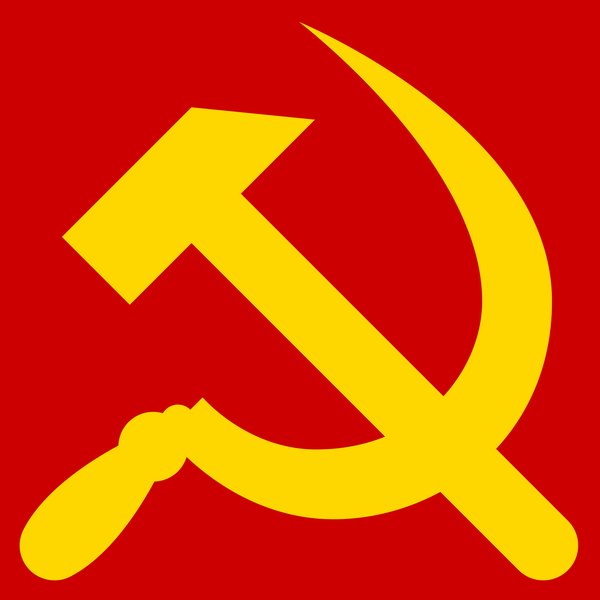
The iconic Hammer and Sickle, symbolizing the union of industrial and agricultural labor.
The Hammer: Symbol of the Industrial Proletariat
The hammer had long been associated with industrial labor, craftsmanship, and the burgeoning working class in urban centers. In the context of Marxist theory, the industrial proletariat was seen as the primary revolutionary class, destined to overthrow capitalism. Thus, the hammer was a natural choice to represent factory workers, miners, and other industrial laborers who formed the backbone of this class.
The Sickle: Symbol of the Peasantry
The sickle, a traditional agricultural implement used for harvesting grain, represented the peasantry – the vast rural population engaged in farming. In Russia, a predominantly agrarian society at the time of the revolution, the peasantry constituted the largest segment of the population. Their support, or at least acquiescence, was crucial for the success and consolidation of the Bolshevik regime.
Early Combinations and Alternatives
Before the definitive hammer and sickle design was adopted, other combinations and symbols were considered. Early Soviet emblems sometimes featured a hammer paired with a plow, another strong symbol of agricultural labor. For instance, the "Star of Mars" insignia used on Red Army recruits' caps from May 1918 initially included a hammer and plow. The decision to replace the plow with the sickle in later iterations, such as on military medals by May 1922, suggests a refinement towards a more universally recognized and dynamic representation of peasant labor.
Forging the Symbol: Yevgeny Kamzolkin and Official Adoption
The most widely accepted account attributes the creation of the specific hammer and sickle design to the Russian artist Yevgeny Ivanovich Kamzolkin. In 1917 or 1918, Kamzolkin proposed this emblem as a decoration for May Day celebrations in the Zamoskvorechye District of Moscow. His design, featuring a crossed hammer and sickle, was intended to visually articulate the essential alliance between the industrial workers and the peasantry, the two classes the Bolsheviks sought to unite.
The formal adoption process was gradual but decisive:
- Initial Appearances: The symbol began appearing on official documents and in public displays relatively quickly. It is reported to have featured on Russian state documentation following the Fifth All-Russian Congress of Soviets on July 10, 1918, although it might have appeared in other contexts even earlier that year.
- Military Insignia: As mentioned, a version with a hammer and plow appeared on Red Army insignia in May 1918. The transition to the hammer and sickle proper for military use, particularly on medals, occurred by May 1922.
- State Emblem and Flag: The hammer and sickle became a central element of the state emblem (coat of arms) of the Soviet Union. Its most prominent display was on the flag of the USSR, officially adopted in 1923. The flag featured a golden hammer and sickle with a red star above it, set against a stark red field. This red background was itself deeply symbolic, representing the blood shed by workers in their struggle for liberation, as well as the revolutionary spirit.
This official endorsement cemented the hammer and sickle's status as the primary visual representation of the Soviet state and its communist ideology.
Ideological Foundations: Marxism, Leninism, and the Worker-Peasant Alliance
The symbolism of the hammer and sickle is deeply rooted in Marxist-Leninist ideology. Classical Marxism, as articulated by Karl Marx and Friedrich Engels, emphasized the revolutionary potential of the industrial proletariat in overthrowing capitalism. However, Russia's socio-economic landscape in the early 20th century presented a challenge to this orthodox view, as it was predominantly agrarian with a relatively smaller industrial working class compared to Western European nations.
Vladimir Lenin adapted Marxist theory to these Russian conditions. He recognized the necessity of forging a strategic alliance (smychka) between the urban proletariat and the vast rural peasantry. This worker-peasant alliance was deemed essential not only for seizing power but also for constructing a socialist society. The hammer and sickle visually encapsulated this crucial Leninist concept: the hammer representing the leading role of the proletariat, and the sickle representing the vital support and participation of the peasantry.
The symbol thus conveyed a message of unity, shared struggle, and collective purpose. It signified a break from the old order and the promise of a new society built by and for the working masses, transcending the traditional urban-rural divide.
Visualizing the Revolution: Symbolism in Propaganda and Daily Life
Once adopted, the hammer and sickle became ubiquitous in the Soviet Union and a powerful tool in state propaganda. Its simple, bold design was easily reproducible and instantly recognizable, making it highly effective for mass communication.
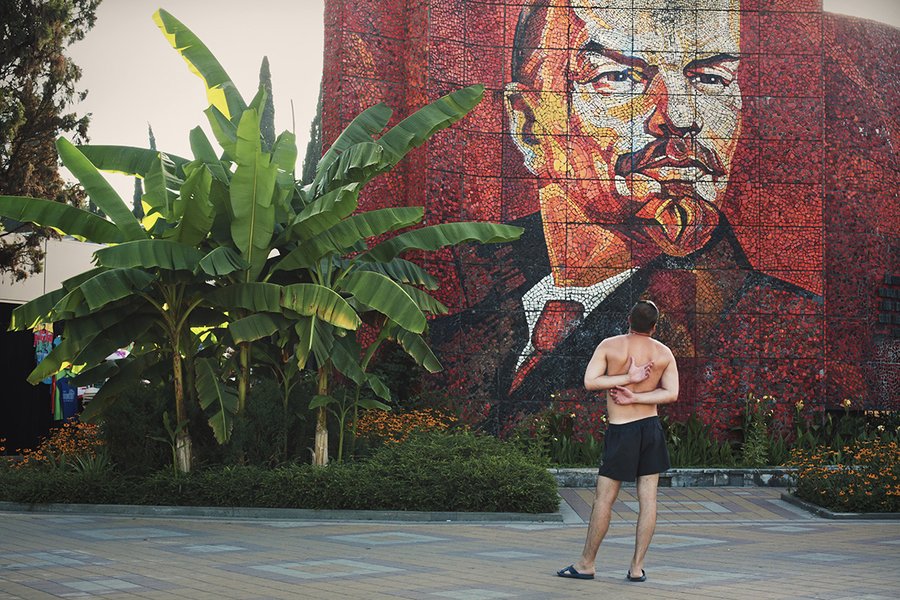
A Soviet-era mosaic depicting Lenin, demonstrating the integration of communist symbols into public art and daily life.
The emblem appeared on:
- Currency and Stamps: Reinforcing state authority and ideology in everyday transactions.
- Military Uniforms and Equipment: Symbolizing the Red Army as the defender of the revolution and the Soviet state.
- Public Buildings and Monuments: Marking the landscape with the visual identity of the new regime.
- Posters, Banners, and Publications: Disseminating political messages and promoting communist ideals.
- Awards and Medals: Recognizing service and achievement in the name of the Soviet state.
The pervasiveness of the hammer and sickle aimed to foster a sense of collective identity and loyalty to the communist cause. It served as a constant reminder of the state's ideological underpinnings and the proclaimed power of the working class and peasantry.
The following video offers a concise overview of the history and symbolism of the hammer and sickle:
This video, "What is The Hammer and Sickle?" by The Cold War channel, provides additional context on its famed association with Communism and the USSR, delving into its historical roots and symbolic meaning as a representation of the union between industrial and agricultural workers.
Deciphering the Components: A Summary Table
The core symbolism of the hammer and sickle lies in its distinct yet united components. This table breaks down their individual and combined meanings:
| Element | Represents | Symbolic Meaning in Communist Ideology |
|---|---|---|
| Hammer | Industrial Proletariat | Factory labor, industrial might, urban working class, technological progress, the vanguard of the revolution. |
| Sickle | Peasantry / Agricultural Workers | Agricultural labor, farming, rural working class, sustenance, connection to the land. |
| Crossed Union | Worker-Peasant Alliance (Smychka) | Solidarity between industrial and agricultural laborers, unified revolutionary force, foundation of the socialist state, collective power. |
Global Proliferation and Divergent Interpretations
Following its consolidation as the primary symbol of the Soviet Union, the hammer and sickle's influence spread rapidly across the globe. Communist parties and movements in numerous countries adopted it, or variations thereof, to signify their ideological alignment with Marxism-Leninism and, often, with the Soviet model. It became an international emblem of proletarian solidarity, anti-capitalist struggle, and the aspiration for a classless society.
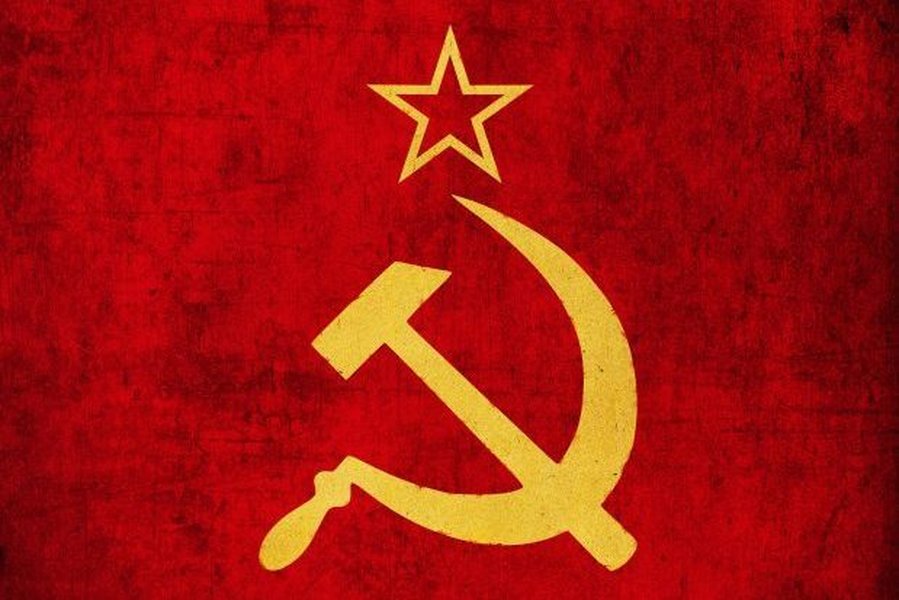
The Soviet flag, prominently featuring the hammer and sickle, became a globally recognized symbol of communism.
The symbol featured prominently on the flags and emblems of various communist states, including the People's Republic of China (though its party emblem uses it more directly than the national flag), Vietnam, Laos, and former Eastern Bloc countries. However, the legacy of the hammer and sickle is complex and deeply contested.
Positive Connotations
For its adherents and supporters, the hammer and sickle continues to represent:
- The power and dignity of labor.
- The fight against exploitation and oppression.
- The ideal of social equality and a classless society.
- Anti-imperialist and anti-colonial struggles.
Negative Connotations and Controversy
Conversely, for many people, particularly those who lived under or were affected by authoritarian communist regimes, the hammer and sickle evokes painful memories of:
- Totalitarianism and state repression.
- Suppression of political dissent and human rights abuses.
- Economic hardship and famine.
- The violence and brutality associated with certain communist states.
As a result, the public display of the hammer and sickle is controversial and even banned in some countries, such as Indonesia, Lithuania, Latvia, Poland, and Ukraine, due to its association with totalitarian ideologies and past occupations or oppressive regimes. Its Unicode character (☭) is often used in digital communication, sometimes to express support for communist ideals, but also ironically or critically.
Radar Chart: Multifaceted Impact of the Hammer and Sickle
The hammer and sickle's journey from a revolutionary emblem to a global icon has been marked by varying degrees of influence and perception across different domains and time periods. The radar chart below offers a visual representation of its multifaceted impact, based on an analytical interpretation rather than precise data. It assesses aspects like its historical significance, global recognition, ideological potency, controversial nature, cultural permanence, and artistic influence during key phases.
This chart illustrates how the symbol's recognition and ideological power peaked during the Cold War, while its controversial nature has become more pronounced in contemporary times, even as its direct historical and ideological potency has somewhat waned in certain contexts.
Mermaid Mindmap: The Hammer and Sickle Deconstructed
To summarize the key elements surrounding the hammer and sickle, the following mindmap provides a structured overview of its origins, design, ideological underpinnings, adoption, and global impact.
(Totalitarianism, Repression)"] id5d["Bans in Some Countries"] id5e["Modern Usage (Unicode ☭, Cultural References)"]
This mindmap highlights the multifaceted journey of the hammer and sickle, from its conceptualization to its enduring, though often divisive, presence in global consciousness.
Frequently Asked Questions (FAQ)
Who specifically designed the hammer and sickle symbol?
The most credited designer of the hammer and sickle emblem is Russian artist Yevgeny Ivanovich Kamzolkin. He proposed the design in 1917 or 1918 for May Day celebrations in Moscow, intending it to represent the unity of industrial workers (hammer) and peasants (sickle).
Why is the color red often associated with the hammer and sickle?
The red background prominently featured with the hammer and sickle (especially on the Soviet flag) is a traditional color of revolutionary movements. It symbolizes the blood shed by workers in their struggle against oppression, courage, and the socialist revolution itself. It was adopted by many socialist and communist groups long before the hammer and sickle's creation.
Were there other symbols considered before the hammer and sickle was adopted?
Yes, before the hammer and sickle became the definitive symbol, other designs and tools were considered or used. Notably, the hammer was sometimes paired with a plow to represent the worker-peasant alliance. Other labor-related tools like brushes, spades, and pickaxes were also part of broader socialist symbolism in various contexts, but the hammer and sickle combination ultimately proved the most enduring for Soviet communism.
Is the hammer and sickle symbol banned anywhere today?
Yes, the public display of the hammer and sickle is banned in several countries, particularly those in Eastern Europe that experienced Soviet occupation or rule. These include Indonesia, Latvia, Lithuania, Poland, and Ukraine, among others. The bans are typically due to the symbol's association with totalitarian regimes, communism, and past oppression.
Recommended Further Exploration
- Explore the evolution of other major political symbols throughout history.
- Investigate the role of Yevgeny Kamzolkin in Soviet art beyond the hammer and sickle.
- Compare the symbolism of the hammer and sickle with emblems used by socialist movements in other parts of the world.
- Delve into the legal and societal debates surrounding the banning of political symbols in contemporary nations.
References
Last updated May 7, 2025