
Choosing the Right Temporary Storage for Your Auto-Scaled Application's OTPs
Navigating OTP storage options for lightweight, containerized web apps that scale.
Selecting an appropriate storage solution for One-Time Passwords (OTPs) is crucial for applications like yours—lightweight, containerized, and auto-scaled in the cloud. Given you're handling a small volume of OTPs (around a dozen at any time) primarily for email validation, the ideal solution must be fast, reliable, cost-effective, and, most importantly, compatible with a dynamic, multi-instance environment.
Key Insights for Your OTP Storage Strategy
- Shared Access is Paramount: For auto-scaled containerized applications, OTPs must be stored in a centralized location accessible by any container instance that might handle the user's validation request.
- Embrace Ephemeral Storage with TTL: OTPs are short-lived by nature. Solutions with built-in Time-To-Live (TTL) features automatically manage the expiration and deletion of OTPs, enhancing security and simplifying data management.
- Focus on Lightweight Solutions: For a dozen OTPs, complex databases are overkill. In-memory caches and serverless key-value stores offer the right balance of performance and simplicity.
Understanding Your Core Requirements
Your application's architecture—a lightweight, containerized web app with cloud-managed auto-scaling—and its specific need to temporarily store a small number of OTPs dictate several key characteristics for the storage solution:
- Low Latency: OTP validation is part of the login flow, so fast read/write operations are essential for a good user experience.
- Centralized or Shared Storage: As your application scales horizontally (i.e., more container instances are added or removed), any instance must be able to access the OTP for validation. This rules out simple in-memory storage tied to a single container instance unless sticky sessions are reliably configured (and even then, it can be a point of failure).
- Ephemeral Nature: OTPs are valid for a very short period (typically a few minutes). The storage solution should ideally support automatic expiration.
- Lightweight & Cost-Efficient: Given the small data volume ("a dozen OTPs"), a complex or expensive storage system is unnecessary.
- Ease of Integration: The solution should offer a simple API or SDK for straightforward integration into your application.
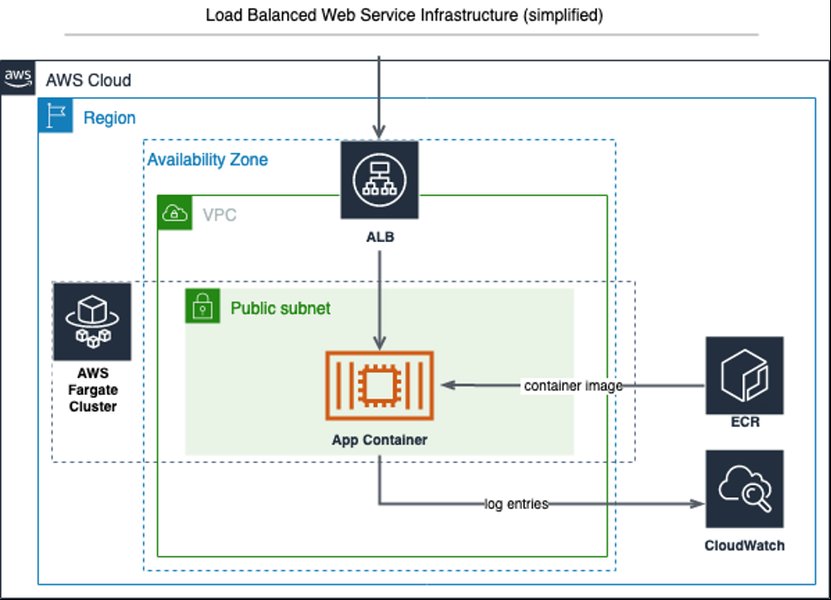
A typical serverless container deployment architecture, where shared resources like OTP stores are crucial.
Top Recommended Storage Solutions for Your OTPs
Considering your specific needs, two main categories of storage solutions stand out: In-Memory Key-Value Stores and Serverless Key-Value Stores.
1. In-Memory Key-Value Stores (e.g., Redis, Memcached)
In-memory databases store data primarily in RAM, leading to extremely fast data access. This makes them ideal for temporary, high-speed data storage like OTPs.
Why They Fit Your Needs:
- Blazing Speed: Retrieving OTPs from memory is significantly faster than from disk, ensuring minimal latency during login.
- Native TTL Support: Most in-memory stores like Redis offer built-in Time-To-Live (TTL) functionality. You can set an expiration time for each OTP (e.g., 5-10 minutes), and the store will automatically delete it, simplifying your application logic and enhancing security.
- Shared Access: When deployed as a centralized service (either self-managed or using a cloud provider's managed service), all your container instances can connect to the same in-memory store, ensuring OTPs are accessible regardless of which instance handles the request.
Cloud-Managed Options:
Cloud providers offer managed services for in-memory caches, which handle setup, maintenance, and scaling:
- AWS ElastiCache (for Redis or Memcached)
- Azure Cache for Redis
- Google Cloud Memorystore (for Redis or Memcached)
For just a dozen OTPs, a very small instance of a managed service or even a self-hosted Redis container (configured for your cloud environment's network) can be cost-effective and sufficient.
2. Serverless Key-Value Stores (e.g., AWS DynamoDB, Cloudflare Workers KV)
Serverless key-value stores provide a fully managed, highly scalable, and often globally distributed database service where you don't need to manage servers. They are excellent for applications with variable traffic and integrate well with containerized, auto-scaling architectures.
Why They Fit Your Needs:
- Simplicity and Low Operational Overhead: Being serverless, these services abstract away infrastructure management. You only pay for what you use, which is ideal for low-volume scenarios.
- Automatic Scaling: They scale seamlessly with your application's needs, although for a dozen OTPs, this is less of a concern for capacity and more for availability.
- TTL Support: Many serverless key-value stores (like Amazon DynamoDB and Cloudflare Workers KV) offer TTL features, allowing OTPs to expire automatically.
- Good Performance: While potentially having slightly higher latency than direct in-memory caches, they offer single-digit millisecond performance, which is more than adequate for OTP validation.
- Durability (Optional Benefit): Many offer durable storage, though for OTPs, the ephemeral nature is more critical.
Prominent Examples:
- Amazon DynamoDB: A fully managed NoSQL database. You can create a table with a primary key (e.g., user ID or session ID) and store the OTP, using DynamoDB's TTL feature for automatic deletion.
- Cloudflare Workers KV: A globally distributed key-value store that provides low-latency access. It's designed for serverless applications and supports custom TTLs.
- KVdb.io: A simple key-value store as a service with a REST API, suitable for lightweight applications and prototyping, supporting key expiration.
- Other options include Deno KV, Upstash, and Fermyon Cloud Key Value Store, each offering unique benefits for serverless architectures.
Visualizing Solution Characteristics
To better understand how these solutions compare, the following radar chart illustrates their strengths across key attributes relevant to your OTP storage needs. The "In-Container Memory" option is included for contrast, highlighting why it's generally unsuitable for auto-scaled applications needing shared state, despite its speed in a single-instance context.
This chart helps visualize that while in-container memory is fast, it falls short on cross-instance consistency and shared access required by auto-scaling. Managed in-memory caches and serverless key-value stores offer a much better balance for your scenario.
Decision Pathway: Choosing Your OTP Store
The following mindmap outlines the key considerations and potential solution paths for your OTP storage needs, helping to clarify the decision-making process.
Containerized Web App"] id1["Key Requirements"] id1_1["Temporary Storage (Short-Lived OTPs)"] id1_2["Low Latency (Fast Access for Login)"] id1_3["Shared & Centralized
(Critical for Auto-Scaling)"] id1_4["Small Data Volume (~12 OTPs)"] id1_5["Automatic Expiration (TTL Feature)"] id1_6["Security (Data Protection)"] id1_7["Cost-Effectiveness & Simplicity"] id2["Recommended Solution Categories"] id2_1["In-Memory Key-Value Stores"] id2_1_1["Examples: Redis, Memcached"] id2_1_2["Core Benefits: Extreme Speed, Native TTL"] id2_1_3["Deployment: Cloud Managed (e.g., AWS ElastiCache, Azure Cache for Redis) or Small Self-Managed Instance"] id2_1_4["Key: Must be a shared/centralized instance"] id2_2["Serverless Key-Value Stores"] id2_2_1["Examples: AWS DynamoDB, Cloudflare Workers KV, KVdb.io, Upstash"] id2_2_2["Core Benefits: Fully Managed, Auto-Scales, TTL, Good Performance, Pay-per-use"] id2_2_3["Deployment: Integrated Cloud Services"] id3["Implementation Factors"] id3_1["Network Accessibility from all Containers"] id3_2["TTL Configuration (e.g., 5-15 minutes)"] id3_3["Secure Connection & Access Control"] id3_4["SDK/API Integration Simplicity"] id4["Less Suitable Options for This Scenario"] id4_1["Local Container Memory/Filesystem"] id4_1_1["Reason: Data is isolated to individual instances, lost on scaling/restarts."] id4_2["Traditional Relational Databases (SQL)"] id4_2_1["Reason: Overkill in complexity and cost for simple, temporary key-value data."]
Comparing Top Contenders: A Closer Look
Here's a table summarizing the key aspects of the leading recommended solutions for your specific OTP storage needs:
| Solution Type | Example(s) | Primary Benefit for OTPs | Cross-Instance Sharing | TTL Support | Management Overhead | Ideal for Your Use Case? |
|---|---|---|---|---|---|---|
| Managed In-Memory Cache | AWS ElastiCache for Redis, Azure Cache for Redis | Ultra-low latency, efficient caching | Excellent (designed for this) | Native | Low (managed service) | Very Strong Fit |
| Serverless Key-Value Store | AWS DynamoDB, Cloudflare Workers KV | Ease of use, scalability, no server management | Excellent (designed for this) | Native or easily implemented | Very Low (fully managed) | Very Strong Fit |
| Self-Hosted In-Memory Cache in Container | Redis (in a dedicated, networked container) | Low latency, more control | Good (if networked correctly) | Native | Medium (requires setup, monitoring) | Good Fit, more setup |
| In-memory Dictionary (Application Level) | Python dict, Node.js Map |
Simplest, no external dependency | Poor (Not shared across instances without complex synchronization, unsuitable for auto-scaling) | Application-managed | None (part of app) | Not Recommended for auto-scaling |
Key Implementation Considerations
Whichever solution you choose, keep these points in mind:
Centralized Access:
This is non-negotiable for an auto-scaled environment. The OTP store must be reachable from any container instance.Time-To-Live (TTL):
Configure a short TTL (e.g., 5 to 15 minutes) for OTPs. This automatically removes expired OTPs, which is crucial for security (reducing the window of opportunity for misuse) and data hygiene (preventing accumulation of stale data).Security:
Even though OTPs are short-lived, protect them. Use encrypted connections (TLS/SSL) to the data store, and apply access controls or authentication if the service supports it. Store only the necessary information.Cost-Effectiveness:
For storing only a dozen OTPs, most serverless options will have negligible costs due to their pay-per-use models. For managed in-memory caches, choose the smallest available instance size that meets your needs.Simplicity of Integration:
Opt for solutions with well-documented SDKs or simple APIs in your application's programming language to minimize development effort.Error Handling:
Implement robust error handling for scenarios where the OTP store might be temporarily unavailable or an OTP is not found (e.g., expired or incorrect).
Solutions to Approach with Caution for Your Scenario
- Local Container Storage (In-Memory Variables or Filesystem): Storing OTPs directly in a container's memory (e.g., in a simple dictionary object) or its local filesystem is the most lightweight approach but is not suitable for auto-scaled applications. Each container instance would have its own isolated store. If a user's request to generate an OTP goes to container A, and the validation request goes to container B, container B won't find the OTP. This only works if you have a single container instance or if your load balancer uses sticky sessions reliably (which can introduce its own complexities and points of failure).
- Traditional Relational Databases (e.g., PostgreSQL, MySQL): While capable of storing data, these are generally overkill for the temporary storage of a small number of OTPs. They introduce more complexity, potentially higher latency for simple key-value lookups, and higher costs than necessary for this specific task.
Exploring Serverless Database Concepts
Serverless databases, particularly key-value stores, align well with modern cloud-native application architectures like yours. They offer advantages in terms of scalability, operational simplicity, and cost-efficiency for use cases such as temporary OTP storage. The following video provides a concise overview of what serverless databases entail and why they are becoming increasingly popular.
Understanding serverless databases and their benefits for applications like yours.
Frequently Asked Questions (FAQ)
Why is local container memory not ideal for OTPs in an auto-scaled setup?
What's the importance of Time-To-Live (TTL) for OTP storage?
How do serverless key-value stores simplify OTP management?
Is a managed Redis service overkill for just a dozen OTPs?
Conclusion: Opting for Simplicity and Scalability
For your lightweight, auto-scaled web application needing to store a dozen OTPs temporarily, the best approach involves a shared, low-latency storage solution with TTL capabilities. Both managed in-memory key-value stores (like Redis) and serverless key-value stores (like AWS DynamoDB or Cloudflare Workers KV) are excellent choices. They provide the necessary speed, ensure OTPs are accessible across all container instances, and simplify management through automatic expiration and, in the case of serverless options, minimal operational overhead. Your final choice may depend on your existing cloud ecosystem, familiarity with specific services, and any nuanced performance or cost considerations. Both paths will effectively address your requirements.
Recommended Further Exploration
- Explore how to implement OTP storage with Redis and Time-To-Live in a containerized application.
- Learn about the differences between AWS DynamoDB and Cloudflare Workers KV for managing small-scale temporary data.
- Discover the best security practices for handling temporary One-Time Password data within cloud-based applications.
- Understand the potential cost implications of choosing managed Redis services compared to serverless key-value stores for low-volume OTP scenarios.
Search Results Explored
 aws.amazon.com
 docs.aws.amazon.com
aws.amazon.com