
Insulin Pumps Unveiled: Beyond Injections for Diabetes Management
Discover how these smart devices mimic the pancreas to offer flexibility and control.
Insulin pumps represent a significant technological advancement in managing diabetes, offering an alternative to multiple daily injections (MDI) of insulin. These small, computerized devices deliver insulin continuously under the skin, aiming to replicate the natural insulin release pattern of a healthy pancreas more closely. This comprehensive overview explores what insulin pumps are, how they function, the different types available, their benefits and drawbacks, and the integration with modern glucose monitoring technologies, based on information available up to April 17, 2025.
Key Insights into Insulin Pump Therapy
- Continuous & Precise Delivery: Pumps provide a constant background (basal) insulin supply and allow users to deliver precise extra doses (bolus) for meals or corrections, mimicking natural pancreatic function.
- Integration with CGM: Most modern pumps connect with Continuous Glucose Monitors (CGMs) to enable automated adjustments, reducing guesswork and improving blood sugar stability through hybrid closed-loop systems.
- Enhanced Lifestyle Flexibility: Pump users often experience greater freedom in meal timing, activity levels, and daily schedules compared to rigid MDI regimens, alongside fewer needle sticks.
What Exactly Is an Insulin Pump?
A Smart Device for Insulin Delivery
An insulin pump is a wearable medical device, typically about the size of a small smartphone or deck of cards, designed for individuals with diabetes who require insulin. It delivers rapid-acting insulin 24 hours a day through a small tube called a cannula, inserted just under the skin. The core function is to provide a continuous subcutaneous insulin infusion (CSII), replacing the need for frequent injections.
These devices contain a reservoir or cartridge filled with insulin, a battery, and a small computer processor that allows users to program insulin delivery rates and doses. By providing insulin consistently, pumps help manage blood glucose levels between meals and overnight (basal insulin) and allow users to deliver extra insulin to cover carbohydrates consumed during meals or snacks, or to correct high blood sugar levels (bolus insulin).
Components of a typical insulin pump system, showing the pump, reservoir, tubing, and infusion set.
How Do Insulin Pumps Mimic the Pancreas?
Basal and Bolus Delivery Explained
Insulin pumps are designed to emulate the two main ways a healthy pancreas releases insulin:
Basal Insulin Delivery
This is a small, continuous trickle of insulin delivered throughout the day and night. It helps keep blood glucose levels stable between meals and during sleep by covering the baseline insulin needs of the body. Pump users can program specific basal rates for different times of the day, allowing for customization based on individual patterns (e.g., higher needs in the morning due to the dawn phenomenon). Advanced systems can automatically adjust this basal rate based on CGM readings.
Bolus Insulin Delivery
This involves delivering larger doses of insulin on demand, typically before meals or snacks, to cover the carbohydrates consumed. Users input information, such as carb counts or current blood glucose levels, and the pump calculates a suggested bolus dose based on pre-set ratios (insulin-to-carb ratio, correction factor). Users confirm or adjust the dose before delivery. This allows for precise dosing tailored to specific food intake and activity levels.
The Synergy of Pumps and Continuous Glucose Monitors (CGM)
Automating Insulin Delivery
A major advancement in diabetes technology is the integration of insulin pumps with Continuous Glucose Monitoring (CGM) systems. CGMs track glucose levels in real-time via a sensor inserted under the skin, sending data wirelessly to the pump or a separate receiver/smartphone.

Visual representation of how CGM data informs automated insulin delivery via a pump, creating a hybrid closed-loop system.
This integration enables several levels of automation:
- Sensor-Augmented Pumps: Display CGM data directly on the pump screen, helping users make more informed decisions about bolus doses and basal adjustments.
- Low Glucose Suspend (LGS): Systems that automatically pause insulin delivery if the CGM detects or predicts dangerously low glucose levels, helping prevent severe hypoglycemia.
- Hybrid Closed-Loop (HCL) / Automated Insulin Delivery (AID) Systems: These sophisticated systems use algorithms that continuously analyze CGM data and automatically adjust basal insulin delivery to proactively prevent both high and low blood sugar levels. The user still needs to manually input carbohydrate information and administer meal boluses, hence the term "hybrid." Examples include systems like Medtronic's MiniMed series (e.g., 780G), Tandem's t:slim X2 with Control-IQ, and Insulet's Omnipod 5.
These integrated systems significantly reduce the burden of diabetes management, improve time spent within the target glucose range, and decrease the risk of hypoglycemia.
Exploring the Types of Insulin Pumps
Insulin pumps generally fall into two main categories based on their design:
1. Tubed (Tethered) Insulin Pumps
These are the traditional style of insulin pumps. They consist of:
- The Pump Body: A small, durable device containing the insulin reservoir (cartridge), battery, screen, and controls. It's typically worn in a pocket, on a belt clip, or in a pouch.
- Tubing: A thin, flexible plastic tube that connects the insulin reservoir in the pump to the infusion site on the body.
- Infusion Set: This includes a small cannula (a soft plastic tube or sometimes a tiny needle) inserted under the skin and an adhesive patch that holds it in place. The tubing connects to this set.
Users need to change the insulin reservoir and the infusion set every 2-3 days. While many tubed pumps are water-resistant, they usually need to be disconnected for activities like swimming or bathing. Examples include pumps from Medtronic (MiniMed series) and Tandem Diabetes Care (t:slim X2, Mobi).
2. Tubeless (Patch) Insulin Pumps
These pumps eliminate the need for external tubing by combining the insulin reservoir, pumping mechanism, and cannula into a single small pod.
- The Pod: A self-contained unit that adheres directly to the skin using a built-in adhesive. It holds the insulin and houses the cannula that delivers insulin under the skin.
- Controller: A separate wireless handheld device (often resembling a smartphone or a dedicated controller) used to program settings, deliver boluses, and monitor pump status.
The pod is typically worn for up to 3 days before being discarded and replaced with a new one at a different site. Patch pumps are generally waterproof, allowing users to wear them continuously during swimming, showering, and other water activities. The most well-known example is the Omnipod system (Omnipod DASH, Omnipod 5).

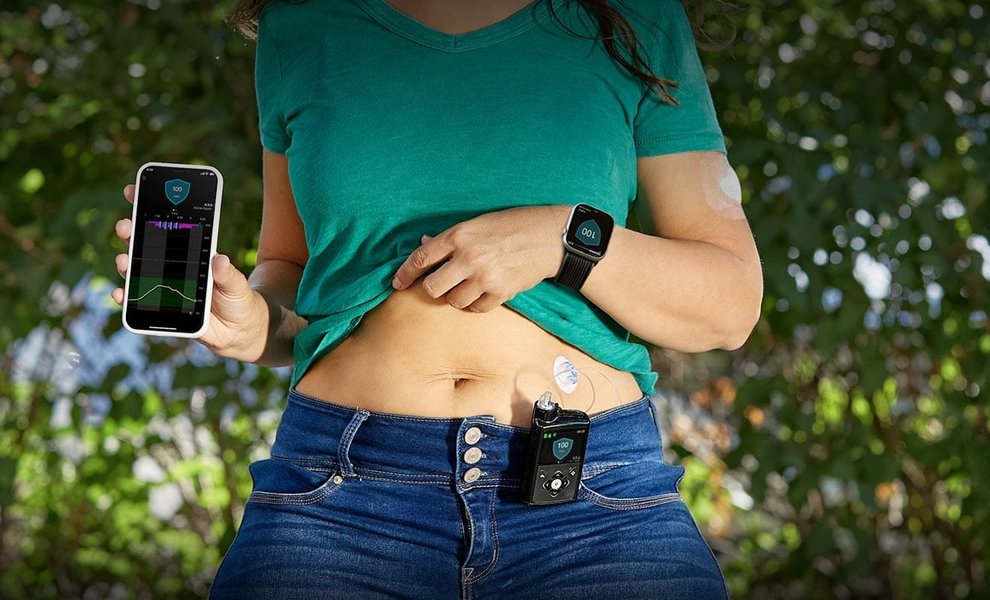
Example of a person utilizing both an insulin pump and a CGM device for integrated diabetes management.
Comparing Pump Types
The choice between a tubed and tubeless pump often comes down to personal preference regarding comfort, discretion, lifestyle, and handling of the device. This table highlights some key differences:
| Feature | Tubed Pumps | Tubeless (Patch) Pumps |
|---|---|---|
| Design | Pump body connected to infusion site via tubing | All-in-one pod adheres directly to skin |
| Control | Buttons/touchscreen on the pump body; some offer smartphone control | Separate wireless handheld controller or smartphone app |
| Tubing | Yes, requires management (potential for snagging, kinking) | No external tubing |
| Water Exposure | Often water-resistant; may need disconnection for swimming/bathing | Generally waterproof; can be worn continuously |
| Discretion | Pump body needs to be carried/worn; tubing visible | Pod worn under clothing; controller carried separately |
| Infusion Site Change | Requires changing infusion set and site every 2-3 days | Requires changing entire pod and site every 2-3 days |
| Examples | Medtronic MiniMed, Tandem t:slim X2, Tandem Mobi | Omnipod DASH, Omnipod 5 |
Weighing the Pros and Cons
Advantages of Insulin Pump Therapy
Compared to multiple daily injections (MDI), insulin pumps offer several potential benefits:
- Improved Glycemic Control: Many users achieve better A1c levels and spend more time in their target glucose range due to the precise and continuous insulin delivery.
- Reduced Hypoglycemia Risk: Especially with CGM integration, pumps can help prevent low blood sugar episodes, particularly overnight.
- Increased Flexibility: Allows for more freedom with meal timing, food choices, and physical activity without needing injections for every adjustment.
- Precise Dosing: Pumps can deliver very small insulin doses (basal and bolus), which is beneficial for children or highly insulin-sensitive individuals.
- Convenience: Eliminates the need for multiple daily shots and simplifies bolus calculations with built-in calculators.
- Fewer Large Swings: Helps smooth out blood sugar fluctuations compared to the peaks and troughs sometimes seen with long-acting insulin injections.
Potential Disadvantages and Considerations
Despite the advantages, insulin pumps also come with challenges:
- Risk of Diabetic Ketoacidosis (DKA): Because pumps use only rapid-acting insulin, any interruption in delivery (e.g., kinked tubing, dislodged cannula, pump malfunction) can lead to high blood sugar and potentially DKA much faster than with long-acting insulin injections. Constant vigilance and having backup insulin supplies are crucial.
- Infusion Site Issues: Skin irritation, inflammation, or infection can occur at the infusion site. Sites must be rotated regularly.
- Cost: Insulin pumps and their supplies (infusion sets, reservoirs, pods) can be expensive, although insurance coverage varies.
- Constant Attachment: Wearing a device attached to the body 24/7 can be bothersome for some individuals.
- Learning Curve: Requires comprehensive training and ongoing education to use the pump effectively and safely.
- Technical Issues: Like any technology, pumps can malfunction, requiring troubleshooting or replacement.
- Body Image Concerns: Some users may feel self-conscious about wearing a visible medical device.
Comparing Insulin Delivery Methods: Pump vs. MDI
A Visual Comparison
This chart provides a comparative overview of insulin pump therapy versus multiple daily injections (MDI) across several key factors. Scores are subjective estimates reflecting general tendencies, where higher values indicate greater advantage or intensity for that factor (Scale 1-10, with 1 being lowest and 10 highest).
This comparison highlights that while pumps offer advantages in precision, flexibility, and convenience, they also come with higher potential risks (like DKA upon failure), greater complexity, and different cost structures compared to MDI.
Who Is a Candidate for an Insulin Pump?
Considering Pump Therapy
Insulin pumps can be suitable for many people with diabetes who require insulin, including:
- Individuals with Type 1 diabetes (adults and children).
- Some people with Type 2 diabetes who need intensive insulin management.
- Individuals with other forms of diabetes like Type 3c or monogenic diabetes requiring insulin.
Specific situations where a pump might be particularly beneficial include:
- Difficulty achieving target blood sugar levels with MDI.
- Frequent or severe hypoglycemia.
- Significant "dawn phenomenon" (high morning blood sugars).
- A desire for greater flexibility in daily routines (meals, exercise).
- Need for very small or precise insulin doses (common in children).
- Experiencing gastroparesis (delayed stomach emptying).
- Planning or during pregnancy, where tight glucose control is critical.
Age approvals vary by pump model, with some approved for children as young as two years old, while others are for ages seven and up. Factors like dexterity, vision, willingness to manage the technology, and access to support and education are also important considerations.
Insulin Pump Technology Landscape
A Mindmap Overview
This mindmap provides a visual summary of the key concepts surrounding insulin pump technology discussed in this overview.
(Continuous background insulin)"] id2b["Bolus Delivery
(Mealtime/Correction doses)"] id2c["Uses rapid-acting insulin"] id2d["Requires cannula insertion"] id3["Types of Pumps"] id3a["Tubed (Tethered)"] id3a1["Pump body + tubing + infusion set"] id3a2["Examples: Medtronic MiniMed, Tandem t:slim"] id3b["Tubeless (Patch)"] id3b1["All-in-one pod on skin"] id3b2["Wireless controller"] id3b3["Example: Omnipod"] id4["Integration with CGM"] id4a["Sensor-Augmented Pumps"] id4b["Low Glucose Suspend (LGS)"] id4c["Hybrid Closed-Loop (HCL) / AID"] id4d["Improves glucose control & safety"] id5["Benefits"] id5a["Better glycemic control (A1c)"] id5b["Reduced hypoglycemia"] id5c["Increased lifestyle flexibility"] id5d["Precise dosing"] id5e["Fewer injections"] id6["Drawbacks & Considerations"] id6a["Risk of DKA if delivery fails"] id6b["Infusion site issues (infection, irritation)"] id6c["Cost (pump & supplies)"] id6d["Constant wear"] id6e["Learning curve & training"] id6f["Technical malfunctions"]
Future Trends and Innovations
What's Next in Pump Technology?
The field of insulin pump technology is rapidly evolving. Research and development focus on creating more sophisticated and user-friendly systems. Key areas include:
- Fully Closed-Loop Systems: The ultimate goal is an "artificial pancreas" that requires minimal user input, automatically managing both mealtime insulin and potential hypoglycemia (perhaps incorporating glucagon delivery).
- Improved Algorithms: Refining the algorithms in AID systems for even better glucose prediction and control, adapting more effectively to exercise and varied meal types.
- Smaller and More Discreet Devices: Ongoing efforts to miniaturize pumps and sensors.
- Longer Wear Times: Developing infusion sets, pods, and sensors that can be worn for longer periods (e.g., 7 days or more).
- Greater Interoperability: Allowing users more flexibility to mix and match pumps, CGMs, and control algorithms/apps from different manufacturers.
- Enhanced User Interfaces: Improving smartphone integration and making device management more intuitive.
New pump models and software updates continually enter the market, offering incremental improvements in automation, usability, and connectivity. Staying informed about the latest developments is important for individuals considering or currently using insulin pump therapy.
Insights on Upcoming Developments
The following video discusses some of the anticipated advancements and new insulin pump technologies expected in the near future, including updates from major manufacturers like Medtronic.
This video provides a glimpse into the continuous innovation within the diabetes technology space, highlighting features like enhanced connectivity, improved algorithms, and potentially new form factors for insulin pumps aiming to further ease the burden of diabetes management.
Frequently Asked Questions (FAQ)
What happens if the pump stops working? ▼
If an insulin pump stops delivering insulin due to malfunction, occlusion (blockage), or a dislodged infusion set, blood sugar levels can rise quickly, increasing the risk of hyperglycemia and Diabetic Ketoacidosis (DKA). Users must be vigilant, monitor blood glucose frequently, check pump alerts, and always have a backup plan, including access to injectable insulin (syringes or pens) and instructions from their healthcare provider on how to manage pump failures.
How often do I need to change the infusion set or pod? ▼
Most insulin pump infusion sets (for tubed pumps) and pods (for tubeless pumps) need to be changed every 2 to 3 days (48 to 72 hours). This helps prevent infection at the insertion site, ensures consistent insulin absorption, and reduces the risk of blockages (occlusions). Adhering to this schedule is crucial for effective therapy.
Can I swim or shower with an insulin pump? ▼
It depends on the type of pump. Tubeless (patch) pumps like Omnipod are typically waterproof and can be worn while swimming or showering. Most tubed pumps are water-resistant but not fully waterproof. Users often need to disconnect their tubed pump for water activities. Always check the manufacturer's specifications for your specific pump model regarding its water resistance rating and guidelines for exposure to water.
Is using an insulin pump complicated? ▼
Using an insulin pump involves a learning curve. Users need thorough training from their diabetes care team on how to operate the pump, program settings, calculate boluses, change infusion sets/pods, troubleshoot alarms, and manage potential issues like occlusions or site problems. While modern pumps are becoming more user-friendly, especially with AID features, ongoing management and attention are required for safe and effective use.
References
-
Insulin Pump: What It Is, How It Works & Types - Cleveland Clinic
- Insulin Pump: What It Is and How It Works - WebMD
- Insulin Pumps: Relief and Choice - American Diabetes Association
- How Does an Insulin Pump Work: Types and How to Use It - Healthline
- New Diabetes Devices and Other Advancements We Expect in 2025 - TCOYD
- How Does an Insulin Pump Work? - Tandem Diabetes Care
Recommended
Last updated April 17, 2025