
Public Key Cryptography Standards (PKCS) Overview
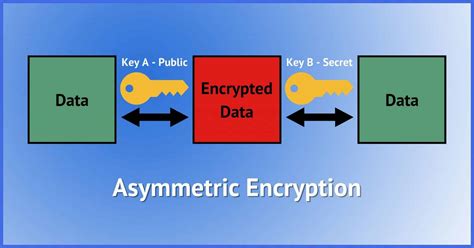
The Public Key Cryptography Standards (PKCS) are a suite of specifications developed to facilitate the implementation of public key cryptography. These standards, initially created by RSA Laboratories, provide guidelines for various cryptographic operations, data formats, and key management practices. They aim to ensure interoperability between different applications and systems, promoting secure communication and data protection. The PKCS standards are crucial for building secure systems that rely on public key infrastructure (PKI).
Key PKCS Standards and Their Constructs
Here is a detailed overview of some of the most commonly used PKCS standards and their key constructs:
PKCS #1: RSA Cryptography Standard
PKCS #1 is a foundational standard that defines the implementation of the RSA algorithm, which is widely used for both encryption and digital signatures. It specifies the mathematical operations, key formats, and padding schemes necessary for secure RSA operations.
- RSA Encryption and Signature Schemes: Defines the algorithms for encrypting and signing data using the RSA algorithm, including padding schemes like OAEP (Optimal Asymmetric Encryption Padding) for encryption and PSS (Probabilistic Signature Scheme) for signatures. These padding schemes are essential for preventing attacks on the basic RSA algorithm.
- Key Representation: Specifies how RSA public and private keys are represented, including the modulus (the product of two large prime numbers), the public exponent, and the private exponent.
- Primitive Functions: Defines core functions for key manipulation, including:
- Integer to Octet String Primitive (I2OSP): Converts an integer to a byte string.
- Octet String to Integer Primitive (OS2IP): Converts a byte string to an integer.
- RSA Encryption Primitive (RSAEP): The basic RSA encryption operation.
- RSA Decryption Primitive (RSADP): The basic RSA decryption operation.
- RSA Signature Primitive 1 (RSASP1): The basic RSA signature operation.
- RSA Verification Primitive 1 (RSAVP1): The basic RSA signature verification operation.
- Certificate Signing Requests (CSR): Prescribes formatting rules and specifications for Certificate Signing Requests, enabling individuals to create private key pairs using a public key from a certificate authority.
Reference: RFC 3447
PKCS #3: Diffie-Hellman Key Agreement Standard
PKCS #3 defines the Diffie-Hellman (DH) key agreement protocol, which allows two parties to establish a shared secret key over an insecure channel. This shared secret can then be used for symmetric encryption.
- Shared Secret: A secure value derived from the private keys of both parties.
- Public Values: The values exchanged during the DH key agreement process.
Note: While PKCS #3 defined the Diffie-Hellman protocol, it has been largely superseded by more modern key establishment schemes specified in IEEE 1363a, ANSI X9.42, ANSI X9.44, and ANSI X9.63.
Reference: RFC 2631
PKCS #5: Password-Based Cryptography Standard
PKCS #5 focuses on securing passwords by defining methods for deriving cryptographic keys from passwords. It uses techniques to make password cracking more difficult.
- Password-Based Key Derivation Functions (PBKDFs): Methods for deriving strong cryptographic keys from passwords. It often uses a salt and iterations to make brute-force attacks more difficult. PBKDF2 is recommended over earlier versions.
- Salt: Random data added to the password before hashing to prevent rainbow table attacks.
- Iteration Count: The number of times the hashing function is applied to increase computational effort.
- Encryption Schemes: Methods for encrypting data using a key derived from a password.
Reference: RFC 2898
PKCS #7: Cryptographic Message Syntax Standard
PKCS #7 defines a general syntax for representing cryptographic messages, enabling the secure transmission of data. It supports digital signatures, digital envelopes, and the inclusion of certificates.
- Digital Signatures: Allows for digitally signing messages to ensure authenticity and integrity.
- Digital Envelopes: A way to encrypt messages using the recipient's public key.
- Certificates: Allows embedding X.509 certificates within the message for authentication.
- Content Info: Indicates the type of content (e.g., data, signed data).
- Signer Info: Information about the signer, including certificates.
Note: PKCS #7 is superseded by Request for Comments 3369 for Cryptographic Message Syntax, and is related to the Cryptographic Message Syntax (CMS) standard.
PKCS #8: Private-Key Information Syntax Standard
PKCS #8 specifies how private keys should be encoded and stored. It defines a standard format for representing private keys, often used within digital certificates and key stores.
- Private Key Representation: A standard format for representing private keys, often used within digital certificates and key stores.
- Attribute-Based Encryption: Allows for defining attributes associated with the private key.
- Encrypted Private Key Information: Includes the syntax for encrypted private key information.
Reference: RFC 5208
PKCS #10: Certification Request Syntax Standard
PKCS #10 defines the structure of a certificate signing request (CSR), which is used to request a digital certificate from a certificate authority (CA). It includes the public key and other identifying information of the entity requesting the certificate.
- Subject Public Key Information: Includes the public key of the entity requesting the certificate.
- Attributes: Additional information about the subject, such as organization name and email address.
- Subject: The entity requesting the certificate.
- Public Key: The key being certified.
- Signature: The signature of the request by the subject.
Reference: RFC 2986
PKCS #11: Cryptographic Token Interface Standard
PKCS #11 provides a platform-independent API for accessing cryptographic tokens, such as hardware security modules (HSM) and smart cards. It allows applications to interact with cryptographic hardware in a standardized way.
- Token: A hardware or software-based storage of keys and cryptographic data.
- Session: An interactive environment for accessing a token's functions.
Reference: OASIS PKCS #11
PKCS #12: Personal Information Exchange Syntax Standard
PKCS #12 defines a file format for storing and transporting personal identity information, such as user private keys, certificates, and extensions. It is widely used for securely storing cryptographic credentials.
-
Private Keys: Stores private keys securely, often protected by a password.
-
Certificates: Can contain certificates and certificate chains.
-
Key Pair Generation and Storage: Handles all aspects of generating and securely storing a key pair.
-
Safe Bags: Containers for different types of objects (e.g., certificates, private keys).
-
Password-Based Encryption: Methods for protecting the contents with a password.
Reference: RFC 7292
Other PKCS Standards
- PKCS #2 and #4: These standards, which covered RSA encryption of message digests, were merged into PKCS #1 and are no longer active.
- PKCS #6: This standard, which defined extended-certificate syntax, is being phased out since the introduction of X.509 v3.
- PKCS #9: This standard defines selected attribute types for use in other PKCS standards and defines two auxiliary object classes. PKCS attributes can be packaged into these object classes and exported to other environments, such as Lightweight Directory Access Protocol systems.
- PKCS #13 and #14: These standards, which were intended to define mechanisms for elliptic curve cryptography and pseudo-random number generation, respectively, were never published.
Conclusion
The PKCS standards are essential for ensuring secure communication and data protection in various applications. They provide a framework for implementing public key cryptography, managing keys, and handling certificates. By adhering to these standards, developers can create interoperable and secure systems that protect sensitive information.
Last updated January 6, 2025