
Owens Corning: Unpacking the Legacy and Innovation of a Building Materials Giant
Discover the global leader in insulation, roofing, and fiberglass composites, shaping industries and building a sustainable future.
Highlights: Key Insights into Owens Corning
- World's Largest Manufacturer of Fiberglass Composites: Owens Corning holds a dominant position in the global market for fiberglass composites, supplying critical materials across diverse industries.
- Pioneering History of Innovation: Since its formation in 1935, the company has consistently introduced groundbreaking products, including PINK® fiberglass insulation and advanced roofing systems.
- Commitment to Sustainability: Owens Corning actively focuses on developing energy-efficient solutions and sustainable building materials, aiming to reduce environmental impact.
A Rich Tapestry: The History of Owens Corning
From Pioneering Partnership to Global Leadership
Owens Corning's journey began in 1935 as a partnership between two prominent American glass companies: Corning Glass Works and Owens-Illinois. This collaboration was initially focused on developing and marketing fiberglass products. The company officially became a separate entity on October 31, 1938, incorporated in Delaware. From its inception, Owens Corning established itself as an innovator, with one of its earliest significant achievements being the development of its trademarked PINK® Fiberglas™ insulation around 1938. This was followed by the introduction of the first all-fiber (AF) fiberglass wool in the same year and the invention of chopped strand for fiber-reinforced plastics (FRP) applications in 1948. The Pre-Forming Process, developed in 1947, further solidified its role in revolutionizing industries like automotive, recreational, and construction.
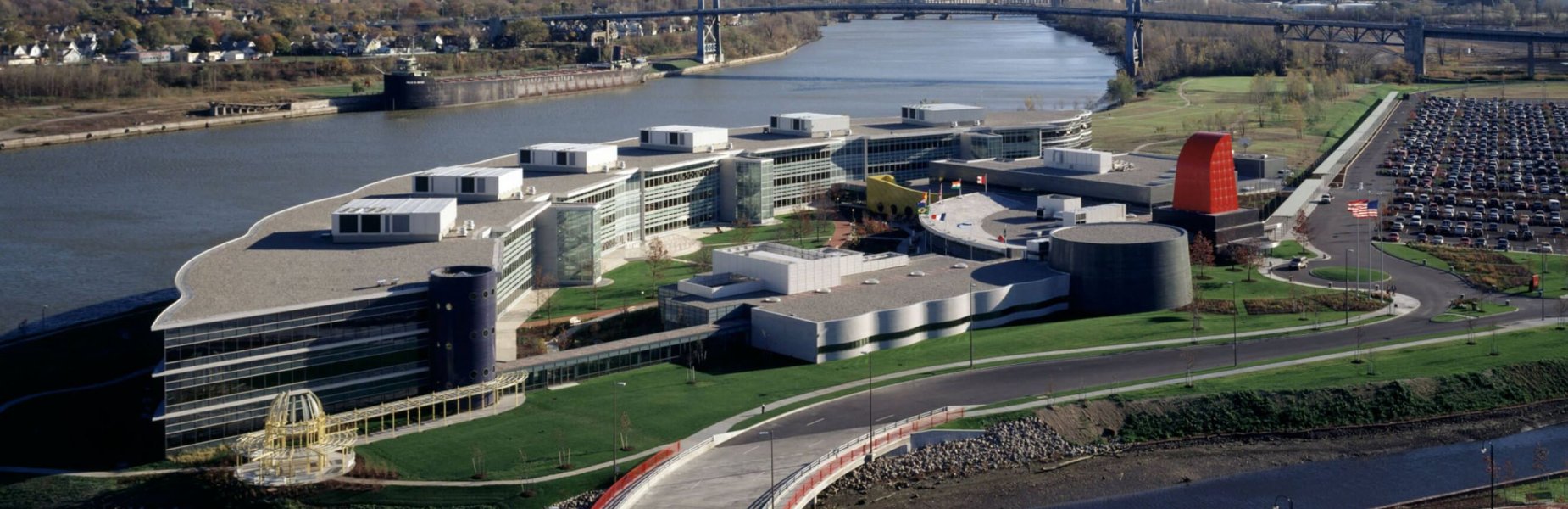
The iconic Owens Corning World Headquarters in Toledo, Ohio.
Navigating Challenges and Growth
The mid-20th century saw rapid expansion for Owens Corning. A significant milestone was its initial public offering (IPO) on the New York Stock Exchange in 1952. In 1955, the company established a research and testing facility near Granville, Ohio, and notably appeared on the first Fortune 500 list, a distinction it has maintained every year since. However, this period also brought regulatory scrutiny. In 1949, Owens Corning faced accusations of illegally monopolizing the fiberglass industry due to the joint control by its parent companies. A court-mandated consent decree ensued, compelling Owens Corning to license its patents to competitors, which inadvertently fostered a more competitive market landscape. The parent companies were also forced to divest their holdings.
International expansion began in earnest with the formation of Owens Corning Fiberglas Europe in 1965. A partnership with Armstrong Rubber Co. in 1966 led to the production of fiberglass-reinforced automobile tires. By 1971, the company's annual revenue had surpassed $500 million. The 1970s saw further diversification and innovation, including the opening of a plant in 1974 to supply insulation for the Trans-Alaska Pipeline System and the acquisition of Frye Roofing in 1977, which expanded its footprint into fiberglass mat for roofing products.
Addressing Past Issues and Embracing the Future
A significant challenge in Owens Corning's history relates to asbestos. The company sold asbestos-containing products between 1953 and 1972, leading to numerous lawsuits concerning asbestos exposure and the eventual establishment of the Owens Corning Asbestos Trust to handle claims. Despite these historical issues, Owens Corning has continued to evolve, focusing on innovation and sustainability. A testament to this is its achievement as the first company in North America to offer a formaldehyde-free perimeter fire containment system, underscoring its commitment to safer and more environmentally conscious building solutions.
Core Business Segments and Global Operations
Owens Corning operates through three primary business segments, each a leader in its respective market. The company is headquartered in Toledo, Ohio, at World Headquarters One Owens Corning Pkwy, Toledo, OH 43659, US, and employs approximately 19,000 to 25,000 people across 31 countries, depending on the source. Its operations span North America, Europe, South and Central America, and the Asia-Pacific regions.
Insulation: Enhancing Energy Efficiency and Comfort
The Insulation segment is renowned for providing a wide array of products designed to help customers conserve energy, improve acoustical performance, and offer ease of installation. This includes thermal and acoustical batts, foam sheathing, loose-fill insulation, and various accessories. Prominent brand names under this segment include the iconic PINK® and Next Gen™ FIBERGLAS™ insulation, FOAMGLAS®, Paroc®, and FOAMULAR®.
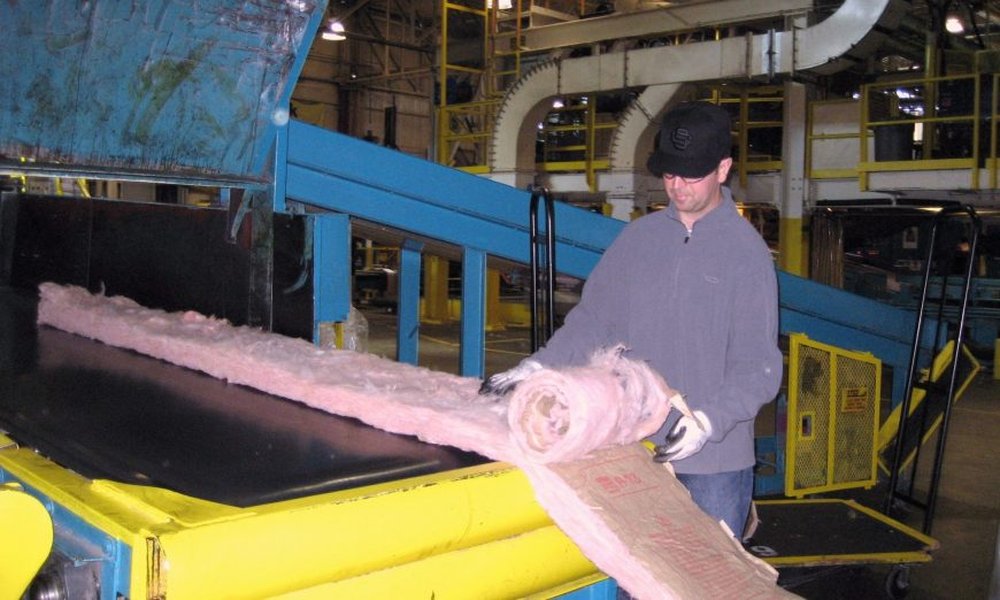
The distinctive PINK® fiberglass insulation is a hallmark of Owens Corning.
Roofing: Protecting Homes and Businesses
Owens Corning's Roofing segment offers a comprehensive suite of products, including laminate and strip asphalt roofing shingles, oxidized asphalt, synthetic packaging materials, and other roofing components and accessories. These products are designed for durability and performance, catering to residential, commercial, and industrial markets. Innovations like the Total Protection Roofing System® and the Duration® Series Shingles highlight their commitment to quality. The company also creatively engages with aesthetics, for example, by naming "Merlot" as their 2025 Shingle Color of the Year.
Composites: Reinforcing the Future
The Composites segment focuses on manufacturing, fabricating, and selling glass reinforcements in various forms. As the world's largest manufacturer of fiberglass composites, this division supports vertically integrated downstream activities. These materials are crucial in numerous industries, including automotive, transportation, aerospace, power and energy, defense, and industrial applications, providing lightweight, strong, and sustainable solutions.
Some sources also mention a "Doors" segment as one of its main market-leading businesses, offering solutions for various building types, particularly in North America and Europe.
Visualizing Owens Corning's Strengths
To better understand Owens Corning's position and focus areas, the following radar chart illustrates key attributes based on an analysis of its operations, market presence, and strategic priorities. These scores are representational, reflecting perceived strengths rather than exact quantitative data.
This chart highlights Owens Corning's strong brand recognition, particularly for its PINK® insulation, its leading position in the composites market, and its significant focus on innovation and sustainability. While its global operational scale and financial stability are robust, there's always room for growth in areas like product diversification relative to some conglomerates, though its current focus is highly specialized and successful.
Product Portfolio Overview
Owens Corning offers a diverse range of building and industrial materials. The following table summarizes key product categories and their typical applications:
| Product Category | Key Products | Primary Applications | Notable Brands/Features |
|---|---|---|---|
| Insulation | Thermal & Acoustical Batts, Loose-fill Insulation, Foam Sheathing, Pipe Insulation | Residential & Commercial Construction, Industrial Applications, Energy Conservation, Noise Reduction | PINK®, Next Gen™ FIBERGLAS™, FOAMULAR®, Paroc®, FOAMGLAS®, Formaldehyde-Free Options |
| Roofing | Laminate & Strip Asphalt Shingles, Roofing Components (Underlayments, Hip & Ridge), Oxidized Asphalt | Residential & Commercial Roofing Systems, Weather Protection, Aesthetics | Duration® Series Shingles, Total Protection Roofing System®, TruDefinition® Colors, 2025 Shingle Color of the Year "Merlot" |
| Composites | Glass Reinforcements (Fibers, Chopped Strands, Mats, Fabrics), Technical Fabrics | Automotive, Transportation, Aerospace, Wind Energy, Marine, Construction, Industrial Equipment | World's largest manufacturer, High-strength, Lightweight solutions |
| Doors (as per some sources) | Entry Doors, Patio Doors | Residential Construction | Focus on energy efficiency and durability |
This table illustrates the breadth of Owens Corning's offerings, catering to a wide array of needs in the building and industrial sectors, with a consistent emphasis on performance, energy efficiency, and durability.
Mapping Owens Corning's Ecosystem
The following mindmap provides a visual representation of Owens Corning's corporate structure, key business areas, and strategic focus points. It helps to illustrate the interconnectedness of its operations and market engagement.
This mindmap highlights the main pillars of Owens Corning: its foundational profile, its diversified business segments in Insulation, Roofing, and Composites, its strategic imperatives of innovation and sustainability, and its strong market attributes along with significant historical context.
Financial Strength and Market Position
A Consistent Performer
Owens Corning has consistently demonstrated robust financial performance. For the full year of 2024, the company reported impressive net sales of $11.0 billion, generating earnings of $647 million and an adjusted EBIT of $2.0 billion. This financial strength is a testament to its market leadership and the sustained demand for its building materials and composite solutions.
Looking into 2025, the company continued its positive trajectory. For the first quarter of 2025, net sales from continuing operations were reported at $2.5 billion. The company's financial outlook for 2025 includes projected general corporate expenses between $240 million and $260 million, and interest expenses between $250 million and $260 million. Owens Corning regularly communicates with its stakeholders, with events such as its 2025 Investor Day scheduled for May 14, 2025, where leadership discusses long-term strategy, enterprise capabilities, and financial goals. Its continuous presence on the Fortune 500 list for every year since the list's inception in 1955 further underscores its enduring market presence and stability.
Vision and Leadership
Steering Towards a Sustainable Future
Owens Corning's mission is centered on innovating materials that contribute to building a sustainable future. This vision is underpinned by core values such as integrity, teamwork, and excellence, which shape its corporate culture and global operations. The company is led by Brian Chambers, who serves as the Board Chair and Chief Executive Officer. He, along with other key executives like Chief Financial Officer Todd Fister, guides the company's strategic direction. The Board of Directors includes individuals with diverse expertise, such as Michelle Collins, who brings valuable executive management experience. This leadership team is committed to generating value for shareholders while upholding the company's commitment to sustainability, innovation, and safety.
The video above, "Owens Corning: Global in Scope—Human in Scale," offers insights into the company's philosophy and its commitment to making a material difference for its customers and the world. It highlights how Owens Corning leverages its global capabilities while maintaining a focus on the human element and community impact, aligning with its broader mission of sustainability and innovation.
Frequently Asked Questions (FAQ)
What are Owens Corning's main product areas?
Owens Corning specializes in three main product areas:
- Insulation: Including thermal and acoustical batts, foam sheathing, and loose-fill insulation under brands like PINK®, FOAMULAR®, and Paroc®.
- Roofing: Offering asphalt roofing shingles, roofing components, and oxidized asphalt.
- Fiberglass Composites: Manufacturing glass reinforcements for various industries, where it is the world's largest producer.
When was Owens Corning founded?
Owens Corning was formed in 1935 as a partnership between Corning Glass Works and Owens-Illinois. It became a separate company on October 31, 1938.
Where is Owens Corning headquartered?
Owens Corning's world headquarters is located at One Owens Corning Parkway, Toledo, Ohio, 43659, USA.
How is Owens Corning committed to sustainability?
Owens Corning is committed to building a sustainable future through material innovation. This includes developing durable, sustainable, and energy-efficient solutions, such as formaldehyde-free insulation and products that help reduce energy consumption in buildings. They focus on minimizing their environmental footprint and helping customers achieve their own sustainability goals.
What is the significance of the Pink Panther for Owens Corning?
The Pink Panther has been Owens Corning's mascot since 1980 and is famously associated with its PINK® fiberglass insulation. This marketing icon has significantly contributed to the brand's recognition and distinctiveness in the market.
Recommended Further Exploration
- Explore Owens Corning's specific innovations in sustainable building materials.
- What is the impact of Owens Corning's composite materials on the automotive industry?
- How does Owens Corning's roofing technology contribute to energy efficiency in homes?
- Detail the history and resolution of Owens Corning's asbestos-related legal challenges.
References
 dv1krj0nar91t.cloudfront.net
Last updated May 7, 2025