
Beyond Breakdown: Finding Oxidants That Preserve Thiourea Integrity
Explore effective oxidizing agents compatible with thiourea solutions, minimizing unwanted degradation in chemical processes.
Thiourea ((NH₂)₂CS) is a versatile chemical compound used in various applications, notably in the leaching of gold and silver and as a reagent in organic synthesis. However, thiourea is susceptible to oxidation, which can lead to its decomposition and reduced effectiveness. Choosing the right oxidant is crucial to ensure the desired reaction proceeds efficiently without excessively consuming or breaking down the thiourea molecule itself. This guide explores alternative oxidants that exhibit better compatibility with thiourea solutions.
Key Insights: Balancing Oxidation and Stability
- Mild Oxidants Preferred: Oxidants with moderate redox potential, like molecular oxygen or controlled doses of ozone, are generally less aggressive towards thiourea compared to strong oxidizers.
- Reaction Conditions Matter: Factors such as pH (acidic conditions are often favored for stability), temperature, and oxidant concentration significantly impact thiourea's stability during oxidation.
- Stabilizers Can Help: In some systems, particularly alkaline ones, stabilizing agents like sodium sulfite or silicate can be added to mitigate thiourea decomposition, even when using potentially problematic oxidants like ferric ions.
Compatible Oxidants for Thiourea Solutions
Selecting an oxidant requires balancing its effectiveness for the primary reaction (e.g., metal dissolution) with its potential to degrade thiourea. Several oxidants are considered relatively compatible under specific conditions:
Molecular Oxygen (O₂) / Air
Gentle but Effective
Oxygen, often supplied as air, is a mild oxidant frequently used in thiourea leaching systems. Its main advantage is its relatively low reactivity towards thiourea itself, reducing the rate of unwanted decomposition compared to more potent oxidants. While the reaction rates for the primary process (like gold leaching) might be slower, the preservation of thiourea makes it a viable option, especially in continuous or large-scale operations where solution stability is paramount. Aeration or agitation is typically used to supply sufficient oxygen.
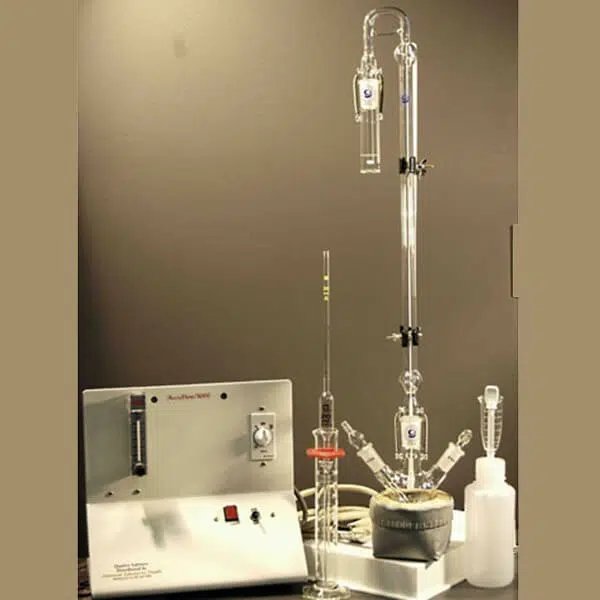
An example of an aeration-oxidation setup, relevant for introducing oxygen/air into solutions.
Ferric Ion (Fe³⁺)
Effective but Requires Control
Ferric ion is a common oxidant in acidic thiourea leaching. It effectively promotes the dissolution of metals like gold. However, Fe³⁺ poses a significant challenge: it readily forms stable complexes with thiourea (e.g., [Fe(SO₄)(Thio)]⁺ in sulfate media), leading to high consumption of the thiourea reagent. While effective as an oxidant, its use necessitates careful control of concentration and potentially the addition of stabilizing agents (like sulfites in alkaline systems) to minimize thiourea loss. Its reaction with thiourea is noted to be slower in sulfate solutions due to complex formation, which paradoxically stabilizes thiourea to some extent against *further* oxidation but increases overall consumption via complexation.
Ozone (O₃)
Powerful yet Manageable
Ozone is a strong oxidant, but when used in carefully controlled, low concentrations, it can effectively drive desired reactions without causing excessive thiourea breakdown. It's identified as a compatible oxidant, particularly in acidic thiourea systems. The key is precise dosage control to prevent over-oxidation. Ozone can oxidize thiourea, potentially forming formamidine disulfide as an intermediate, which itself can act as an oxidant in leaching processes.
Sodium Peroxide (Na₂O₂)
Controlled Oxygen Release
Mentioned as a compatible oxidant for acidic thiourea solutions, sodium peroxide provides oxidizing power without the rapid, uncontrolled degradation associated with some other peroxides like H₂O₂ under certain conditions. It releases oxygen species in a more controlled manner, making it suitable for applications like gold leaching where maintaining thiourea integrity is important.
Other Potential Candidates
Exploring Alternatives
- Manganese Dioxide (MnO₂): Mentioned as an oxidant used to enhance gold leaching in thiourea solutions. Its specific impact on thiourea stability requires careful evaluation based on reaction conditions.
- Dichromate (Cr₂O₇²⁻): Also listed as an oxidant for enhancing gold leaching. Chromium compounds can be effective oxidizers but may pose environmental concerns.
- Potassium Bromate (KBrO₃): Suggested as having a moderate redox potential, potentially offering a balance between oxidizing power and thiourea stability, degrading it less aggressively than hydrogen peroxide.
- Copper(II) Perchlorate (Cu(ClO₄)₂): Noted as an effective oxidant for thiourea in acetonitrile. However, perchlorates are generally strong oxidizers and might pose risks, as highlighted by other sources cautioning against their use due to potential for aggressive thiourea breakdown. Its use might be limited to specific non-aqueous systems or controlled laboratory conditions.
Oxidant Compatibility Comparison
The choice of oxidant involves trade-offs between oxidizing strength, reaction speed, cost, control difficulty, and impact on thiourea stability. The radar chart below provides a conceptual comparison of some common oxidants based on these factors. Note that these are qualitative assessments for illustrative purposes.
This chart illustrates that while oxidants like Ozone and Hydrogen Peroxide offer high oxidizing power and reaction speed, they pose challenges for thiourea stability and control. Oxygen is gentler on thiourea but slower, representing a trade-off. Ferric ion is effective but consumes thiourea via complexation, impacting stability indirectly.
Oxidants to Use with Caution or Avoid
Some common oxidants are known to rapidly degrade thiourea and should generally be avoided or used only under very specific, controlled conditions.
Hydrogen Peroxide (H₂O₂)
High Reactivity Risk
Although sometimes used (and mentioned as compatible by some sources, likely under strict control), hydrogen peroxide is widely reported to oxidize thiourea rapidly, especially at room temperature and under acidic conditions. This can lead to significant decomposition, forming intermediates like formamidine disulfide, which can further react, or leading to complete breakdown into urea, sulfur oxides, etc. While potentially usable with careful control of concentration, pH, and temperature, or in stabilized systems (e.g., alkaline conditions with stabilizers), it carries a high risk of excessive thiourea consumption.

Careful handling and precise measurement are crucial when dealing with reactive chemicals like hydrogen peroxide.
Strong Oxidizing Agents
General Incompatibility
Highly potent oxidizers such as potassium permanganate (KMnO₄), perchlorates (like Cu(ClO₄)₂ mentioned earlier, despite specific application notes), chlorates, and nitrates are generally considered incompatible with thiourea. They can cause aggressive, potentially hazardous oxidation, leading to rapid and complete breakdown of the thiourea molecule.
Visualizing Thiourea Oxidation Factors
The mindmap below summarizes the key aspects related to thiourea oxidation, including compatible and problematic oxidants, and the factors influencing its stability.
(e.g., Formamidine Disulfide, Sulfates)"] id2["Compatible Oxidants (Less Breakdown)"] id2a["Oxygen (O₂) / Air
(Mild, Stable)"] id2b["Ferric Ion (Fe³⁺)
(Effective but Consumes via Complexation - Needs Control/Stabilizers)"] id2c["Ozone (O₃)
(Powerful but Requires Dosage Control)"] id2d["Sodium Peroxide (Na₂O₂)
(Controlled O₂ Release)"] id2e["Manganese Dioxide (MnO₂)"] id2f["Dichromate (Cr₂O₇²⁻)"] id2g["Potassium Bromate (KBrO₃)
(Moderate Potential)"] id3["Problematic Oxidants (High Breakdown Risk)"] id3a["Hydrogen Peroxide (H₂O₂)
(Rapid Oxidation unless Highly Controlled)"] id3b["Strong Oxidizers
(Permanganates, Perchlorates, Chlorates, Nitrates)"] id4["Factors Influencing Stability"] id4a["pH
(More stable in acidic conditions, e.g., < pH 4.3;
Alkaline possible with stabilizers)"] id4b["Oxidant Concentration
(Lower is generally safer)"] id4c["Temperature
(Higher temps often increase degradation)"] id4d["Presence of Stabilizers
(e.g., Sulfites, Silicates in alkaline media)"] id4e["Presence of Catalysts/Impurities"]
Oxidation of Sulfur Compounds
Thiourea contains a sulfur atom, making its chemistry related to that of thiols (R-SH). Understanding how sulfur compounds react to oxidation provides context for thiourea's behavior. The following video discusses the oxidation reactions of thiols, which share some similarities with the oxidation pathways thiourea might undergo, such as the formation of disulfide-like intermediates (formamidine disulfide in thiourea's case).
This video explains how thiols can be oxidized to various states, including disulfides (RSSR), sulfenic acids (RSOH), sulfinic acids (RSO₂H), and sulfonic acids (RSO₃H), depending on the strength of the oxidant and reaction conditions. While thiourea's structure (C=S) differs from a thiol (C-SH), the sulfur atom remains susceptible to similar oxidative processes. Mild oxidation of thiourea often leads to formamidine disulfide, analogous to disulfide formation from thiols. Stronger oxidation can lead to sulfur oxides and breakdown products like urea and sulfate, similar to the higher oxidation states seen with thiols. This highlights why controlling the oxidant strength is critical for preserving thiourea.
Summary Table of Oxidants and Thiourea Compatibility
This table summarizes the discussed oxidants and their general compatibility with thiourea solutions.
| Oxidant | Chemical Formula | Typical Conditions/Use | Effect on Thiourea | Key Considerations |
|---|---|---|---|---|
| Oxygen / Air | O₂ | Acidic or Alkaline Leaching | Relatively Stable; Slow Oxidation | Slower reaction rates; Requires good aeration. |
| Ferric Ion | Fe³⁺ | Acidic Leaching | High Consumption via Complexation | Requires strict concentration control or stabilizers. |
| Ozone | O₃ | Acidic Leaching | Stable with Controlled Dosage | Requires precise control; Can be aggressive if overdosed. |
| Sodium Peroxide | Na₂O₂ | Acidic Leaching | Relatively Stable | Provides controlled oxygen release. |
| Potassium Bromate | KBrO₃ | Leaching (potential) | Moderate Stability | Less aggressive than H₂O₂. |
| Hydrogen Peroxide | H₂O₂ | Acidic Leaching (with control) | High Risk of Rapid Decomposition | Use only with extreme caution, control, or stabilization. |
| Strong Oxidizers (Permanganates, etc.) | Varies (e.g., KMnO₄) | General Oxidation | Aggressive Decomposition | Generally incompatible; Avoid. |
Frequently Asked Questions (FAQ)
Why is thiourea so sensitive to oxidation?
The sulfur atom in the thiourea molecule (C=S) is relatively electron-rich and can be easily oxidized. Oxidation can lead to various products, including formamidine disulfide (an intermediate where two thiourea units link via a disulfide bond), cyanamide, urea, elemental sulfur, and ultimately sulfate ions, depending on the oxidant and conditions. This sensitivity makes it prone to degradation if the wrong oxidant or unsuitable conditions are used.
Is formamidine disulfide formation always bad?
Not necessarily. Formamidine disulfide is often formed as the initial product of mild thiourea oxidation. In some processes, like gold leaching, formamidine disulfide itself acts as the primary oxidant for dissolving gold. The issue arises when oxidation proceeds further, breaking down the formamidine disulfide or the original thiourea into inactive products, or when formamidine disulfide accumulates and precipitates. Controlled formation can be part of the intended mechanism, but uncontrolled or excessive oxidation leads to thiourea loss.
What pH conditions are best for thiourea stability during oxidation?
Generally, thiourea exhibits better stability in acidic solutions (e.g., pH below 4.3 or even lower, around pH 1-2) compared to neutral or alkaline conditions, where it tends to hydrolyze or decompose more readily. However, some research indicates that alkaline thiourea systems (pH 10-13) can be viable if specific stabilizing agents (like sodium sulfite or silicate) are used to inhibit decomposition pathways.
Can temperature control help preserve thiourea?
Yes, temperature plays a significant role. Higher temperatures generally accelerate chemical reactions, including the decomposition of thiourea and its oxidation. Operating at lower temperatures can help slow down these degradation processes, improving the stability of the thiourea solution, although it might also slow down the desired primary reaction (e.g., leaching).
References
- Thiourea Leaching of Gold & Silver - 911 Metallurgist
-
The dissolution of gold in acidic solutions of thiourea - ScienceDirect
-
Thiourea Leaching of Gold - Taylor & Francis
- Oxidation of Thiourea and Substituted Thioureas - ResearchGate
-
Study on stabilized alkaline thiourea leaching gold and silver from polymetallic sulfide concentrate - ScienceDirect
- Insights on Thiourea Stability and Oxidation - Wiley Chemistry Europe
-
Thiourea - ScienceDirect Topics
Recommended Reading
Last updated April 17, 2025