
Advanced Paint Formulation Optimization
Harnessing Science, Technology, and Sustainability for Superior Coatings
Key Highlights
- Digitalization & AI Integration: Digital tools, machine learning, and data analytics are revolutionizing formulation processes.
- Component Precision: Optimizing core ingredients such as pigments, binders, solvents, and additives is critical to performance.
- Sustainability & Innovation: Sustainable alternatives like bio-based polymers and advanced additives are pivotal in reducing environmental impact.
Introduction
The field of paint formulation optimization has evolved into a highly sophisticated process that synergizes advanced materials science, digital technologies, and sustainability efforts. Modern formulations seek to balance performance enhancements with environmentally friendly practices. The aim is to achieve superior aesthetic appeal, durability, chemical resistance, and cost-effectiveness. In this in-depth exploration, we delve into the methodologies and technologies that drive the optimization of advanced paint formulations.
Core Components in Paint Formulation
Paint is traditionally composed of four main components that play distinct roles in ensuring the desired properties of the final product:
Primary Ingredients
Resins
Resins are the binding agents that hold the pigments and other constituents together. They determine the adhesion and durability of the paint film. Innovations in resin chemistry, including acrylic, polyurethane, and epoxy variants, have allowed formulators to tailor mechanical properties and environmental resistance.
Pigments
Pigments provide both color and opacity. Titanium dioxide (TiO₂), particularly in its rutile form, is widely used due to its high refractive index and superior light-scattering properties. The particle size and dispersion of pigments are critical; advancements in wet milling and dispersion technologies have led to improved consistency and color quality.
Solvents
Solvents such as water or organic compounds act as carriers, helping to dissolve or disperse the resin and pigment. They not only modify the viscosity but also play a role in the drying process. Innovations in solvent selection are increasingly aimed at reducing volatile organic compounds (VOCs) while maintaining performance.
Additives
Additives are minor constituents added to achieve specific functionalities. These include UV stabilizers, anti-microbial agents, rheology modifiers, and dispersants. Recent advances have improved the efficiency of these additives, ensuring optimal viscosity, improved adhesion, and resistance to environmental stressors.
Technological Advancements in Formulation Optimization
Optimization techniques in paint formulation have greatly benefited from digital transformation and advanced analytics. New digital tools and AI-based platforms have not only streamlined the formulation process but also enabled rapid development cycles with increased accuracy.
Digital Transformation and Data-Driven Tools
Modern paint formulation optimization employs digital platforms that combine historical data with real-time analytics. These platforms integrate several techniques including:
Automated Data Analysis
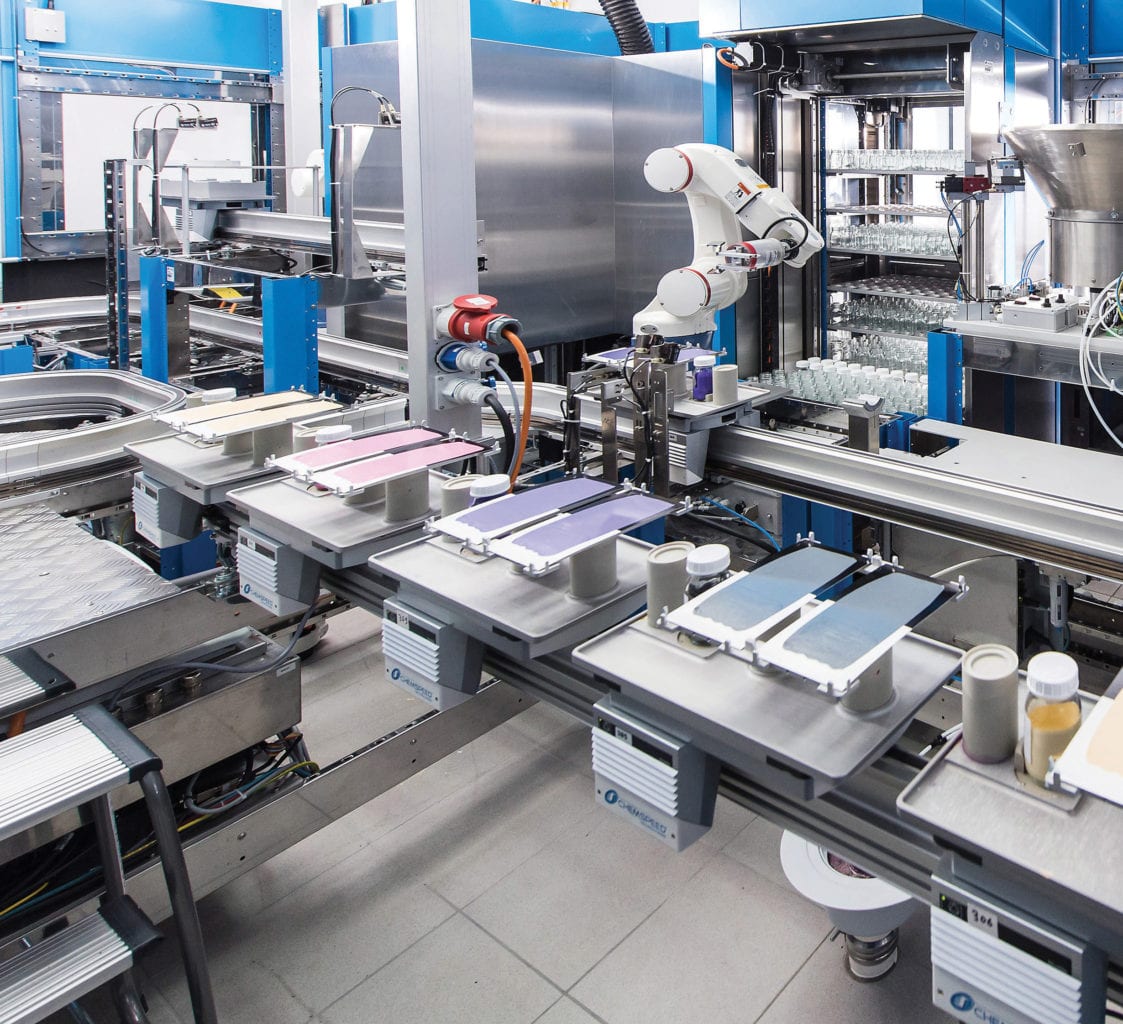
Automation in data collection and analysis helps capture high-throughput results from formulation experiments. Such data is used to build predictive models that shorten the development cycle.
Machine Learning & AI
AI integration is fundamental to current optimization strategies. By leveraging machine learning algorithms, formulation platforms can predict the interactions between components. These systems suggest modifications to achieve desired properties like improved adhesion, longer durability, and optimal color performance.
Digital Color Matching and Simulation
Advances in digital color matching technologies facilitate not only consistent hues but also accurate simulation of how colors will appear under different lighting conditions. This greatly reduces trial-and-error and accelerates the development process.
Analytical and Mathematical Techniques
Precision in formulating paints is achieved through the employment of various analytical techniques and mathematical modeling.
Elemental Analysis and Instrumentation
Tools such as X-ray fluorescence (XRF) and X-ray diffraction (XRD) provide precise measurement of elemental composition and crystalline structure of the raw materials. Laser diffraction techniques measure particle sizes ensuring uniform dispersion. These analytical methods are indispensable for achieving consistency in formulations.
Response Surface and Mixture Design Experiments
Mathematical strategies such as response surface modeling and mixture design experiments allow formulators to study the interactions between multiple components simultaneously. These experiments help determine the synergistic effects and optimal proportion of ingredients, resulting in paints that meet specific performance criteria.
Optimization of Properties and Performance
The performance of a paint formulation is influenced by a variety of factors ranging from mechanical strength to optical properties. The optimization process focuses on enhancing multiple performance metrics simultaneously.
| Property | Optimization Strategy | Expected Outcome |
|---|---|---|
| Durability | Employ cross-linking polymers and advanced binders | Improved adhesion and resistance to wear |
| Color Consistency | Optimize pigment dispersion and particle size | Uniform appearance and enhanced opacity |
| Viscosity & Application | Use rheology modifiers and tailor solvent systems | Smooth application and reduced sagging |
| Environmental Impact | Swap to low-VOC and bio-based materials | Sustainable and eco-friendly formulations |
| Drying Speed | Adjust solvent evaporation rates and additives | Faster curing times with maintained finish quality |
By adjusting variables and using sophisticated mathematical modeling, the final formulations achieve improvements that cater not only to traditional performance metrics but also to emerging market needs for sustainability and cost-effectiveness.
Sustainability and Future Directions
A significant driving force behind the evolution of advanced paint formulations is the increasing demand for sustainable products. Environmental challenges and stricter regulatory requirements have led formulators to innovate with greener materials and processes.
Green Chemistry Initiatives
Sustainability in paint formulation involves reducing the reliance on hazardous substances and lowering emissions of VOCs. Transitioning to waterborne systems or using bio-based solvents and resins are part of this initiative. Materials derived from renewable sources—such as plant oils and recycled polymers—have been developed to meet this need.
Bio-based and Recycled Polymers
The incorporation of bio-based polymers enables the creation of paints with a lower environmental footprint. Recycled polymers also contribute by reducing waste and conserving resources. Modern optimization techniques ensure that these sustainable alternatives do not compromise the mechanical and visual properties of the paint.
Eco-friendly Additives
Advances in additive technology have also enabled formulators to replace traditional chemicals with eco-friendly alternatives without sacrificing performance. UV stabilizers, anti-microbial agents, and rheology modifiers are being reformulated to align with green chemistry principles.
Technological Integration for Sustainable Processes
Fully integrated digital platforms not only streamline the creation of formulations but also monitor the environmental impact of production processes. Real-time data analytics play a crucial role in minimizing waste, reducing energy consumption, and optimizing the overall life-cycle of products.
Manufacturers are investing in high-throughput screening and advanced analytical instrumentation to rapidly test and iterate sustainable formulations. This digital transformation supports continuous improvement, ensuring that new products remain competitive in an increasingly eco-conscious market.
Challenges in Paint Formulation Optimization
Despite the technological advancements and promising innovations, optimization of paint formulations still faces several challenges. These challenges require careful consideration and continuous research:
Balancing Performance with Sustainability
One of the major challenges is to maintain high performance while transitioning to greener ingredients. The replacement of traditional chemicals with sustainable alternatives sometimes results in compromises in durability, color retention, or adhesion. Achieving an optimal balance through rigorous testing and advanced modeling remains a focal point of current research.
Consistency Across Batches
Consistency in formulation is vital in industrial production. The use of advanced analytical techniques helps ensure that each batch maintains a uniform composition and performance profile. However, challenges in scaled-up production processes and raw material variability continue to require meticulous quality control.
Cost-Efficiency and Innovation
While digital tools and AI platforms streamline development and optimize the use of materials, initial investments remain high. Balancing the research and development costs with the need for innovation poses an ongoing economic challenge for many manufacturers in a competitive marketplace.
Case Studies and Best Practices
Several industries employing advanced paint formulation optimization have provided valuable insights into best practices:
Case Study: AI-Powered Formulation
In one notable example, a leading manufacturer integrated an AI-powered platform to accelerate the formulation process. By harnessing machine learning and response surface methodology, they reduced development time significantly while enhancing the overall performance of the paint. This case highlights the integration of digital tools in streamlining traditional formulation workflows.
Best Practices
Best practices in advanced formulation optimization include:
- Leveraging Data Analytics: Build robust digital databases to capture and analyze formulation data for future iterations.
- Adopting Cross-Disciplinary Approaches: Integrate expertise from chemistry, materials science, and AI to achieve efficient formulation outcomes.
- Embracing Sustainability: Evaluate the feasibility of bio-based and recycled raw materials to align with environmental regulations and consumer expectations.
These strategies underpin the development of some of the most advanced, high-performance coatings on the market today.
Integration of Optimization Techniques in Industrial Applications
In industrial settings, the process of optimizing paint formulations is not only about improving performance metrics but also ensuring the scalability and cost-efficiency of production. Manufacturers often rely on a combination of high-throughput experimental techniques and automated process controls to maintain consistency and drive innovation.
High-Throughput Screening
High-throughput screening allows rapid testing of multiple variables in parallel. By automating the experimental setup, formulators can gather large datasets which enable the precise tuning of parameters. Benefits include reduced development time and improved predictive reliability for scaling formulations.
Statistical and Mathematical Modeling
Statistical modeling techniques, such as design of experiments (DoE) and response surface methodology, play a pivotal role in identifying optimal conditions. These methods mathematically predict how changes in formulation variables affect the final product’s properties, allowing manufacturers to adjust processes proactively.
For instance, an equation model might be employed to balance pigment volume concentration (PVC) and critical pigment volume concentration (CPVC) to optimize both color and durability. Such models assimilate variables and constraints into a unified system that predicts performance characteristics accurately.
Emerging Trends and Future Prospects
The future of advanced paint formulation optimization lies in continued integration of cutting-edge technology and sustainable practices. Emerging trends include:
Integration with Internet of Things (IoT)
IoT devices are beginning to play a role in real-time monitoring of production processes. Sensors and smart devices can collect data at every stage of the manufacturing process, allowing for immediate adjustments and higher quality control.
Further AI and Cloud Integration
As cloud computing capabilities expand, AI-driven formulation platforms will have even greater access to computational power and data. This integration promises faster iteration cycles, improved supply chain management, and enhanced optimization of raw material usage, ensuring that high-performance paints continue to evolve.
Customized Formulations
With the rise of digital technologies, manufacturers are increasingly able to offer customized formulations tailored to specific needs and applications. Such personalization not only meets niche market demands but also enables specialized performance attributes such as weather resistance, rapid drying, or enhanced anti-fouling properties.
Conclusion
Advanced paint formulation optimization represents the intersection of traditional materials science and advanced digital technologies. The evolution of this field is driven by innovations in digitalization, AI, and enhanced analytical techniques that collectively improve the efficiency, performance, and sustainability of paint products.
By understanding and optimizing the interplay of core components—resins, pigments, solvents, and additives—manufacturers are able to tailor their products to meet rigorous performance standards. Analytical instruments and mathematical modeling techniques further empower formulators to assemble data-driven, high-performing formulations that are both cost-effective and environmentally conscious.
Looking ahead, the increasing adoption of IoT, cloud computing, and further advancements in AI is set to revolutionize the industry even further. The continuous focus on sustainability ensures that future paints not only meet aesthetic and functional benchmarks but also align with global environmental initiatives. Overall, the dynamic involvement of cross-disciplinary innovations and emerging technologies will continue to propel the art and science of paint formulation to new heights.
References
- Paint Vision - Dow
- Improving Paint Formulations - Malvern Panalytical
- FastFormulator - AI-Powered Formulation
- A New Smart Paint Blends Art and Science - Advanced Science News
- Painting Process Optimization - Fraunhofer
Recommended Further Exploration
Last updated February 28, 2025