
Understanding Palletization for Shipping Goods
A Guide to Palletizing and its Benefits in Logistics
Key Highlights of Palletization
- Palletization is the process of securing goods on a pallet for easier handling and transportation, crucial for efficient logistics.
- Properly palletized freight offers enhanced protection against damage and theft, streamlines loading and unloading, and can lead to cost savings.
- Various factors influence the number of pallets required for a shipment, including the size, weight, and nature of the goods, as well as the type and dimensions of the pallets used.
What is Palletization?
Palletization is a fundamental practice in modern logistics and supply chain management. It involves consolidating goods onto a flat structure called a pallet, typically made of wood, plastic, or metal. This process transforms multiple smaller packages into a single, stable unit, making them easier to handle, store, and transport using equipment like forklifts and pallet jacks.
By securing items to a pallet, businesses can significantly improve efficiency throughout the supply chain, from warehousing to shipping and receiving. This method is widely adopted across various industries due to its numerous advantages in terms of safety, cost-effectiveness, and speed of operations.
The Core Concept
At its heart, palletization is about creating a standardized, manageable unit for freight. Instead of dealing with numerous individual boxes or items, logistics professionals can move, track, and store a single pallet with a consolidated load. This not only speeds up processes but also reduces the risk of mishandling and damage.
The process usually involves stacking goods in a stable configuration on the pallet, often using interlocking patterns. Once stacked, the load is typically secured using materials like stretch wrap, strapping, or banding to prevent shifting during transit.
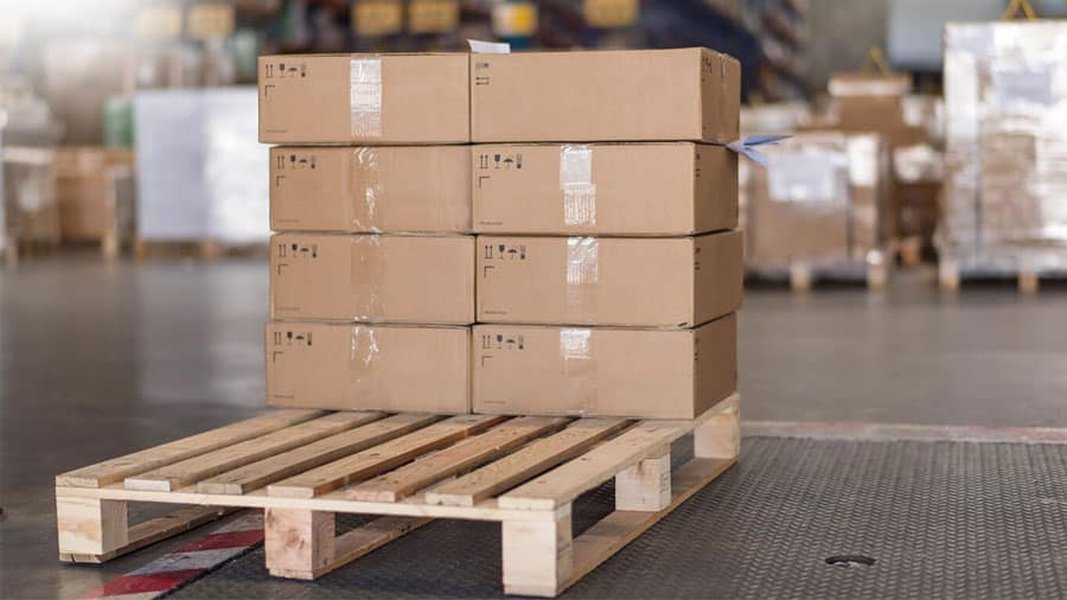
Securing goods on a pallet using stretch wrap for stability during transport.
Benefits of Palletized Freight
Utilizing palletized freight offers a multitude of benefits for businesses involved in the movement of goods. These advantages contribute to a more streamlined, secure, and economical supply chain.
Enhanced Protection and Reduced Damage
One of the primary benefits of palletization is the increased protection it provides to goods during transit. By consolidating and securing items on a pallet, the load becomes more stable and less susceptible to shifting, vibrations, and impacts that can occur during transportation. This significantly reduces the risk of product damage, which in turn minimizes losses and customer complaints.
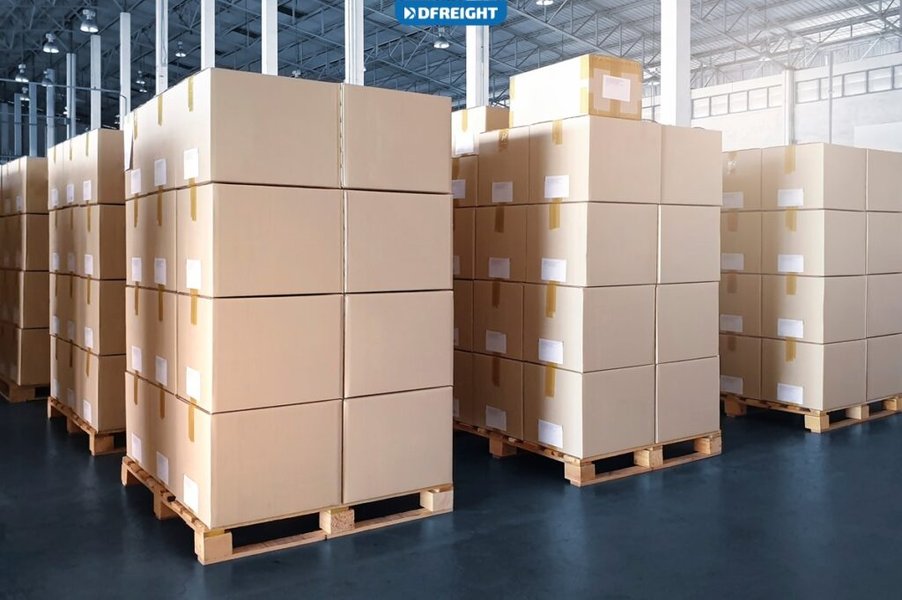
Palletized goods stacked and ready for storage or shipment in a warehouse environment.
Improved Handling Efficiency
Palletized freight is designed for efficient handling using mechanical equipment such as forklifts, pallet jacks, and automated systems. This dramatically speeds up the loading and unloading process at warehouses, distribution centers, and shipping docks. Reduced manual handling also decreases the risk of injuries to workers.
Cost Savings in Shipping and Labor
While there are initial costs associated with pallets and packaging materials, palletization can lead to significant cost savings in the long run. By optimizing space on trucks, containers, and in warehouses, businesses can transport more goods in fewer shipments, reducing transportation costs. Furthermore, the efficiency gained in handling translates to lower labor costs compared to manually moving individual items.
Streamlined Inventory Management
Pallets serve as convenient units for tracking and managing inventory. Instead of counting individual items, businesses can count pallets, simplifying stock counts and improving accuracy. This also aids in better organization within warehouses.
Factors Influencing the Number of Pallets
Determining the exact number of pallets required for a specific shipment, such as goods from a company like Mariusta, depends on several variables. There isn't a single answer that applies to all situations. The calculation involves considering the characteristics of the goods being shipped, the types of pallets used, and the mode of transportation.
Product Characteristics
The size, weight, and shape of the individual items being shipped are crucial factors. The density of the product will dictate how many items can fit into a given volume, which in turn affects how many can be stacked on a single pallet. Fragile or irregularly shaped items may require more protective packaging or specialized stacking configurations, potentially reducing the number of items per pallet.
Pallet Dimensions and Type
The dimensions of the pallets being used are a primary determinant of how much freight can be loaded onto them. Standard pallet sizes vary by region, with common dimensions including 48x40 inches in North America and 1200x800 mm or 1200x1000 mm in Europe (Euro pallets). The type of pallet material (wood, plastic, cardboard) and its load capacity also play a role, especially for heavy shipments.
Stacking Configuration and Height Restrictions
The way the goods are stacked on the pallet (the stacking pattern) is essential for stability and maximizing space. Interlocking patterns are often used to prevent items from shifting. Additionally, transportation modes and warehouse facilities may have height restrictions for palletized loads, limiting the vertical stacking of goods.
Weight Limits
Both the pallet itself and the transportation vehicle (truck, container, etc.) have weight limits. The total weight of the goods loaded onto a pallet, plus the weight of the pallet and packaging, must not exceed these limits. This is particularly important for Less-Than-Truckload (LTL) shipments, where weight is a key factor in determining freight class and cost.
Shipping Regulations and Carrier Requirements
International shipments may have specific requirements, such as ISPM-15 regulations for wooden pallets to prevent the spread of pests. Individual carriers may also have their own guidelines and restrictions on pallet size, weight, and packaging. Adhering to these regulations is vital to avoid delays or rejected shipments.
To calculate the number of pallets needed, businesses often use pallet calculators or work with logistics providers. These tools and experts consider the dimensions and weight of the goods, the desired pallet size, and the stacking pattern to determine the optimal number of pallets and the overall shipment volume.
Common Pallet Types and Sizes
While the specific number of pallets for Mariusta's goods would depend on the details of the shipment, understanding common pallet types and sizes provides a general framework. Different industries and regions favor specific pallet standards.
Standard North American Pallet
The most common pallet size in North America is the 48x40 inch GMA (Grocery Manufacturers Association) pallet. This size is widely used across various industries due to its compatibility with standard racking systems and transportation equipment.
Euro Pallet
In Europe, the most prevalent pallet size is the 1200x800 mm Euro pallet (also known as the EUR pallet). Other common European sizes include 1200x1000 mm.
Other Pallet Sizes
Beyond the standard sizes, there are various other pallet dimensions used for specific purposes or industries. Examples include 42x42 inch pallets often used in the beverage industry and 48x48 inch pallets for drums and large containers.
The choice of pallet size and type can impact freight costs and handling efficiency. Using standard sizes that are compatible with the logistics infrastructure of both the shipper and the receiver can help streamline operations.
Here is a table summarizing some common pallet types and their typical uses:
| Pallet Type | Common Dimensions | Typical Use Cases |
|---|---|---|
| GMA Pallet (North America) | 48x40 inches | Grocery, Retail, General Warehousing |
| Euro Pallet (Europe) | 1200x800 mm | Various Industries in Europe |
| Euro Pallet (Europe) | 1200x1000 mm | Various Industries in Europe |
| Plastic Pallets | Various (often mimic wood sizes) | Food, Pharmaceutical, Chemical Industries (due to hygiene and durability) |
| Cardboard Pallets | Various | Lightweight Shipments, Export (single-use) |
Palletizing Best Practices
To ensure the safe and efficient transportation of goods on pallets, several best practices should be followed during the palletization process.
Proper Load Configuration
Planning the load configuration is the first step. This involves determining the optimal way to stack items on the pallet to maximize stability and space utilization while keeping the heaviest items at the bottom to maintain a low center of gravity.
Secure Packaging
Ensure that individual packages are properly sealed and sturdy. Use appropriate dunnage and void fill to prevent items from shifting within their packaging. For fragile items, extra cushioning and protective materials are essential.
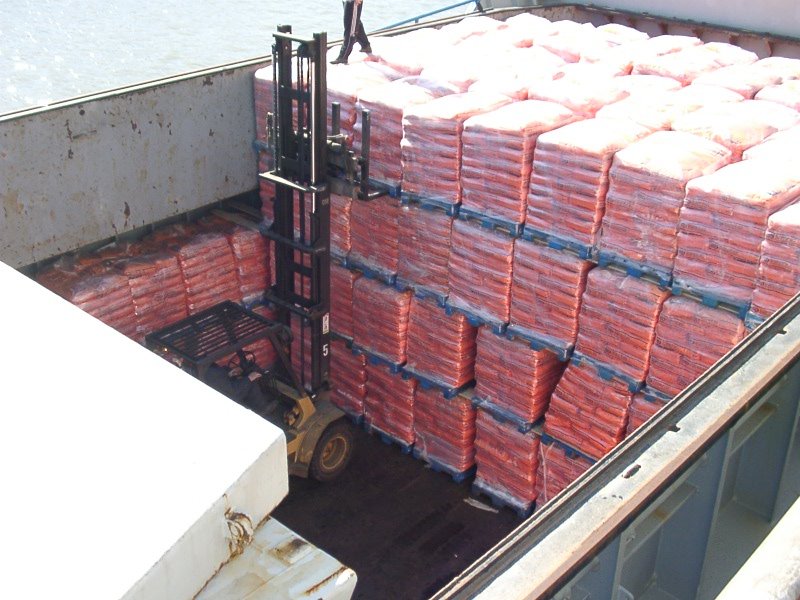
Properly stacked and secured goods on a pallet, ready for transport.
Effective Load Securing
Once the items are stacked, the entire load must be secured to the pallet. Stretch wrap is commonly used to bind the items together and to the pallet. For heavier or less stable loads, strapping or banding may also be necessary. Corner protectors can be used to prevent damage to the edges of the load.
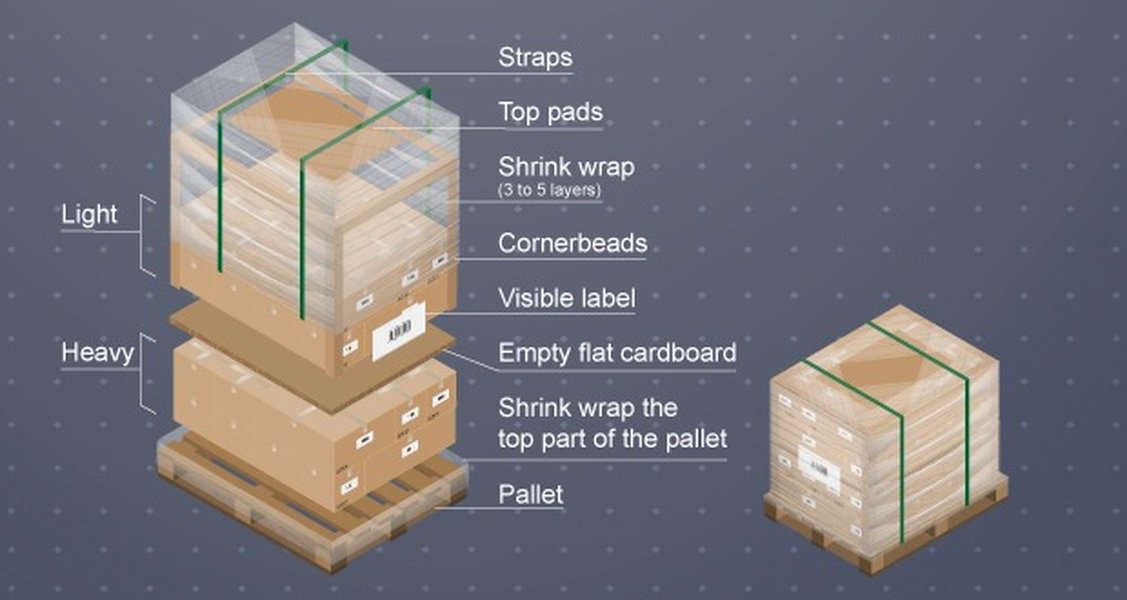
Applying stretch wrap to a palletized load for enhanced stability and protection.
Accurate Labeling
Each pallet should be clearly and accurately labeled with essential information, including the contents, quantity, destination address, and any special handling instructions. This helps ensure that the shipment is routed correctly and handled appropriately throughout the transportation process.
Inspection Before Shipment
Before tendering the palletized shipment to a carrier, inspect it thoroughly to ensure that the load is stable, securely wrapped, and properly labeled. Address any issues such as leaning stacks or loose packaging.
How Many Pallets for an LTL Shipment?
For Less-Than-Truckload (LTL) shipments, the number of pallets is a key factor in determining whether the freight qualifies as LTL and how it will be priced and transported. LTL typically involves shipments that do not require the full space of a truck trailer.
Generally, an LTL shipment is considered to contain between 1 and 6 pallets. However, this can vary depending on the freight carrier and the overall weight and volume of the shipment. Some carriers may consider shipments up to a certain weight threshold (e.g., 5,000 lbs) or a certain number of linear feet within the trailer as LTL, even if it exceeds 6 pallets, provided it does not occupy the full trailer.
When shipping LTL, carriers consolidate multiple smaller shipments from different customers onto a single trailer to optimize space and reduce costs. Therefore, the characteristics of your palletized freight, including its dimensions, weight, and freight class, will influence how it fits with other shipments on the truck.
Understanding LTL limits and working with a knowledgeable freight provider can help businesses determine the most cost-effective shipping method for their goods.
Conclusion
Palletization is an indispensable practice in global logistics, offering significant advantages in terms of efficiency, protection, and cost-effectiveness. While the specific number of pallets required for a shipment of goods from a company like Mariusta depends on various factors related to the product, pallet type, and transportation, the principles of proper palletization remain universal. By adhering to best practices in load configuration, securing, and labeling, businesses can ensure their goods are transported safely and efficiently through the supply chain.
Companies specializing in packaging and logistics, such as those mentioned in the sources like UAB "MARKO PALLETS" or providing palletizing equipment, can offer further expertise and solutions for optimizing palletized shipments.
Frequently Asked Questions
What is the main purpose of palletizing goods?
The main purpose of palletizing goods is to consolidate multiple smaller packages into a single, stable unit for easier and more efficient handling, storage, and transportation using mechanical equipment like forklifts.
How does palletization help reduce shipping costs?
Palletization helps reduce shipping costs by optimizing space utilization in transportation vehicles and warehouses, allowing more goods to be moved in fewer shipments. It also reduces manual handling, leading to lower labor costs.
What are the most common pallet sizes?
The most common pallet sizes are the 48x40 inch GMA pallet used predominantly in North America and the 1200x800 mm and 1200x1000 mm Euro pallets common in Europe.
Why is securing the load on a pallet important?
Securing the load on a pallet using materials like stretch wrap or strapping is crucial to prevent items from shifting during transit, which can lead to product damage, instability of the load, and potential safety hazards during handling.
Can cardboard pallets be used for all types of shipments?
Cardboard pallets are typically used for lightweight shipments or as a cost-effective, single-use option, particularly for exports. They are generally not recommended for heavy, high-value, or sensitive products due to their lower durability compared to wood or plastic pallets.
References
Last updated May 6, 2025