
Unveiling the Altitude Ace: What Barometer Powers the 2S-3S Pavo Pico Drone?
Discover the precise sensor technology that gives the BetaFPV Pavo Pico its remarkable flight stability and altitude awareness.
The BetaFPV Pavo Pico, a popular 2S-3S cinewhoop drone, is renowned for its compact size and impressive flight performance, especially its ability to maintain stable altitudes for smooth cinematic footage. A key component enabling this capability is its integrated barometer. This response delves into the specifics of the barometer used in this agile quadcopter.
Key Insights at a Glance
- Sensor Identified: The 2S-3S BetaFPV Pavo Pico drone primarily utilizes the BMP280 barometer sensor for precise atmospheric pressure measurement.
- Integrated Solution: This barometer is an integral part of the F4 2-3S 20A AIO (All-In-One) Flight Controller V1, which is the brain of the Pavo Pico.
- Critical for Stability: The BMP280 plays a crucial role in enabling stable altitude hold, enhancing flight control precision, and contributing to the drone's overall smooth flight characteristics, vital for a cinewhoop.
The Heart of Altitude Sensing: The BMP280 Barometer
For pilots seeking detailed information about the components within their Pavo Pico, understanding the barometer is key to appreciating its flight dynamics. The consensus across technical specifications and community discussions points decisively to one particular sensor.
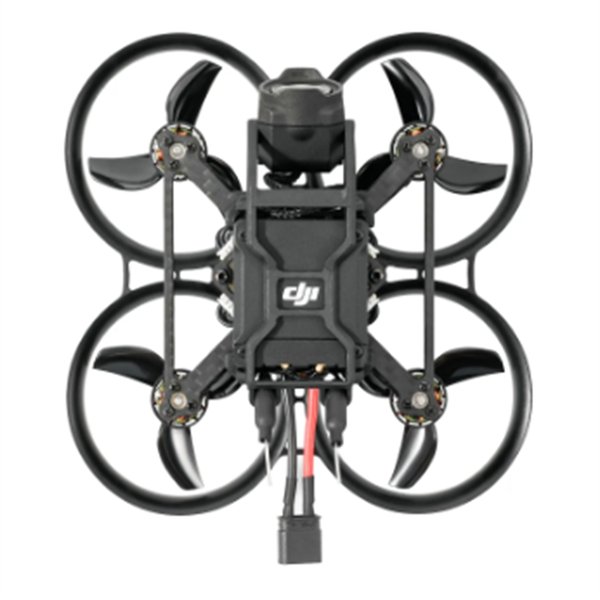
The BetaFPV Pavo Pico, a compact cinewhoop equipped with advanced sensor technology.
Identifying the Sensor: The BMP280
The BetaFPV Pavo Pico, in its 2S-3S configuration, is equipped with the BMP280 barometer. This sensor is a well-regarded digital pressure sensor known for its accuracy and reliability in compact applications. It measures atmospheric pressure, which the flight controller then uses to calculate and maintain the drone's altitude relative to its starting point or a calibrated sea level.
Seamless Integration: The F4 2-3S 20A AIO Flight Controller V1
The BMP280 isn't a standalone component haphazardly added to the drone; it's thoughtfully integrated into the Pavo Pico's sophisticated flight controller, the F4 2-3S 20A AIO FC V1. This all-in-one board is the central hub for the drone's operations.
Flight Controller Core Specifications
The F4 2-3S 20A AIO FC V1 is a feature-rich board designed for modern FPV drones. Key specifications include:
- Microcontroller Unit (MCU): STM32F405RGT6, a powerful processor running at 168MHz, capable of handling complex flight calculations.
- Inertial Measurement Unit (IMU): Typically an ICM42688P or similar, providing gyroscope and accelerometer data for orientation and stabilization.
- Integrated Receiver: Often comes with a Serial ExpressLRS (ELRS) 2.4G receiver, though versions compatible with TBS Crossfire or DJI systems are also available.
- Onboard Black Box: 16MB of flash memory for logging flight data, invaluable for tuning and diagnostics.
- Current Meter: Allows for real-time monitoring of power consumption.
- Barometer: The aforementioned BMP280.
- Battery Support: Designed for 2S to 3S LiPo batteries.
- BEC (Battery Eliminator Circuit): Dual BECs providing stable power outputs (e.g., 5V/2A for HD VTX and 5V/0.5A for the receiver).
- External Device Support: Includes UARTs for connecting external GPS modules and HD Digital Video Transmitters (VTX) like the DJI O3 Air Unit, Walksnail Avatar HD Pro, or Caddx Vista HD.
Function and Benefits of the BMP280 in the Pavo Pico
The inclusion of the BMP280 offers several advantages for the Pavo Pico's flight performance:
Precise Altitude Measurement
By detecting minute changes in air pressure, the BMP280 provides the flight controller with the data needed to estimate the drone's altitude. This is fundamental for features like altitude hold.
Enhanced Flight Stability and Control
In a cinewhoop like the Pavo Pico, smooth and stable flight is paramount for capturing high-quality video. The barometer contributes significantly to this by enabling altitude hold modes, where the drone automatically maintains its height. This allows the pilot to focus more on horizontal movement and camera framing. It also aids in smoother ascents and descents.
Advantage for Compact Cinewhoops
The Pavo Pico is designed to be lightweight (often under 100 grams fully equipped) and maneuverable, suitable for flying in tight spaces both indoors and outdoors. A reliable barometer like the BMP280 helps maintain stability even in challenging conditions or when flying close to obstacles, without adding significant weight or power draw.
Pavo Pico Flight Controller: A Closer Look at its Features
The F4 2-3S 20A AIO FC V1 is central to the Pavo Pico's performance. The table below summarizes its key attributes, highlighting how the BMP280 fits into this advanced system.
| Feature | Specification / Description |
|---|---|
| Processor (MCU) | STM32F405RGT6 @ 168MHz |
| Gyro/Accelerometer (IMU) | ICM42688P (or similar high-performance IMU) |
| Barometer | BMP280 (for atmospheric pressure sensing and altitude estimation) |
| Integrated Receiver Options | Serial ELRS 2.4G, TBS Crossfire compatibility, DJI PNP |
| Onboard Black Box | 16MB Flash Memory |
| Integrated Current Meter | Yes, for battery monitoring |
| Supported Battery Voltage | 2S - 3S LiPo (typically via XT30 connector) |
| BEC Outputs | Dual BECs (e.g., 5V 2A for VTX, 5V 0.5A for Receiver/GPS) |
| Motor ESC Rating | 20A (Continuous) |
| External Peripheral Support | GPS, HD Digital VTX (DJI O3, Walksnail Avatar Pro, Caddx Vista) |
| Firmware Compatibility | Betaflight (typically version 4.4.0 or later), ArduPilot (community support) |
This integrated approach ensures that all components, including the BMP280 barometer, work harmoniously to deliver a responsive and stable flight experience.
Visualizing Pavo Pico's Core Components
To better understand how the barometer fits into the Pavo Pico's ecosystem, the following mindmap illustrates the drone's main systems and features, with the F4 flight controller and its BMP280 sensor at the core of its flight intelligence.
F4 2-3S 20A AIO V1"] id1a["MCU: STM32F405RGT6"] id1b["IMU: ICM42688P"] id1c["Barometer: BMP280"] id1c1["Altitude Sensing"] id1c2["Pressure Measurement"] id1d["Integrated ELRS Rx"] id1e["16MB Black Box"] id1f["Current Meter"] id2["Key Drone Features"] id2a["Sub-100g Weight"] id2b["Cinewhoop Design"] id2c["HD VTX Support
(DJI O3, Walksnail, Caddx Vista)"] id2d["45mm Propellers"] id2e["1102 14000Kv Motors"] id3["Performance Aspects (Enhanced by BMP280)"] id3a["Stable Altitude Hold"] id3b["Smooth Cinematic Flight"] id3c["Precise Height Control"] id4["Power System"] id4a["2S-3S LiPo Compatible"] id4b["XT30 Connector"] id4c["Recommended: 2S 450mAh"]
This mindmap highlights the BMP280's role within the flight controller, which in turn governs the drone's overall features and performance characteristics.
Sensor Suite Performance Metrics
The BMP280 barometer contributes significantly to several performance aspects of the Pavo Pico. The radar chart below provides an illustrative comparison of how the sensor suite, including the barometer, impacts key characteristics vital for a cinewhoop drone. The scores (out of 10) are qualitative assessments based on its design and typical performance.
This chart illustrates how the BMP280's role in altitude stability is a strong point, complemented by the flight controller's compact integration and the overall precision it lends to the drone's flight.
See the Pavo Pico in Action
While technical specifications are crucial, seeing the drone perform provides a better appreciation of its capabilities, which are partly enabled by sensors like the BMP280. The following video offers a review and flight footage of the BetaFPV Pavo Pico, showcasing its performance as a compact DJI O3 cinewhoop.
This review demonstrates the kind of stable and smooth flight characteristics that a well-integrated barometer like the BMP280 helps achieve, especially when paired with advanced HD video systems.
Frequently Asked Questions (FAQ)
What exactly does a barometer do on a drone like the Pavo Pico?
A barometer on a drone, such as the BMP280 in the Pavo Pico, measures atmospheric pressure. Since air pressure decreases with increasing altitude in a predictable way, the flight controller can use these pressure readings to estimate the drone's current height above its takeoff point or a reference level. This data is crucial for features like "altitude hold," where the drone automatically maintains a consistent height, allowing the pilot to focus on other aspects of flying, like capturing smooth video footage.
Why is the BMP280 specifically used in the Pavo Pico?
The BMP280 is a popular choice for compact drones like the Pavo Pico due to its small size, low power consumption, and good accuracy for its class. These characteristics make it ideal for integration into All-In-One (AIO) flight controllers where space and weight are at a premium. Its ability to provide reliable pressure data helps the Pavo Pico, a sub-100g cinewhoop, achieve stable flight performance necessary for capturing cinematic shots.
How does the barometer interact with flight software like Betaflight?
Flight control software like Betaflight (or ArduPilot, if configured) uses the data from the BMP280 barometer as one of several inputs to manage the drone's flight. In Betaflight, the barometer data is essential for modes like "Altitude Hold" (ALTHOLD). The firmware processes the pressure readings, often combining them with accelerometer data (to account for vertical acceleration) and sometimes GPS data (if available and configured for sensor fusion like in iNav), to make fine adjustments to motor speeds, thereby maintaining or changing altitude precisely.
Is the barometer the only sensor responsible for altitude on the Pavo Pico?
While the barometer (BMP280) is the primary sensor for measuring absolute altitude based on air pressure, it often works in conjunction with other sensors for more robust altitude control. The Inertial Measurement Unit (IMU), which includes an accelerometer and gyroscope, helps the flight controller understand the drone's orientation and vertical movements. In advanced flight modes or firmware, data from the accelerometer can be fused with barometer data to provide more accurate and responsive altitude stabilization, compensating for rapid changes or drift. If an external GPS is added, its altitude data can also be incorporated for even better height estimation over larger areas.
Recommended Further Exploration
- How does the BMP280 barometer improve drone cinematic footage quality?
- What are the key features of the BetaFPV F4 2-3S 20A AIO FC V1 beyond the barometer?
- Compare flight stability: Pavo Pico with BMP280 vs drones without a barometer.
- How to calibrate the barometer on a BetaFPV Pavo Pico for optimal performance?
References

Last updated May 10, 2025