
Understanding PBKDF2 and Its Role in Wi-Fi Security
A comprehensive exploration of PBKDF2 principles, key stretching, and its implementation in protecting wireless networks
Key Highlights
- PBKDF2 Overview: A key derivation function that transforms passwords into cryptographic keys using salts and iterations.
- Wi-Fi Security Integration: Utilized in WPA/WPA2 protocols to derive a secure pre-shared key for wireless connections.
- Enhanced Protection: The process involves iterative hashing (key stretching) to deter brute-force and dictionary attacks.
Introduction to PBKDF2
PBKDF2 (Password-Based Key Derivation Function 2) is a cryptographic method that transforms a user-supplied password into a secure cryptographic key. Its primary objective is to make password cracking by brute-force or dictionary attacks significantly harder through the process of key stretching.
The algorithm takes in several important parameters – a password, a salt, a number of iterations (which determines the computational effort), and a desired output key length. The derived key is the result of repeatedly applying a pseudorandom function (most commonly HMAC, typically with SHA-256 or SHA-1) on the combination of these inputs. The process is delineated further below:
Core Components of PBKDF2
Password Input
The user’s password or passphrase forms the primary input. Without proper processing, storing or using the original password might expose vulnerabilities. PBKDF2 ensures that even if a password is weak, deriving a strong key from it is computationally heavy for attackers.
Salt
A salt is a unique, randomly generated value used to add uniqueness to the password. This means that even if two users have the same password, different salts ensure that their derived keys will differ. Typically, a minimum of 64 bits is recommended for salts.
Iteration Count
The iteration count refers to how many times the hashing function is applied. A higher count means more computational work, making it increasingly time-consuming for an attacker to attempt brute-force attacks. In many implementations, such as in Wi-Fi protocols, this value is often set to 4096 iterations.
Derived Key Length
The desired length (often measured in bits) for the final key output, for instance, 256 bits for many encryption standards. The PBKDF2 algorithm outputs a key of the specified length after performing the iterative hashing process.
Implementation in Wi-Fi Security
In wireless network security, PBKDF2 plays a pivotal role in establishing secure communications. Wireless networks using protocols such as WPA and WPA2 rely on PBKDF2 to derive the Pairwise Master Key (PMK) from a passphrase provided by the user during network setup.
The process typically follows these steps:
Step-by-Step Implementation
User Passphrase Input
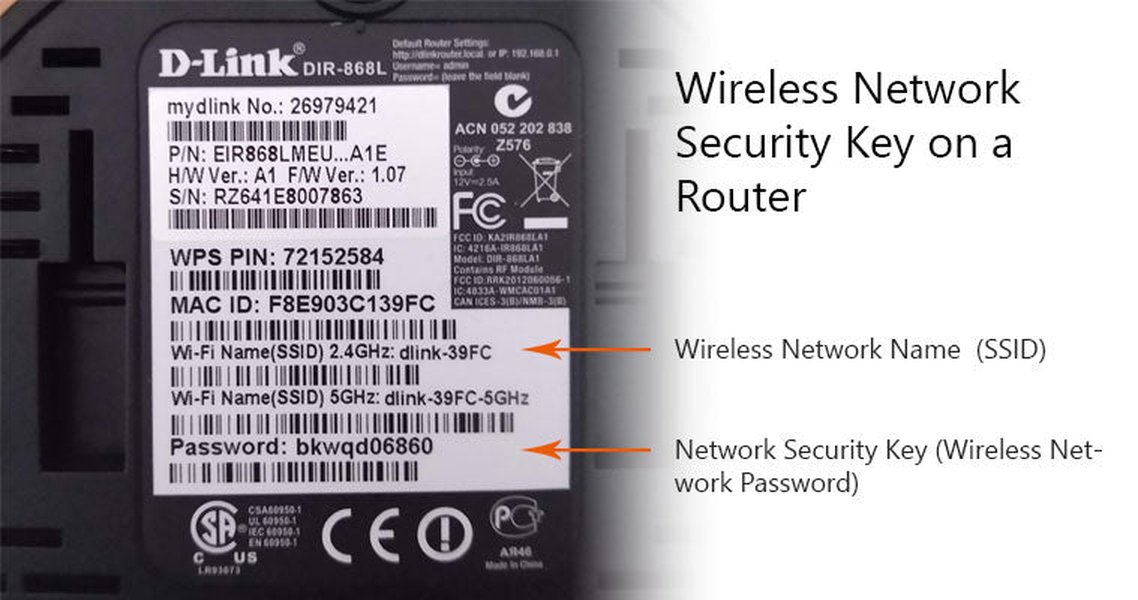
When setting up a Wi-Fi network, the user inputs a passphrase which acts as the foundation for generating the secure key. This passphrase is used in combination with the network's SSID (Service Set Identifier) to enhance the key’s uniqueness.
Salt and Iterations
The SSID of the wireless network serves as the salt. The uniformity of network names in a given service area adds another layer of protection against precomputed rainbow table attacks. In a typical configuration, the iteration count is set to 4096, meaning that the algorithm applies the HMAC function 4096 times to delay computations by potential attackers.
Deriving the Pre-Shared Key (PSK)
The PBKDF2 function takes in the passphrase, SSID, and the iteration count, along with a defined output length (commonly 256 bits), to generate a 256-bit key known as the PSK. This same PSK is computed independently on both the access point and the client device during connections, ensuring that they share a secure key for encrypting traffic.
Key Management and Data Encryption
Once derived, the PSK is used within the Wi-Fi security framework to generate session-specific encryption keys. These keys are then employed in the encryption of the data transmitted over the wireless network, ensuring confidentiality and integrity.
Benefits and Security Considerations
PBKDF2 offers numerous security benefits that are crucial, especially in scenarios where password-based authentication is employed:
- Increased Attack Resistance: The key stretching mechanism significantly slows down brute-force and dictionary attacks, reducing the risk of rapid credential compromise.
- Salt Uniqueness: Employing a unique salt for every attempt prevents attackers from using precomputed hash tables (rainbow tables) to reverse-engineer passwords.
- Adaptability: Adjusting the iteration count allows the security measure to keep pace with increasing computational power over time.
- Standardized Approach: PBKDF2 is recognized in standards such as RFC 2898 (PKCS #5 v2.0) and is widely implemented in various security protocols, ensuring robustness and familiarity among security professionals.
However, it is important to note that while PBKDF2 remains a robust method, newer algorithms like bcrypt, scrypt, and Argon2 have been developed to address some of the limitations in extremely high-security environments. Despite this, PBKDF2 continues to be a mainstay in many systems, particularly due to its compatibility and simplicity in implementation.
Technical Breakdown Via HTML Table
Below is a table summarizing the key aspects of PBKDF2, its parameters, and its role in Wi-Fi security settings:
| Parameter | Description | Typical Value in Wi-Fi |
|---|---|---|
| Password | User-supplied passphrase | Complex string (min. 8 characters) |
| Salt | Unique random value to prevent rainbow table attacks | SSID of the Wi-Fi network |
| Iteration Count | Number of times the algorithm applies HMAC to slow down brute force | 4096 (commonly used in WPA2/WPA3) |
| Derived Key Length | Length of the output key used in cryptographic operations | 256 bits |
| Pseudorandom Function (PRF) | Used to compute the HMAC over inputs | HMAC-SHA256 (most common) |
This table provides a succinct overview of the essential components that integrate PBKDF2 into wireless network security systems.
Interactive Visualizations
Radar Chart Overview
The following radar chart provides a visual representation of several key characteristics associated with PBKDF2 and its integration in Wi-Fi security. Each axis represents an important aspect considered during security evaluation.
Mindmap Overview
The following diagram maps out the fundamental concepts and interrelations regarding PBKDF2’s functioning and its implementation in Wi-Fi security.
Additional Learning Through Videos
To further solidify your understanding, here is an embedded video that dives into the technical aspects of PBKDF2 and its applications within cryptography:
The video covers the evolution of key derivation functions including comparisons to modern alternatives and demonstrates practical examples using PBKDF2.
Frequently Asked Questions (FAQ)
What is the primary purpose of PBKDF2?
PBKDF2 is designed to transform a user’s password into a cryptographic key using iterative hashing, thereby making brute force and dictionary attacks computationally expensive and time-consuming.
How does PBKDF2 contribute to Wi-Fi security?
In Wi-Fi security, especially in WPA and WPA2, PBKDF2 is used to derive a secure pre-shared key (PSK) from the user’s passphrase. It uses iterative hashing with the network's SSID as salt to ensure the resultant key is unique and resistant to various types of attacks.
What are the main parameters required in PBKDF2?
The main parameters are the password (passphrase), a unique salt (often the Wi-Fi network's SSID), the iteration count (commonly set to 4096 for Wi-Fi security), and the desired length of the derived cryptographic key.
How does iteration count enhance security?
The iteration count determines how many times the pseudorandom function is applied to the input. Increasing this count makes the key derivation process more computationally intensive, thus significantly delaying potential brute-force attempts.
References
- PBKDF2 - Wikipedia
- Cryptobook - PBKDF2
- A Security Site - PBKDF2 and Wi-Fi
- SSL Trust - PBKDF2
- YouTube - PBKDF2 Explained
Recommended Further Queries
Last updated March 30, 2025