
Unmasking PCOS: Are These Common Signs Affecting You?
A comprehensive guide to recognizing the diverse symptoms of Polycystic Ovary Syndrome.
Polycystic Ovary Syndrome (PCOS) is a prevalent hormonal condition impacting individuals with ovaries, typically during their reproductive years. It arises when the ovaries or adrenal glands produce higher-than-normal levels of androgens (male hormones), leading to a cascade of potential symptoms. Understanding these signs is the first step towards diagnosis and management.
Key Insights into PCOS Symptoms
- Irregular Periods: Often the most common initial sign, manifesting as infrequent, absent, prolonged, or unpredictable menstrual cycles.
- Hormonal Imbalance Effects: Elevated androgen levels frequently cause visible symptoms like excess facial/body hair (hirsutism), severe acne, and male-pattern hair thinning.
- Metabolic Disturbances: Weight gain, difficulty losing weight (especially abdominal fat), and skin changes like dark patches (acanthosis nigricans) are common, often linked to insulin resistance.
Decoding the Spectrum of PCOS Symptoms
PCOS presents a wide array of symptoms that can vary significantly in presence and severity from person to person. Some individuals may experience only mild or few symptoms, while others face a more complex combination. Symptoms often emerge around the time of the first menstrual period during puberty, but they can also develop later in the teen years or early adulthood.
Menstrual Cycle Disruptions
One of the most defining characteristics of PCOS involves irregularities in the menstrual cycle, stemming from infrequent or absent ovulation (anovulation).
Common Patterns
- Oligomenorrhea: Infrequent periods (e.g., fewer than eight or nine cycles per year, or cycles longer than 35 days).
- Amenorrhea: Complete absence of periods for three or more consecutive months.
- Irregular Bleeding: Unpredictable timing and flow, sometimes including very heavy bleeding (menorrhagia) when periods do occur, due to prolonged buildup of the uterine lining.
Signs of Excess Androgens (Hyperandrogenism)
Elevated levels of androgens, often referred to as "male hormones" although naturally present in all sexes, cause several distinct physical symptoms in individuals with PCOS.
Physical Manifestations
- Hirsutism: Excessive growth of coarse, dark hair in a male-like pattern, affecting areas such as the face (upper lip, chin), chest, abdomen, back, and thighs. This affects a large percentage of those with PCOS.
- Acne: Persistent, severe acne, often cystic, that may not respond well to typical treatments. It commonly appears on the face, chest, and upper back.
- Androgenic Alopecia: Thinning hair or hair loss resembling male-pattern baldness, typically on the scalp.
- Oily Skin: Increased sebum production leading to noticeably oily skin.
Ovarian Appearance
While the name suggests cysts are central, the "cysts" in PCOS are actually small, undeveloped follicles. Their presence contributes to the diagnosis but isn't universal or always required.
Ultrasound Findings
- Polycystic Ovaries: Ultrasound scans may reveal enlarged ovaries containing numerous small follicular cysts (often 12 or more measuring 2-9 mm) arranged around the periphery, sometimes described as a "string of pearls" appearance.
- Important Note: Not everyone with PCOS will have this ovarian appearance, and having polycystic ovaries on ultrasound doesn't automatically mean a PCOS diagnosis without other key symptoms.
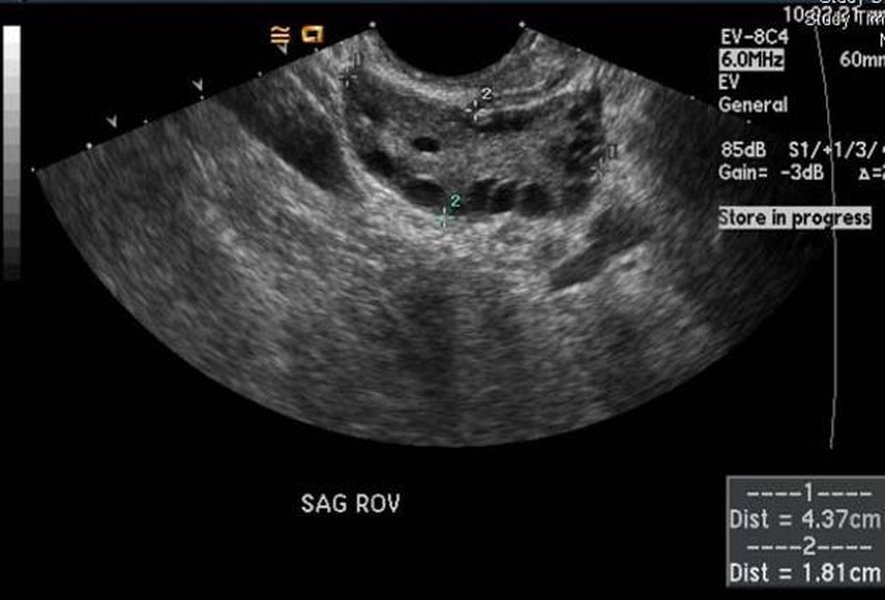
Transvaginal ultrasound demonstrating multiple small peripheral follicles characteristic of polycystic ovaries.
Metabolic and Physical Changes
PCOS is strongly linked to metabolic disturbances, particularly insulin resistance, which can affect weight and skin.
Weight and Skin Indicators
- Weight Gain/Difficulty Losing Weight: Many individuals with PCOS struggle with weight gain, especially abdominal obesity, and find weight loss challenging. This is often linked to insulin resistance, where the body's cells don't respond effectively to insulin, promoting fat storage. Up to 80% of women with PCOS are overweight or obese.
- Acanthosis Nigricans: Dark, velvety patches of skin, usually found in body folds like the neck, armpits, groin, or under the breasts. This is a marker of insulin resistance.
- Skin Tags: Small flaps of excess skin often found in the armpits or neck area, also associated with insulin resistance.
Reproductive Health Challenges
The hormonal and ovulatory disruptions in PCOS frequently lead to difficulties with fertility.
Fertility Issues
- Infertility: Difficulty conceiving is common due to irregular or absent ovulation. PCOS is one of the leading causes of female infertility.
Other Associated Symptoms
Beyond the core features, PCOS can be associated with other symptoms that affect overall well-being.
Additional Concerns
- Fatigue: Persistent tiredness or lack of energy is reported by some individuals.
- Sleep Problems: Increased risk of sleep disorders, notably obstructive sleep apnea (where breathing repeatedly stops and starts during sleep), especially in those with obesity. This can lead to daytime sleepiness.
- Mood Changes: Higher rates of anxiety, depression, mood swings, and negative body image can occur, influenced by hormonal fluctuations and the distress caused by physical symptoms like hirsutism or weight gain.
- Headaches: Some individuals may experience headaches potentially linked to hormonal changes.
Visualizing PCOS Symptom Impact
The following chart provides a conceptual representation of the relative prevalence and potential impact of different symptom categories in individuals diagnosed with PCOS. Note that individual experiences can vary widely, and this chart illustrates general trends rather than precise data points for any specific person. It aims to show how different facets of the syndrome contribute to the overall condition.
This visualization underscores that while menstrual irregularity and signs of hyperandrogenism are very common, metabolic issues, fertility concerns, psychological impact, and the specific appearance of the ovaries on ultrasound also play significant roles in the overall picture of PCOS.
Mapping the Symptoms of PCOS
To better understand how the various symptoms of Polycystic Ovary Syndrome are interconnected, the following mindmap provides a visual summary of the key areas affected.
(Oligomenorrhea)"] id1b["Absent Periods
(Amenorrhea)"] id1c["Heavy/Prolonged Bleeding"] id1d["Irregular Ovulation"] id2["Hyperandrogenism
(Excess Androgens)"] id2a["Hirsutism
(Excess Hair Growth)"] id2b["Acne
(Severe/Persistent)"] id2c["Androgenic Alopecia
(Hair Thinning)"] id2d["Oily Skin"] id3["Metabolic Issues"] id3a["Weight Gain / Difficulty Losing"] id3b["Insulin Resistance"] id3c["Acanthosis Nigricans
(Dark Skin Patches)"] id3d["Skin Tags"] id4["Ovarian Changes"] id4a["Polycystic Morphology
(Multiple Follicles on Ultrasound)"] id4b["Enlarged Ovaries"] id5["Reproductive Health"] id5a["Infertility / Subfertility"] id5b["Ovulatory Dysfunction"] id6["Associated Symptoms"] id6a["Fatigue"] id6b["Sleep Apnea"] id6c["Mood Disorders
(Anxiety/Depression)"] id6d["Headaches"]
This mindmap illustrates the main categories of symptoms stemming from the hormonal and metabolic disruptions characteristic of PCOS.
PCOS Symptoms Explained Visually
Understanding the complex nature of PCOS symptoms can be aided by visual explanations. The video below provides an overview of Polycystic Ovary Syndrome, covering its causes, associated conditions, signs and symptoms, and diagnostic approaches. It offers a deeper dive into how these symptoms manifest and relate to the underlying hormonal imbalances.
This video helps to consolidate understanding by presenting information on the syndrome's characteristics, including the common symptoms discussed, in an accessible format.
Summary Table of Common PCOS Symptoms
This table provides a quick reference guide to the common symptoms associated with Polycystic Ovary Syndrome.
| Symptom Category | Specific Symptom | Description |
|---|---|---|
| Menstrual | Irregular Periods | Cycles are infrequent, absent, unpredictable, or unusually long/short. |
| Menstrual | Heavy Bleeding | Excessively heavy flow during periods when they occur. |
| Hyperandrogenism | Hirsutism | Excessive growth of dark, coarse hair on face, chest, back, or abdomen. |
| Hyperandrogenism | Acne | Severe, persistent acne, often on the face, chest, and back. |
| Hyperandrogenism | Hair Thinning | Loss of scalp hair in a male-like pattern (androgenic alopecia). |
| Metabolic | Weight Gain / Difficulty Losing Weight | Often centered around the abdomen; weight loss is challenging for many. |
| Metabolic | Acanthosis Nigricans | Dark, velvety skin patches, typically in folds (neck, armpits, groin). Sign of insulin resistance. |
| Metabolic | Skin Tags | Small skin growths often in armpits or on the neck. |
| Ovarian | Polycystic Ovaries | Enlarged ovaries with multiple small follicles seen on ultrasound (not always present). |
| Reproductive | Infertility | Difficulty conceiving due to irregular or absent ovulation. |
| Other | Fatigue | Persistent feeling of tiredness or low energy. |
| Other | Sleep Apnea | Pauses in breathing during sleep, often linked to obesity. |
| Other | Mood Changes | Increased risk of anxiety, depression, or mood swings. |
When to Consult a Doctor
If you are experiencing a combination of symptoms such as irregular periods, excessive hair growth, persistent acne, difficulty managing weight, or problems conceiving, it's advisable to consult a healthcare provider. Early diagnosis and management can help control symptoms and reduce the risk of long-term health complications associated with PCOS, such as type 2 diabetes, high blood pressure, and heart disease.
Frequently Asked Questions about PCOS Symptoms
Do all individuals with PCOS have ovarian cysts? +
No, not necessarily. Despite the name "polycystic," the presence of multiple small follicles (often referred to as cysts) on the ovaries is only one of the three potential diagnostic criteria (Rotterdam criteria). A diagnosis can be made if two out of the three criteria are met: 1) irregular or absent ovulation (causing irregular periods), 2) clinical or biochemical signs of hyperandrogenism, and 3) polycystic ovarian morphology on ultrasound. Therefore, someone can have PCOS without the characteristic ovarian appearance if they have irregular periods and signs of high androgens.
Can PCOS symptoms start later in life? +
While PCOS symptoms most commonly begin during adolescence, around the time of the first period, they can sometimes develop later, in the early to mid-20s or even later. In some cases, symptoms might become apparent only when trying to conceive or after significant weight gain. The onset and manifestation can vary.
Is weight gain always a symptom of PCOS? +
No, while weight gain and obesity are common in individuals with PCOS (affecting up to 80% in some studies), it's not a universal symptom. Some individuals with PCOS maintain a normal weight or are even underweight ("lean PCOS"). However, even those with lean PCOS can still experience other symptoms like irregular periods, hyperandrogenism, and insulin resistance, although metabolic issues might be less pronounced than in those with obesity.
Can PCOS symptoms change over time? +
Yes, PCOS symptoms can change throughout a person's life. For example, menstrual cycles might become more regular closer to menopause. Symptoms like acne and hirsutism can improve or worsen depending on hormone levels, lifestyle factors (like weight changes), and treatments. Metabolic risks, like the risk for type 2 diabetes, tend to increase with age if not managed.
Recommended Reading
- What causes the hormonal imbalances seen in PCOS?
- How is PCOS officially diagnosed by healthcare professionals?
- What are the long-term health risks associated with having PCOS?
- Are there lifestyle changes that can effectively help manage PCOS symptoms?
References
Last updated May 5, 2025