
Unlock Perfect Delts: Your Ultimate Guide to Sculpted Shoulders
Build strength, size, and symmetry with this comprehensive workout targeting all three deltoid heads.
Achieving "perfect delts" means developing well-rounded, strong, and aesthetically pleasing shoulder muscles. The deltoid muscle, located at the outermost aspect of your shoulder, is comprised of three distinct sections or heads: the anterior (front), lateral (side/medial), and posterior (rear) deltoids. A truly effective shoulder workout must target all three heads to ensure balanced development, prevent injury, enhance posture, and create that coveted "capped" shoulder look.
Key Highlights for Optimal Deltoid Training
- Target All Three Heads: Ensure your routine includes specific exercises for the anterior, lateral, and posterior deltoids for balanced growth and function.
- Combine Compound & Isolation: Utilize heavy compound lifts like overhead presses for overall mass and strength, alongside isolation exercises like raises and flyes to target specific heads.
- Prioritize Form & Progression: Master proper technique before increasing weight. Consistently challenge your muscles through progressive overload (increasing weight, reps, or sets over time).
Understanding Your Deltoids: The Three Heads
To build perfect deltoids, it's essential to understand the role of each muscle head:
- Anterior Deltoid (Front): Located at the front of the shoulder, this head is primarily involved in shoulder flexion (raising your arm forward) and internal rotation. It gets significantly worked during pressing movements.
- Lateral Deltoid (Side/Medial): Situated on the side of the shoulder, this head is responsible for shoulder abduction (lifting your arm out to the side). Developing the lateral head is key for creating shoulder width.
- Posterior Deltoid (Rear): Found on the back of the shoulder, this head contributes to shoulder extension (moving your arm backward) and external rotation. Strong rear delts are crucial for shoulder health, posture, and creating a 3D look from the back.
Crafting the Perfect Deltoid Workout: Exercises, Sets, and Reps
This workout incorporates exercises proven to effectively stimulate each deltoid head, drawing from expert recommendations and research on muscle activation. Aim to perform this workout 1-2 times per week, allowing at least 48 hours of rest between sessions.
Compound Movements: Building the Foundation
Compound exercises engage multiple joints and muscle groups simultaneously, allowing you to lift heavier weights and build overall mass and strength, primarily targeting the anterior and lateral heads.
Overhead Press (Barbell or Dumbbell)
A cornerstone exercise for shoulder development. Can be performed seated or standing. Focus on controlling the weight throughout the movement.
- Target: Primarily Anterior & Lateral Deltoids, Triceps
- Sets: 3-4
- Reps: 6-10

Example of a shoulder isolation exercise (Front Raise) targeting the anterior deltoid.
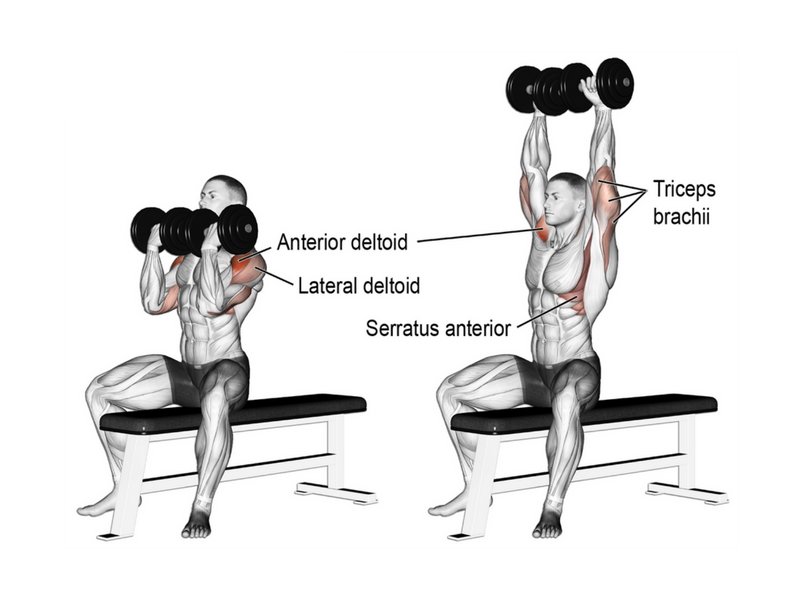
Arnold Press
Named after Arnold Schwarzenegger, this dumbbell press variation involves rotation, hitting the deltoids from multiple angles, especially emphasizing the anterior head.
- Target: Anterior & Lateral Deltoids
- Sets: 3
- Reps: 8-12
Isolation Exercises: Sculpting and Defining
Isolation exercises target specific muscle heads, helping to ensure balanced development and address weaknesses.
Lateral Raises (Dumbbell, Cable, or Band)
The king of exercises for targeting the lateral deltoid and building shoulder width. Use strict form, avoiding momentum, and focus on a controlled negative (lowering phase).
- Target: Lateral Deltoids
- Sets: 3-4
- Reps: 10-15
Dumbbell Lateral Raises are crucial for targeting the side deltoids.
Front Raises (Dumbbell or Cable)
Directly targets the anterior deltoid. Keep arms relatively straight and lift to shoulder height. Often performed after pressing movements.
- Target: Anterior Deltoids
- Sets: 3
- Reps: 10-15
Bent-Over Lateral Raises / Rear Delt Flyes (Dumbbell or Cable)
Essential for hitting the often-neglected posterior deltoids. Perform bent over at the hips (keeping your back straight) or lying face down on an incline bench. Focus on squeezing the shoulder blades together at the top.
- Target: Posterior Deltoids, Upper Back
- Sets: 3-4
- Reps: 10-15

Exercises like bent-over rows or flyes target the posterior deltoids.
Face Pulls
An excellent exercise for posterior deltoid development and overall shoulder health. Use a cable machine with a rope attachment set at chest or face height. Pull the rope towards your face, aiming your hands towards your ears while keeping elbows high.
- Target: Posterior Deltoids, Rotator Cuff, Upper Back
- Sets: 3
- Reps: 12-15
Sample Perfect Delts Workout Routine
This table summarizes a potential workout structure combining the exercises above. Remember to warm up adequately before starting and cool down with stretches afterwards. Adjust weights to match the target rep ranges while maintaining good form. Rest 60-120 seconds between sets.
| Exercise | Primary Target | Sets | Reps |
|---|---|---|---|
| Barbell or Dumbbell Overhead Press | Anterior & Lateral Delts | 4 | 6-10 |
| Dumbbell Lateral Raises | Lateral Delts | 4 | 10-15 |
| Bent-Over Lateral Raises / Rear Delt Flyes | Posterior Delts | 4 | 12-15 |
| Arnold Press | Anterior & Lateral Delts | 3 | 8-12 |
| Face Pulls | Posterior Delts & Shoulder Health | 3 | 12-15 |
| Front Raises (Optional/Alternating) | Anterior Delts | 3 | 10-15 |
Note: This sample provides a high volume (around 21 sets). Beginners or those training shoulders more frequently might reduce the sets per exercise (e.g., 3 sets each) or choose fewer exercises per session.
Visualizing Deltoid Exercise Focus
This chart illustrates the relative emphasis of key shoulder exercises across the three deltoid heads and overall shoulder health contribution. A balanced workout aims for comprehensive stimulation across all areas.
(Scale 1-10, where 10 represents maximum emphasis. These are illustrative values based on common training principles.)
Structuring Your Deltoid Training Approach
This mindmap outlines the core principles behind constructing a perfect deltoid workout, emphasizing the need to target each head with appropriate exercises for balanced development.
Overhead Press
Arnold Press
Front Raise"] id1b["Lateral (Side) Delts"] id1b1["Exercise Examples:
Lateral Raise
Upright Row (use caution)"] id1c["Posterior (Rear) Delts"] id1c1["Exercise Examples:
Rear Delt Fly / Bent-Over Raise
Face Pulls
Seated Rear Delt Row"] id2["Key Principles"] id2a["Compound Lifts (Mass)"] id2b["Isolation Lifts (Definition)"] id2c["Proper Form"] id2d["Progressive Overload"] id2e["Adequate Rest & Recovery"] id3["Goals"] id3a["Strength"] id3b["Size (Hypertrophy)"] id3c["Symmetry & Aesthetics"] id3d["Injury Prevention"] id3e["Improved Posture"]
Expert Insights on Shoulder Training
Understanding the nuances of exercise selection and execution is crucial for maximizing results and minimizing injury risk. This video provides valuable insights into constructing an effective shoulder workout, including exercise choices and programming considerations tailored for optimal deltoid development.
Watch this video for a detailed breakdown of structuring the perfect shoulder workout, including sets and reps.
Frequently Asked Questions (FAQ)
How often should I train my deltoids?
What's more important: lifting heavy weight or using proper form?
Can I achieve perfect delts with only bodyweight exercises?
Why is targeting all three deltoid heads so important?
Recommended Further Reading & Exploration
- What are the most effective exercises specifically for building the rear deltoids?
- How can I minimize the risk of shoulder injuries while performing these exercises?
- Can I build strong shoulders using only bodyweight exercises?
- What advanced training techniques can I use to further stimulate deltoid growth?
References
Last updated May 5, 2025