
Unlocking External Business Strategies Through PESTEL Analysis
Discover the comprehensive framework shaping competitive business insights
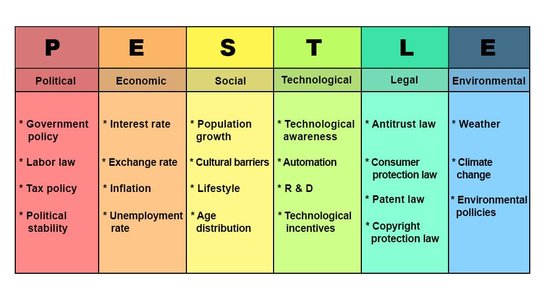
Highlights
- Comprehensive Overview: Understand the six external forces that shape business environments.
- Strategic Application: Learn how PESTEL analysis informs risk management, opportunity identification, and strategic planning.
- Actionable Framework: Gain insights on integrating PESTEL findings into business strategies and decision-making.
What is PESTEL Analysis?
PESTEL analysis (also referred to as PESTLE analysis) is a strategic framework that organizations use to evaluate the external macro-environment affecting their operations. The acronym stands for Political, Economic, Social, Technological, Environmental, and Legal factors. This systematic approach allows companies to identify risks and opportunities that arise from changes in these six dimensions, shaping informed strategic decisions and long-term planning.
The Six Dimensions of PESTEL Analysis
1. Political Factors
The political dimension examines the influence of government policies, political stability, regulations, and legal frameworks on an organization. These determinants include:
- Government policies and political stability
- Trade regulations and international relations
- Taxation laws and fiscal policies
- Public policy shifts and political lobbying
By monitoring political factors, companies can anticipate regulatory changes such as new trade tariffs or policy shifts that may impact their operational environment.
2. Economic Factors
Economic factors involve the analysis of macroeconomic trends and indicators that impact business performance. Key factors include:
- Economic growth and recession periods
- Inflation, interest rates, and exchange rates
- Unemployment levels and labor market conditions
- Consumer spending patterns and disposable income
Organizations use economic analysis to forecast market demand, adjust pricing strategies, and plan for future investments. This understanding is particularly vital when expanding into new markets or during economic downturns.
3. Social Factors
This aspect assesses the social and cultural environment that influences consumer behavior and market dynamics. Social factors include:
- Demographic trends such as age, gender, and ethnicity
- Cultural norms, values, and consumer lifestyles
- Education levels and workforce diversity
- Social attitudes and ethics
Companies harness these insights to tailor products and services, design targeted marketing strategies, and adjust to evolving consumer expectations. Understanding cultural trends is essential for maintaining relevancy in diverse and dynamic markets.
4. Technological Factors
Technological factors focus on the impact of innovation and technological advancements on how companies operate. This dimension covers elements such as:
- Emerging digital technologies and innovation
- Automation, artificial intelligence, and robotics
- Research and development trends
- Technological infrastructure and cybersecurity
The fast-paced evolution in technology creates both competitive advantages and new risks. Adapting quickly in terms of digital transformation can drive efficiency, foster innovation, and prepare companies for disruption.
5. Environmental Factors
The environmental dimension deals with ecological and environmental concerns that are increasingly influencing business operations. Critical areas include:
- Climate change and global warming
- Natural resource availability and sustainability
- Environmental regulations and green policies
- Corporate social responsibility and eco-friendly practices
With growing consumer and regulatory emphasis on sustainability, businesses are compelled to integrate eco-friendly practices within their operations. They often leverage environmental insights to polish their public image and adapt to future regulatory changes.
6. Legal Factors
Legal factors encompass the framework of laws, regulations, and legal constraints that govern business operations. This domain includes:
- Occupational health and safety regulations
- Consumer protection and competition laws
- Intellectual property protection and labor laws
- Compliance requirements and legal risk management
Understanding legal requirements is paramount to mitigate risks and ensure compliance. Adjustments may be required in business strategies to adhere to changing laws, from labor regulations to consumer protection measures.
Integrating PESTEL in Business Strategy
PESTEL analysis is not just a theoretical exercise but an actionable tool that contributes to effective strategic planning and decision-making. Here are some essential points to consider for successful implementation:
Actionable Steps for PESTEL Implementation
1. Define the Scope
Begin by clearly specifying the business area, market, or product line for which the analysis is being conducted. This ensures a targeted approach and a more meaningful evaluation of macro-environmental factors.
2. Data Collection & Analysis
Gather robust data related to each PESTEL factor. This involves:
- Monitoring government publications, economic reports, and market research studies
- Utilizing industry benchmarks and competitor analyses
- Engaging with experts and stakeholders for qualitative insights
Accurate data collection and analysis help in painting a realistic picture of the external landscape and uncover both immediate and long-term impacts on the business.
3. Identify Trends and Implications
Once data is collected, analyze trends over time and evaluate their potential consequences on the organization. Identify key opportunities, such as emerging technologies or new market segments, and assess risks like regulatory shifts or economic downturns.
4. Develop Strategic Responses
Translating insights from the PESTEL analysis into actionable strategies is a critical step. This might include:
- Adapting operational processes to comply with new environmental regulations
- Investing in technological advancements to leverage digital opportunities
- Restructuring market strategies in response to sociocultural shifts
- Adjusting pricing or product features in line with economic forecasts
Strategic responses should be integrated into the overall business plan to ensure resilience and adaptability in a changing external environment.
5. Regular Monitoring and Updating
The external business environment is dynamic, thus requiring continuous monitoring. Regularly update the PESTEL analysis to reflect recent changes and make adjustments to strategies as necessary. Ongoing assessment helps in staying ahead of market disruptions and capitalizing on new opportunities promptly.
PESTEL Analysis Summary Table
| Factor | Key Elements | Strategic Implications |
|---|---|---|
| Political | Government policies, regulation changes, political stability, trade laws | Adjusting to tax policies, navigating regulatory shifts, managing international risks |
| Economic | Economic growth, inflation, interest rates, unemployment | Forecasting demand, pricing strategies, planning investments, managing operational costs |
| Social | Demographics, cultural trends, consumer behavior, education levels | Tailoring marketing strategies, product adaptation, customer engagement improvements |
| Technological | Innovation, digital transformation, research and development, automation | Leveraging new technologies, boosting efficiency, preparing for disruption |
| Environmental | Climate change, sustainability practices, resource availability, environmental regulations | Incorporating eco-friendly strategies, ensuring compliance, enhancing corporate social responsibility |
| Legal | Laws, labor regulations, consumer protection, intellectual property, compliance issues | Reducing legal risks, maintaining regulatory compliance, adjusting policies accordingly |
Further Insights and Applications
Beyond the foundational analysis, organizations should consider weaving PESTEL insights into broader strategic tools like SWOT analysis. This integrated approach allows for a more granular risk assessment by categorizing internal strengths and weaknesses alongside external opportunities and threats.
For example, a company operating in a highly regulated industry may combine its strong technological innovations (identified from the Technological factor) with a recognition of potential regulatory shifts (from Political and Legal factors) to invest in adaptive technology solutions. Similarly, understanding demographic shifts (Social factors) can influence product design modifications that cater to evolving consumer preferences.
Additionally, emerging technologies can transform conventional business models, urging companies to reexamine competitive strategies. Another important application of PESTEL is in market entry strategies. When exploring new territories, an organization must evaluate all external factors to determine potential barriers to entry and tailor strategies that resonate with local economic and cultural climates.
Ultimately, regular application of PESTEL analysis helps organizations stay agile in the face of external challenges, ensuring they are well-prepared to capitalize on new market trends while mitigating risks from fluctuating macro-environmental factors.
References
- Rahapedia: Pestel-analyysi: määritelmä ja esimerkkejä - Rahapedia
- Redesan Oy: Yrittäjä - Tiedätkö mikä on PESTEL-analyysi? - Redesan Oy
- Corporate Finance Institute: PESTEL Analysis & Uses in Finance - CFI
- Indeed.com: What Is a PESTLE Analysis? Factors, Examples and Uses - Indeed
- PESTLE Analysis: What is PESTLE Analysis? - PestleAnalysis.com
Recommended Next Queries
 asiantuntijablogi.wordpress.com
Last updated March 28, 2025