
Decoding the Carbon Footprint of Pharmaceuticals: A Comprehensive Guide to GHG Emissions Calculation
Unveiling the methodologies and critical considerations for assessing environmental impact in the pharmaceutical industry.
Key Insights into Pharmaceutical GHG Emissions Calculation
- Standardized Methodologies: The pharmaceutical industry primarily relies on frameworks like the GHG Protocol, particularly its Corporate Accounting and Reporting Standard and the Scope 3 Standard, to calculate greenhouse gas (GHG) emissions across their value chains.
- Activity Data and Emission Factors: The fundamental principle involves multiplying "activity data" (e.g., fuel consumption, electricity use, product units) by corresponding "emission factors" to determine GHG emissions. These factors convert specific activities into their equivalent CO2e (carbon dioxide equivalent).
- Scope 3 Dominance: A significant portion, often the majority, of a pharmaceutical company's total GHG emissions falls under Scope 3, which encompasses indirect emissions from upstream and downstream value chain activities like purchased goods and services, logistics, and product end-of-life.
The pharmaceutical industry, a vital sector for global health, also carries a notable environmental footprint, largely in the form of greenhouse gas (GHG) emissions. Understanding and accurately calculating these emissions is crucial for companies to develop effective decarbonization strategies and contribute to global climate goals. This comprehensive guide delves into the intricate methodologies and key considerations involved in calculating GHG emissions within the pharmaceutical sector, emphasizing the standardized approaches and the significant role of value chain emissions.
The Foundation: GHG Protocol and Emission Scopes
At the core of GHG emissions calculation in the pharmaceutical industry, as in many other sectors, is the Greenhouse Gas Protocol (GHG Protocol). This internationally recognized standard provides a comprehensive framework for companies to measure and manage their emissions. The Protocol categorizes emissions into three scopes:
- Scope 1: Direct Emissions - These are emissions from sources owned or controlled by the company. In pharmaceuticals, this includes emissions from manufacturing facilities (e.g., combustion of natural gas for heating or steam generation, company-owned vehicles, fugitive emissions from refrigeration or processes).
- Scope 2: Indirect Emissions from Purchased Energy - These cover emissions from the generation of purchased electricity, heat, or steam consumed by the company. Pharmaceutical companies account for these based on their energy consumption and the emission factors of their energy providers.
- Scope 3: Other Indirect Emissions - This is often the most complex and significant category for the pharmaceutical industry. Scope 3 emissions arise from activities in a company's value chain, both upstream and downstream, that are not directly owned or controlled by the company. For pharmaceutical companies, these can include emissions from raw material extraction, manufacturing of active pharmaceutical ingredients (APIs) and excipients, transportation, product use, and end-of-life disposal.
The Pharmaceutical Supply Chain Initiative (PSCI) and the Pharmaceutical Environment Group (PEG) have developed specific guidance for pharmaceutical companies to calculate GHG emissions in their upstream and downstream value chains, aligning with the GHG Protocol's recommendations. Companies like Pfizer, AstraZeneca, and GE HealthCare explicitly state their reliance on the GHG Protocol for calculating Scope 1, 2, and 3 emissions.
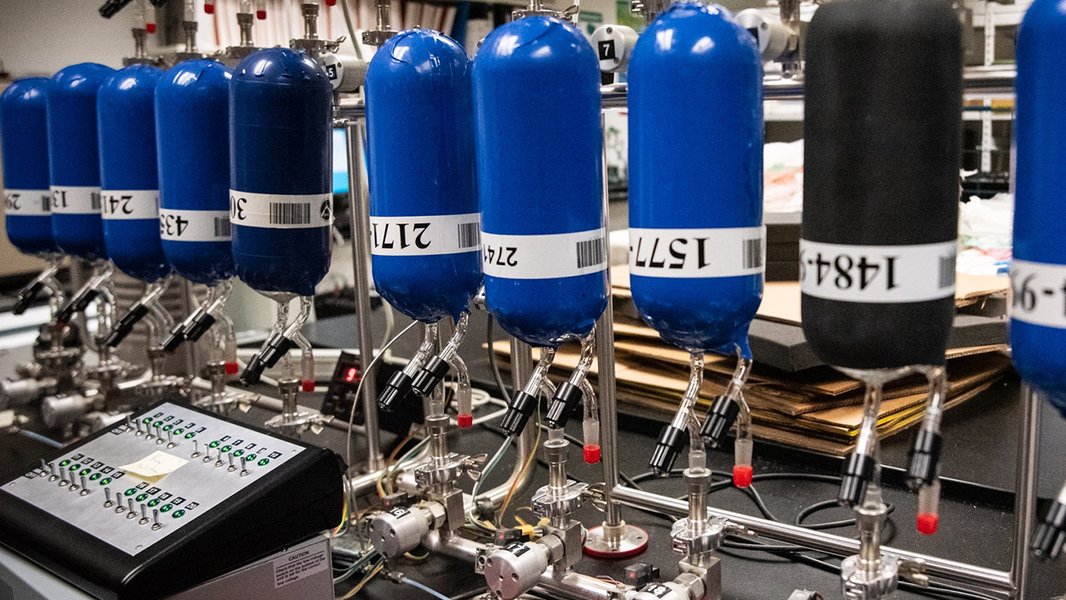
An instrument for monitoring greenhouse gases, reflecting the importance of accurate measurement in environmental management.
The Calculation Methodology: Activity Data and Emission Factors
The fundamental principle behind calculating GHG emissions is the multiplication of "activity data" by "emission factors." This can be represented by the following formula:
\[ \text{GHG Emission} = \text{Activity Data} \times \text{Emission Factor} \]- Activity Data: This refers to the quantitative measure of an activity that causes GHG emissions. Examples in the pharmaceutical context include:
- Fuel consumption (liters of diesel, cubic meters of natural gas)
- Electricity consumption (kilowatt-hours)
- Units of raw materials purchased (kilograms)
- Distance traveled by transport vehicles (ton-kilometers)
- Number of products manufactured (SKUs)
- Waste generated (tonnes)
- Emission Factor (EF): An emission factor is a coefficient that allows the conversion of activity data into GHG emissions. These factors are typically expressed in terms of carbon dioxide equivalent (CO2e) per unit of activity. Emission factors can be specific to a region, energy source, or process. For instance, the emissions factor for electricity varies depending on the energy mix of the grid from which it is purchased. Organizations like Climatiq provide embedded carbon intelligence software and emission factors for various activities, including pharmaceutical preparation manufacturing.
Converting to CO2e: The Global Warming Potential (GWP)
Different greenhouse gases (e.g., methane (CH4), nitrous oxide (N2O), hydrofluorocarbons (HFCs)) have varying abilities to trap heat in the atmosphere. To standardize reporting, all GHG emissions are converted into carbon dioxide equivalent (CO2e) using their Global Warming Potential (GWP). The GWP is a factor that describes how much heat a greenhouse gas traps in the atmosphere over a specific time horizon (usually 100 years), relative to carbon dioxide. The EPA accepts GWP factors developed by the IPCC’s Second Assessment Report (SAR).
The conversion formula is:
\[ \text{CO2e} = \text{GWP} \times \text{GHG Emission (tons)} \]After calculating emissions for each GHG, they are summed up to get the total CO2e emissions for a reporting period.
Deep Dive into Scope 3 Emissions: The Pharmaceutical Challenge
Scope 3 emissions are particularly challenging yet crucial for the pharmaceutical industry. Studies indicate that for most industries, including biotech and pharma, Scope 3 emissions are significantly larger than Scope 1 and 2 combined. For example, Merck KGaA reported Scope 3 emissions constituted 79.9% of their total emissions in 2022. The complexity arises from the vast and intricate global supply chains involved in pharmaceutical production and distribution.
Key Scope 3 Categories for Pharmaceuticals
The GHG Protocol's Scope 3 Standard outlines 15 categories, many of which are highly relevant to the pharmaceutical sector:
- Purchased Goods and Services: This is often the largest source of Scope 3 emissions, encompassing emissions from the extraction, production, and transportation of raw materials, active pharmaceutical ingredients (APIs), excipients, packaging materials, and other supplies. Novartis and Gilead, for instance, report this category contributing over 80% of their Scope 3 figures.
- Capital Goods: Emissions associated with the production of capital goods purchased or acquired by the company (e.g., manufacturing equipment, laboratory instruments).
- Fuel- and Energy-Related Activities (not included in Scope 1 or Scope 2): Emissions from the production of purchased fuels and electricity, not accounted for in Scope 1 or 2.
- Upstream Transportation and Distribution: Emissions from the transportation of purchased goods and services between a company's tier 1 suppliers and its own operations, or between its own operations.
- Waste Generated in Operations: Emissions from the disposal and treatment of waste generated from a company's operations.
- Business Travel: Emissions from employee travel for business purposes.
- Employee Commuting: Emissions from employees commuting to and from work.
- Downstream Transportation and Distribution: Emissions from the transportation and distribution of sold products to the end-consumer. This includes logistics, warehousing, and road transport, which present unique challenges in data collection and calculation due to varied intensity factors.
- Processing of Sold Products: Emissions from the processing of intermediate products sold by the company.
- Use of Sold Products: Emissions from the end-use of pharmaceutical products. This can be complex to quantify as it depends on how products are used and disposed of by healthcare providers and patients.
- End-of-Life Treatment of Sold Products: Emissions from the waste disposal and treatment of products sold by the company at the end of their life cycle, including packaging.
- Leased Assets (Upstream/Downstream): Emissions from the operation of assets leased by the company (upstream) or leased to other entities (downstream).
- Franchises and Investments: Relevant for pharmaceutical companies with franchise models or equity investments.
Challenges in Scope 3 Calculation
The primary challenges in calculating Scope 3 emissions stem from data availability and complexity. Companies often rely on primary data from their suppliers and customers, which can be difficult to collect consistently. When primary data is unavailable, secondary data (e.g., industry averages, spend-based methods) are used, which may be less accurate. The GHG Protocol provides guidance on various calculation methods for Scope 3 categories, including the hybrid method for 'Purchased goods and services' to combine activity-specific data with spend data where necessary.
Tools and Guidance for Pharmaceutical GHG Accounting
Several tools and guidance documents assist pharmaceutical companies in their GHG accounting efforts:
- GHG Protocol Tools and Guidance: Beyond the core Corporate Standard, the GHG Protocol offers specific calculation guidance for Scope 3 emissions, including detailed technical guidance and examples for various categories. They also provide tools for specific sectors or emission types, though generic cross-sector emission factors are available.
- PSCI Guidance: The Pharmaceutical Supply Chain Initiative (PSCI) provides specific guidance for calculating Scope 3 GHG emissions tailored for the pharmaceutical industry, focusing on upstream and downstream value chains. This guidance is consistent with GHG Protocol recommendations.
- Pharmaceutical and Medical Device GHG Accounting Sector Guidance: Developed by the Pharmaceutical Environment Group (PEG), this modular guidance aims to enable consistent quantification of the GHG inventory of pharmaceutical products and medical devices across their life cycle stages.
- Simplified GHG Emissions Calculators: Tools like the US EPA's Simplified GHG Emissions Calculator and the Global Green and Healthy Hospitals' Climate Impact Checkup can help organizations estimate their GHG footprint, though more detailed assessments are often required for comprehensive reporting.
- Commercial Software and Databases: Companies like Climatiq offer embedded carbon intelligence software and verified scientific emission factor databases to automate GHG emission calculations.
A Snapshot of Pharmaceutical Emissions Impact
The pharmaceutical industry's global greenhouse gas footprint has significantly grown, from 124.2 Mt CO2e in 1995 to 219.6 Mt CO2e in 2019, a 77% increase. While the industry contributes around 4.4% of global carbon emissions (as part of the healthcare sector, with 70% of these from supply chains), analysis suggests its emissions intensity is about 55% higher than that of the automotive sector. This underscores the urgency for robust measurement and reduction strategies.
The radar chart above visually represents a hypothetical breakdown of GHG emission contributions across different scopes for a typical pharmaceutical company and an ideal goal. It illustrates how Scope 3 emissions, particularly from purchased goods and services, often dominate the carbon footprint, highlighting the critical need for supply chain engagement and collaborative efforts to achieve decarbonization targets.
Strategies for Emission Reduction and Reporting
To mitigate their climate impact, pharmaceutical companies are focusing on several strategies, heavily influenced by their emissions calculations:
- Supplier Engagement: Given the large share of Scope 3 emissions from purchased goods and services, engaging suppliers to set carbon reduction targets and adopt greener practices is paramount. This includes providing favorable terms and greater weighting to greener goods and services in procurement.
- Sustainable Manufacturing: Implementing green chemistry principles, optimizing energy efficiency in production, and transitioning to renewable energy sources for manufacturing facilities are key. Some companies aim for fully sustainable electricity by 2025.
- Sustainable Logistics and Packaging: Optimizing transportation routes, using lower-emission transport modes, and developing sustainable packaging initiatives (e.g., reducing material use, promoting recyclability, implementing circular solutions) are crucial for tackling distribution and end-of-life emissions.
- Product Design: Designing products with lower life cycle emission intensity, considering raw material sourcing, and end-of-life disposal during the R&D phase.
- Setting Science-Based Targets (SBTs): Aligning emission reduction targets with climate science, often aiming for a 1.5°C global warming scenario by 2030, provides a clear roadmap for decarbonization.
- Transparency and Reporting: Regular and transparent reporting of GHG emissions, aligning with international standards, is vital for demonstrating commitment and tracking progress. Benchmarking against peers can highlight areas for improvement.
This video, "A Case Study in Approaches to Achieve Decarbonisation in the Manufacture of Pharmaceutical Products," directly addresses the core challenge of reducing emissions in pharmaceutical manufacturing, including strategies for tackling Scope 3. It offers practical insights into how companies can apply decarbonization efforts, which are inherently tied to accurate GHG emission calculations. The content delves into real-world approaches that align with the methodologies discussed, providing valuable context for understanding the practical application of emission accounting.
Key Elements of GHG Calculation in Pharmaceuticals
To summarize, the process of calculating GHG emissions in pharmaceuticals involves several interconnected steps and considerations, ensuring a robust and actionable inventory.
| Calculation Aspect | Description and Relevance to Pharma | Key Considerations |
|---|---|---|
| GHG Protocol Framework | The foundational standard for corporate GHG accounting, categorizing emissions into Scope 1 (direct), Scope 2 (purchased energy), and Scope 3 (value chain). Widely adopted by pharmaceutical companies. | Ensures consistency and comparability. Guides the identification of all relevant emission sources. |
| Activity Data Collection | Quantifying activities that generate emissions, such as energy consumption, raw material procurement, transportation distances, and waste generation. | Requires detailed record-keeping across all operations and supply chain partners. Accuracy of data is paramount. |
| Emission Factors Application | Converting activity data into GHG emissions (CO2e) using specific coefficients (e.g., kg CO2e per kWh, per liter of fuel, per tonne of material). | Using relevant and up-to-date emission factors (e.g., from national inventories, IPCC, or industry-specific databases). |
| Scope 3 Focus | Addressing the significant portion of emissions from upstream (e.g., purchased goods, raw material production) and downstream (e.g., product transport, end-of-life) activities in the value chain. | Collaboration with suppliers and customers, data gathering from third parties, and utilization of hybrid calculation methods for comprehensive coverage. |
| Conversion to CO2e | Standardizing all GHG emissions (CO2, CH4, N2O, HFCs) into a single unit (carbon dioxide equivalent) using Global Warming Potential (GWP) factors. | Ensures consistent reporting and allows for aggregation of different GHGs. Requires using accepted GWP values (e.g., IPCC SAR). |
| Life Cycle Assessment (LCA) | A systematic approach to evaluating the environmental impacts associated with a product or service throughout its entire life cycle, from raw material extraction to disposal. | Provides a holistic view of a pharmaceutical product's footprint, informing design for sustainability and identifying hotspots. |
| Reporting and Verification | Transparently disclosing emissions data and methodologies, often through sustainability reports or to initiatives like CDP, and seeking independent verification. | Enhances credibility and accountability. Supports target setting and progress tracking towards climate goals. |
Conclusion: A Path Towards Sustainable Pharmaceuticals
The calculation of greenhouse gas emissions in the pharmaceutical industry is a complex yet indispensable process for understanding and mitigating environmental impact. By adhering to standardized methodologies like the GHG Protocol, diligently collecting activity data, and applying appropriate emission factors, companies can gain a clear picture of their carbon footprint. The emphasis on Scope 3 emissions highlights the critical need for collaborative efforts across the entire value chain, from raw material suppliers to product end-of-life. As the industry continues to innovate and adapt, accurate and comprehensive GHG accounting will remain a cornerstone of its journey towards greater sustainability and a healthier planet.
Frequently Asked Questions
What are the three scopes of GHG emissions?
Why are Scope 3 emissions particularly important for the pharmaceutical industry?
What is an emission factor, and how is it used?
What is CO2e?
What guidance exists specifically for pharmaceutical GHG calculation?
Recommended Further Exploration
- How can pharmaceutical companies reduce their Scope 3 emissions effectively?
- What are the latest advances in green chemistry for pharmaceutical manufacturing?
- How do pharmaceutical companies set science-based targets for decarbonization?
- What is the role of Life Cycle Assessment in sustainable pharmaceutical development?
Referenced Search Results
 cdn.pfizer.com