

Key Insights into Philosophy and Its Arabic Contributions
- Philosophy's Core: At its heart, philosophy is a systematic, rational inquiry into fundamental questions concerning existence, knowledge, ethics, reason, and reality, with roots stretching back to ancient Greece.
- The Golden Bridge: Arabic and Islamic philosophy played an indispensable role during the Islamic Golden Age (9th-12th centuries), acting as a crucial bridge for preserving, translating, and enriching ancient Greek thought, particularly Aristotelian philosophy, for subsequent Western intellectual development.
- Innovators of Thought: Visionary Arabic thinkers like al-Kindi, al-Fārābī, Avicenna (Ibn Sina), and Averroes (Ibn Rushd) not only preserved classical knowledge but also made profound original contributions in metaphysics, logic, natural philosophy, ethics, and the reconciliation of reason and faith.
Philosophy, derived from the Greek words "philo" (love) and "sophia" (wisdom), is a profound and systematic endeavor to understand the most fundamental questions about existence, knowledge, values, reason, mind, and language. It's a journey of critical inquiry that continuously examines its own methods and assumptions. Throughout history, many scientific disciplines that are distinct fields today trace their origins back to philosophical contemplation.
From Ancient Civilizations to the Dawn of Systematic Thought
The earliest known philosophical traditions emerged independently in various ancient civilizations. While there are rich traditions in Indian and Chinese philosophies, the Western philosophical lineage typically begins in Ancient Greece around the 6th century BCE. Here, foundational figures like:
- Socrates: Known for the Socratic method of questioning and his focus on ethics and self-knowledge.
- Plato: A student of Socrates, he developed comprehensive philosophical systems, including his theory of Forms, and explored metaphysics, ethics, politics, and epistemology.
- Aristotle: Plato's student, whose work spanned logic, metaphysics, ethics, politics, biology, and poetics. His logical treatises, particularly, became cornerstones of Western thought for centuries.
These early Greek philosophers laid the groundwork for logical reasoning, metaphysical exploration, and ethical discourse, shaping the trajectory of philosophical thought for millennia.
A Golden Era of Preservation, Innovation, and Transmission
Following the decline of the Roman Empire, much of Greek philosophical knowledge was lost to Western Europe. However, it found a new home and a vibrant intellectual environment in the Islamic world. From the 9th to the 12th centuries, during what is often referred to as the Islamic Golden Age, Arabic and Islamic philosophers embarked on an ambitious project of translation, commentary, and original philosophical inquiry.
The Translation Movement: Rekindling Ancient Wisdom
A monumental translation movement, primarily centered in Baghdad, saw countless Greek philosophical and scientific texts, particularly those of Aristotle, translated into Arabic. This was not merely a linguistic exercise; it was an intellectual rebirth. Scholars meticulously studied, preserved, and critically engaged with these ancient works. Figures like al-Kindi and Ibn al-Muqaffa played crucial roles in this early phase.
Key Figures and Their Enduring Contributions
The philosophical landscape of the Islamic world was shaped by a succession of brilliant thinkers:
-
Al-Kindi (c. 801–873 CE): The "Father of Arab Philosophy"
Al-Kindi was one of the earliest and most significant figures to integrate Greek philosophical thought with Islamic theological principles. He wrote extensively on metaphysics, ethics, logic, and mathematics. His work was foundational in introducing Aristotelian and Neoplatonic ideas to the Arabic-speaking world, advocating for the compatibility of reason and revelation.
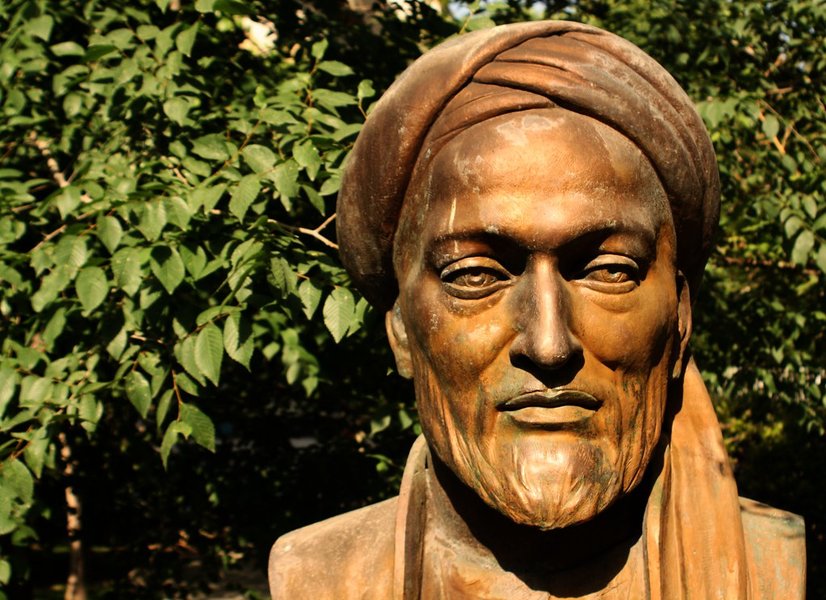
Image: Influential Muslim philosophers who shaped intellectual history.
-
Al-Fārābī (c. 872–950 CE): The "Second Teacher"
Considered by many as the "Second Teacher" after Aristotle, al-Fārābī made significant contributions to logic, political philosophy, and metaphysics. He envisioned an ideal state guided by philosophical principles and attempted to reconcile the philosophies of Plato and Aristotle. His work profoundly influenced later Islamic and European philosophers.
-
Avicenna (Ibn Sina, c. 980–1037 CE): The Polymath of the East
Avicenna was a Persian polymath who excelled in medicine, philosophy, astronomy, and logic. His magnum opus, The Canon of Medicine, was a standard medical text for centuries. In philosophy, his Book of Healing developed a comprehensive system of metaphysics and natural philosophy, deeply influencing both Islamic and medieval European thought. He synthesized Aristotelianism and Neoplatonism within an Islamic framework, particularly focusing on the nature of being and the soul.
-
Averroes (Ibn Rushd, c. 1126–1198 CE): The Commentator
Averroes was a Andalusian polymath, celebrated for his extensive commentaries on Aristotle. He staunchly defended philosophy against theological criticisms and argued for the harmony between reason and religious law. His works were instrumental in transmitting Aristotelian thought to Latin Europe, playing a significant role in the intellectual flourishing of the Scholastic movement.
Video: A concise overview of the Islamic Golden Age and Medieval Philosophy. This video provides valuable context on the intellectual environment in which Arabic philosophers thrived, showcasing the dynamic interplay between different philosophical traditions.
-
Ibn Khaldun (1332–1406 CE): The Father of Sociology and Historiography
Although later than the classical Golden Age, Ibn Khaldun is a pivotal figure for his contributions to the philosophy of history and sociology. His Muqaddimah (Prolegomenon) is considered a groundbreaking work that introduced a scientific method to the study of history, analyzing social and political phenomena with unprecedented rigor.

Image: Statue of Ibn Khaldun, a pioneering figure in social sciences.
The "Falsafa" Tradition
The term "falsafa" refers specifically to the school of philosophy that emerged in the Islamic world, heavily influenced by Greek thought, particularly Aristotle. This tradition was characterized by a systematic approach to knowledge, emphasizing logic, metaphysics, and natural sciences. Falsafa sought to integrate philosophical reasoning with Islamic theological principles, leading to profound discussions on the nature of God, creation, and the human soul.
Reconciling Reason and Faith
A central theme within Arabic and Islamic philosophy was the ongoing attempt to reconcile philosophical reasoning (derived from Greek logic) with religious faith (Islamic doctrines). Thinkers like al-Fārābī, Avicenna, and Averroes grappled with how to harmonize these seemingly divergent paths to truth. This intellectual tension led to sophisticated arguments and a deeper understanding of both philosophical and theological concepts.
Bridging Civilizations and Fueling the Renaissance
The contributions of Arabic and Islamic philosophy were not confined to the Islamic world. Through extensive translation movements into Latin, their works profoundly influenced medieval European intellectual life. This transmission was critical for the reintroduction of Aristotelian thought to the Latin West, which had largely been lost after the fall of Rome.
This mindmap visually represents the multifaceted impact of Arabic philosophy, highlighting its crucial role in preserving ancient Greek knowledge, its original contributions across various philosophical domains, and its transformative influence on Western thought through the transmission of ideas and texts.
Transformative Influence on Medieval Europe
The influx of Arabic philosophical and scientific knowledge spurred intellectual awakenings in Europe, contributing to transformations in various fields:
- Natural Philosophy: Arabic scholars developed atomistic theories and advanced Aristotelian natural philosophy, which laid groundwork for later scientific revolutions.
- Medicine: Avicenna's Canon of Medicine became the standard medical textbook in Europe for over five centuries.
- Logic and Metaphysics: The detailed commentaries and original works on logic and metaphysics by figures like Avicenna and Averroes deeply influenced scholastic philosophers such as Thomas Aquinas.
- Mathematics and Astronomy: Beyond philosophy, Arabic scholars introduced Hindu-Arabic numerals, algebra, and advanced astronomical observations, which were vital for European scientific progress.
The table below summarizes some of the key figures and their primary contributions to Arabic and Islamic philosophy, underscoring their diverse intellectual endeavors:
| Philosopher | Era (CE) | Key Philosophical Domains | Notable Contributions/Works |
|---|---|---|---|
| Al-Kindi | c. 801–873 | Metaphysics, Epistemology, Ethics, Logic | Synthesized Greek philosophy with Islamic thought, pioneer of Arabic philosophical writing. |
| Al-Fārābī | c. 872–950 | Logic, Political Philosophy, Metaphysics | "Second Teacher," wrote on ideal state, reconciled Plato and Aristotle. |
| Avicenna (Ibn Sina) | c. 980–1037 | Metaphysics, Natural Philosophy, Medicine, Logic | Developed comprehensive philosophical system, The Book of Healing, The Canon of Medicine. |
| Averroes (Ibn Rushd) | c. 1126–1198 | Logic, Metaphysics, Reconciliation of Reason & Faith | Extensive commentaries on Aristotle, defended philosophy against theological critiques. |
| Ibn Khaldun | 1332–1406 | Philosophy of History, Sociology, Economics | Pioneering work in social sciences, Muqaddimah. |
Frequently Asked Questions About Philosophy and Arabic Contributions
What is the fundamental goal of philosophy?
How did Arabic philosophy preserve Greek knowledge?
Who were some of the most influential Arabic philosophers?
What is "falsafa"?
How did Arabic philosophy influence the West?
Conclusion: A Unified Intellectual Heritage
Philosophy, in its essence, is a universal human endeavor to understand the world and our place within it. The journey of philosophical thought is a rich tapestry woven from diverse cultural threads, and the contributions of Arabic and Islamic philosophy form one of its most vital and vibrant sections. Far from being a mere footnote in intellectual history, the Islamic Golden Age was a period of immense creativity and intellectual stewardship. Arabic thinkers not only preserved the intellectual treasures of ancient Greece but also critically engaged with them, synthesizing them with their own religious and cultural perspectives, and ultimately enriching the global philosophical discourse. Their legacy endures as a testament to the power of cross-cultural exchange and the enduring quest for knowledge and wisdom that transcends geographical and temporal boundaries.
Recommended Further Exploration
- The impact of Greek philosophy on Islamic thought
- Avicenna's contributions to medicine and philosophy
- Averroes and the reconciliation of reason and faith
- The Islamic Golden Age and its scientific achievements