
Creating a Photonic Digital Code Language
Exploring innovative ideas to harness light for digital computing
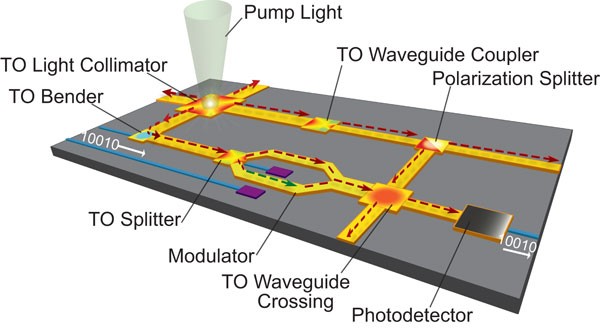
Highlights
- Integration of Photonic Components: Leverage photonic integrated circuits using materials like silicon and indium phosphide to perform high-speed optical computations.
- Custom Syntax and Visual Tools: Develop a language with an intuitive syntax and a visual programming interface for designing and simulating photonic circuits.
- Optimization for Efficiency: Focus on minimizing digital-to-analog conversions and incorporating control structures ideal for light-based data processing.
Introduction
The development of a photonic digital code language marries the worlds of optical computing and digital programming. This pursuit involves leveraging the physical properties of light—manipulated through photonic integrated circuits (PICs)—to perform computations and process data. With the rising demand for faster, more energy-efficient computing paradigms, such languages can revolutionize simulation, design, and control of optical components.
Defining the Core Objectives
The starting point in creating a photonic digital code language is a clear definition of the language’s objectives:
Primary Purposes
The language should serve multiple functions:
- Design and Simulation: Facilitate the design and simulation of photonic integrated circuits, enabling engineers to construct layouts that manipulate light efficiently.
- Control and Data Processing: Enable direct programming of optical components and processes, bypassing multiple conversions between optical and electronic domains.
- Visualization and Prototyping: Provide a visual programming interface that aids non-expert programmers and engineers in assembling and analyzing photonic systems.
By clarifying these objectives, developers can create a language that is targeted, robust, and versatile enough to address evolving computational needs in photonics.
Foundational Concepts in Photonic Computing
To create a language that effectively communicates and controls photonic circuits, a deep understanding of photonic computing principles is essential. Some of these principles include:
Photonic Integrated Circuits (PICs)
PICs are specialized chips that use light instead of electrons to transmit and process data. They are comprised of fundamental components such as waveguides, lasers, modulators, detectors, and phase shifters. By integrating these components onto one chip, it is possible to support high-speed data operations while consuming less energy than traditional electronic circuits.
Optical Signal Processing
In photonic digital systems, the encoding and manipulation of information relies on unique optical properties:
- Wavelength and Amplitude Modulation: Data can be encoded through changes in light’s wavelength, phase, or amplitude, offering a multi-dimensional approach to information processing.
- Minimizing Conversions: Current systems often need to convert optical signals into electrical signals for processing. A robust photonic language aims to minimize these optical-electrical-optical (OEO) conversions, reducing energy consumption and increasing processing speed.
Designing the Language Syntax and Structure
The next challenge lies in developing a clear, concise, and powerful syntax for the photonic digital code language. The syntax should be accessible to both seasoned programmers and photonic engineers. Key considerations include:
Adopting a Familiar Programming Paradigm
One strategy is to adopt a syntax akin to popular high-level programming languages like Python. This approach not only lowers the learning curve but also facilitates easy integration with existing tools. The language should incorporate:
- Keyword Richness: Use descriptive and intuitive keywords that mirror the functions and components of photonics, such as waveguide, modulator, and coupler.
- Readable Constructs: Simple control structures like if-then-else, loops, and function definitions make code maintainable and adaptable to complex photonic tasks.
Visual Programming Environment
A visual programming interface enhances the usability of the language:
- Drag-and-Drop Design: Users can assemble photonic components visually, automatically generating the corresponding code.
- Graphical Feedback: Real-time visualization of circuit behavior is essential for rapid prototyping and iterative improvements.
Incorporating Photonic Components and Libraries
A crucial element of the language is the definition of libraries or modules that encapsulate standard photonic components. These modules should include comprehensive definitions for:
- Waveguides: Define the physical properties such as refractive index, width, and optical mode propagation.
- Couplers and Splitters: Add components that control the path division and combination of optical signals.
- Detectors and Modulators: Implement functions that capture light intensity and modulate optical signals in terms of phase and amplitude.
Each component should be parameterized so that users can easily adjust dimensions, refractive indices, or other optical properties. Consider creating a repository or technology library where these components are standardized and can be shared among the community.
Example of a Photonic Digital Code Language Structure
Below is a conceptual example that illustrates how a snippet of code in a photonic digital code language might look:
# Example: Define and simulate a photonic circuit component

def create_waveguide(length, width, refractive_index):
    # Define the geometry of the waveguide
    geometry = define_geometry(length, width)
    # Assign optical properties
    geometry.add_property("refractive_index", refractive_index)
    return geometry

def create_coupler(coupling_ratio):
    # Create a directional coupler with a specific optical coupling ratio
    component = define_component("coupler")
    component.add_property("coupling_ratio", coupling_ratio)
    return component

# Assemble the photonic circuit using a visual programming approach
circuit = create_circuit()
circuit.add_component(create_waveguide(50, 2, 3.45))
circuit.add_component(create_coupler(0.5))

# Simulate the circuit and visualize the light propagation
simulate_circuit(circuit)
This code snippet demonstrates how fundamental photonic components are created and assembled. It illustrates concepts like component parameterization, control functions, and simulation routines that define an all-encompassing language capable of handling the complexities of optical data processing.
Integration with Photonic Design Tools
Modern photonics design and simulation tools can significantly influence the development process of a photonic digital code language. For example:
Existing Toolchains
Leverage existing integrated circuits and simulation platforms such as:
- Unified Design Platforms: Tools that combine both electronic and photonic design aspects help in creating a cohesive development environment, offering functionalities from layout to simulation.
- Simulation and Visualization: Incorporate simulation tools that provide real-time visualization of optical signals. This helps designers tweak parameters dynamically and immediately observe results.
By developing plugins or direct interfaces with these tools, the photonic digital code language can become part of a larger ecosystem, facilitating the smooth transition from concept to fabrication.
Open-Source Collaboration
Encouraging a community-driven approach where contributors can share and refine libraries of photonic components not only accelerates development but also promotes standards in the emerging field of optical computing.
Optimizing Performance and Energy Efficiency
One of the pivotal goals in optical computing is to ensure that photonic systems operate with minimal latency and power consumption. In developing the language, consider the following strategies:
Minimizing Optical-Electrical-Optical Conversions
Traditional systems rely heavily on converting optical signals to electrical ones and back. An efficient photonic language should be designed to operate directly in the optical domain wherever possible.
Achieving all-optical processing means reductions in energy expenditure, latency, and signal degradation.
Real-Time Simulation and Adaptive Control
Support for real-time simulation can be critical for applications such as optical wireless communications and photonic machine learning. Implement support in the language for:
- Visual Feedback Mechanisms: Allowing designers to immediately see the effects of parameter changes on signal propagation.
- Adaptive Control Structures: Creating loops and conditional statements that can adapt the circuit configuration in response to simulated feedback.
Advanced Topics and Future Directions
As photonic digital code languages evolve, they can integrate advanced concepts that push the boundaries of current technology:
Quantum Photonic Computing
The language can be extended to harness principles from quantum computing by encoding information in the quantum states of light. This includes:
- Qubit Encoding with Photons: Representing qubits using photon polarization or other quantum optical properties.
- Quantum Gate Operations: Implementing optical analogs of quantum logic gates to perform quantum computations.
Machine Learning and Photonic Circuits
The development of photonic machine learning models can benefit from a specialized code language that allows:
- Integration with Neural Networks: Directly simulating the behavior of optical neural networks and optimizing their configurations for pattern recognition and data processing tasks.
- Efficient Data Ops: Handling large datasets by leveraging the parallelism inherent in photonic systems.
As research in these fields accelerates, the language can incorporate experimental features that allow for innovation and rapid prototyping in both academic and industrial settings.
A Comparative Overview Using a Table
| Feature | Description | Primary Goal |
|---|---|---|
| Photonic Integrated Circuits | Using waveguides, modulators, and detectors to build optical computing platforms. | Enhanced speed and energy efficiency. |
| Custom Syntax | Developing an intuitive programming language that abstracts complex optical processes. | User-friendliness and wide adoption. |
| Visual Programming | Deploying a drag-and-drop interface integrated with real-time simulation feedback. | Simplified design and debugging of photonic circuits. |
| Minimized Conversions | Operating in the optical domain as much as possible to reduce OEO conversions. | Lower latency and power consumption. |
| Advanced Integration | Support for quantum photonics and machine learning modules. | Staying at the forefront of emerging technologies. |
Implementation Roadmap
To develop such an innovative language, a roadmap that phases the creation process is essential. Here is a suggested roadmap:
Phase 1: Foundations and Prototyping
- Requirement Analysis: Define objectives, target users, and core components.
- Establish a Baseline Syntax: Create a prototype syntax inspired by familiar high-level languages.
- Core Component Library: Develop libraries for basic photonic components such as waveguides, couplers, and modulators.
- Integration Testing: Begin integrating early prototypes with simulation tools to validate functionality.
Phase 2: Interface and Optimization
- Develop Visual Tools: Construct a visual interface that allows drag-and-drop functionality for circuit design.
- Performance Tuning: Optimize processing routines with a focus on minimizing any unnecessary conversions.
- Feedback Mechanisms: Implement mechanisms for real-time graphical feedback during simulation.
Phase 3: Advanced Functionalities and Community-Building
- Quantum and Machine Learning Modules: Extend the language to support quantum photonic computing and integrate advanced simulation modules.
- Documentation and Community Engagement: Develop comprehensive documentation and create platforms for community feedback and code-sharing.
- Iterative Improvements: Leverage community-driven enhancements to continually refine and update the language.
Conclusion and Final Thoughts
In summary, creating a photonic digital code language is a multifaceted project that blends the intricacies of optical computing with the clarity and usability of modern programming languages. It integrates principles from photonic integrated circuits, optical signal processing, and quantum computing to deliver a language that is poised to revolutionize design and simulation in cutting-edge applications. The process involves defining clear objectives, developing an intuitive and flexible syntax, integrating visual simulation tools, and providing a foundation for high-speed, energy-efficient optical data processing. With a structured roadmap spanning initial prototyping, interface development, and advanced functionality integration, the proposed language can efficiently address the demands of both current and future photonics applications. This comprehensive approach ensures that the language not only meets the needs of today’s photonics engineers and computer scientists but also pushes the boundaries into the realms of quantum photonics and optical machine learning.
References
- Science Daily - ScienceDaily
- Effect Photonics - Effect Photonics
-
Connect-A-PIC - SPIE Digital Library
- Photonic Integrated Circuit - Wikipedia
- Tutorial on Photonic Quantum Computing - PennyLane
- Python for Photonics Development - PreFab Docs
- L-Edit Photonics - Siemens EDA
- Photonics Guide - GitHub
- Create Photonic PDK Through Virtuoso SKILL - Ansys Optics
Recommended Further Queries
Last updated February 26, 2025