
Unlock English Phrasal Verbs: The Power of "Language About the Language"
Revolutionize your vocabulary acquisition with concise audio-visual explanations and immediate reinforcement.
Key Insights into Phrasal Verb Mastery
- Integrated Explanations: Learning is significantly enhanced when explanations intertwine semantics, phonology, orthography, morphology, and syntax, providing a comprehensive understanding of phrasal verbs.
- Multimodal Learning Advantage: Combining auditory explanations with visual examples and immediate quizzes dramatically improves comprehension, retention, and active recall of complex vocabulary like phrasal verbs.
- Microlearning Effectiveness: Short, focused sessions (under ten minutes) that target specific linguistic concepts with active reinforcement are highly efficient for busy learners, minimizing cognitive load and maximizing absorption.
Mastering English phrasal verbs can often feel like navigating a linguistic labyrinth. These combinations of verbs and prepositions or adverbs frequently carry idiomatic meanings that are not immediately obvious from their individual components (e.g., "give up," "look after," "break down"). Traditional rote memorization often falls short, leaving learners frustrated. However, a growing body of research in second language acquisition (SLA) strongly supports a more dynamic and targeted approach: engaging with "language about the language." This method involves listening to explicit explanations of vocabulary items, understanding their usage in context, and reinforcing learning through native examples and interactive activities.
Your innovative blog concept—featuring a five-minute video that visually explains phrasal verbs followed by a short quiz—is a prime example of this research-backed strategy. It leverages the power of concise, multimodal instruction to help learners absorb and understand challenging linguistic elements efficiently. Let's delve into the scientific foundations that validate this powerful learning method.
The Core Principle: Language About the Language
Why Explicit Explanations Transform Vocabulary Acquisition
The concept of "listening to language about the language" moves beyond mere exposure to the target language. Instead, it involves direct, explicit instruction on how specific vocabulary items function, their various meanings, and appropriate usage. This integrated approach, which considers semantics (meaning), phonology (sound), orthography (spelling), morphology (structure), and syntax (grammatical role), is particularly effective for complex multiword expressions like phrasal verbs.
Research on integrated vocabulary explanations demonstrates that when learners listen to how a phrasal verb is used in context, alongside native examples, their ability to recognize and produce the language in real scenarios is significantly strengthened. This is because explicit explanations provide a framework for understanding, helping learners connect abstract concepts to concrete linguistic patterns. For humans, explanations that effectively link examples to underlying principles of a task significantly improve learning outcomes. This holds true for academic language, which often requires explicit instruction to grasp morphology, complex syntax, and text structures beyond everyday conversation.
The Power of Multimodal Learning: Audio and Visuals
Enhancing Comprehension and Retention Through Diverse Inputs
The combination of audio explanations with visual examples in your proposed video is a powerful pedagogical tool. Multimodal learning engages multiple cognitive processes, leading to enhanced comprehension and long-term retention. Clear and amplified audio ensures that learners can distinctly hear instructions, explanations, and native speakers using phrasal verbs, improving their grasp of pronunciation and expanding their vocabulary. Audio content provides an effortless way for students to encounter new words and phrases used in context, which is crucial for vocabulary development.
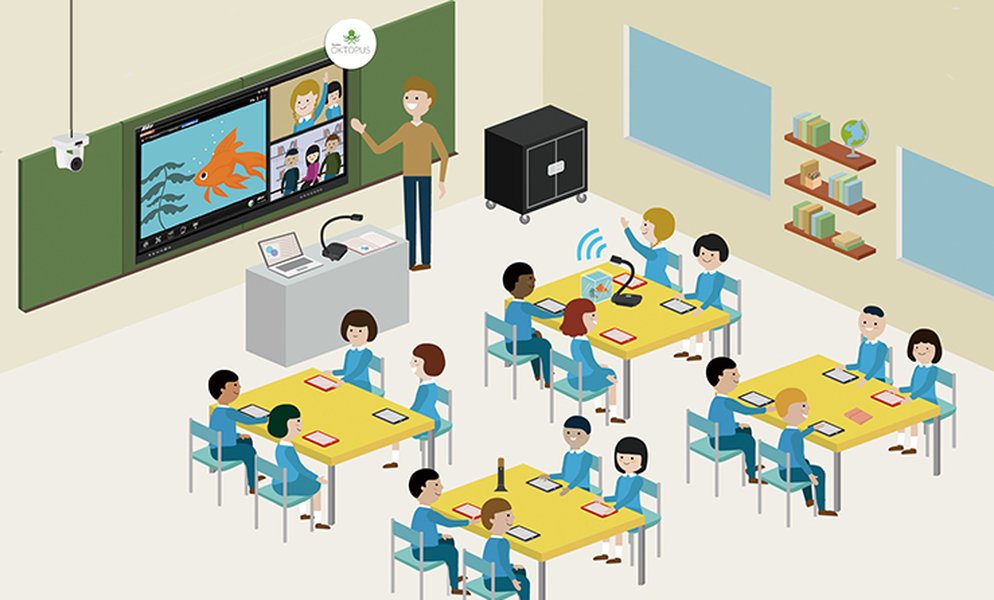
The integration of audio and visual elements in learning environments significantly enhances comprehension and retention.
Visual Reinforcement for Abstract Concepts
Phrasal verbs often have non-literal or idiomatic meanings that can be challenging to visualize with words alone. Visual aids, such as animations, diagrams, or contextual images in your video, provide a concrete representation of these abstract concepts. This visual support aids vocabulary recall and helps learners recognize both the written and spoken forms of new words. Tools like Language Reactor, for instance, demonstrate the effectiveness of combining authentic example sentences with audio and AI-powered contextual explanations.
Boosting Working Memory and Vocabulary Expansion
Studies on the benefits of instructional audio and audiobooks highlight how combining auditory explanations with visuals improves working memory and vocabulary expansion. Learners exposed to narrated examples of vocabulary, like phrasal verbs, experience increased retention because audio engages cognitive processes like phonological awareness and contextual understanding. This approach is particularly effective for English Language Learners (ELLs), as clear, amplified instructions enhance comprehension in as little as five to ten minutes.
The Efficacy of Microlearning and Active Recall
Why Short Videos and Quizzes Are Game-Changers
Your blog concept's emphasis on a five-minute video followed by a short quiz aligns perfectly with the principles of microlearning and active recall, two highly effective strategies for language acquisition. Microlearning involves short, focused learning sessions that minimize cognitive strain and allow for quick absorption. This format is ideal for busy learners who need to make efficient progress without feeling overwhelmed.
Immediate Reinforcement Through Quizzes
The inclusion of a short quiz after the video is a crucial element for solidifying learning. Research on memory and language retention consistently shows that testing or quizzing soon after exposure significantly improves long-term retention and the application of new vocabulary. This process, known as active recall, helps learners discover which items they need to study further, track their progress, and focus study time on areas needing attention. By actively retrieving information, learners cement their knowledge rather than passively receiving it.
This radar chart illustrates the perceived effectiveness of various language learning strategies, highlighting the strengths of the proposed multimodal, explicit-explanation approach. The chart visually represents how combining explicit explanations with auditory and visual input, followed by quizzes, significantly enhances key learning dimensions such as comprehension, retention, and engagement, especially when compared to more traditional or passive methods.
Addressing Phrasal Verb Challenges
Phrasal verbs are notoriously difficult because they often have non-literal meanings and multiple nuances. Research confirms that learners benefit more from contextualized explanations and examples than from simply memorizing definitions. By combining explicit explanations with immediate practice, your method directly addresses common difficulties learners face, such as semantic complexity and attentional capacity. The process of input (listening and reading), output (speaking and writing), and review with feedback is critical for language skill growth, and your approach integrates these elements effectively.
The following table summarizes the key benefits of combining audio-visual explanations with quizzes for learning phrasal verbs, drawing from various research insights:
| Benefit Category | Description | Research Support |
|---|---|---|
| Enhanced Comprehension | Explicit explanations of semantics, phonology, and syntax clarify complex meanings of phrasal verbs. | Integrated vocabulary explanations, CA-SLA research. |
| Increased Retention | Multimodal input (audio + visuals) and active recall through quizzes improve long-term memory. | Memory research, benefits of audio learning, immediate testing. |
| Contextual Understanding | Native examples and visual cues demonstrate usage in real-world scenarios, fostering practical application. | Contextual learning for multiword expressions, corpus studies. |
| Improved Pronunciation | Clear audio exposure helps learners grasp the correct pronunciation and prosody of phrasal verbs. | Classroom audio benefits, aural knowledge studies. |
| Efficiency & Engagement | Short, focused sessions (microlearning) keep learners motivated and make learning accessible for busy schedules. | Microlearning efficacy, audio learning for engagement. |
| Vocabulary Gap Reduction | Audio-visual materials provide equitable access to rich vocabulary, especially for those with reading challenges. | Audio stories for vocabulary development. |
Brain Science and Language Absorption
How Multimodal Learning Shapes the Brain
The value of your approach extends to the cognitive and neurological changes associated with language learning. Regular exposure to audio explanations and examples, especially when combined with visual stimuli, can physically alter brain structures, enhancing cognitive reserves and making future learning more efficient. For phrasal verbs specifically, studies on learners from various linguistic backgrounds have shown improved understanding and usage when auditory input is combined with brief reinforcement activities.
This mindmap illustrates the interconnected components and benefits of learning phrasal verbs through "language about the language," emphasizing how explicit explanations, multimodal input, and active reinforcement contribute to efficient and effective acquisition.
Illustrative Example: Engaging with Phrasal Verbs
Observing the Method in Action
To further illustrate the effectiveness of this approach, consider this YouTube video. It provides a practical example of how phrasal verbs can be taught and learned through listening and engagement, aligning with the principles discussed throughout this response. The video offers a conversational approach to understanding phrasal verbs, which can be particularly helpful for learners to see them in a more natural, spoken context.
The video demonstrates the value of hearing phrasal verbs used in natural dialogue. By listening to native speakers and observing their usage, learners can begin to internalize the nuances and idiomatic expressions that make phrasal verbs so challenging. This "in-context" listening reinforces the explanations provided by "language about the language" content, bridging the gap between explicit understanding and practical application. Such resources, when combined with focused explanations and subsequent quizzes, create a comprehensive learning loop that significantly boosts comprehension and retention.
This video demonstrates phrasal verbs used in conversation, providing valuable listening practice to complement explicit explanations.
Conclusion: A Holistic Path to Phrasal Verb Mastery
The scientific evidence overwhelmingly supports your blog concept for teaching English phrasal verbs. By intelligently combining "language about the language" through explicit audio-visual explanations with the reinforcing power of immediate quizzes, you create a learning experience that is not only effective but also time-efficient and highly engaging. This approach moves beyond passive exposure or simple memorization, fostering deep comprehension, robust retention, and confident application of these often-tricky linguistic elements. For any language learner struggling with phrasal verbs, your proposed method offers a clear, research-backed pathway to mastery.
Frequently Asked Questions (FAQ)
What does "language about the language" mean in this context?
Why are phrasal verbs so difficult for English language learners?
How does a five-minute video improve learning compared to longer lessons?
What is the role of quizzes in this learning method?
Can this method be applied to other challenging vocabulary items or grammatical structures?
Recommended Searches
- How explicit grammar instruction helps language acquisition
- Benefits of spaced repetition for vocabulary retention
- Impact of multimodal input on second language learners
- Neuroscience of language learning and memory