
Unlock Pain-Free Movement: Your Comprehensive Guide to Physical Therapy for Achilles Tendon Issues
Discover how targeted physical therapy can effectively treat Achilles tendinitis and ruptures, restoring strength and function.
The Achilles tendon, connecting your calf muscles to your heel bone, is the largest and strongest tendon in the body. It's essential for walking, running, and jumping. However, it's also susceptible to injury, primarily tendinitis (inflammation or degeneration) and tears or ruptures. Physical therapy (PT) is a cornerstone of treatment for both conditions, offering a structured approach to reduce pain, restore mobility, and regain strength, ultimately helping you return to your daily activities and sports.
Key Insights into Achilles Tendon Physical Therapy
- Personalized Approach: Effective PT programs are tailored to the specific type (tendinitis vs. rupture) and severity of the injury, as well as individual patient factors and goals.
- Progressive Loading is Crucial: Gradually increasing the load on the tendon through specific exercises, particularly eccentric movements, is vital for stimulating healing and rebuilding tendon strength, especially in tendinopathy.
- Patience and Consistency are Key: Recovery takes time, often several weeks to months. Adhering consistently to the prescribed PT program, including home exercises, is essential for optimal outcomes and preventing re-injury.
Understanding Achilles Tendon Conditions
Differentiating Between Tendinitis and Rupture
It's important to understand the difference between the main types of Achilles tendon injuries treated with physical therapy:
Achilles Tendinitis/Tendinopathy
This condition typically involves inflammation (tendinitis) or, more commonly, degeneration (tendinopathy) of the tendon tissue due to overuse or repetitive strain. It causes pain, stiffness, and swelling along the back of the heel or lower calf, often worse in the morning or after activity. PT focuses on reducing pain, improving flexibility, and strengthening the tendon and surrounding muscles through progressive loading exercises.
Achilles Tendon Tear/Rupture
This is a more severe injury where the tendon fibers partially or completely tear. It often occurs suddenly during activities involving forceful pushing off or jumping, sometimes accompanied by a "popping" sound and immediate, severe pain. Treatment may be surgical or non-surgical (involving immobilization). PT is crucial after either approach, following a structured, phased protocol to protect the healing tendon while gradually restoring range of motion, strength, and function.
Core Components of Achilles Tendon Physical Therapy
Regardless of the specific condition, physical therapy for Achilles tendon issues generally incorporates several key components tailored to the individual's needs and recovery phase:
- Pain and Inflammation Management: Initial focus often involves strategies like ice application, relative rest (avoiding aggravating activities), and potentially modalities like ultrasound or electrical stimulation to reduce pain and swelling. Heel lifts might be used temporarily to decrease tendon strain.
- Restoring Range of Motion (ROM): Gentle stretching exercises are introduced early, especially for tight calf muscles (gastrocnemius and soleus), which can increase stress on the Achilles. Manual therapy techniques performed by the therapist can also help improve joint mobility.
- Strengthening Exercises: As pain allows, targeted exercises begin to rebuild strength in the calf muscles and the Achilles tendon itself. This typically starts with basic movements and progresses in intensity and complexity.
- Progressive Tendon Loading: This is a fundamental principle, especially for tendinopathy. Exercises are designed to gradually increase the mechanical load on the tendon in a controlled manner, stimulating tissue adaptation and healing. Eccentric exercises (emphasizing the muscle-lengthening phase) are particularly effective.
- Balance and Proprioception Training: Injury and immobilization can impair balance and the body's sense of joint position (proprioception). PT incorporates exercises, often starting with double-leg and progressing to single-leg stances, to restore stability and coordination, reducing the risk of re-injury.
- Functional and Sport-Specific Training: In later stages, therapy focuses on integrating movements relevant to daily life and specific sports, such as walking mechanics, running drills, jumping, and landing techniques.
Physical Therapy Focus Areas: Tendinitis vs. Rupture
While the core principles overlap, the emphasis and timing of different PT components vary significantly between Achilles tendinitis and rupture rehabilitation. This radar chart illustrates the relative focus on key areas during the primary rehabilitation phases for each condition.
As shown, early rehabilitation for a rupture prioritizes regaining range of motion carefully, while tendinitis treatment often focuses more heavily on specific loading strategies like eccentrics from an earlier stage, alongside flexibility and pain management.
Mindmap of Achilles Tendon Physical Therapy
This mindmap provides a visual overview of the key aspects involved in physical therapy for Achilles tendon conditions.
for Achilles Tendon"] id1["Goals"] id1a["Reduce Pain & Inflammation"] id1b["Restore Range of Motion (ROM)"] id1c["Build Strength & Endurance"] id1d["Improve Functional Mobility"] id1e["Prevent Re-injury"] id2["Conditions Treated"] id2a["Achilles Tendinitis/Tendinopathy
(Overuse/Degeneration)"] id2b["Achilles Tendon Rupture/Tear
(Acute Injury)"] id3["Key PT Techniques"] id3a["Pain Management
(Ice, Modalities, Rest)"] id3b["Stretching
(Calf, Achilles)"] id3c["Strengthening
(Heel Raises, Eccentrics)"] id3d["Progressive Loading"] id3e["Balance & Proprioception"] id3f["Manual Therapy"] id3g["Functional/Sport-Specific Drills"] id4["Common Exercises"] id4a["Calf Stretches
(Gastrocnemius, Soleus)"] id4b["Heel Raises
(Double-leg, Single-leg)"] id4c["Eccentric Heel Drops"] id4d["Toe Walks / Heel Walks"] id4e["Single-Leg Balance"] id5["Important Considerations"] id5a["Personalized Program"] id5b["Gradual Progression"] id5c["Pain Monitoring"] id5d["Consistency & Adherence"] id5e["Proper Footwear/Orthotics"]
This map highlights the multifaceted nature of Achilles tendon rehabilitation, encompassing assessment, targeted interventions, and patient education.
Exercise Examples in Achilles Tendon PT
Physical therapists prescribe specific exercises based on the diagnosis, stage of healing, and individual capabilities. Exercises should generally be performed slowly and controlled, within a pain-free or minimally uncomfortable range. Here are some common examples:
Stretching
Standing Calf Stretch (Gastrocnemius)
Stand facing a wall with hands braced against it. Step one foot back, keeping the knee straight and heel flat on the floor. Gently lean forward until a stretch is felt in the upper calf. Hold for 20-30 seconds. Repeat 3 times per leg.
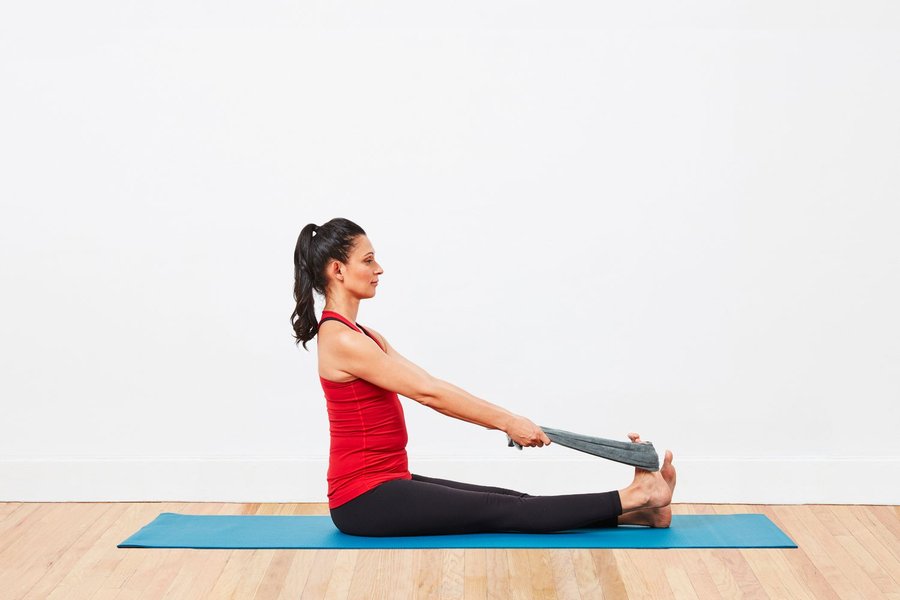
While this image shows a towel stretch, the principle of stretching the calf is similar in the standing version.
Bent-Knee Calf Stretch (Soleus)
Assume the same starting position as the standing calf stretch, but slightly bend the back knee while keeping the heel down. This targets the deeper soleus muscle. Hold for 20-30 seconds. Repeat 3 times per leg.
Strengthening
Double-Leg Heel Raises
Stand with feet flat on the floor, possibly holding onto a support for balance. Slowly rise up onto the balls of both feet, lifting the heels as high as comfortable. Pause briefly, then slowly lower back down. Start with 3 sets of 10-15 repetitions.
Single-Leg Heel Raises
As strength improves, progress to performing heel raises on one leg at a time. This significantly increases the load on the Achilles and calf.
Eccentric Heel Drops
Stand with the balls of your feet on the edge of a step. Rise up onto your toes using both legs (concentric phase). Then, lift the uninjured leg off the step and slowly lower the heel of the injured leg below the level of the step, taking about 3-4 seconds (eccentric phase). Use the uninjured leg to help return to the starting position. Perform 3 sets of 15 repetitions. This is a highly effective exercise for tendinopathy.

Examples of common physical therapy exercises for Achilles tendonitis, including variations of heel raises/drops.
Balance and Control
Single-Leg Stance
Stand on the injured leg, maintaining balance for 30 seconds. Increase difficulty by closing eyes or standing on an unstable surface (like a pillow or foam pad) as tolerated.
Visual Guide to Achilles Tendon Rehab Exercises
Watching demonstrations can be helpful for understanding proper exercise form. This video provides examples of exercises commonly used in physical therapy for Achilles tendinopathy (tendinitis and tendinosis).
This video covers primary rehabilitation exercises used by physical therapists to treat Achilles tendon pain, focusing on techniques suitable for both tendinitis and tendinosis. Remember to consult with your physical therapist before attempting new exercises to ensure they are appropriate for your specific condition and stage of recovery.
Exercise Progression Table
Physical therapy involves gradually progressing exercises as your tendon heals and strengthens. Here’s a simplified example of how exercises might progress:
| Exercise Type | Early Phase Goal | Mid Phase Goal | Late Phase Goal | Progression Tips |
|---|---|---|---|---|
| Stretching | Gentle static stretches (Pain-free ROM) | Increase hold time/frequency | Dynamic stretches (if returning to sport) | Ensure no sharp pain; focus on calf flexibility. |
| Heel Raises | Double-leg, low reps (e.g., 3x10) | Increase reps/sets; progress to single-leg | Add weight (backpack/dumbbells); faster tempo | Focus on slow, controlled lowering (eccentric). |
| Eccentric Heel Drops | May start mid-phase for tendinopathy (3x15) | Increase load (add weight) | Continue as needed for tendon health | Crucial for tendinopathy; perform slowly. |
| Balance | Double-leg stance; single-leg holds (supported) | Single-leg holds (unsupported); stable surface | Single-leg on unstable surfaces; dynamic balance drills | Challenge stability gradually. |
| Plyometrics | Not applicable / Contraindicated | Introduce basic hopping (double-leg) | Progress to single-leg hops, jumps, sport-specific drills | Only introduce when sufficient strength is achieved; guided by PT. |
Note: This table provides general examples. Your specific progression will be determined by your physical therapist based on your individual assessment and progress.
Recovery Timeline and Preventing Recurrence
How Long Does Recovery Take?
Recovery times vary significantly based on the injury type, severity, treatment approach (surgical vs. non-surgical for ruptures), and individual factors like age, health, and adherence to the PT program.
- Achilles Tendinitis: Mild cases might improve within a few weeks (6-8 weeks) with consistent PT and activity modification. More chronic or severe tendinopathy can take 3 to 6 months, sometimes longer, to fully resolve.
- Achilles Rupture: Rehabilitation after a rupture is a longer process. Return to low-impact activities might begin around 3-4 months, but returning to demanding sports can take 6 to 12 months or more, requiring completion of a rigorous PT program.
Strategies for Prevention
Once recovered, preventing recurrence is important. Key strategies include:
- Proper Footwear: Wear shoes appropriate for your activity that provide adequate support and cushioning.
- Gradual Progression of Activity: Avoid sudden increases in training intensity, duration, or frequency.
- Warm-up and Cool-down: Incorporate dynamic warm-ups before exercise and static stretching afterward, focusing on calf flexibility.
- Maintain Strength and Flexibility: Continue performing calf strengthening (especially eccentric) and stretching exercises regularly.
- Address Biomechanical Issues: If gait abnormalities or foot mechanics contributed to the initial injury, ensure these are addressed through PT or orthotics if recommended.
- Listen to Your Body: Pay attention to early signs of pain or discomfort and modify activities accordingly. Don't push through significant pain.
Frequently Asked Questions (FAQ)
+ How long does physical therapy for Achilles tendonitis typically last?
The duration varies. Mild cases might see significant improvement in 6-8 weeks, while moderate to severe or chronic cases can require 3-6 months or longer of consistent physical therapy, including home exercises.
+ Is some pain normal during Achilles PT exercises?
Mild discomfort (e.g., up to a 3/10 on a pain scale) might be acceptable during certain exercises, particularly tendon-loading exercises like heel drops. However, sharp, increasing, or significant pain is not normal and indicates the exercise may need modification or is being done too intensely or too soon. Always communicate pain levels to your physical therapist.
+ When can I return to running or sports after an Achilles injury?
Return to sport is highly individualized and depends on the type/severity of injury and successful completion of PT milestones. For tendinitis, it depends on pain levels and tendon tolerance. After a rupture, return to running often starts gradually around 4-6 months, with full return to cutting/jumping sports taking 6-12+ months. Your physical therapist will guide this process based on strength, ROM, balance, and functional testing.
+ What's the difference between eccentric and concentric exercises for the Achilles?
Concentric exercise involves the muscle shortening as it contracts (e.g., rising up onto your toes during a heel raise). Eccentric exercise involves the muscle lengthening while under tension (e.g., slowly lowering your heel down during a heel raise or heel drop). Eccentric exercises are particularly important for treating Achilles tendinopathy as they help remodel and strengthen the tendon fibers.
Recommended Further Exploration
- What are the most effective eccentric exercises specifically for mid-portion Achilles tendinopathy?
- Can you outline a typical week-by-week physical therapy protocol following Achilles tendon repair surgery?
- How does manual therapy complement exercises in treating Achilles tendonitis?
- What are the best evidence-based strategies for runners to prevent Achilles tendon injuries?
References
Last updated May 3, 2025